A backwards step for world peace

backwards-bob-conondale
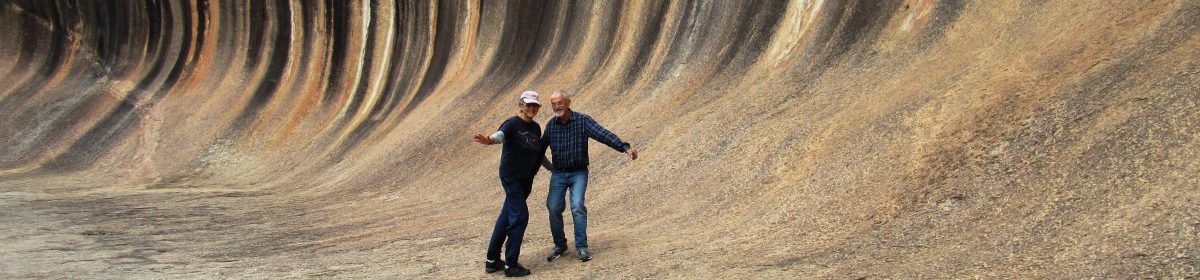
A backwards step to make a point about world peace

In 2009, Greens candidate Peter Bell walked several kilometres backwards from a Mackay fast food franchise to the office of the National member for Dawson, De-Anne Kelly.

He told ABC radio at the time he did this to highlight the backwards nature of the Howard Coalition’s policies on industrial relations and climate. Despite making headlines with this stunt, Bell polled only 3,489 votes (4.4% of the Dawson ballot). But he made his point, in public.


There was a time when if someone said you’d taken a step backwards, they meant a return to older and less effective ways of doing things. The Cambridge Dictionary’s example: “The breakdown in negotiations will be seen as a step backwards.”

You could argue the ‘step backwards’ is in vogue here and around the world; for example the public re-emergence of white supremacists in the USA. President Trump set the mood for this, with florid statements about expelling Muslims and building a wall to keep Mexicans out.

Now Trump and North Korean leader Kim Jong-un are trading threats about the latter’s reported development of missiles capable of delivering nuclear war heads. One of Trump’s responses, tweeted in the early hours, was to bring down ‘fire and fury’ on North Korea. Does that not seem like a backward step for world peace?

Australia’s non-compulsory, non-binding postal vote about a simple social justice issue is also a step backwards. The Australian government’s stubborn commitment to this $122 million folly could have been avoided if PM Malcolm Turnbull had called a free vote for all federal politicians.

There’s a backwards look too about the kerfuffle over whether you can be a politician in Australia while also a citizen of another country − even when you didn’t know you were a dual citizen. I seem to recall the media making much of Julia Gillard’s Welsh background and Tony Abbot’s British roots. So what? We all came from somewhere else, didn’t we?

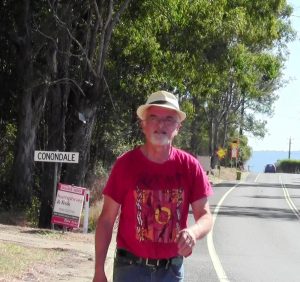
“Whatever”, as the Gen Xers used to say, one should never say rash things in print like “if anyone can hum a few bars of Song of Australia I’ll walk backwards to Conondale.”  Several readers challenged me about their memories of Song of Australia, the fourth choice when Australia last held a plebiscite in 1977. Regular FOMM reader Elaine Beller wrote to say that in the years leading up to the plebiscite, she was a teenager living in Townsville, and a member of the local youth choral society.

Just wanted you to know that I really enjoy reading FOMM each week,’ she wrote. “However, I also wanted to let you know that walking backwards to Conondale is on!”

“We had to learn all the patriotic songs for a public performance on The Strand, so the citizens of Townsville could make an educated choice,” she said. “So, I can sing/hum more than a few bars of Song for Australia! The lyrics had us kids in fits of laughter (‘gushing out with purple wine’ being a particular favourite).”

Caroline Carleton wrote the poem (later set to music by Carl Linger) in 1859, her winning entry for a competition held by the Gawler Institute.

I still can’t believe I walked backwards to Conondale on the strength of such purple prose as:

There is a land where honey flows
Where laughing corn luxuriant grows;
Land of the myrtle and the rose.
On hill and plain the clustering vine
Is gushing out with purple wine,
And cups are quaffed to thee and thine – Australia.

So, while I was steeling myself for the backwards trek to Conondale (note how I carefully did not specify from where), I did a little research on the art of backwards perambulation.

Shannon Molloy writing in The Courier-Mail about colourful Qld political characters, found an endearing photo of former Industrial Relations minister Vince Lester walking backwards.

“The intriguing figure of 1980s politics was famed for his hobby of walking backwards, often for hours at a time. He would complete trips in the name of charity, once rear wandering for several hours between two regional towns.”

Colourful Queensland MP Bob Katter once promised to “walk to (or from, according to some reports) Bourke backwards if the gay population of North Queensland is any more than 0.001%”. Despite his half-brother since coming out as gay and Katter being (often) reminded about this loose remark (there was a rainbow protest outside his Mt Isa offices in 2011), he maintains that gay marriage isn’t an issue in his electorate. It appears he never did take up the threat to walk frontwards or backwards to or from Bourke in Western NSW (about 1,600 kilometres to his Mt Isa electoral office).

Sometimes known as ‘retro walking,’ the seemingly unusual habit of walking (or running) backwards is widely recommended for fitness.

You will find many health and fitness links on the Internet which suggest walking backwards strengthens little-used muscles, improves balance and is good for people with knee, hip and back problems.

Some people even do it for a living.

Seaman Nathan Winn is a tour guide for the Pentagon, and routinely walks up to eight kilometres backward per day (including escalators)

Whatever you do, don’t try walking down stairs, steps or steep bush tracks backwards (or backward as they say in the US). As Seaman Mann found, when he tried going down the up-escalator, it’s embarrassing and definitely not funny.

I walk every day but if you want to have some idea how far you’re walking and set some goals to increase the tempo and distance, a pedometer is useful.

It is said that for maximum fitness from walking you need to chalk up 10,000 steps a day. That’s about eight kilometres, the same as that logged by Seaman Winn, but in a forwards direction.

If you fell asleep in your recliner while reading this on your IPad, you may want to do something about your general level of inertia.

Here’s a suggestion: Sign up for Steptember (a fund-raiser for Cerebral Palsy), where you pledge to walk 10,000 steps on each of 28 days during September.

Or you could just donate money and loaf in the recliner and watch old movies on SBS on Demand, Stan or Netflix. I’ve been looking but have not yet found the critically panned 2008 remake of The 39 Steps, a spy thriller starring Rupert Penry-Jones (Silk and Spooks). I’m curious, having seen the 1959 remake starring Kenneth More (which was spiffing). Never did see the original (Hitchcock, 1935).

UK author John Buchan wrote the book at a clifftop nursing home in Broadstairs while recovering from illness. A set of wooden steps which led from the garden to the beach are thought to have inspired the title. In the book these steps become the escape route (frontwards) down to a quay where the villains’ vessel, Ariadne, is waiting to speed them away.


Plebiscites for the huddled masses

plebisicites-same-sex-marriage
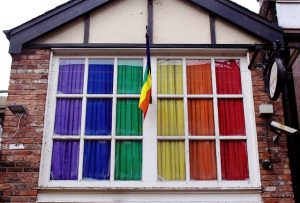
Rainbow curtains by Maxbphotography https://flic.kr/p/RJ6yMy

Did you know that the good citizens of Puerto Rico voted in a plebiscite whether to allow the island territory to become the 51st state of the USA? Despite a low voter turnout (23%), the $15 million non-binding plebiscite achieved a 97% yes vote for statehood. But now the fate of PR lies in the hands of the US government, which has no legal obligation to follow through.

The issue for Puerto Rico’s 3.42 million citizens is the country’s insupportable debt, worsening poverty and rapidly declining population. The Pew Research Centre says the childhood poverty level among Hispanics of Puerto Rican origin is 58%, the figure based on a median household income of $18, 626. Puerto Ricans living on the US mainland, meanwhile, have a household income of $33,000 (if born on the island) or $44,000 if born in the US. The childhood poverty level is 44% and 30% respectively. Little wonder almost half a million Puerto Ricans moved to the US between 2005 and 2015.

As you may have read (unless living under the proverbial rock), the Australian Government wants to hold a national plebiscite on same-sex marriage. Despite the Senate blocking draft legislation this week, the government aims to proceed with a $122 million postal ballot. This is so we can find out for sure if what the polls have been saying since 2011 are right – that more than 50% of the people want marriage equality.

But as per the outcome in Puerto Rico, there’s no guarantee a government will act on the result of a plebiscite, which, unlike a referendum, is not binding.

Australia has only ever held three plebiscites: two on conscription in 1916 and 1917 (the No vote prevailed), and a third in 1977 which offered a selection of mediocre tunes from which to select a national song. You will note here the bastardry of the choices, with Advance Australia Fair (which attracted 43.2% of the votes) distancing Waltzing Matilda (28.3%) and God Save the Queen (18.7%), which the Fraser government decided to keep as the official national anthem). Another 9.8% voted for Song of Australia (Caroline Carleton/Carl Linger). Close to 653,000 people voted for this song, but if you can hum me a few bars I’ll walk backwards to Conondale.

National songs aside (Bob Hawke reinstated Advance Australia Fair as the National Anthem in 1984), plebiscites are only ever held (in Australia) to decide issues which do not require a change to the constitution. Elsewhere in the world, as noted by election analyst Antony Green, the terms plebiscite and referenda are interchangeable. Some countries (New Zealand, even) hold citizen-initiated plebiscites to decide a range of issues, like whether to smack a child or not.

The prominent constitutional lawyer George Williams, explaining why plebiscites are so rare in Australia said: “They go against the grain of a system in which we elect parliamentarians to make decisions on our behalf”.

Professor Williams said referendums necessarily polarise debate, as happened in Ireland when a yes/no proposition was put to the community.

As a result, even if the referendum did succeed, it may leave bitterness and division in its wake,” he wrote in the Sydney Morning Herald.

National University of Ireland lecturer Brian Tobin said the Irish experience showed that putting a human rights issue to a national vote is a crude means of legalising same-sex marriage. “It forces a historically oppressed minority to literally have to plead with the majority for access to marriage in the months prior to the vote. It also provides a platform for those opposed to misinform the public and air anti-gay views.”

Labor Senator Penny Wong spoke against the plebiscite proposal in Parliament this week, saying it will expose same-sex couples and their children to hatred. It’s a fair argument, given that Australia seems well behind the times when it comes to giving minorities a fair go.

Wake up, Australia!

So far, 23 countries have legalised same-sex marriage since the Netherlands took the first step in 2001. Only Ireland has put the question to a popular vote. As SBS News reporter Ben Winsor noted in June this year, there are now 670 million people living in countries where same-sex marriage is a legal right.

In 2015, the Supreme Court of the United States declared that the constitution protected the rights of citizens to marry, regardless of gender. It was the same year that Ireland voted 62% in support of same-sex marriage.

Nevertheless, Northern Ireland has not passed same-sex marriage legislation. The Church of England remains opposed to it, despite ongoing internal debate, and gay marriage has become a legal minefield in the aforementioned Puerto Rico.

The Australian government could resolve the issue simply and cheaply by holding a free ballot for members of parliament. This would cost the taxpayer precisely nothing and would avoid months of divisive debate.

Facebook’s Rainbow Warriors

Social media was aflame on Wednesday night as people ridiculed the costly notion of a (voluntary) plebiscite. Many people offered findings on what else $122 million could buy (chicken nuggets for all, said one post).

A cursory search by yours truly turned up another fascinating nugget: The cost of the same-sex marriage postal ballot is only $6 million more than the 2017-2018 Budget approved last month by Noosa Shire Council. The Shire covers 868.7 square kilometres and has a population of more than 52,000 residents.

But getting back to Puerto Rico, an unincorporated territory of the United States located in the northeast Caribbean Sea. Then White House press secretary Sean Spicer said of the June 11 vote, “now that the people have spoken on Puerto Rico, this is something that Congress has to address.” But Spicer is gone and Congress has an easy ‘out’ pointing to the low (23%) voter turnout. The key reason Puerto Rico wants Statehood is to be protected by US bankruptcy laws.

As Carlos Ivan Gorrin Peralta, a professor at the InterAmerican University of Puerto Rico told The Atlantic magazine, “To make a long story short, the prospects (of nationhood) are between zero and negative-10 percent.”

I’m not suggesting that Australians will boycott the (voluntary) postal ballot to that degree. But the Puerto Rican plebiscite shows what can happen when governments try to railroad people into something they do not want.

In 2011, then Opposition Leader Tony Abbott proposed a plebiscite to test Australians’ support for a carbon tax. This was variously described in the media as “junk politics” and “an expensive, bad idea”.

Moreover, Abbott said that if the plebiscite showed support for a carbon tax he would ignore it anyway.

If there’s a clear sign Aussies are fed up with the dicking about* over the same-sex marriage debate, it was reflected in the much-retweeted front page of the NT News.

The Murdoch-owned Northern Territory tabloid set aside its usual croc-shock/blood in the water approach. Instead its masthead was decked out in rainbow colours.

Under an image of two hands intertwined the NT News declared: “The legalisation of same sex-marriage is inevitable. It’s time to end this farce”.

Cool. Now can we have our chicken nuggets?

*dicking about’ – to do absolutely nothing constructive and be completely useless to the point where it can aggravate others. (Urban Dictionary).


The dangers of plastic waste

plastic-recycling-dangers
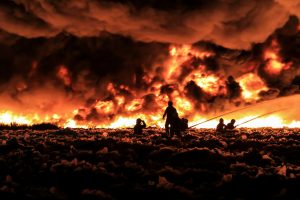
Photo of plastic recycling plant fire in Birmingham (2013) courtesy of West Midlands Fire Service Photographic 2017

I wish someone had told me about Plastic Free July before August arrived. But hell, it’s never too late to start learning new tricks, eh!

In case you missed it too, this is a global initiative started in Western Australia. From its humble beginnings in 2011 with 40 people in Perth, Plastic Free July has now spread across the country and around the world. In 2016, 100,000+ Western Australians and more than 1 million people worldwide took part.

Every bit of plastic ever made still exists and in the first 10 years of this century the world economy produced more plastic than the entire 1900’s.”

The initiative aims to educate people to cut down on their consumption of single-use plastic. The main thrust is to get people to stop using disposable shopping bags. Australians already have an incentive, in that there is already a ban in Tasmania, South Australia, the Northern Territory and the ACT.

About a third of the plastic consumed in Australia ends up at recycling plants to be ‘down-cycled’ into other products. Plastic, as we know, lasts forever, unless of course it catches fire, in which case it burns as fiercely as oil or natural gas. Fire is an ever-present risk at waste and recycling plants because of the highly combustible nature of the stored materials.

In mid-July, a major fire broke out amid stockpiles of paper and plastic at the Coolaroo Recycling plant north of Melbourne. The political fall-out from this fire spread further than the smoke plume, sparking a class action threat and a move by the Victorian government to audit all recycling plants in the state.

Victoria (and other States) would probably want to avoid something like the UK’s record of fires at waste and recycling plants (300 per year), including the one depicted (above) at a recycling plant in Birmingham. 

Meanwhile back home…

No-one knows for sure how many recycling plants there are in Australia because many are private companies licensed by their respective Councils. However, Deakin University environmental science lecturer Trevor Thornton, writing in The Conversation, quoted 2013 figures from the Department of Environment and Energy which estimate there are 114 waste recycling plants in Australia.

Thornton says the industry needs a national registry, updated annually. Governments need to provide tax breaks so plant operators can upgrade their equipment and also provide manufacturers with an incentive to use recyclable material in their products.

“At the same time, we should consider penalising businesses which use non-recyclable packaging when alternatives exist,” Thornton said. He cited retailers who sell goods in multi-material packaging like polystyrene and plastic without providing an alternative.

I was musing about all of this and more after realising I need to break a habit of asking for bags at the supermarket. I’ve been kidding myself that they are being re-used at home as rubbish bags. Just because a plastic bag gets used twice or even three times doesn’t make it any better for the environment.

Major supermarket chains Coles and Woolworths have already made a commitment to phase out single-use bags within a year. Woolies has revealed it uses three billion bags a year. Coles has not released data but it is probably of a similar scale.

Plasticfreejuly.org says six out of 10 Australians are already refusing single-use bags and using a variety of alternatives, all of which involve bringing your own container when you go shopping. But it’s not just a shopping problem – cling wrap, plastic water bottles, drinking straws, plastic takeaway containers and plastic cutlery are all potential sources of pollution. But as we’ll read later, it’s not as simple as chucking everything into the yellow bin.

​The Waste Authority of WA says Australians use one million tonnes of plastic a year (most of it packaging) and 320,000 tonnes of it goes to landfill. But even the refuse, reuse, recycle mantra won’t be enough to hold back the tide of plastic garbage which is engulfing oceans.

Some plastic ends up in waterways and the ocean – where scientists predict there will be more tonnes of plastic than tonnes of fish by 2050.

​The Plastic Oceans Foundation says the world is producing nearly 300 million tons every year, half of which is for single use. More than eight million tons is dumped into our oceans.

As for the oceans becoming a massive plastic rubbish dump, how in hell does plastic end up there? Some of it is microbeads from the manufacturing and recycling process which finds its way to the ocean via drains and runoff. Containers carrying plastic product to foreign ports fall off ships. The best-known example is the container full of thousands of yellow toy ducks lost at sea in 1992. You can read more about this phenomenon and how ocean currents play their part by browsing this educational website created by clever people at the University of NSW.

Data from plasticoceans.org underlines the impact of this pollution on the planet (plastic manufacturing uses 6% of the world’s fossil fuels). Every year 500 million bottles and one trillion bags are discarded as waste (not to mention 24.7 billion disposable nappies). On the scale of things, it’s good that a third of this waste is recycled.

While Australia seems on track to phase out single-use  bags, we need to do something about our addiction to bottled water. A Choice Magazine story in 2014 highlighted the fiscal folly of choosing bottled water over tap water. If you drink two litres a day from the tap, you’ll pay about $1.50 a year, Choice said. Drink the same amount from single-serve bottles you could be looking at more than $2,800 a year.

The Australasian Bottle Water Institute says ours is a $500 million a year industry selling the equivalent of 600 megalitres (600,000,000 litres) of water a year, 60% of which is sold in single-serve bottles.

If we do use plastic, then we should at least know how to sort the different types of waste for recycling. The ABC’s Amanda Hoh, following up on the ABC’s popular War on Waste TV show, interviewed Brad Gray of Planet Ark for some tips.

Gray says the most common mistake is that people throw soft plastics such as bags, food packaging or “scrunchable” plastic in with containers. These soft plastics get caught in the conveyer belt and the whole recycling system has to be stopped so they can be removed.

“All “scrunchable” plastic including shopping bags, plastic food packaging, fruit netting and dry cleaning bags can be recycled, although most often not via your home recycle bin,” says Gray.

“The best method is to bundle all your plastic bags into one bag and take it to a REDcycle bin located in most metro and large regional supermarkets. These plastics are then recycled into plastic school furniture.”

So now I have finished this week’s FOMM, it’s hi-ho to the supermarket and co-op, sturdy hemp shopping bags in hand. Well, that’s the goal.


Funeral costs a trap for the unprepared

funeral-costs-unprepared
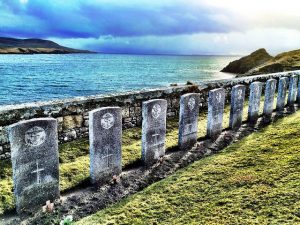
Photo of Shetlands war cemetery by Joanna Penn https://flic.kr/p/ri73H3

If there’s one thing that can put an unexpected dent in the household budget, it’s paying for a funeral. A new study by Finder shows that the average cost of a funeral in Australia ranged from $6,131 (Canberra) to $7,764 in Perth. Of course those who can afford it and deem it necessary pay $20,000 and more for a formal send-off.

Finder’s Money Expert Bessie Hassan says one in five Australians don’t have enough money set aside to cover a $500 setback.

“So if an unexpected death of a family member does arise it could cause significant financial stress.”

Finder analysed Funeral Planner’s survey of some 2,000 adults, which showed that 60% of Australians either haven’t thought about their funeral costs or are expecting relatives to foot the bill. The other 40% have probably gone the whole hog and pre-paid for their funeral, and/or the cost is covered under a life insurance policy.

Invocare, a listed company, owns major funeral businesses in Australia including Simplicity Funerals, Guardian Funerals and White Lady Funerals. Invocare’s 2015 annual report shows it has $422 million in funds under management, derived from pre-paid funeral contracts.

Trends are emerging that show a growing number of Australians are seeking out practical and affordable funeral offerings. Invocare found that more clients were choosing direct ‘committals’ without requiring a traditional funeral service. The other popular choice was to combine a church service with a committal service at a cemetery or crematorium.

There is growing demand too for “Green Funerals” which shun embalming and use biodegradable coffins or shrouds. This seemingly morbid topic reminded me of the darkly comic TV drama, Six Feet Under (2001-2005). SFU explored the dysfunctional lives of a family of undertakers. Every episode would start (spoiler alert) with someone dying (the essential plot element, in that it supplied the necessary corpse). After a season or two, the writers got better at building suspense so the by-now predictable death would still come as a shock, as the person who would soon pop his clogs succumbed to unlikely events including a lightning strike.

I’ve been to a few unconventional funerals/memorial services in recent years. There were a few where the body was cremated in a private family service then the ashes scattered later in a more public forum. A couple of memorial services have been held in locations loved by the dearly departed. So no coffin or wreaths, not even an urn with ashes. People whose loved one had gone to meet their maker spoke passionately and fondly of them. On one or two of these occasions, God never got a mention, nor did Buddha or Allah.

This trend may have something to do with the 30% of Australian who profess to be irreligious. In the 2016 Census (6.93 million people) described themselves as having “no religion”.

My old Scots Dad was fond of saying (apropos of dying) “Och, just roll me up in a carpet and put me oot with the rubbish.”  You probably have friends who say similar things, often bracketed with “if I get dementia just put me out of my misery.”

In practice this rarely happens. When the time came (1991), there was a wee church service and a piper played Over the Sea to Skye. Dad’s ashes were inserted into a memorial wall at the local crematorium, next to “Winnie” who died in 1966.

Don’t ask me what it cost because (typical family experience), everyone is so distressed at the passing that they surrender to the blandishments of the dark-suited undertaker.

The plot thickens

The argument against burial is increasingly to do with the finite supply of burial plots. Local governments are understandably reluctant to offer land to be locked up for perpetuity. Burial plot prices have increased dramatically in the past five years, as a result of pre-paid contracts. In Sydney a plot can cost between $4,000 and $52,000.

Nevertheless, She Who Has a Plan wants to be buried and has a burial site in mind. As always, she is more organised than me. I have a will but there is no fine print about what happens to my mortal remains. Whenever cremation is mentioned, I mentally replay that scene in the Coen Brothers cult movie, The Big Lebowski. John Goodman’s character Walter Lobchak, accompanied by The Dude (Jeff Bridges), climbs to a windy clifftop, ready to distribute his friend Donny’s ashes.

(video contains expletives)

More than 50% of Australians who die are cremated, with more people choosing direct cremation. This means you pay only for the body to be disposed of: there is no service and nobody in attendance when the mortal remains are set alight. Later, the family may hold a memorial service, usually in a place that held significance for the departed.

In Australia, a direct cremation starts at $1,500, though most pay around $2,900. That’s considerably cheaper than a burial organised by a funeral director. Just so you know I did some homework on this, it is legal to scatter ashes at sea or on land (with provisos). If you scatter ashes on private land you need the permission of a landowner. Ashes scattered at sea must be dispersed beyond the three-mile (4.82 kms) limit. If you are scattering in a state forest or national park, you need permission.

Some of the information in this essay was gleaned from this website which has a searchable tool on its website where you can shop around for the cheapest funeral option (if that is what you want).

A thorough investigation last year by Choice magazine left few coffin lids closed. This article by Allison Potter is available online

Choice answers the most obvious question; do you have to engage a funeral director? Choice could not find a law that says you have to, although you will find advice to the contrary. Laws differ from one jurisdiction to another, but it’s best to disbelieve those who say it is legal to bury Aunt Bridget near her favourite peach tree. In theory, a DIY back yard planting is possible, but only if the private land is larger than 5ha and the local Council agrees. In any event, burying a body changes the zoning to cemetery. Your neighbours may not be impressed.

This is an ex-parrot

Monty Python’s euphemism-laden sketch aside, Six Feet Under remains the benchmark for kick the bucket humour. From the opening episode to the ‘we’ll all go together when we go’ finale six series’ later, SFU set out to test the boundaries of many taboos. It is full of dark one-liners about the different ways individuals manage grief.

One fine example (from a list compiled by www.pastemagazine.com) comes from episode one. Ruth, matriarch of the Fisher family, flings Christmas dinner to the floor on hearing the news of her husband’s abrupt demise.

She tells her son Nate: “There’s been an accident. The new hearse is totalled. Your father is dead. Your father is dead, and my pot roast is ruined.”

You will note that, despite the show’s title, Ruth does not employ any of Wikipedia’s 128 euphemisms for death (obscure ones include Ride the Pale Horse, Tango Uniform, Hand in One’s Dinner Pail, Wear a Pine Overcoat and Assume Room Temperature).


Carnarvon open for business

carnarvon-business
Carnarvon Gorge – The Ampitheatre by Bob Wilson

It doesn’t seem too widely known that the once-notorious black soil road from the Rolleston turn-off to Carnarvon Gorge is now completely sealed. True, there is an unsealed section between Takarakka Resort and the National Park headquarters, but it’s a few hundred metres at best.

In the 1970s, a hired car full of adventurous Kiwis set off for Carnarvon, 720kms west of Brisbane, having heard it was a must-do wilderness experience in Queensland.

“Mind you, it’s four-wheel drive country only,” we were warned. Even with a four-wheel drive vehicle, after heavy rain, the black soil roads to Carnarvon from Injune or Rolleston could become impassable. You either couldn’t get in or couldn’t get out. We naïve Kiwis of course hired a conventional six-cylinder sedan and went close to running out of fuel as the car made slow and slippery progress. We turned back and kind people we met in the pub at Injune offered space in their homes for our tired bodies.

In 2017, the 40 kms of new sealed road from the Rolleston turn-off to Carnarvon completed in June, makes it a dream run. Even last year, when the road between the turnoff and Takarakka Resort was still unsealed, Carnarvon Gorge attracted 65,000 visitors.

The gorge is a spectacular sight after driving across the seemingly endless central Queensland plains. It’s a scenic drive in from the A7 Carnarvon Highway between Rolleston (100 km to the north) and Injune (150km to the south). The only tip for the novice in 2017 is to make sure you have plenty of fuel and to realise that you might need to forego Facebook for a few days.

There was a long period when the remoteness of Carnarvon Gorge and the spirituality of a place held sacred by local Aborigines was the key attraction for hikers keen to soak up the solitude and silence. Friends who recently stayed at Carnarvon Gorge during school holidays were disenchanted with the numbers of people staying there. They have a four-wheel drive vehicle so also visited Mt Moffat, which they said was less spectacular but comparatively devoid of people.

After spending four nights at the gorge (during school holidays), I’m wondering what sort of growth pressures the park will face in coming years. But I’m thinking that Carnarvon Gorge visitor numbers will stay fairly constant. Unless you like a 10-hour driving day, you’ll have to stay overnight at least once between Brisbane and your destination.

The Environmental Protection Agency’s 2005 management plan for Carnarvon noted there were 27 separate tourism operators allowed to do business within the national park. These include coach and helicopter tour operators but no flying in the park itself – drones, as the sign at the headquarters said, are not allowed either. Accommodation and camping ranges from a camp site at the National Park headquarters (36 sites), which, for some reason, is only available in school holidays. At Takarakka Resort, 4 kms outside the park, one can choose between pitching a tent, hooking a caravan up to power and water or staying in one of the powered safari cottages (canvas roof and walls and timber floors). Alternatively, there’s the Carnarvon Gorge Wilderness Resort just down the road where you can enjoy most of the comforts of home.

Unlike some travel articles, which carry coy disclaimers that (writer) was a guest of (airline-travel agency-resort), this blog pays its own way. She Who Organises Things paid in advance for the four nights (powered caravan site at $46 a night). We also signed up for the Sunday night roast dinner ($25 per person).

If I found anything at all less than satisfactory it was the cleaners with leaf blowers.

That minor irritation was offset by the free outdoor movie night (The Castle), which is cornier than I remember but somehow very dinky-di.

Carnarvon Gorge is rugged and remote, and even with its well-marked tracks and the support of local rangers, it would not be hard to get into a spot of bother. One has to rock-hop over the six creek crossings and there are ladders and vertical steps involved with other walks. We walked about 12 kms on our first day and ran out of water by the end of the trip. So you evidently have to carry at least one and probably two litres per person. A reasonable level of fitness is required.

If you are a serious bush-walker with a four-wheel drive vehicle you could spend some weeks exploring this 164,000ha national park and the unsealed roads into nearby Mt Moffat and Ka Ka Mundi national parks.

Carnarvon Gorge was surrounded by pastoral properties, parts of which have since been incorporated into the national park.

In the mid-1880s, white explorers Thomas Mitchell and Ludwig Leichhardt made the public aware of the area’s permanent water. This led to settlers taking up blocks in Central Queensland and sparked off two decades of open aggression between local indigenous groups and the newcomers.

Libby Smith’s historical account of European settlers living on Carnarvon Station (now owned by Bush Heritage), chronicles the hardships suffered by successive owners of the 59,051ha station north-west of Carnarvon Gorge.

They had to battle droughts, floods, bushfires and invasive pests like prickly pear and feral animals. Above all was the remoteness of the property, which sits between Mt Moffat and Ka Ka Mundi.

Even in 2001, the resident managers described Carnarvon Station as more remote than their last posting in Kakadu. Co-manager Steve Heggie said the biggest challenge was the inability to enter or exit the property after the rains. A trip to town involved four hours of hard driving ‘before you even hit the blacktop’.

“We had to plan for adequate supplies of food, fuel and work stores, medical emergencies and for volunteers stranded after rain.”

Smith writes that Carnarvon National Park was extended in the 1960s and 1970s to include pastoral holdings which had been surrendered. They include Salvatore Rosa National Park (1957) and Ka Ka Mundi (1973). The park was also extended west in the 1980s and 1990s. Smith notes there was initially fierce opposition to proposals to expand national parks into pastoral leases.

“There was a fear of any change in land use and ‘locking up country.’

Smith’s story deals only with pastoral history, but considering that Aboriginal history in Carnarvon long preceded European settlement, the reaction by pastoralists to the conservation ‘threat’ is quite ironic.

In 2001, Bush Heritage purchased Carnarvon Station for conservation. It has since been found to contain 25 regional ecosystems, including seven that were endangered.

Feedback from last week

The Prickly Pear column, also inspired by this trip, engendered a lot of feedback. One reader wrote to say her grand-father had to walk off the land near Roma as a result of prickly pear infestation and became a land valuer instead. Some readers were keen to say the pear has been maligned and that many people grew up used to eating the fruit, which is tasty and nutritious. Another emailed to correct us, saying the river at Nindigully is the Moonie, not the Balonne.

Perplexed Pensioner of Reeseville once again took issue with my claim that white settlers introduced cats. A topic for another Friday, perhaps.

Ah well, Queensland still won!

Further reading:


Prickly Pear makes a comeback

prickly-pear-comeback
Photo of Prickly Pear near Roma by Bob Wilson

You don’t have to travel far inland in Queensland to see that Prickly Pear, the invasive scourge of farmland in the early 1900s, is making a comeback. ‘The Pear’ as it is sometimes known by farmers, has started to re-appear, growing and spreading after the floods of 2011 and 2012.

The Opuntia species (a member of the Cactaceae family) was introduced to Australia (by white settlers) in the late 1880s to form hedges and provide fodder for times of drought.

Prickly Pear, a cactus plant from the Americas, thrived in the Australian outback. The combination of cacti and rabbits, another introduced species, took a heavy toll on Australian farmland at the turn of the century. By the 1920s, Prickly Pear was a major problem. After some years of experimentation, authorities introduced a biological control in the form of the Latin American Cactoblastis Moth. The moth lays eggs on the prickly pear and its larvae eat the cactus. This was hailed as one of the world’s most successful examples of biological control (the moth eggs were distributed manually). Within six years all varieties of the prickly pear cactus had disappeared.

Not so circa 2017, with varieties of Prickly Pear re-emerging along roadsides and in paddocks around western Queensland and the southern Downs. When we travel I notice things like this and habitually make notes (usually when I’m a passenger).

In some areas (Goondwindi to Inglewood is particularly bad); the cactus has spread into farmland back from the road. Some plants look unwell, though whether through poisoning or biological controls we don’t know.

At this point it should be noted that the variety known as Tree Pear (photos) has some resistance to Cactoblastis, though it can succumb to a cochineal insect. The Southern Downs Regional Council recommends the application of herbicides.

In the interests of moistening a dry subject, let me digress and mention two folk bands that enshrined the Prickly Pear legend into folklore.

Toowoomba musicians John and Sandy Whybird formed Cactoblastis Bush Band when John, then a high school teacher at Chinchilla, saw what Prickly Pear could do to the land. He taught students about the pest and the late 1920s solution to the invasive species.

The band, which recently recorded a CD, performed at the Chinchilla Museum last September to commemorate the 90th anniversary of the introduction of Cactoblastis to the area.

A Brisbane folk duo (Jan Davis and the late Tony Miles), adopted the clever stage name Prickly Pair. They played together for eight years in the late 1980s and early 1990s.

My research led me to the Urban Dictionary, which defines Prickly Pair as slang for the stubble growing back on a man’s testicles after shaving (for an operation or whatever).

Anyway, the Common Pest Pear is back and local farmers ought to know that notification of infestation is required under the Biosecurity Act 2014. No-one expects a problem of the scale which caused farmers to walk off their land after ‘The Pear’ and rabbits finished off what floods and drought had missed. There’s a plaque alongside the Moonie River at Nindigully that commemorates the success of the Cactoblastis moth, when the use of poisons and cochineal insects proved to be ineffective.

Early settlers, in their wisdom, decided to set up a cochineal industry to provide dye for clothing. The cochineal is a scale insect from which the natural dye is extracted. The insects are found on the pads of prickly pear cacti then brushed off and dried.

The Pear is commonly spread by birds and animals eating the fruit and excreting seeds. However, the new spread of Prickly Pear has been accelerated by floods moving broken cacti pads from one location to another.

The State Government’s Business Queensland website describes the Pear as “vigorous in hot, dry conditions, causing other plants to lose vigour or die. It competes and invades pastures and impedes stock movement and mustering.”

Authorities took the rampaging cacti seriously and began investigating biological control agents in 1912. More than 150 insect species were studied, with 18 insects and one mite released in Queensland.

Today, eight insects, including Cactoblastis cactorum remain established in Queensland. An article by Leonie Seabrook and Clive McAlpine in the Queensland Historical Atlas describes Prickly Pear in Queensland as a generic term for five different Opuntia cacti.  Three are low-growing shrubs up to 1.5 metres high and two are tree pears, growing up to three metres. The article observes that at the height of the infestation in 1925, prickly pear had spread across 24 million hectares in Queensland and New South Wales.

While the (imported) Cactoblastis Moth was hailed as a biological saviour, early settlers must shoulder the blame for importing invasive species and pests into Australia. Apart from prickly pear and many other weed species, settlers also introduced cane toads, rabbits and feral goats, pigs, cats, brumbies, foxes and camels.

Prickly Pear observations aside, we had four lovely days hiking in Carnarvon Gorge where the weather was balmy. It did rain on the last day but I went for a walk anyway. It’s only rain, as they say in NZ.

As you’ll have gathered, we just spent 10 days towing our little caravan out to Carnarvon Gorge via Rolleston and back via Injune, Roma, St George, Nindigully, Goondiwindi and Warwick. Today we headed home, via Toowoomba and Esk.

Other on-road observations included a lot of road kill, a feral cat, a lone kangaroo out in the middle of the day, a couple of pelicans in a dam, two emus foraging in the long grass, an abandoned car that had been pillaged for parts and a bloke on a recumbent bicycle (the rider lying down and pedalling in a reclining position). We saw two vans smaller than our 12-footer and a massive RV being towed by a 4×4 (with a small car being towed behind that).

We had the usual (and unusual) mishaps common to most caravan expeditions. Like trying to move the car when it was still shackled to the caravan by metal chains (good one, Bob). I bought one of those stainless steel coffee percolators you brew on the stove. First cup I poured tasted a little soapy. As I sipped further down the cup it transpired someone had left a spoonful of congealed dishwashing liquid in the bottom of the cup. (Guess who usually does the dishes? Ed.)

A highlight of the trip was the free camp at Nindigully, where about 50 caravanners were camped beside the Moonie River. A goodly number of them gathered in the pub to watch the State of Origin decider. Many people left at half-time (we assume they were NSW supporters or maybe they were just cold). The ones who remained were in good spirits, taking their crushing defeat like good sports. As we headed back to the van in the dark we heard a chorus of cheering and the war cry ‘Queenslander!’ from the pub.

How do you reckon NSW will go next year?” I asked She Who Spilt A Pot of Pepper In the Van But Didn’t Want It Mentioned.

“I reckon they’re cactus,” she said, chortling quietly under her maroon beanie.

Online subscribers might have noticed we did not file a FOMM last week. That’s because we were out bush and offline. I did post a 2014 column to email subscribers. You can read it here:

https://accounts.google.com/o/oauth2/approval/v2?auto=false&response=code%3D4%2F95ecdlLPrRNanWf2kHbdOTsrt5gIfRbSQ-pTeN6r60s&approvalCode=4%2F95ecdlLPrRNanWf2kHbdOTsrt5gIfRbSQ-pTeN6r60s

Irish songwriter Kieran Halpin plays Maleny August 6

kieran-halpin-house-concert
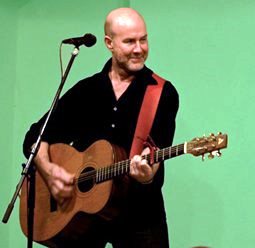
Irish songwriter Kieran Halpin

Irish songwriter Kieran Halpin may not know all the answers, but he knows how to construct memorable songs. Some of his best-known songs (like All the Answers and Nothing to Show for it All), have been covered by major UK folk artists.

Kieran’s house concert in Maleny on Sunday August 6 is a long-awaited encore to his 2011 concert at Bob & Laurel Wilson’s home. Kieran is on a 24-date tour of Australia and New Zealand.

Kieran is a prolific songwriter with a base in Germany, from where he keeps up a touring schedule of more than 160 gigs a year. Only the best songwriters have their songs covered by major artists and Kieran Halpin’s name keeps cropping up on albums by the likes of Ilse De Lange, Vin Garbutt, Dolores Keane, The Battlefield Band, John Wright and Niamh Parsons.

You may have heard people sing his tunes at folk clubs, pubs and festivals. Songs like All the Answers, Angel in Paradise, Nothing to Show for it All and Mirror Town are among those covered multiple times. Some of Kieran’s songs have been translated into German, Finnish and Spanish. He has recorded 22 albums in his native Ireland, Scotland, London, Nashville, Oxford and Sydney and his latest, Doll, was recorded in Germany.

On stage Kieran Halpin is powerful and passionate, intimate and intense. As one critic said, he has a ‘‘wonderful stage presence and surprising humour.

“Every song has a story and every lyric paints that story clearly”

The concert on August 6 starts with a short set of original songs from house band The Goodwills, often heard on Australia all Over.

Tickets are $15. Bookings are essential as seating is limited. Email Laurel goodwills (at) ozemail.com.au.


Homeless for a rainy night

homeless-for-night
The Hope Centre for the homeless, Logan. Photo used by permission

For some, today is a reminder that anyone can become homeless, with various agencies (and reality TV) bringing this urgent issue to light. It also marks the end of the financial year, a kind of witching hour for those engaged in financial markets, investing in rental housing, or running Australia’s businesses, large and small.

For seventy-nine intrepid souls, our charity sleep-out on Maroochydore beach was thwarted by early morning drizzle turning into heavier rain.

Some abandoned their posts, leaving sheets of cardboard for others to make shelters with. Others took up the scarce positions under the eaves of the Maroochy Surf Club.

I took refuge in a nearby toilet block, mopping my wet hair with a sweatshirt. I decided I’d done enough, including raising $700+ and headed home in the wee hours. I briefly imagined a truly homeless mother in a similar situation. The two-year-old wants to be carried and the seven-year-old is saying “This is dumb, I wanna sleep.” So they walk 300m in the rain to the 1997 Ford wagon and do as best they can.

The St Vincent De Paul Society homelessness sleep-out raised more money this year ($125,577) with fewer people sleeping out. That’s an impressive result from a regional population of 300,000, (1,500 of whom are homeless).

The 2016 Census homeless tally (105,000 in 2011), won’t be known until 2018. But a 2014 Australian Bureau of Statistics survey found that 351,000 Australians had experienced homelessness in the previous 12 months.

There were a few speeches last night before we headed out to a balmy 17 degree Maroochydore evening. Mix FM’s Todd Widdicombe threw gentle barbs at local politicians and did a good job of generating competitive bidding for the charity auction (including a pillow sold to local politician Steve Dickson for $320).

St Vincent De Paul Society tells us most social housing on the Sunshine Coast was built more than 30 years ago. The Coast’s private rental vacancy rate is less than 2% and one-bedroom units are hard to find. A chart of social housing demand shows that 64% of people are looking for accommodation for one person. Developers on the coast tend to build three and four-bedroom homes and two or three-bedroom units. Many units are rented to holiday-makers.

Older people facing a tougher future

This is not a problem unique to the Coast. Pensioners and working parents have been priced out of the rental market in all metropolitan areas across Australia, according to National Shelter’s Rental Affordability Index (RAI), released on May 17.

Chief Executive of COTA Australia (Council on the Ageing) Ian Yate told a conference this week that older Australians were the forgotten faces of the housing crisis. He cited as examples the 70 year old divorcee facing homelessness, the 80 year old with a knee replacement who can’t find appropriate or affordable accommodation, the 68 year old couple retiring, still with a significant mortgage.

“Older Australians are increasingly falling through the cracks in the growing housing affordability and supply challenge,” he said. “A growing number of older Australians need to rent, rather than owning a home outright.

“We are already starting to see rates of home ownership by older Australians decline, and this is forecast to drop even further in the next 10-15 years.”

Anglicare’s annual report into housing affordability shows that welfare recipients and single-person households are the least likely to find appropriate accommodation. Queensland’s stock of social housing is just 3.6%, compared with a national average of 4.5%.


Rents are generally lower on the Sunshine Coast and the weather markedly warmer than the Southern States, even in winter. Little doubt this is why young people take their battered old wagons, surfboards and sleeping bags to the beach.

While many people in crisis use their cars as a refuge between one home and the next, others have developed an on-the-road lifestyle.

I once met a woman in her 50s whose camper van is her home and always on the road, unless she’s visiting family in one state or the other. Recently we met a couple who have a permanent caravan moored in a small town van park. They also have a bigger van for their grey nomad adventures. Safe to say most of their capital is tied up in these depreciating assets

For those who’d rather have a fixed abode, the Queensland Government recently made a ‘better-than-nowt’ commitment to provide 5,500 new social and affordable housing units over the next 10 years. Last year, the Government launched a Better Neighbourhoods initiative in fast-growing Logan City, with an affordable housing target of 3,000 by 2030.

Hoping for Hope Centre II

Family and Kids-Care Foundation established the Hope Centre in 2009, a complex of 19 self-contained units, designed for individuals and small family groups in crisis.

President Tass Augustakis told FOMM the charity is currently considering participating in the Better Neighbourhoods Logan initiative, seeking funding for a second Hope Centre which can accommodate larger family groups.

“The thing that got me going to start the Hope Centre was seeing women sleeping in cars with their kids. It just shouldn’t be happening, but it still is.”

Family and Kids-Care donated the land for the first Hope Centre and raised funding from the Federal Government to build it.

“After reading about the State Government’s affordable housing strategy, I’m organising a meeting to discuss Hope Centre II,” he said.

“We can provide the land, but we need the Government to contribute between $10 million and $12 million to build a four or five-level unit building.”

Cameron Parsell, a researcher with the University of Queensland, last year revealed that it costs governments more to provide services to the homeless than it costs to provide standard accommodation.

He produced ‘compelling and robust’ data in The Conversation which showed that chronically homeless people used state government funded services that cost approximately $48,217 each over a 12-month period. He compared this with another 12-month period in which the chronically homeless were tenants of permanent supportive housing.

“The same people used state government services that cost approximately $35,117 – $13,100 less when securely housed, compared to the services they used when they were chronically homeless.”


Urban studies researcher Emma Power, also writing in The Conversation, says single, older women are among the fastest-growing groups of homeless people in Australia. Yet most are unable to apply for community housing because the sole eligibility criterion is their low-income status.

Sadly, women who are not leaving a violent situation or who do not have a recognised disability will risk homelessness before they qualify for community housing.

The answer is for governments to provide more secure, low-cost social housing and/or increase rent-assistance payments across the board.

But as Power points out, the latter is not ideal. Although it assists renters in the short-term, it effectively subsidises private landlords.

This has been going on for a long time and it is getting worse, despite a lot of work by charitable organisations like St Vinnies. I tucked myself into my cosy bed (early) last night, feeling OK about raising the equivalent of a fortnight’s rent for someone.

But it is a band-aid at best.

Further reading:

http://www.huffingtonpost.com.au/2017/06/27/australias-homelessness-crisis-summed-up-in-four-news-events_a_23005274/

Everyone should have a home


Dog dogging my footsteps

dog-dogging-footsteps
Photo of Pomeranian dog enjoying harbour views on Hydra (Greece) by Laurel Wilson

It’s been a while since we had a dog underfoot and this one specialises in getting as underfoot as possible. If not that, he’ll be in someone’s lap – a 22.5 kg lap dog.

When I take Dog for a walk up the main street he gets sooked-over big time- “Aw what a cute Staffie – is he friendly?” Well, he does have a green harness and lead with “friendly” emblazoned upon it, so, yeh. We are just baby-sitting this one, and I use the word advisedly as he is an anxious dog who (a) does not like to be outside when all the humans are inside, and (b) dislikes being left alone for more than two or three hours. This makes a weekend trip to Brisbane for the ballet just a bit tricky.

He’ll lie doggo on the back seat of the car for a lengthy time but then starts whining and the whining turns into screaming. Oh, you know this behaviour? The other thing Staffies do is a supressed excitement grunt not unlike Marge Simpson’s hhmmnn (when Homer is being irritating).

On Wednesday night Dog was in his element – a choice of laps to sit in with the ritual watching of the State of Origin. He got excited and confused with all the yelling and cheering in the 78th minute. Last time (when Queensland was beaten), we made him wear a maroon beanie and put photos on Facebook.

If you inhabit Facebook you will see a lot of dog photos (and videos) including one that had 17 million views.

The obvious question is who watched these videos and why? Other dog owners, I’m guessing.

The RSPCA says there are 4.5 million dogs in Australia, with 39% of households having one.

Dogs in Australia experience lifestyles ranging from the cossetted fur babies who have the run of the house, their own beds (usually at the foot of the humans’ bed), pet insurance, gourmet pet food and the vet on speed-dial. In the middle are working dogs; guiding disabled people, sniffing out drugs or explosives, guarding junk yards, tracking bad guys, herding sheep, baling up pigs or hunting down rabbits. At the other end of the scale are the neglected dogs, chained up all day while the owners are away and often abandoned once their owners realise how much work is involved.

Many ‘rescue’ organisations have been formed to take neglected dogs away from bad circumstances, to rehabilitate them and foster them to caring families. One such foster-Dad was telling me his rescue dog flinches whenever someone nearby swears loudly. So dogs get PTSD too.

We could have a lengthy debate about dogs and their respective levels of intelligence. German Shepherds are said to have the intellect of a seven-year-old child. One night we were watching Inspector Rex (remember Rex?) on our big screen TV, positioned against a lounge room wall with our bedroom on the other side. Previously we had thought our female Alsatian was uninterested in TV. But then Rex appeared and went ‘woof’. Our dog scampered behind the TV, then into our bedroom and came out a few seconds later with a perplexed look.

Smart dogs come when called

The difference between the German shepherd and the Staffie is the latter will come when called. Our Shepherd would spot some other dog on the other side of the park and off she’d go (at pace), coming back when she felt like it. She was too smart to try crossing Annerley Road on her own, but too dumb to open the side gate once she did come home.

She Who Takes Dog Photos has, among her many interests, a knack for identifying dog breeds. She did this repeatedly on our travels, in the US, Canada, the UK and various parts of Europe. (One time, after a few moments of disbelief, I said “Get away, there’s no such dog as a Dandie Dinmont”)

I had to bow to her encyclopaedic knowledge of dog breeds. On the surface, this is a fairly useless skill. But you can start conversations with complete strangers and some of them may end up giving you directions or sharing lunch on a train (Italians take their dogs on trains).

Unfortunately, dogs go in and out of fashion. Teenagers (‘I want a puppy’), will pick whatever type of dog their peer group likes at the time – (Rottweilers r cool!) Older people, perhaps influenced by popular media, want a dog like the one Madonna has, or Prince Harry. Back in the 60s and 70s, Afghan hounds were popular, then Irish setters, breeds known for shedding and for not having much between their ears.

Many people buy or adopt a dog on a whim and quickly come to the conclusion that they are too much work. For the 61% of households who don’t own a dog, here’s what can happen if you give in to requests for a puppy.

According to the BankWest Family Pooch Index, it can cost $25,000 to look after a dog over its lifetime. Some dogs die young, through accidents, ticks, genetic flaws or terminal illness. Most, however, will soldier on to reach the life expectancy of the relevant breed. An old poodle, part of our extended family, turned 18 the other day. He has a few ailments we humans share like cataracts, hearing loss, spinal degeneration and hip problems. But he knows what he wants. Yarp means he wants to go out. Yipe means he wants to come back in. Warf means “I want to come up the back steps but I can’t so could you please carry me?”

If you’ve never owned a dog, remember these important points:

  • Dogs lack opposable thumbs, so you need to do everything for them that humans use their hands to accomplish;
  • Female dogs which are not desexed can have up to 15 puppies at a time; said puppies at three months’ old will be consuming two to three kilograms of meat per day; finding good homes for them will be problematic
  • Dogs left alone while you are at work commonly bark and give your neighbours the shits; if you buy a companion for the first dog, you could end up with two dogs barking all day;
  • Teenagers say they want a puppy but then, when they get a boy or girl friend, will leave said puppy in your tender care;
  • If you want to travel, there are only three options: a dog and/or house sitter, a kennel or the dog goes with you.

When we travelled around Australia in 2015, it seemed every second caravanner had at least one dog. These people frequently use free camps because so many caravan parks have a ‘no dogs’ rule. We said hello to a couple travelling in a Toyota Hiace pop-top motor home. They showed us their set-up – two single beds and a dog bed in between for their Labrador!

Once at a free camp (there was only one other van when we arrived) I approached a dog. The owner, who was sitting in a camp chair reading a caravan magazine, said “Don’t pat him when he’s chained up. He’s on guard duty.

Nice doggy – sit, stay.

I’m joining in a St Vinnies fundraiser for homelessness next Thursday (29th). There are some 1500 homeless men, women and children on the Sunshine Coast, including some in our small town. I hope you can help meet my target of $500 (the regional target is $100k). Think of me and 80+ others next Thursday, with our sheets of cardboard, soup and rolls and (hopefully adequate) sleeping bags.

Here are links to articles I have written previously on this topic


http://bobwords.com.au/homeless-for-a-week/

http://bobwords.com.au/everyone-should-have-a-home/

http://bobwords.com.au/goodwill-housing/

http://bobwords.com.au/little-bit-compassion/

Thanks for your support.


Homelessness and affordable housing

homeless-housing-affordable
Homelessness and affordable housing, photo by Giulio Saggin

Last week I was walking from Roma Street Station to the top end of George Street, the hub of State Government. I was meeting friends for lunch and on the way passed a few apparently homeless young men on park benches, one tucked inside a doorway, others hovering around intersections, nervously smoking.

One young person was sitting on the footpath with a cardboard sign that read “homeless – please help”. I was too preoccupied on my mission so I ignored the hat, not even dropping a few coins on the return journey.

So now I’m hunting around the house for a decent sleeping bag and a beanie, hoping to make amends for my lapse in empathy by participating in a fund-raising community sleep-out on June 29. (If I chicken out I promise to donate money to the cause.)

Our local member Andrew Powell (Member for Glass House) has agreed to participate in the annual sleep-out.

Mr Powell wrote about this in his regular Glasshouse Country and Maleny News column. He will be among local dignitaries, business people and community members sleeping rough outside the Maroochydore Surf Club on June 29. Participants will be given a sheet of cardboard to sleep on and fed a simple meal of soup and bread rolls. Mr Powell says there are 1,500 homeless men, women and children on the Sunshine Coast.

The St Vincent de Paul northern diocese (which is organising the sleep-out), has provided support over the eight months to March 2017 to 450 homeless people, including 250 children.

The gesture by the Member for Glass House is admirable, but this is a problem that has, at best, been patched up by successive Queensland governments. The Sunshine Coast, which has a paucity of affordable and public housing, is named as one of the regional areas to be targeted by the new housing strategy.

The Rental Tenancies Authority published median rents for the Sunshine Coast region in December 2016. Tenants pay between $315 and $400 a week for a three-bedroom home or a two-bedroom unit. Rents are cheaper in the Hinterland areas like Beerwah, Peachester, Mooloolah, Palmwoods, Hunchy and Woombye, but public transport is limited and one needs a reliable car to live in these areas.

Meanwhile, Queensland has a plan

As the debate continues about the lack of affordable housing and how to find beds for homeless people, the Queensland Government has a 10-year plan.

The Government had some fairly positive (and uncritical), press about its plan to provide more than 5000 social and affordable houses. The $1.8 billion Housing Strategy announced in this week’s State Budget aims to get the private sector involved and utilise State government-owned land.

Treasurer Curtis Pitt said it was the biggest commitment to housing in Queensland’s recent history. The strategy will see more than 5,500 social and affordable homes built over the next decade. Eight hundred homes are to be built each year for the first five years. This is about double the number of social and affordable homes built in 2016-2017.

The Minister said the housing strategy includes $1.2 billion to renew the existing social housing property portfolio. A $420 million housing construction program aims to boost the supply of social and affordable housing. This includes $3.5 million to build two refuges for women and children escaping domestic and family violence.

The Government is also allocating $75 million to advance home ownership in ‘discrete’ Aboriginal and Torres Strait Islander communities.

At first glance this sounds like a bold plan, made with some compassion for those struggling to survive in a competitive housing market. On second glance, it is unlikely to make a dent in Queensland’s 25,000+ public housing waiting list.

Too little, too late?

Public and social housing comprised 4.8% of the total national housing stock, according to the Australian Housing and Urban Research Institute (2011 Census data). AHURI’s research showed that at a minimum, the social housing system would have to have been around 43% larger (on 2011 figures) to accommodate all those who met public housing eligibility criteria and who pay more than 50% rent.

Nevertheless the Queensland strategy has been welcomed by the construction industry and the housing sector, as it is said to provide 450 jobs. One of the more positive aspects of the plan is that 5% to 25% of the land used for these purposes will be land already owned by State Government. This implies vacant or under-utilised land near public buildings like hospitals and schools. So maybe at last the under-privileged will get to live in the middle-ring suburbs of Brisbane rather than 49 km away in fast-growing Logan City.

In December 2016, the State Government announced a $1 billion investment plan to build 3000 new houses in Logan City over 20 years. Minister for Housing and Public Works Mick de Brenni said the Better Neighbourhoods Logan initiative would deliver a range of economic and social benefits, including 410 new social and affordable dwellings over the next five years and over 3,000 new homes by 2036. A spokesman confirmed that the 3000 social and affordable homes are part of the Budget housing strategy. That leads me to surmise that another 4000 homes will be built in other regions over 10 years, on average, 40 new houses per year for each of the 10 regions identified by State Development.

The strategy shows some progressive thinking in that new social or affordable housing strategy should incorporate:

  • Rental bond loans to help tenants meet the private market;
  • Provision for public housing tenants to own their own home through shared equity loans or rent-to-buy schemes;
  • A new Housing Partnerships Office to streamline processes and lower costs and time frames;
  • Private sector involvement through expressions of interest to develop small, medium and large developments in regional centres;
  • $29.4 million to provide front line services for victims of domestic violence and young people at risk of homelessness. This includes a $20 million boost for ‘youth foyers’ – supported accommodation for young people aged 16-25 who are either homeless or at risk of becoming homeless.

Looking after property investors

The State Budget announcement follows a plan revealed in the 2017 Federal Budget to allow a tax break to invest in social housing.

Retail and institutional investors are being offered a 10% increase in capital gains discount (from 50% to 60%). The Australian Financial Review reported that the scheme, aimed at Management Investment Trusts, would allow the discount to MITs and their investors, provided they offer the properties at an affordable rent for at least 10 years. The AFR said the Government also planned to issue bonds backed by rental income from social housing, replacing bank debt issued to approved social housing developers.

While governments play ‘catch up’ with affordable housing, the onset of winter should turn our thoughts to the homeless.

As Andrew Powell observed, it is not a matter of choice.

“In many cases homelessness comes about through factors out of a person’s control – whether this is mental or physical illness, financial instability, lack of education, domestic violence or something else entirely,” he wrote in the GCMN.

Yes, and sometimes all of the above.