Time to befriend an indigenous person

NAIDOC-Week-Yes-Nawa
Musician Kevin Bennett

Aboriginal and Torres Strait Islander viewers are advised that this blog may contain references to deceased persons.

Reading an online ABC story about Ash Barty and her newly-born baby, I was struck by two things. The first was that the story had clearly been assembled with no direct input from Barty. Since retiring from championship tennis last year, Ash has made it fairly clear she values her private life. All the same, she’s famous enough that a declaration (to friends) on social media was appropriated by deadline-hungry online media. The story was compiled from what old journalists used to call ‘the cuts’, meaning file stories, social media comment (and responses) and a photo of Ash on her wedding day (supplied).

The second thing about this shallow news story was that nowhere in the text was Ash identified as an indigenous person. You’d think that in NAIDOC week, that would be a given.

NAIDOC stands for National Aboriginals and Islanders Day Observance Committee (originally dubbed National Aborigines Day Observance Committee).

The ABC could at least have tried to contact Ash, perhaps in the guise of preparing a NAIDOC week story. The time-honoured protocols of mainstream journalism should at least contain the disclaimer – the ABC made attempts to contact Ash Barty for comment but was unsuccessful.

The most interesting thing about the newly-born son (Hayden) of Ash Barty and husband Garry Kissick is that he is now part of the Barty extended family.

Through her great-grandmother, Ash Barty is a member of the Ngarigo people, the Aboriginal people of southern New South Wales and north-eastern Victoria. Despite being declared Australia’s Person of the Year in 2022, Ashleigh Barty is entitled to her private life, so I will now move on to NAIDOC.

This is a week of observance during which indigenous people can feel free to celebrate their origins. White fellas can use the time to reflect on their attitudes to indigenous folk, hopefully in a positive way. It is probably fair to say (and feel free to let me know if you think this is a generalisation), most white people who are not in some way inter-married, know few indigenous people and fewer still can actually say they have an Aboriginal friend.

She Who Is Going to Canada Soon has been making attempts to meet First Nations people in our home town, with limited success. Her attempts to make eye contact and say Hi will on occasion elicit a shy smile or a nod. (Of course, it’s just possible we already have Indigenous acquaintances, as not everyone chooses to mention their ethnicity. Ed)

It’s probably no wonder that so many Indigenous people are reluctant to engage with ‘white’ Australians If I was an Aboriginal person living in this country I’d probably not want to make eye contact with white people either.Ed

This is a reference to the shocking periods in this country’s history when European settlers squatted on land once used by Aboriginal tribes for hunting, food-gathering and sacred ceremonies. From this arose seldom-mentioned Frontier Wars and the gradual marginalisation of indigenous Australians

We got chatting to a young person in Brisbane recently who we discovered has Aboriginal ancestry, though it was not obvious to us. We found this out because she was visibly upset by an overtly racist comment made in her workplace by a customer.

The comment was not addressed to the young person, but it was gratuitous enough to make her angry and upset.

The young person revealed that her grandmother was one of the Stolen Generation. This refers to a shameful period in Australia’s history (mid-1800s to 1969), when Aboriginal children were removed from their parents and adopted by (usually) well-intentioned white people. This tawdry period in Australia’s colonial past was best summed up by the late songwriter, Archie Roach:

Taught us to read, to write and pray
Then they took the children away
Took the children away
The children away
Snatched from their mother’s breast
Said this is for the best
Took them away.

Even today, people in their 50s and 60s are discovering or tracing back their ancestry and those who have the opportunity to spread the story do just that. Alt-country songwriter Kevin Bennett not so recently traced his family and now writes songs depicting or satirising that era. Check out his song Spaghetti Western and its reference to a ‘stolen land’. Bennett also referred to intermarriage in Goulburn Valley Woman.

“She said she was a Goulburn Valley woman, she felt connected to the land; Her mother was a flame-haired Irish lass, her father was a Yorta Yorta man.”

The ABC this week interviewed songwriters Paul Kelly and Kev Carmody, who did more to raise awareness than most with their seminal song ‘From Little Things Big Things Grow’. I first met Kev at a folk club in Toowoomba and was also aware that he was (like me) one of the mature age students studying at the university. Kev played guitar in a local bush band and on occasions would sing one of his own songs. I had no idea he was indigenous until the night he sang a song about someone being ‘zipped up in black skin’.

“This is a song about my Uncle,” he said, launching into Jack Deelin. Carmody released his debut album in 1988, the Bicentennial year. Along with indigenous bands Yothu Yindi and compadres including Gurrumul, Tiddas, Kutcha Edwards and others, Kev Carmody was at the forefront of raising awareness of indigenous culture and the injustices of the past.

The injustices and inequalities (which still exist) include a mortality rate 1.6 times greater than non-indigenous, chronic health problems, inadequate housing and over-representation among jail populations.

Over time, this led to the Apology by Prime Minister Kevin Rudd in 2007 and the emergence of some now ubiquitous traditions. One is the warning at the start of this blog. This accords with the Aboriginal custom of not referring to the departed by name, unless special permission has been given. Then there is the acknowledgment of country which has become universal.

My attempts at befriending Aboriginal people stall on innate shyness and I suspect it is a two-way street. A fellow sometimes busks outside the IGA in town. He sings, plays guitar and harmonica and is not half-bad. I was tempted to sidle up and join in on the harmony to “Down on the corner, out on the street, Willie and the Poor boys etc.” Opportunity lost.

I remember visiting Derby in Western Australia and seeing the ancient Boab ‘Prison’ tree and reading the bleak history of the region. While the story of that hollow tree used as a temporary prison is said to be a myth, the Boab was a staging post and Aboriginal prisoners were chained to nearby trees. These are stark images which remind us of how European settlers mistreated the original inhabitants. But as is often the case, the historic records are often disputed, many because they were never written down.

It’s not that much different to the Highland Clearances, where my descendants were pushed off their land so the English aristocracy could run their sheep and lay claim to whisky production. The same applies to other colonial conquests around the world, although the mistreatment of Aborigines and Native Americans stand out as egregious examples.

The way I see it on this particular Friday is that come the referendum, we should all be saying ‘yes’.nawa.
 

Plebiscites for the huddled masses

plebisicites-same-sex-marriage
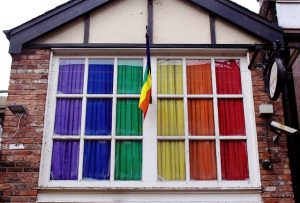
Rainbow curtains by Maxbphotography https://flic.kr/p/RJ6yMy

Did you know that the good citizens of Puerto Rico voted in a plebiscite whether to allow the island territory to become the 51st state of the USA? Despite a low voter turnout (23%), the $15 million non-binding plebiscite achieved a 97% yes vote for statehood. But now the fate of PR lies in the hands of the US government, which has no legal obligation to follow through.

The issue for Puerto Rico’s 3.42 million citizens is the country’s insupportable debt, worsening poverty and rapidly declining population. The Pew Research Centre says the childhood poverty level among Hispanics of Puerto Rican origin is 58%, the figure based on a median household income of $18, 626. Puerto Ricans living on the US mainland, meanwhile, have a household income of $33,000 (if born on the island) or $44,000 if born in the US. The childhood poverty level is 44% and 30% respectively. Little wonder almost half a million Puerto Ricans moved to the US between 2005 and 2015.

As you may have read (unless living under the proverbial rock), the Australian Government wants to hold a national plebiscite on same-sex marriage. Despite the Senate blocking draft legislation this week, the government aims to proceed with a $122 million postal ballot. This is so we can find out for sure if what the polls have been saying since 2011 are right – that more than 50% of the people want marriage equality.

But as per the outcome in Puerto Rico, there’s no guarantee a government will act on the result of a plebiscite, which, unlike a referendum, is not binding.

Australia has only ever held three plebiscites: two on conscription in 1916 and 1917 (the No vote prevailed), and a third in 1977 which offered a selection of mediocre tunes from which to select a national song. You will note here the bastardry of the choices, with Advance Australia Fair (which attracted 43.2% of the votes) distancing Waltzing Matilda (28.3%) and God Save the Queen (18.7%), which the Fraser government decided to keep as the official national anthem). Another 9.8% voted for Song of Australia (Caroline Carleton/Carl Linger). Close to 653,000 people voted for this song, but if you can hum me a few bars I’ll walk backwards to Conondale.

National songs aside (Bob Hawke reinstated Advance Australia Fair as the National Anthem in 1984), plebiscites are only ever held (in Australia) to decide issues which do not require a change to the constitution. Elsewhere in the world, as noted by election analyst Antony Green, the terms plebiscite and referenda are interchangeable. Some countries (New Zealand, even) hold citizen-initiated plebiscites to decide a range of issues, like whether to smack a child or not.

The prominent constitutional lawyer George Williams, explaining why plebiscites are so rare in Australia said: “They go against the grain of a system in which we elect parliamentarians to make decisions on our behalf”.

Professor Williams said referendums necessarily polarise debate, as happened in Ireland when a yes/no proposition was put to the community.

As a result, even if the referendum did succeed, it may leave bitterness and division in its wake,” he wrote in the Sydney Morning Herald.

National University of Ireland lecturer Brian Tobin said the Irish experience showed that putting a human rights issue to a national vote is a crude means of legalising same-sex marriage. “It forces a historically oppressed minority to literally have to plead with the majority for access to marriage in the months prior to the vote. It also provides a platform for those opposed to misinform the public and air anti-gay views.”

Labor Senator Penny Wong spoke against the plebiscite proposal in Parliament this week, saying it will expose same-sex couples and their children to hatred. It’s a fair argument, given that Australia seems well behind the times when it comes to giving minorities a fair go.

Wake up, Australia!

So far, 23 countries have legalised same-sex marriage since the Netherlands took the first step in 2001. Only Ireland has put the question to a popular vote. As SBS News reporter Ben Winsor noted in June this year, there are now 670 million people living in countries where same-sex marriage is a legal right.

In 2015, the Supreme Court of the United States declared that the constitution protected the rights of citizens to marry, regardless of gender. It was the same year that Ireland voted 62% in support of same-sex marriage.

Nevertheless, Northern Ireland has not passed same-sex marriage legislation. The Church of England remains opposed to it, despite ongoing internal debate, and gay marriage has become a legal minefield in the aforementioned Puerto Rico.

The Australian government could resolve the issue simply and cheaply by holding a free ballot for members of parliament. This would cost the taxpayer precisely nothing and would avoid months of divisive debate.

Facebook’s Rainbow Warriors

Social media was aflame on Wednesday night as people ridiculed the costly notion of a (voluntary) plebiscite. Many people offered findings on what else $122 million could buy (chicken nuggets for all, said one post).

A cursory search by yours truly turned up another fascinating nugget: The cost of the same-sex marriage postal ballot is only $6 million more than the 2017-2018 Budget approved last month by Noosa Shire Council. The Shire covers 868.7 square kilometres and has a population of more than 52,000 residents.

But getting back to Puerto Rico, an unincorporated territory of the United States located in the northeast Caribbean Sea. Then White House press secretary Sean Spicer said of the June 11 vote, “now that the people have spoken on Puerto Rico, this is something that Congress has to address.” But Spicer is gone and Congress has an easy ‘out’ pointing to the low (23%) voter turnout. The key reason Puerto Rico wants Statehood is to be protected by US bankruptcy laws.

As Carlos Ivan Gorrin Peralta, a professor at the InterAmerican University of Puerto Rico told The Atlantic magazine, “To make a long story short, the prospects (of nationhood) are between zero and negative-10 percent.”

I’m not suggesting that Australians will boycott the (voluntary) postal ballot to that degree. But the Puerto Rican plebiscite shows what can happen when governments try to railroad people into something they do not want.

In 2011, then Opposition Leader Tony Abbott proposed a plebiscite to test Australians’ support for a carbon tax. This was variously described in the media as “junk politics” and “an expensive, bad idea”.

Moreover, Abbott said that if the plebiscite showed support for a carbon tax he would ignore it anyway.

If there’s a clear sign Aussies are fed up with the dicking about* over the same-sex marriage debate, it was reflected in the much-retweeted front page of the NT News.

The Murdoch-owned Northern Territory tabloid set aside its usual croc-shock/blood in the water approach. Instead its masthead was decked out in rainbow colours.

Under an image of two hands intertwined the NT News declared: “The legalisation of same sex-marriage is inevitable. It’s time to end this farce”.

Cool. Now can we have our chicken nuggets?

*dicking about’ – to do absolutely nothing constructive and be completely useless to the point where it can aggravate others. (Urban Dictionary).


Press vote now

Combo Waterhole, source of inspiration for Banjo Paterson’s poem. Photo by Laurel Wilson.

Queenslanders who voted ‘Yes’ for four-year fixed parliamentary terms last weekend may live to rue the day. The people have spoken, although there is a vigorous debate about how well-informed they were at the time they voted. And while vote counting is not complete, critics are saying 53.1% for the affirmative is a poor result, considering it had bipartisan support.

The people certainly spoke back in 1967 when a referendum was held to count Aborigines as part of the human population − 90.77% of registered voters said ‘Yes’. (Voters were also asked to approve an increase in the number of members of the House of Representatives without increasing the number of Senators. That one got voted down.)

Sometimes politicians do that – sneak an extra question in which is arguably the real reason they are having a referendum in the first place. But the people aren’t stupid, are they?

There have been referendums held to consider questions less vital to human rights and equality than whether or not Aborigines should count as people. For example, in 1968 Tasmanians were asked if they wanted a casino in Hobart and (only) 53% said ‘yes’. In 1975 West Australians were asked to vote for or against daylight saving (No) and again in 1984 (also No). In 1992, after a three-year trial, Queenslanders were also asked to vote on this somewhat vexed question  and the ‘No’ vote got up then too.

Didn’t we get asked this question 25 years ago?

In 1991 voters were asked if they wanted the Queensland Parliament to have four-year terms. The proposal was narrowly defeated, with 51.1% voting against and 48.9% in favour.

University of Queensland Professor of Law Graeme Orr told FOMM one of the travesties of this year’s referendum was the ‘bundling’ of two separate issues, ie the question of whether to have ‘fixed terms’, but also whether to have four year terms instead of the current three. According to Professor Orr, the government of the day could have legislated for fixed (three year) terms, without the need for a referendum, as “the three-year term was entrenched in the old Constitution”.

Prof Orr said it was remarkable that this referendum could only attract a 53% ‘Yes’ vote, given both major parties backed it, there was paid advertising, high-profile support, and no organized ‘No’ case.

“It shows how less trusting people are today of the two big but dwindling parties.”

Prof Orr added that the last referenda which had bi-partisan support (in 1977 – to allow Territories to vote in referenda) attracted a 77.7% ‘Yes’ vote.

Saturday’s poll was the third ‘Yes’ result from eight Queensland referendums held since 1899. The result also defied a national trend, with only 18% of referendums passed since Federation. An astute local political observer remarked that the referendums which are won usually have bi-partisan support.

Federal referendums are much harder to win because not only do you need a majority, but at least four of the six states must also say ‘Yes’.

Only eight of the 44 referendum questions posed to the Federal electorate (38 of them were held prior to and including 1977), have been approved. Canberra has clearly lost its appetite for referendums as there have been only eight held since 1984, the last one being the failed bid (at a cost of $66.82 million) to turn Australia into a Republic in 1999.

A conscience vote would be cheaper

While a referendum in Australia is always a proposal to amend the Constitution, a plebiscite is a non-binding vote used to determine the electorate’s position regarding an important public question. So while Australia has not had a referendum since 1999, a plebiscite vote on same-sex marriage is very likely in the next year or two, unless the electorate cracks up about the mooted cost ($158.4 million), although accountants PwC distributed a press release which stated that lost productivity could push it out to $525 million.

While some political interests get mileage from playing up the unseemly cost of democracy, we calculated the per voter cost of Saturday’s exercise at just $3.73. The budget for Queensland’s 2016 referendum ($11.5 million) was relatively modest as it was held concurrently with local government elections. The State Government said this strategy saved Queensland taxpayers $5.1 million. FOMM asked Electoral Commission Queensland to identify the biggest single expense in holding a referendum. Forty percent of the budget ($4.60 million) went on postage, which tends to support the e-voting alternative discussed below.

Elections and referendums chew through serious money. Data drawn from the Australian Electoral Commission shows the five Federal elections held since 2000 cost $745+ million while another $8.26 million was spent on 10 by-elections and another $21 million on a half senate election in WA. So if PM Malcolm Turnbull makes good his threat and goes to a double dissolution in July, democracy in Australia will have cost us close to $1 billion in just 17 years.

E-voting – a good question for a referendum?

Surely in 2016 we could have our democratic say on things and spend less money? After all, hundreds of thousands of Centrelink, Medicare and ATO clients can log on to MyGov and carry out simple administrative tasks on their own behalf.

We’d only need to raise the bar a little to allow voters to vote from home, using dedicated WIFI gadgets, smart cards and ASIO-level backroom security.

Hackers, electoral fraud, I hear you say? How could it be more full of loopholes than the current system?

The long-term savings seem obvious. An online scheme would involve a large up-front cost manufacturing terminals and cards and setting up secure data management. They would also have to be installed in public libraries to ensure people who do not own a computer or a smart phone still get a vote. Special arrangements would also be needed for those who are too remote to have access to such technology.

But once the scheme was operating, it could be utilised not only for Federal elections, by-elections and referendums, but by all states and territories and local governments. The accumulated savings over, say a fixed, four-year term would be significant. This is not some random FOMM fantasy either – check out the e-voting experiences of the State of Victoria and countries like Switzerland and Estonia.

Girt by dire songs

An online system would need a trial run, preferably using a non-critical issue. May I suggest we revisit the 1977 plebiscite that asked Australians to choose one of four songs as the National Anthem? I say this on the basis that people tire of old songs that get played to death, particularly if they were sappy songs in the first place: I Go to Rio, Don’t Cry for Me Argentina and Living Next Door to Alice were all big hits in 1977.

First we’d need a national songwriting competition to come up with a short-list of songs, including one written by a person of Aboriginal or Torres Strait Island descent. Historically, 90% of the people should agree with this. You might say we’ve got plenty of existing songs to choose from – From Little Things, This is Australia, Land Down Under, True Blue, Great Southern Land.

Dame Edna Everage’s duet with Loudon Wainwright III singing C. Carson Parks’ Somethin’ Stupid is not a contender for our national song circa 2017.

I just thought since it’s a public holiday and you have time to spare, and given that this is such a turgid subject and what’s another 100 words anyway, you should know such a thing exists. Happily no video of that performance could be found. But there is this.

Should we include the runner-up from the 1977 plebiscite? Can anyone remember the names of the three songs which were not Advance Australia Fair? See if you can remember without using your favourite search engine. I realise that anyone under 40 will struggle with this question, so I’ll give you another subtle clue – one song relates to a bloke camped by a billabong in the shade of a Coolabah tree; he’s sitting, watching, waiting till his billy boils.