
Terrorised in London (still)

terrorised-in-london
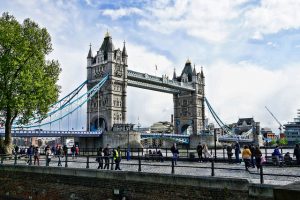
London Bridge image by Mirko Toller (https://flic.kr/p/Uq9nBc)

There’s a Waifs’ song with a plaintiff chorus that defines the homesick expatriate – “I’m in London still, I’m in, la la London still.”

I’m a Waifs’ fan but never thought much of London. The capital city of England, despite its numerous parks and gardens, museums and galleries, ancient monuments and centuries of history etched into every building, was never among my peak travel destinations.

Sure, I was broke, lonely and depressed on my first two excursions in the 1970s. But subsequent visits, when not broke, lonely or depressed still left me with those negative impressions: the sooty smell, the pressing crowds, the awful smelly tubes, the poor huddled masses waving flags outside the gilded palace. I could go on.

There were magic moments; hearing a choir sing in St-Martin-In-The-Fields, visiting the Tate Gallery on a day when there were very few people about; a lovely day at Kew Gardens with a broke, lonely and depressed friend, back in the early 1970s before the tranquillity was ruined by flight paths in and out of Heathrow.

But those moments and memories are supressed beneath the intangible air of menace which permeates some London boroughs. Even when living among Aussie and Kiwi expats who gathered in Shepherd’s Bush and Earl’s Court, there was (to me), an air of something violent about to happen.

My broke, lonely and depressed Aussie mate advised. “Mate, you should leave the weed alone – it’s making you paranoid.”  But even when I took his advice, the loneliness and depression persisted.

We were living in a suburban squat, which is something poor people can still do in London, where squatter’s rights hold firm.

Back in London 1970-something, we pooled our money, pinched a bit from the household petty cash and went to see the new Martin Scorsese movie, Mean Streets. It’s about a wannabe mobster who gets in over his head. The violence and desperation cheered us up no end.

I’ve been thinking about those la-la London days in the aftermath of the callous, premeditated attack on innocent bystanders at London Bridge, which left eight people dead and 48 injured.

In the early 1970s, the Irish Provisional Army had London in a state of fear. In case you’d forgotten, the IRA’s reign of terror in Ireland and in the UK between 1969 and 1997 makes the attacks by fanatics in Manchester and London look like random, unrelated incidents.

Regardless, the level of violence shown in the 2017 attacks on May 22 and June 3 drove British authorities to escalate the threat level to ‘critical,’ then ‘severe’ (‘severe’ meaning a terrorist attack is highly likely).

Parents of young people determined to head off to Europe for an adventure are in a state of high anxiety. According to DFAT there are more than 130,000 Australian residents living in the UK. As of June 7, 10,610 Australians had registered with Smart Traveller as currently visiting the UK. When you add in exchange students and people on two-year work visas, the collective angst at home is understandable

Our parents were similarily horrified when in the early 1970s we left for the obligatory OE (overseas experience) with our brand new backpacks and passports.

“The IRA is leaving parcel bombs on the Tube,” my Dad warned. “And in pubs.”

Dad, I could get killed crossing Karangahape Road,” I replied.

Teenagers and people in their early 20s have the carefree mindset “it’ll never happen to me.” It will, however, happen to someone. And ‘it” does not have to be a random terrorist event. On average 171 people have been murdered in Greater London every year since 1990 – more than three per week.

And you might get killed or maimed by accident. Pedestrians and cyclists are always at risk on London roads, though a mitigation campaign seems to be working.

Transport for London (TfL) figures show that the number of people killed or seriously injured on London’s roads fell by 3% in 2015.

The June 2016 report, the latest available, said the numbers of people killed or seriously injured fell from 2,167 to 2,092 compared with 2014. There were 84 fewer serious injuries (2,040 to 1,956) over the same period. However there was a 7% rise in traffic fatalities (from 127 to 136). Fatal and serious injuries involving cyclists fell by 10% compared to 2014 (nine fatalities down from 13).

TfL says it is making “good progress” on its target for reducing death and serious injury on our roads by 50% by 2020.

These are just a few examples of how living in a city of 8.75 million carries a correspondingly higher level of risk. The rate of crime against Londoners jumped substantially in 2015, according to Metropolitan Police. The murder rate was up by more than 14% with 113 murders occurring in the capital in the 12 months to September 2015.

But as people who watch Lateline know, London, with a murder rate less than 2 per 100,000 is a long way down the list of the world’s most dangerous cities.

This Wikipedia entry lists 50 cities where the murder rate ranges from 34.43 (Durban SA) to 130.35 (Caracas, Venezuela).

If you are the nervous type, scratch these 50 cities off your wish list. While 19 of these high-murder risk cities are in Brazil (where nine-year-old kids armed with hand guns prowl the streets), four cities are in President Trump’s United States of America (St Louis, Baltimore, Detroit and New Orleans).

Not that any of this makes the attacks on London Bridge or at the Ariana Grande concert a fortnight earlier any less serious. But I find myself pondering the faux bravado of politicians who bluster and bluff, saying “enough is enough.” It’s exactly what the parents of uncontrollable teenagers say, when trying to deal with the latest escapade, be it drugs, drinking, truanting or under-age sex. As actions plans go, they are futile.

There’s an air of futility and misdirection about the current focus on Muslim radicals and how the ‘tread softly’ approach is not working.

The far right in Britain and here in Australia simplistically call for a ban on all things Islam. Maybe my memory is hazy (I was drinking in those days), but I don’t recall anyone calling for a ban on people from Northern Ireland living and working in the UK.

Australia’s shameful mood of xenophobia (fear of foreigners), is not restricted to Muslims.

An editorial in the New Zealand Listener last month, “They’re just not that into us,” used modern dating argot to discuss how Kiwis are being marginalised. And it’s government-sponsored. The list of discriminatory policies includes:

  • Full user-pays fees for New Zealand students;
  • Summary detention and deportation for Kiwi felons;
  • (Scientifically unjustified) bans on NZ apples;
  • New citizenship barriers;
  • Open criticism of New Zealand’s foreign policy.

The leader writer adds: “The one affront we can be sure wasn’t deliberate is Australia’s export of myrtle rust.”

As the editorial says, penalising New Zealand residents is a handy (and popular) way to distract attention from the Turnbull government’s political and fiscal woes. It would not surprise to see the UK Prime Minister (whoever that May be), misuse Muslims in the same way.

One drink too many

one-drink-too-many
one-drink-too-many

The smell of Scotch makes me want to puke. That’s an astonishing thing for a Scot to say. Let’s call it a physical memory; traces of a bender with no recollections to go with the nauseating smell.

Our State of Origin friends gathered on Wednesday for food, wine, conviviality and (as it turned out), a fairly subdued evening as our team was soundly beaten. I’d forgotten to get some sparking mineral water or what we call “fake wine”. One of our guests brought a bottle of the latter and shared a glass. The alcohol-removed option is a rare treat because it is just as expensive as buying a bottle of wine.

It has been so long since alcohol touched my lips I rarely have to refuse alcohol when socialising.

“His is a ginger beer,” someone will say when we have choir wine nights. Most people just accept that I don’t drink. Years ago I went to lunch with a business contact who kept pressing me to drink, to the point where I said “Mate, you don’t need my approval. If you want another, have another.” We never went to lunch again.

Since I decided to stop drinking, circa 1984, I have never been tempted to start again. My (former) drinking mates would say “Oh well you obviously weren’t an alcoholic, then if you could just stop like that.” A couple of people I knew decided to quit around the same time. We never had the conversation because I rarely drank with those two. They had an enormous capacity while I was a two-pot screamer. If I started drinking wine or spirits after two or three beers, the night would be a write-off. As far as I’m aware, they did the 12 Steps and never fell off the wagon, which is universal parlance for starting to drink again.

I did go to an AA meeting once, in Auckland, circa something. The group comprised mostly rough-looking young men, a few teenage girls and a couple of middle-aged men and women you could pass in the supermarket and never think “Jeez, she looks like an alkie.”

One of the traits of a long-term alcoholic is to hide it from partners, children, extended family and friends. If friends and family enjoy a social drink, they will probably not notice you starting on the third bottle of wine.

AA impressed me because (a) it was anonymous (b) you could share your story and not feel as if you were being judged and (c) there was a cast-iron understanding that your story would not be told outside the room. I’d been an agnostic since my teenage years and decided that talking to God and following the 12 Steps was not going to work for me. I had a two-week break from drinking, decided to have a few at the weekly folk club and woke up next day not remembering anything from the night before. This was not a fuzzy, “Oh, now I remember” night. It was like someone had sliced a piece out of my brain and it never came back. Two weeks later (after another break) I got on another bender and the same thing happened. Next morning, the car was sitting in the driveway covered in mud.

It was so like the Paul Kelly song that emerged three or four years later:

“The sergeant asked me softly “Now do you recall?”
It all looked so familiar as though I’d dreamt it all;
I don’t remember a thing, I don’t remember a thing.”

(Paul Kelly and the Coloured Girls – Under the Sun)

So I quit. She Who Likes a Social Drink was a bit pissed (sorry, annoyed), that I threw out the remains of a wine cask.

If I could recap the life I lived since that day 34 years ago, you could chart it on an Excel spreadsheet; my professional life, physical and mental health and creative life all on an upward trajectory. It was not, as I feared, that being sober would rob me of rich ideas for my songwriting and short fiction. The opposite occurred. I rediscovered the serenity which comes from long vigorous walks, during which I was writing things in my head. My performance as a husband, father and friend, however, was like Telstra shares, a good income provider, punctuated with periods of poor performance.

You may wonder what brought this on – it’s not an anniversary of anything, I’m not inclined to fall off the wagon, even though Queensland lost the State Of Origin and the Baby Broncos got thumped by The Warriors. Two things gave me pause to revisit my drinking days, where I’d get drunk quickly and cheaply, slowly beginning to understand (sometimes) that I was the only drunk person in the room and that my real friends were just putting up with me. A silly bore, but never obnoxious. We all know the obnoxious drunk; the kind who get in your face and insist that you (the sober one), must be some kind of wimp because you won’t take a drink.

The other triggering factor was a story in The Monthly which is ostensibly about AA (the organisation) but more about the author’s personal struggle with alcohol and how AA helps and maybe doesn’t help. The remarkable thing about Jenny Valentish’s story* is that it stands alone as critical essay about an 82-year-old organisation which is rarely scrutinised.

AA mean Alcoholics Anonymous, which means you can repent under a cloak of anonymity. You could be a big rock star or the chief executive of Very Big Inc and no-one knows or should know you are a recovering alcoholic. One of the precepts of AA is that you never ‘get over it’. You’re an alcoholic and one drink will bring you undone.

Valentish observes that AA has made no significant updates to its doctrine, despite “a growing mountain of evidence-based research”. AA won’t change its literature without the approval of 75% of members worldwide. Three addiction experts reviewed the Big Book in 1985. Psychologist Albert Ellis was concerned by the lack of emphasis on self-management.

“By calling on God to remove your defects of character, you falsely tell yourself that you do not have the ability to do so yourself and you imply that you are basically an incompetent who is unable to work or and correct your own low frustration tolerance.”

Valentish starts her essay by confessing to a relapse after seven years sober. She says AA helped her a lot when she stopped drinking the first time. But by AA’s rules, if you have a relapse, you have ‘failed’ and have to start the 12 Steps all over again.

The organisation holds the 12 Steps (based on Christian principles), to be sacrosanct and it seems to work for problem drinkers (if they are determined to stop).

So go ahead and have a drink while you watch the Roosters give the Baby Broncos a pasting. If you can stop at 2, jolly good luck. I never could.

*One Step Beyond by Jenny Valentish, page 46 The Monthly, June, 2017

Chuck and Chrissy at Goodwills Maleny house concert

goodwills-house-concert
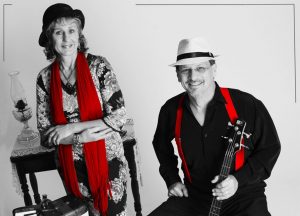
Mr Chuck & Missy Chrissy, aka Chuck and Chrissy Euston, coming to Maleny on June 25.

Brisbane musical duo Chuck and Chrissy Euston will bring their own brand of blues and jazz to the Goodwills’ lounge room on Sunday June 25, 2017.
Known as members of the folk band Stockade, as a duo ‘Mister Chuck and Missy Chrissy’ play everything from roots and blues to jazz, with hints of gospel and country swing. The duo are recording a new album, Bluesy End of Town, which will follow “Jazzy Side of the Street,” their fourth album. www.chuckandchrissy.com.au
“So the harmonica, accordion, stomp, slide and acoustic guitars are all getting a work out,” Chrissy said.
Chrissy, known for her howling blues harmonica playing, held a popular workshop last year at Neurum Creek Festival, where the duo also performed.
Resident band The Goodwills will present an opening set of old and new originals and other people’s songs.
The concert starts at 2pm. Tickets are $15/$12 and afternoon tea will be available.

Email Laurel goodwills(at)ozemail.com.au for bookings and directions.

And one for your diaries

On Sunday August 6 we have an international guest, Irish songwriter Kieran Halpin (All the Answers, Angel of Paradise, Mirror Town). He makes an overdue return to Maleny, a town he visited twice while on a round-Australia holiday. If you are not familiar with his work, go to his website and be amazed. He is a captivating performer and his songs are excellent. He is bringing two new albums with him on this tour of Australia and New Zealand

Goodwills house concerts are sponsored by the Queensland Folk Federation

Rugby league vs State of Origin

state-of-origin
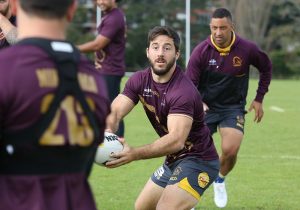
No State of Origin for Broncos halfback Ben Hunt, who returns from injury for the NZ Warriors game on Saturday (Benji Marshall in the wings) Photo courtesy

Dear readers, it’s time for those of you who don’t like rugby league or sport in general to get back to posting cat and dog photos on Facebook. Today we ask the unthinkable: why not scrap this faux State rivalry  called State of Origin and let footie players get back to their own teams?

Each year at this time, professional rugby league players face a massive conflict. If you’re good enough, fit enough and have that perceived ‘spark’ you’ll get picked for State Of Origin.

Kick-off for the first of three State of Origin games is this Wednesday evening. It’s Queensland vs New South Wales, although not really. You can be born and bred in Cunnamulla, but if your first senior game was played in Dubbo, then by default you become a NSW representative – a “Cockroach”. Likewise for the Queensland team. If you played your first senior footie for Brothers in Brisbane, you’re a Cane Toad.

But as Brisbane Broncos Chairman Dennis Watt says, “It’s always part of every player’s dream to play for their State and play for their country. If they get picked, nobody says no.”

Mr Watt says the State of Origin period (May 31-July 12) is a difficult management issue for the Brisbane Broncos, who have six senior players in the Queensland team for State of Origin I.

“It’s a big impost on the club but also an opportunity for younger players coming through.

“The fear is that top players will be injured. Traditionally we (Broncos) have not done well through the Origin period, with the exception of 2015.

“My other fear is that the junior players will eat too much at the buffet,” he quipped.

A touring group of 45 players, coaches and support staff left Brisbane this week, flying to Auckland for the match against the New Zealand Warriors. The group included 20 players from the Broncos under-20 team, who will also play on Saturday. All travel, accommodation and ancillary costs are covered by the NRL.

“The downside of State of Origin is that we are missing some of our best players,” he said. “We haven’t been playing great footy for 80 minutes (this year), but there’s a bit of grit about the team.”

Mr Watt, a former newspaper executive, says he is enjoying the challenge of helping Broncos chief executive Paul White oversee the construction of the Broncos’ new $27 million headquarters at Red Hill.

NRL.Com’s New Zealand correspondent Corey Rosser, previewing Saturday’s game at Mt Smart Stadium, seemed to be predicting a Broncos win. He reminded readers of the Warriors 30-14 loss to the St George Illawarra Dragons last week, while Brisbane scored six tries against the Wests Tigers to win 36-0.

Six Broncos players and Warriors veteran Jacob Lillyman will miss the Round 12 match in Auckland due to State of Origin commitments. The Broncos will be missing Darius Boyd, Corey Oates, Anthony Milford, Josh McGuire, Matt Gillett and Sam Thaiday. Also missing from the squad is hooker Andrew McCullough (injured).

Halfback Ben Hunt returns from injury, joining utility player Benji Marshall, who has had limited playing time for the Broncos in 2017. Newcomers or players who rarely get a run include Jai Arrow, Jonus Pearson, Jaydn Su’A, Travis Waddell and George Fai (making his first-grade debut). The Broncos named Tevita Pangai Junior, Jamayne Isaako and Joe Boyce as reserves.

We were at Lang Park stadium in Brisbane on May 13 for the ‘double-header’ rugby league event. We got there at 5.15 and the first game between The Gold Coast Titans and the Melbourne Storm had already started. The crowd, which later swelled to 44,127, was already vocal. There were conflicting cries of “Go Billy, Go” or “Hayne Train.” If you want a quiet Saturday night out, don’t do it to yourself.

It is interesting how a football stadium becomes a microcosm of the broader city. There were a few “pre-loaded” young blokes intent upon drinking themselves into a stupor, a few young women wearing heels and nightclub clothes instead of the ubiquitous Broncos fan jumpers. There were also happy family groups behind and in front of us, one woman willing to take our photo ‘in situ.’

“Don’t try posting that to Facebook from here, mate” she advised. “Everyone’s on it and it will take ages to upload.” She was right. The Titans made an unbelievable comeback and beat the Storm 38-36.

Then we were between matches. The Manly cheerleaders came on the field in tiny white shorts and halter tops and did a dance routine. Many people streamed out and thronged to the bar. There were queues for food, queues for the loos and those not otherwise engaged were checking their phones or checking out the tiny white shorts.

When I returned to my seat, the Little League game was in progress. These keen young kids play across a small section of the field at half-time. Even with the under-6 kids, you can spot the future stars. They are the ones who run straight and hard, tackle properly or who show footwork and pace. One particular young lad crossed the goal line four times. There are a few different age categories of mini league kids between 6 and 10. Hard to know which is which when there’s no commentary, just a seemingly muddled group of kids getting carved up by the three or four who know what’s going on.

“Go, son, go” came a shout from somewhere behind me, “Go! You beauty.” (as the kid scored between the plastic goal posts.

Then Manly (boo) and the Brisbane Broncos (yay) ran out for the main match. We were up and down like that Whack-A-Mole sideshow game. Every few minutes we were standing, flipping back our seats back while someone struggled their way to the other end of the row, carrying four dribbling beers in a plastic tray. This went on all night, even though drinks are expensive at Lang Park (sorry, Suncorp Stadium). She Who Listens to the Radio While Watching Footie shouted “Why don’t you sit down and stay sat.” I pointed out that as she had headphones in her ears, the remark may have been louder than she thought. “Good,” she mouthed.

Despite a dismal first half, when Manly piled on 14 unanswered points, one of the best coaches in the game (Wayne Bennett) must have said inspiring words at half-time. The Broncos came back from a 14-0 deficit to win the match 24-14.

As 44,127 people were being squeezed like toothpaste out of Suncorp Stadium’s various exits, I had that panicky feeling like when you’re about to go under anaesthetic but nobody has given you pethidine yet.

If you don’t like crowds and noise and can’t afford decent seats, you’re far better off watching rugby league on TV, or listen to the game on ABC Grandstand. You’ll get a better word picture of the game and even details often missed by Nine’s commentators like who replaced who from the bench (and why). And you’ll never hear discussions about whether players should wear their socks up or down.

Shut up, Gus!


A dog-doo afternoon

dog-doo-afternoon
Amsterdam dog doo sidewalk photo Laura K Gibb https://flic.kr/p/3sbQLJ

So I’m walking the dog in unfamiliar territory – Brisbane bayside suburbs. I have my little black plastic dog doo bag tucked into the hip pocket of my jeans, as one should. But it seems many people in this particular suburb don’t give a shit about dog shit, if you’ll pardon my Flemish. If you’d taken a plastic supermarket bag and a trowel on this walk and could be bothered, you’d end up with a good five kilos of dog doo just from this one suburban street and a small park.

The words (above) on an Amsterdam sidewalk translate to ‘dog in the gutter,’ but the city’s tolerance has been stretched. Dog owners must now carry a plastic bag or a trowel and inspectors can issue a €50 fine. There was also a suggestion that owners be traced (and fined) through DNA tests on dog doo, according to the English language NL Times.

Some responsible Australian dog owners have somehow trained their pets to back their arses under a tree or shrub to do their number twos. If you don’t have a bag you can just throw a bit of mowed grass over it.

In one of the episodes of the Stan series Billions, Public Prosecutor Chuck Rhoades (Paul Giamatti), bullies and shames a guy into picking up after his dog. It’s a gratuitous and outlandish scene in a series known for gratuitousness and outlandishness.

My favourite line is (guy) “Why don’t you mind your business?” Chuck replies “This is my business.”

(Actually it’s the dog’s business, if you want to be pedantic).

If you are a dog owner, this YouTube video of the dog doo scene will hopefully remind you to ‘do the right thing’.

There are many other examples of TV writers (Family Guy) and others taking up the dog doo theme.

Songwriter Loudon Wainwright III works the dilemma into a song (Man and Dog from his 2014 album Ain’t Got the Blues (Yet).

Here’s the appropriate verse:

“When a man has to carry a plastic bag
on his person at all times
when a dog dumps on a side walk
walking away is a crime, living in the city…

(this will lift your mood, maybe)

Loudon sings about walking your dog as being a good way to meet a woman, although one would suggest that carrying a (full) plastic bag on your person would not be alluring.

Walking a dog in a strange neighbourhood means people don’t call out hello to the dog by name (even if they don’t know yours). Also, you don’t know which yard has a dog that will bark and snarl or if the gate is open or shut. Some people, on seeing a large dog with jaws approach, will pick up their little squealing ball of fluff, which, while seemingly prudent, is apparently not the best way to socialise animals.

On my walk last Saturday I did meet a woman who came out of her driveway to sook over the normally sooky dog but he was too intent upon, as my friend Mr Loophole calls it, “reading the P-mail”.

I told She Who Sometimes Scoffs I was thinking about writing a column with the dog as narrator, which she said had probably been done. She was right.

Here’s a reading list which is probably by no means exhaustive:

So after flirting with that idea: “Why do you want me to come? There are so many far more interesting things over here.” Or “Why do you want me to put my lipstick away? Call a spade a spade, you stupid human.”

So I decided on a different approach, and that was to use the failure of dog owners to clean up after their animals as a clumsy yet probably accurate political analogy.

Let’s use the current Queensland Labor government as an example. The party has been in a tenuous state of power since January 2015 and will contest an election sometime in the next 12 months.

In the interim, the government is supporting Indian company Adani’s controversial plan to develop a new coal mine near Alpha in western Queensland. This would require the building of a railway line to the Abbot Point coal terminal north of Bowen to export coal from the (expanded) port. This proposal has sparked a broad protest movement with former Greens leader Bob Brown weighing in.

“In 40 years’ time people will be talking about the campaign to stop Adani like they now talk about the Franklin (Dam). “Where were you and what did you do?” they will ask.

“This is the environmental issue of our times and, for one, the Great Barrier Reef is at stake,” Brown wrote in the Guardian Weekly on March 24.

The Queensland Labor government wants this project to happen. Promised employment, it seems, is the government’s main reason for risking environmental damage to the Great Barrier Reef and incurring the wrath of many loyal Labor voters.

My point, if clumsily made, is that if and when the Queensland government is toppled, it will be a replaced by another regime. When protestors make their valid points about the risks of environmental damage, the next government can always say, “It’s not our mess”.

One could make the same case for offshore detention centres, the proposal to drug test welfare recipients or the cashless welfare debit card being trialled in South Australia and the Northern Territory.

The potential for the latter to become a big mess is that a cashless welfare card system could be extended to all welfare recipients, even pensioners. Now that’s not a mess I’d want to clean up.

Returning to the original rant, people should pick up their dog doos. If you forgot a plastic bag (and we have all done this), as Chuck Rhoades suggests, “pick it up with your hands”.

Paul Giamatti’s character says to the shamed guy as he’s walking away:

“Sir, still some over here.”

“That’s not (dog’s name), man!

“It is now,” says Chuck, while talking on his mobile about his nemesis, the crafty funds manager, Bobby Axelrod (Damien Lewis).

The scene ends with Chuck thanking the guy for doing his civic duty. “Feels good, doesn’t it.”

One could extend this analogy to the real estate development company which mistakenly sent an email to its entire database thanking recipients for supporting their Sunshine Coast development. Mine was addressed, ‘Dear Bob’ and thanked me for supporting Sekisui’s development application for Yaroomba Beach. At some point I must have signed a petition against the proposal so I was one of unknown numbers of people who got the email from the developer thanking them for supporting the project. We got an apologetic email from Sekisui about the same time we read the story in the Sunshine Coast Daily.

To me, the second email was like the guy who walks his dog without a plastic bag and has a citizen shame him into picking up dog doo with his hands.

It’s called doing the right thing.

Smile at the dentist

smile-dentist
Dentist Smile Photo courtesy of http://www.nationalsmilemonth.org/

So I’ve just been to the dentist for a clean and descale. It’s a must-do, twice-yearly chore.

As I walk back to the car I’m looking for suitably long grass to spit out the remains of the fluoride wash. As I near 70, I’m hearing dental horror stories from my peers. Most of these anecdotes involve four-figure quotes for implants, bridges or crowns. I still have most of my own teeth and a couple of implants that set me back $1,600.

Maybe 25 years ago, pain drove me to a dentist. Luckily, I picked a good one (out of the phone book). He packed the problem tooth with antibiotics, put in a temporary filling and booked me in for a proper filling in a week’s time. It was the start of a process, overcoming dental phobia and accepting an expensive course of dental remediation. Some thousands of dollars later, I was at a stage where I could safely book in for a six-monthly check-up.

I’m doing this on a regular basis now and it’s been a while since we had any issues. I did crack a filling once on a chunk of dark chocolate, but OMG, it was such a nice piece!

As we age, we are more prone to gum disease, our teeth more likely to crack or shatter, and more importantly, those large old fillings we had in our childhood start to fail. Some of our teeth may have been saved by root canal treatments, which permanently kill the nerve but preserve the tooth.

Put your teeth in the glass, Mr Wilson

My Dad’s generation had a quick but not entirely painless solution to teeth and gum problems – they had all their teeth extracted. After going around gummy for a number of months they were fitted with dentures.

I was reading Annie Proulx’s novel, Barkskins, which charts the history of two families of wood cutters, carving out a life in New France – 16th century Quebec. There are many things that could catch your attention in this 700-page, richly imagined generational epic, but this one stood out. Proulx’ character Charles Duquet suffers from gum disease and has had his teeth extracted. A vain man, he seeks out a denture-maker. Duquet’s new teeth are made from ivory. The French denture-maker explains that the teeth are ‘only for display, not for chewing’ and that he should take them out when eating. Also, they will turn yellow with exposure to sunlight, so perhaps Monsieur would like to order a spare set?

I figure the author of The Shipping News and other fine novels would be a peerless researcher, so I checked out the history of dentures. Then as now, dentures are a luxury poor people can rarely afford.

A full set of dentures in 2017 can cost from $2,000 to $2,500. Factor in about $150-$200 per extraction and it’s no cheap exercise. However, as those who replace amalgam fillings with porcelain or opt for caps and crowns can testify, dentures are a relative bargain.

The ever-informative Wikipedia (now banned in Turkey), tells us that dentures were available as early as the 7th century (usually partial plates made with human or animal teeth and held together with gold bands). The Japanese invited full wooden dentures in the early 16th century (and continued using them until the 19th century).

US President George Washington’s dentures were made with ivory from hippos and elephants as well as gold, rivets, spiral springs and even real human teeth.

As recently as the Victorian era, young men and women were offered dentures as a 21st birthday present.

Manifold improvements in dental care have seen demand for dentures dwindle over the centuries.

A 2009 survey in the UK found that only 6% of adults had no natural teeth, a big improvement on a 1978 survey when 37% were entirely edentulous.

An Australian government report (2013) said that 19% of adults aged 65 and over had no natural teeth.

Our generation at least went through childhood with regular dental care. In New Zealand where I grew up, every school had a dental clinic, staffed (usually) by one qualified dentist and a team of dental nurses.

The nurses did the inspections and de-scaling and also filled cavities under the watchful eye of the in-house dentist. As a result of a life-long craving for sweets and chocolate, a lack of fluoride (a subject for another time), and less than rigorous brushing, my mouth is full of mercury amalgam fillings.

Other things can do your teeth in, including facial injuries from traffic accidents, assaults, playing sports and other mishaps.

One of the biggest impediments to maintaining a healthy set of teeth is dental phobia. Almost half of UK adults surveyed for National Smile Month in 2009 said they feared going to the dentist and 12% of them suffered from extreme dental anxiety.

This Monday marks the start of the 40th National Smile Month in the UK, a dental health awareness campaign. Australia has a national dental care week in August, at which time we’d hope to have more recent data than 2013. Here some current UK figures.

  • One in four adults don’t brush twice a day, including a third of men;
  • One in ten admit they regularly forget to brush their teeth;
  • 42% use only a toothbrush and toothpaste for their oral care;
  • Less than a quarter of adults use dental floss regularly;
  • One in three have never flossed their teeth;
  • The UK spends £5.8 billion a year on dental treatments;
  • Half of adults visit their dentist every 6 months;
  • 25% have not visited a dentist in the past two years;
  • Around 2% of the UK population (about one million) have never visited a dentist.

An Australian report says that uninsured adults are more likely to have experienced toothache (20%) than insured adults (12%). I was too cheap to pay $17 for the whole report (with 2013 data), so I’m quoting the media release from the Australian Institute of Health and Welfare (AIHW).

The report shows that of those who were eligible for public dental care in 2013, just over 20% experienced toothache, compared with almost 15% of adults who were not eligible. Only about half of Australians have some form of private dental insurance.

Expenditure on dental services (except those in hospitals) in Australia was $8.706 billion in 2012-13.

“The largest source of funds for this expenditure was individuals, paying directly out of pocket for 58% of total dental costs,” AIHW spokesman Dr Adrian Webster said.

Today’s children, flossing daily, their often near-perfect teeth the product of fluoride and orthodontics, are a reminder to the rest of us to make do with what we’ve got.

In my case, that means living with an undershot jaw; a genetic condition exacerbated by a face-plant motorcycle accident 40+ years ago. For a visual cue think dog breeds – Pekinese, Shih Tzus, Bulldogs (or Albert Steptoe).

When my current dentist first looked inside my mouth and asked me to bite he said something like “Holy Cow.” I know what he meant to say.

Last week’s FOMM − a reader wrote to say Dexy’s Midnight Runners may have been a one-hit wonder in Australia with Come on Eileen, but they also had another number one hit, Geno, in the UK.


Sing that hit song one more time

hit-song
Songwriter Kath Tait sings her hit song Bastard!

All songwriters and bands that have a hit song wear it like an anchor, a money-making and/or crowd-pleasing obligation. That is, you are required to sing it at each and every performance. Forever.

This applies universally, whether you are Barnsey, U2, Coldplay, Paul Kelly, Adele or a one-hit wonder band (in Australia) like Dexy’s Midnight Runners (who had two number one hit songs in the UK).

And what about those long hit songs, like Hotel California? Can you imagine how it must be for Don McLean singing his hit song American Pie, or Arlo Guthrie persevering through another rendition of Alice’s Restaurant thousands of times? On my experience, most famous musicians are more than happy to trot out the old faithfuls.

Some stick to the ‘sounds like the record’ version while others re-invent their hit song or develop ‘acoustic’ versions.

Even your relatively anonymous folksinger will be known by fans (however few in number), for one good and/or catchy tune.

A friend sent me a YouTube video of songwriter Al Stewart (hit song – Year of the Cat), performing at the 2017 UK folk awards. My friend knew I had all of the old vinyl records and the boxed CD sets.

It amazed me to watch this 71-year-old chap, who started off in London in the 1960s wearing an Afghan coat and flatting with Paul Simon, working his way through On the Border. After the 35-second guitar intro, surprise, the voice is just as it always was, taking me all the way back to 1969 and his debut album, Bedsitter Images.

People who have known me a long time sometimes call out for a song I wrote but rarely sing, a late 1970s anti-war song with a corny chorus – “Armageddon, Armageddon, Armageddon out of here”.

I won a May Day songwriting competition with that one in 1979 but have rarely sung it since. We moved towns, moved on, the Russians left Afghanistan and the references became dated. I’m now being urged to add an updated verse with the words Trump and Dump. But as songwriters know, it is hard to recapture the moment and make it relevant almost 40 years later.

Then in 1998, I wrote Courting the Net, a sardonic love ballad about a woman whose husband has been cheating on the Internet. Sometimes She Who Sings the Girl Bits will say, “Haven’t we done that one to death yet?”  I usually say there are sure to be people in the audience who don’t know the song, so let’s do it anyway.

I recall going to hear Peggy Seeger a long time ago. Peggy, half-sister to Pete, wrote a feminist hit song in 1970, “I’m Gonna be an Engineer”. People at the gig started calling out for the song when it appeared she was getting to the end of her set and might not sing it at all. As I recall, she ended the set with this song, which has multiple points to make about gender inequality and sexual harassment.

“Well, I started as a typist but I studied on the sly
Working out the day and night so I could qualify
And every time the boss came in, he pinched me on the thigh
Said, “I’ve never had an engineer!”

The song was on the 1979 album Songs of History and Politics. The Youtube video with guitar played by her husband, the late Ewan MacColl, has had 40,409 views.

Peggy, now 81, has recorded more than 60 albums, either solo, with Ewan MacColl, her brother Mike, the Seeger family or singers like Frankie Armstrong. I had the good fortune to share dinner with Peggy and a few mutual friends at Woodford’s Spaghetti Junction when she was on her retirement tour a few years back. We sang her our favourite original song and felt quietly chuffed that it got the Seeger seal of approval.

While 40,000+ views is pretty damn good for a 47-year-old, 759-word, 4.33 minute feminist folk song, it is a trifle compared to Adele.

Her song Hello has had an astonishing 1.925 billion views on YouTube. A friend who knows more about these things than I do explains that this does not mean that 25% of the world’s population are Adele fans. It means that a vast number of fans, ranging from hard-core wannabes to occasional listeners and YouTube browsers have tuned in to this video, over and over.

Remember Adele? Her recent shows in Brisbane were the reasons why the women’s AFL had to be transferred to the Gold Coast and other big sports events shuffled around to other venues. The upside was you could ride trains for free on the day.

It’s hard to beat a great voice, great songs, longevity and massive marketing. Adele packed out Brisbane’s Gabba Cricket Ground over two successive nights, but the weather and 120,000 people attending over two days left the ground unsuitable for imminent sporting events.

Confession time: until Tapestry choir director Kim Kirkman handed out sheet music to Set Fire to the Rain I did not know Adele’s music, though people told me she sang the theme song for the James Bond movie Skyfall. It’s in the style of Thunderball (without Tom Jones’s head-splitting and sharp final note).

I’m being told by people under 40 that no-one in their social set is buying CDs anymore. They listen to and watch YouTube videos or subscribe to a streaming service like Spotify or Deezer. Just how anyone makes a living from being listened to in this way is not hard to figure out. The better you are as a live act and the more you tour, the more people will turn out to hear the music they already know. This is probably why Adele outsold the Guns n’ Roses tour, attracting 600,000 Australians to her concerts. Adele, who has mainstream, cross-generational appeal, is a graduate of the BRIT School for Performing Arts and Technology. She wrote Set Fire to the Rain in 2011. It has been viewed 376 million times (so far) on YouTube.

Jetse Bremer’s acapella arrangement of Set Fire to the Rain, written by Adele, with lyrics by her producer, Fraser T Smith, has been added to Tapestry’s expanding repertoire, with an airing scheduled at Lift Gallery on Sunday afternoon 4th June.

Meanwhile back in our little village, last night we sang Kath Tait’s song Strangers and Foreigners (2,712 views on YouTube) at an IDAHO community function at the local RSL. IDAHO is the International Day Against Homophobia, so Kath’s song about small town prejudice and the need for tolerance was quite on point. Some of Kath’s songs are about being different in places where differences make you a social outcast. Listen to the song here.

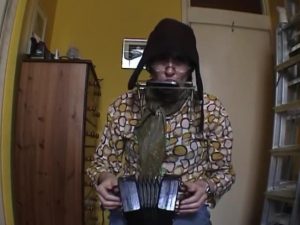
If you really like it, consider ordering a copy of her CD, Bastard! It’s a classic. She’s also the only person I know who can sing and play concertina and harmonica at the same time.

Last week: The sharp-eyed will have noticed I spelt Labor Day incorrectly. (And the usually sharp-eyed proof reader didn’t pick it up! Ed.). A reader sent me some information about Labour Day in Melbourne this Sunday (May 7th). There’s a march starting at Trades Hall at 1pm. You’d hope all those Fairfax journos who are striking for a week about the axing of 125 journalists’ jobs would show up.

Closed for Public Holidays

Ekka-Public-Holidays
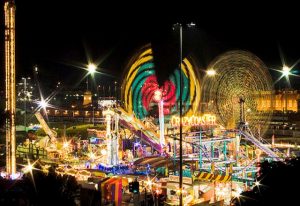
Photo of sideshow alley on Ekka Public Holiday by Toni Fish, flickr

As I enter the 14th year of not being anchored to a traditional working life, public holidays have become redundant. At best, they are an opportunity to catch up with family and friends still shackled to the Monday to Friday yoke. At worst, they are days when you get by without the dark chocolate you meant to pick up on the Thursday before Easter weekend.

What is the point of public holidays anyway? They mean little to a retired person, or someone unemployed, on disability, or those who just got bored with work and decided not to go in anymore. We need something more attuned to the Australian work ethic − like turning Tuesday’s Anzac Day, the one day of the year to reflect on the folly of war, into an unofficial four-day weekend.

Our Vanuatu-based research team has been working on a radical proposal. Imoverit Day is ideally suited to individuals who need to take a day off but have run out of sick leave. It is named after the Lithuanian linguist and Latin scholar, Ivan Moverit, whose doctorate ‘An analysis of the third-person singular perfect active subjunctive of moveō,’ is a fairly dry read.

Imoverit days can be taken by individuals at any time, without notice, replacing the seven paid national holidays. Yes, we know, some Federal unions already allow workers ‘personal’ time off (with strings attached). One supposes these award provisions would be axed if Imoverit Day gets past the Senate.

As the pronunciation suggests, Imoverit Day acts like the emergency escape valve on a compressed cylinder. When you’re really stressed, frustrated or angry, you just call the boss and say “Imoverit”.

If you happen to be unemployed or retired, just say the magic word to your spouse (assuming you have not been gazumped). You can get some idea of the mindset by browsing the twitter hashtag #imoverit (with a lower-case i) where people vent about petty things.

The invocation of ‘Imoverit’ immediately triggers one of your seven designated days, permission to disappear without sanction for 24 hours. This would necessitate some tweaking of industrial relations and family laws because, as implied, these individual holidays also absolve individuals of their paternal or maternal responsibilities.

Children who have reached the age of reason (7 or 8 according to canon law), will also be allowed to take Imoverit days. Parents would be allowed to set limits on what said children are allowed to do with their 24-hour escapades.

“Yes you can sleep over at Cory’s but no watching Andrew Bolt, right?”

A great day for loners to be alone

Just think of the benefits of taking a day off randomly. You can go to the supermarket and it won’t be crammed with people laying in for the Siege of Leningrad. Visit a popular national park picnic spot when (most) other people are at work − just you and the brush turkeys. Go to a movie in the middle of the week and have the cinema and the popcorn to yourself.

If you can convince your lover to take an Imoverit Day, laws specify you are not required to explain where you were or what you were doing. This would also be good for the hospitality industry.

Australians would very quickly ‘get’ the concept of Imoverit Day, cunningly planning ahead and parlaying ID’s into long weekends. If, after their unplugged rest day individuals still feel stressed, they can call in sick. We forecast a tremendous improvement in work-related stress. Imoverit Day would help HR teams identify workers who are under extreme stress.

“We’ve noticed you’d taken five ID’s and seven sick days in the last three months, Bob. Is there something going on at work or at home you’d like to tell us about?”

We predict a surge in Imoverit Day applications around the third Wednesday in August, an obscure local holiday. The Royal Queensland Show, also known as the Brisbane Exhibition, has in true Aussie fashion, become The Ekka. On People’s Day, tens of thousands cram on to free trains and buses to attend an over-rated carnival where tradition decrees you will either spread or pick up a late winter virus.

All Brisbane workers get a paid day off for the Ekka, unless they happen to be shift workers or in emergency services. Future generations will read how once, long ago, people were paid extra for working on public holidays (or Sundays). It was called time and a half or double time. Employers hated it, but workers were able to enjoy, albeit briefly, the joys of being paid something close to a living wage.

Public holidays often spill over into school holidays, so workers who plan ahead often parlay their annual leave into extended family holidays. Fine if you live in civilised countries like Austria, Portugal, Australia, Finland, Germany and the UK, which allow workers 28 to 35 days per year.

Australia is, nevertheless, a bit stingy with public holidays. With only seven national public holidays, we are in 10th place behind the likes of Austria, Portugal, Spain and Italy.

We predict Imoverit Day would spread swiftly to other countries, apart from the US. As The Telegraph (UK) reported in 2016, the US is the only advanced economy that does not guarantee workers paid annual leave. Official statistics suggest the average private-sector worker in the US receives 10 days of paid annual leave and six paid public holidays a year. Compare that with China though, where you get five days off after your first year with an employer. After 10 years they give you 10 days off. Yay.

Generous paid holidays, but for how long?

It has to be said that in Australia entitlements to paid leave and penalty rates for working on public holidays has been under attack. Even the concept of Labor Day (originally known as Eight Hour Day) has been diminished by successive Tory governments.

Not that we want to put thoughts in people’s heads, but taking an ID the Tuesday after May Day would give you a four day weekend to celebrate the people who fought so hard to bring us the eight-hour work day.

In Queensland, we’re getting May 1 back as Labor Day, conveniently landing this year on a Monday. A previous State government, which cannot be mentioned for fear it might rise again, shuffled May Day to October. Some States also hold Labor Day in October or March. Conspiracy theorists say this is a psychological ploy to dilute the strength of May Day as an international symbol of worker unity.

Our research chief Little Brother said he was astounded to find that, despite the paucity of workers’ rights in the US, the quest to free the serfs from vassalage started in Chicago in 1886 with the bloody “Haymarket affair”.

Little Brother, who reads Chomsky for recreation, says anyone taking an ID on May Day (a public holiday in 66 countries), should be paid double time. They will, however, be required to turn out for workers’ marches in whatever city or town they live in, wear a red beret, sing The Internationale and spend the rest of the day listening to the likes of 2Pac, Public Enemy, Ani Di Franco, Billy Bragg, Pete Seeger and Leon Rosselson.

There are worse ways to spend a day.

Some of you may have noticed I took a day off last week. Here’s an extra read from my website archives, April 2015, long before some of you were subscribers. http://bobwords.com.au/anzac-hard-tack/


Thanks for having me, Bryan – a tribute to John Clarke

tribute-john-clarke
Cyclone Malcolm, image used with permission from the website mrjohnhclarke.com.

John Clarke has died of natural causes while bushwalking in Victoria’s Grampian Mountains. Clarke, best-known for the long-running ABC political skit Clarke & Dawe, was 68.

Sad way to start a week, hearing about the demise of Mr John Clarke, Dip Lid, PhD in Cattle (Oxen), advisor and comforter to various governments. Still, we like to think he is now having a celestial ale with the likes of Murray Ball, Bunny Walters and Phil Garland.

Clarke, the same age as your correspondent, initially found fame in his native New Zealand by creating the iconic gumboot-wearing, singlet-clad Kiwi farmer, Fred Dagg, father of seven boys, all named Trev.

John Clarke had a long and varied career in Australian film and television. He wrote film scripts, starred in films (he was the voice of Wal the dog in Footrot Flats), and was a regular on television in the 1980s and 1990s, including The Gilllies Report and a series he wrote and starred in, The Games.

He also wrote the original script for The Man Who Sued God, starring Billy Connolly. Don Watson wrote the final screenplay, but as movie reviewer David Stratton observed, Clarke’s ultra-dry approach to satire (exemplified in the Olympics spoof, “The Games”), can be detected at the heart of the film.

Clarke was best known for his ‘mockumentaries’ – satire in the form of the television interview. His long-running collaboration with Bryan Dawe first ran on the Nine Network in 1989 then was relaunched in 2000 on the ABC’s 7.30 Report.

For 27 years John Clarke and Bryan Dawe continued to broadcast a weekly satirical interview in which prominent figures spoke about matters of public importance. John pretended to be someone he wasn’t pretending to be and Bryan, the straight man, contained his frustration.

They outlived other ABC attempts at satire including The Roast, The Glass House and Good News Week, all axed or moved to short-lived stints on commercial TV.

Satire, rare as a hen’s pecker

Sharp, subtle satire is thin on the ground in Australia. Good written satire is rarer still. Toowoomba residents might remember Sir John Branscombe, a satirical writer of merit hiding behind a pseudonym and a pith helmet. Branscombe used clever anagrams to pillory 1980s-era politicians with his series of letters from the remote mountain village of Motowoboa, ruled by one King Elvic. It’s a shame no-one has revived this subtle style of satire, where you get away with a lot by inventing a Swiftian world that vaguely resembles the one you live in.

When Mad as Hell won a Logie in 2016, Anthony Morris (SBS) asked whether Australian satire was on its way back or too far gone to be saved. Morris took us back to 1966 when the Mavis Bramston Show won three Logies, arguably the last time we had good satire on Australian TV. Twenty years later came the Gillies Report (aided and abetted by John Clarke and Brian Dawe). The 1980s was a period when comedy spiced with satire prevailed – the Aunty Jack Show, the Norman Gunston Show, Rubbery Figures and Australia, You’re Standing In It.

It’s easy to dismiss the Logies as a popularity contest,” writes Morris. “But comedy is meant to be popular – if nobody’s laughing, then it’s not working.”

“Put another way, Rove McManus has 16 Logies, including three Gold; The Chaser team has none.”

Last year, Mad as Hell and Gruen won Logies which sums up the state of satire in Australia, not counting in this context the Clarke & Dawe Thursday spot on the ABC.

When inducted into the Logies Hall of Fame in 2008, the then 60-year-old John Clarke typically quipped: “I’m inclined to regard this as a youth encouragement award. I’m deeply grateful and will do what I can.”

The final episode, maybe

Good evening Prime Minister and thank you for coming in at such short notice.

My pleasure, Bryan, or should I say my sadness for your loss.

Not just my loss Prime Minister, also John’s family and the people of Australia who admired his keen sense of political satire.

And his virile baldness, Bryan, although I never quite got his pretending to be me, or Tony, or Julia, or the little bloke from Queensland. He didn’t look like any of us or try to sound like us.

Yes but he got away with it through deadpan humour and taking on some of the traits of the person he was impersonating.

Quite, Bryan, but why am I really here?

We wanted to ask you about your trip to Papua New Guinea.

What trip to Papua New Guinea?

You know, across the waters from Cape York, where you keep asylum seekers locked away, out of sight and mind.

Oh that Papua New Guinea.

You’ve been accused of interfering in PNG’s sovereignty by visiting just a few days prior to a general election.

Well the ABC said that. I never said that.

They also said you were ‘tight-lipped’ over the fate of refugees held on Manus Island, even when a PNG court has ruled that their detention on Manus is illegal.

I don’t know about tight-lipped. It’s just the way God made my face.

You congratulated Papua New Guinea for making “significant progress” in resettling 1,000 asylum seekers who are in their fourth year in PNG. We’re hearing that fewer than 20 have been resettled, is that right?

Well I’m not there now, Bryan. It’s very hard to know what’s going on when you’re not actually boots on the ground in PNG. As they say in the Highlands, Mi no save nating long dispela samting! Nice touch providing Niugini Gold in the green room, by the way.

And then you went on to India for what were said to be business meetings. Was one of those meetings with executives from Adani?

Oh good try, Bryan. No, we try very hard to stay out of State government affairs and if Queensland wants Adani to build an export coal mine in their State, good luck to them I say.

So you did meet with Adani?

Don’t put words in my mouth Bryan. As I said, it is State government business, even though the Federal Environment minister has the last word on approvals.

So is he going to approve it?

Early days, Bryan. Early days. But now let me ask you a question.

Oh, well, why not?

Many of my colleagues have been fans of Clarke & Dawe, for years, Bryan, years. They have all the boxed sets from the ABC or their own private copies. Sometimes we watch replays before cabinet meetings. You’ve become famous, but now you’re a man down. What are you going to do about that?

Someone will step up, Prime Minister.

(Waggles eyebrows and makes like Groucho Marx). I like to follow the horses, Bryan. But the horses I like to follow also like to follow the horses.

Don’t give up your day job, Prime Minister. Thanks for coming in.

The pleasure and the sadness was all mine.


Cancel my PO Box

PO-Box
Photo of PO Box Warburton (Vic) by Mick Stanic

Some of my rural readers have been writing impassioned letters about a troubling domestic issue (the rising cost of renting a PO Box).

“Dear Mr BobWords, (wrote Perplexed Pensioner of Reeseville)

“When we knew we’d be moving to Maleny, we applied for a PO Box. “When we arrived here on Dec 22nd, 1993, the post office was still in the old house on the corner of Teak St.

“They kept saying (once we presented ourselves in person), that there were no private mailboxes to spare, so we had “poste restante” status for quite a while. Once the new Riverside Centre post office opened, we were finally able to rent our new PO Box: the fee was $40 p.a. (1995-96).

“When I recently received the renewal notice for my standard P.O Box, I could see it was going to cost me $129. Frankly, it seemed a waste of a Pensioner’s Pittance. Australia Post offered a $5 discount if you paid before March 31st (but nothing for pensioners!)

“So, after almost 24 years I have let go of my town lifeline.”

Yes, we hear you, Perplexed Pensioner. We decided there was not enough mail arriving in our private mailbox to justify the expense.

Ironically, when we inquired about getting a six-month mail redirection, we found that these rates too would rise on April 3.

When reviewing essential household mail, I discovered that 80% of our bills and official communiques arrive via email.

In line with similar issues facing postal services in all countries, revenue has been squeezed by online transaction services. Moreover, operating costs in this labour-intensive business (Oz Post employs 36,000 people), keep on rising.

As always, Australia Post is constrained by its obligation to offer postal services to all, no matter where they live.

Next time you gasp at the cost of posting a letter or parcel, Australia Post’s 2016 annual report confirms that losses for its regulated postal service over five years now total $1.29 billion.

Increasing the cost of letter postage from 41c in 1989 to $1 in 2017 does not seem to have done the trick.

Nevertheless, Australia Post returned a profit after tax every year between 2012 and 2014. Though producing its first after-tax loss of $221.7M in 2015, it was in the black again last year ($36.4 million).

Email rules – for now

If I had to mail this newsletter to FOMM subscribers, it would cost more than $500 per week, including envelopes, stamps, printing and labour. That would mean I’d have to pass the cost on to you, dear reader, market forces driving me to embrace the profit ethos.

Australia Post’s letter volumes peaked in 2008, according to its 2016 annual report. In the eight years since, volumes have declined by 41% per letterbox. We have seen this happen in our private mail box too.

Perplexed Pensioner referred us to a blog by Anny, a calendar-maker. She took Australia Post to task in 2014 and again this year for what she sees as price gouging, including a list of PO Box price rises compiled from her records of invoices (from $55 in 2004 to $129 in 2017).

While price increases in recent years have been well above average annual inflation, increases have been smaller since 2014.

“From February, Post Office (PO) Box prices increased by an average of 2.7% across the product range,” an Australia Post spokesperson told FOMM. “Like many businesses, Australia Post is operating in a challenging economic environment with increasing costs and competition.”

Local correspondent Little Bird says the cost of private mail boxes is a can of worms for the minority of Australians who do not have street delivery.

“Because we don’t have street delivery we pay a discounted rate, but I think it’s still a bit rich when everyone else gets their mail delivered for nothing.

“Also, since we live out of town it also means they won’t deliver parcels out here. The Australia Post-aligned couriers won’t deliver here either. (There are some which contract to Australia Post and some which do their own deliveries). So the sender pays a courier rate to have something delivered and it still goes no further than the PO Box.”

Australia Post responded: “Residents living in areas that receive a street delivery service less than once per week can collect mail over the Post Office counter for free. As PO Boxes are an optional delivery service (they), may be eligible to lease a PO Box at a reduced rate.”

Hefty price increases are not uncommon after government-owned essential services are corporatised or privatised.

So let’s be clear about one thing – Australia Post is still 100% owned by the Commonwealth Government. However, since 1989 (when, incidentally, a stamp cost 41c), it has been run as a Government-Owned Corporation.

It is run very much along private company lines – many of its post office shops are privately owned and along the way Australia Post bought its own courier service (StarTrack) to compete with rival courier services.

The Institute of Public Affairs has lobbied for the government to fully privatise Australia Post and found supporters in the Productivity Commission and the Australian competition watchdog (the ACCC).

There are examples aplenty of countries which have done so. Britain privatised the Royal Mail in 2013. Japan Post, which became a government-owned corporation in 2003, was privatised in 2007 and listed on the stock exchange in 2016. Deutsche Post was privatised in 2000.

Australia Post was ranked fourth in a survey of the world’s best postal services, interestingly led by the government-owned and operated US Postal Service

While Australia Post competes with the digital world by offering an array of electronic services, most people just want to post a letter, card or parcel to someone and trust it will arrive within the week.

So while we have cancelled our private mailbox, we can still rely on the humble postie delivering to our letter box. They deserve a medal, going out in all weathers, dodging swooping magpies, skateboarders and hostile dogs. We were given updated figures that show there are 11,000 ‘posties’ servicing 11, 240 postal routes around Australia. Motorcycles are used for delivery on about 6,000 routes, bicycles on 900 routes and about 900 intrepid posties walk their routes, all delivering to 11.6 million locations.

On a round-Australia trip in 2015, we encountered a group of 40 men and women riding 110cc ex-‘postie’ bikes from Brisbane to Adelaide via Birdsville and remote desert roads. Members of the group paid about $5,000 each for the privilege. The cost included an ex-‘postie’ bike, all accommodation and support while en-route and a flight home. Riders were encouraged to donate their bikes to Rotary at the end of the ride.

This seems a worthier use of energy than complaining (futilely) about Australia Post and its ongoing quest for profit. You could instead enjoy a vicarious few weeks experiencing much what it must feel like to be an all-weather ‘postie’. You could send postcards to your friends from every destination (at $1 a time), confident in Australia Post’s claim that it delivers 96.2% of domestic mail on time.