Submarines or social housing?

housing-crisis-homelessness
Image by Jon Tyson www.unsplash.,com

One of our readers commented that on the same day the media were banging on about the Federal Government’s $368 billion submarine plan, a lone SBS panel programme focused on the national housing crisis.

It is tempting to compare spending on affordable housing with the capital cost of up to five nuclear-powered submarines. The Federal Government’s (annual) commitment to affordable housing (currently $1.6 billion), equates to about 13% of its annual submarine budget (ie if the $368 billion is spread equally over 30 years). This assumes that successive governments will continue to spend that much on affordable housing (and submarines).

While housing is the responsibility of individual States and Territories, the Federal Government develops national policy and funds it with grants to the States and Territories.

That’s the theory, but in reality the critical shortage of housing, the cost of housing and the rising tally of homelessness is a clear and present danger to Australia’s social stability. Just this week the 2021 Census data on homelessness was released – what kept them, you might ask?

More than 122,000 people in Australia experienced homelessness on Census night, an increase of 5.2% from 2016, according to the Australian Bureau of Statistics (ABS).

The ABS interpreted the numbers as representing 48 people for every 10,000 people, compared with 50 people for every 10,000 in 2016.

While that is a reduction, the historical snapshot would seem to be an unreliable statistic, given that measures to reduce the spread of COVID-19 throughout 2021 contributed to some of the changes in the data.

“During the 2021 Census, we saw fewer people ‘sleeping rough’ in improvised dwellings, tents or sleeping out, and fewer people in living in ‘severely’ crowded dwellings and staying temporarily with other households,” ABS spokesperson Georgia Chapman said.

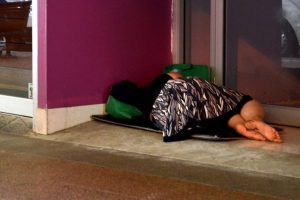
The affordable housing issue is not just about people sleeping in doorways. A new report produced by the Queensland Council of Social Services (QCOSS) clearly shows that working families are among those falling prey to the acute rental housing market shortage. It’s worse in some States than in others.

The report from QCOSS and The Town of Nowhere campaign is sobering reading. It predicts more than 220,000 households in the State will not have affordable housing within 20 years.

The report was prepared by national housing expert, University of New South Wales Professor Hal Pawson, and UNSW colleagues.

The tough conclusions include that there are around 150,000 households across Queensland with unmet housing needs. This includes 100,000 households who would typically be eligible for social housing. These households are either experiencing homelessness, or are low-income households in private rentals, paying more than 30% of household income in rent.

The figure is more than twice the official indicator of 47,306 households on the Queensland social housing waiting list. The latter has grown by 70% over the past three years.

Un-met housing needs are highest in satellite cities south of Brisbane. Pawson’s study shows that 10% of all households in Logan, Beaudesert and Gold Coast are homeless or living in unaffordable housing.

Professor Pawson said Queensland would need 11,000 affordable and social homes each year for the next 20 years, about 2,700 of which would need to be social housing.

He told the ABC the government had promised to build 13,000 social and affordable homes by 2027. But the QCOSS report found that the number of people with “very high need” for social housing was 37% higher than the system could accommodate.

In the decade leading up to 2017, there was “minimal” investment by State and Federal governments in affordable and social housing, Professor Pawson said.

“Unless they can get a grip on the situation, it’s a problem that over the next generation will continue to become more stressed and more pressurised.”

Much of the blame for the current problem is laid at the feet of private landlords. Private rentals in Queensland have risen as much as 33% since 2020. The sharpest increases, however, have been in regional markets. For example, over the past five years median rents rose by 80% per cent in the industrial town of Gladstone, by 51% in the tourist town of Noosa and 33% in the Gold Coast area. Nearly 60% of low-income households in the private rental market are facing unaffordable housing costs, with 15% in extreme housing affordability stress (rent accounting for more than half of total income).

While rentals have risen steeply, the bigger problem is a lack of rental accommodation. Rental vacancies are close to zero not only in Brisbane and the Gold Coast but also in regional towns.

The report states: “Queensland’s private rental housing has seen several years of declining vacancy levels and rent inflation rates far above the national norm. More generally, the sector remains entirely dominated by small-scale investor landlords whose usual prioritisation of capital growth over rental revenue inherently compromises tenant security.”
The upshot of this is that landlords are selling on the rising market, resulting in fewer houses for rental. Coupled with this is the inadequacy of tenant rights on rents, security and conditions. The Queensland Government enacted significant rental regulation reforms in 2022, but these fell far short of the changes advocated by tenants’ rights campaigners.

The Productivity Commission reported last year on the National Housing and Homelessness Agreement framed by the Albanese Government.

The agreement provides $1.6 billion a year in federal funding to the States and Territories, with the aim of improving access to affordable and secure housing.

However, the Commission judged the programme ineffective and in need of a major shake-up. With rents rising and vacancies falling, low-income private renters are spending more on housing than they used to. One in four households have less than $36 a day left for other essentials, the Commission said.

For those who might argue against more investment in social housing, there are success stories. The Queensland Government has funded a small number of permanent supportive housing (PSH) tenancies for people who have experienced long-term homelessness. PSH combines subsidised long-term housing with access to intensive but voluntary support services. One PSH programme, Brisbane Common Ground (BCG), established in 2012, is a 146-unit apartment block with 24/7 on-site support. Studies reported high tenancy sustainment rates and tenant satisfaction levels. It also produced significant savings via reduced use of emergency services and crisis accommodation. (QCOSS Report).

Despite the success of projects like BCG, there are many examples of State governments backing away from the commitment to social housing. For example, the New South Wales government is reportedly preparing to sell its Waterloo social housing complex in Sydney. The ABC reported that Waterloo Estate, the biggest social housing estate in Australia, houses almost 2,500 people.

The 18ha site will be redeveloped under a NSW government strategy called Communities Plus, where public land is offered to developers on the proviso 30% of what they build is dedicated social housing. This is clearly a retrograde move away from a project that is 100% dedicated to social housing. Meanwhile, more than 51,000 hard-pressed households are waiting for a home in NSW.

In an even more backward step, Darwin’s local Council has reportedly been issuing $162 fines to ‘rough sleepers’. The latter may or may not be indigenous people known as ‘longgrassers.’ (see link below)

Darwin Council issued a statement saying it had been subject to significant pressure from some current Northern Territory government MLAs. The MPs wanted to increase the number of infringements (and the size of fines), issued to vulnerable people who are sleeping rough in public places. (And what happens when these people cannot pay the fines? Imprisonment for non-payment? I guess that’s one way of getting people off the streets..Ed)

In its defence Council said council rangers issued fines as a “last resort”.

“We do not consider the fining of vulnerable people the solution to complex issues such as homelessness.”

More reading

https://www.theguardian.com/australia-news/2022/jul/12/queenslanders-miss-out-on-social-housing-due-to-failures-to-build-homes-and-inaccurate-waiting-lists

https://www.drbilldayanthropologist.com/resources/Longgrass%20people%20of%20Darwin%202012.pdf


Homeless for a rainy night

homeless-for-night
The Hope Centre for the homeless, Logan. Photo used by permission

For some, today is a reminder that anyone can become homeless, with various agencies (and reality TV) bringing this urgent issue to light. It also marks the end of the financial year, a kind of witching hour for those engaged in financial markets, investing in rental housing, or running Australia’s businesses, large and small.

For seventy-nine intrepid souls, our charity sleep-out on Maroochydore beach was thwarted by early morning drizzle turning into heavier rain.

Some abandoned their posts, leaving sheets of cardboard for others to make shelters with. Others took up the scarce positions under the eaves of the Maroochy Surf Club.

I took refuge in a nearby toilet block, mopping my wet hair with a sweatshirt. I decided I’d done enough, including raising $700+ and headed home in the wee hours. I briefly imagined a truly homeless mother in a similar situation. The two-year-old wants to be carried and the seven-year-old is saying “This is dumb, I wanna sleep.” So they walk 300m in the rain to the 1997 Ford wagon and do as best they can.

The St Vincent De Paul Society homelessness sleep-out raised more money this year ($125,577) with fewer people sleeping out. That’s an impressive result from a regional population of 300,000, (1,500 of whom are homeless).

The 2016 Census homeless tally (105,000 in 2011), won’t be known until 2018. But a 2014 Australian Bureau of Statistics survey found that 351,000 Australians had experienced homelessness in the previous 12 months.

There were a few speeches last night before we headed out to a balmy 17 degree Maroochydore evening. Mix FM’s Todd Widdicombe threw gentle barbs at local politicians and did a good job of generating competitive bidding for the charity auction (including a pillow sold to local politician Steve Dickson for $320).

St Vincent De Paul Society tells us most social housing on the Sunshine Coast was built more than 30 years ago. The Coast’s private rental vacancy rate is less than 2% and one-bedroom units are hard to find. A chart of social housing demand shows that 64% of people are looking for accommodation for one person. Developers on the coast tend to build three and four-bedroom homes and two or three-bedroom units. Many units are rented to holiday-makers.

Older people facing a tougher future

This is not a problem unique to the Coast. Pensioners and working parents have been priced out of the rental market in all metropolitan areas across Australia, according to National Shelter’s Rental Affordability Index (RAI), released on May 17.

Chief Executive of COTA Australia (Council on the Ageing) Ian Yate told a conference this week that older Australians were the forgotten faces of the housing crisis. He cited as examples the 70 year old divorcee facing homelessness, the 80 year old with a knee replacement who can’t find appropriate or affordable accommodation, the 68 year old couple retiring, still with a significant mortgage.

“Older Australians are increasingly falling through the cracks in the growing housing affordability and supply challenge,” he said. “A growing number of older Australians need to rent, rather than owning a home outright.

“We are already starting to see rates of home ownership by older Australians decline, and this is forecast to drop even further in the next 10-15 years.”

Anglicare’s annual report into housing affordability shows that welfare recipients and single-person households are the least likely to find appropriate accommodation. Queensland’s stock of social housing is just 3.6%, compared with a national average of 4.5%.


Rents are generally lower on the Sunshine Coast and the weather markedly warmer than the Southern States, even in winter. Little doubt this is why young people take their battered old wagons, surfboards and sleeping bags to the beach.

While many people in crisis use their cars as a refuge between one home and the next, others have developed an on-the-road lifestyle.

I once met a woman in her 50s whose camper van is her home and always on the road, unless she’s visiting family in one state or the other. Recently we met a couple who have a permanent caravan moored in a small town van park. They also have a bigger van for their grey nomad adventures. Safe to say most of their capital is tied up in these depreciating assets

For those who’d rather have a fixed abode, the Queensland Government recently made a ‘better-than-nowt’ commitment to provide 5,500 new social and affordable housing units over the next 10 years. Last year, the Government launched a Better Neighbourhoods initiative in fast-growing Logan City, with an affordable housing target of 3,000 by 2030.

Hoping for Hope Centre II

Family and Kids-Care Foundation established the Hope Centre in 2009, a complex of 19 self-contained units, designed for individuals and small family groups in crisis.

President Tass Augustakis told FOMM the charity is currently considering participating in the Better Neighbourhoods Logan initiative, seeking funding for a second Hope Centre which can accommodate larger family groups.

“The thing that got me going to start the Hope Centre was seeing women sleeping in cars with their kids. It just shouldn’t be happening, but it still is.”

Family and Kids-Care donated the land for the first Hope Centre and raised funding from the Federal Government to build it.

“After reading about the State Government’s affordable housing strategy, I’m organising a meeting to discuss Hope Centre II,” he said.

“We can provide the land, but we need the Government to contribute between $10 million and $12 million to build a four or five-level unit building.”

Cameron Parsell, a researcher with the University of Queensland, last year revealed that it costs governments more to provide services to the homeless than it costs to provide standard accommodation.

He produced ‘compelling and robust’ data in The Conversation which showed that chronically homeless people used state government funded services that cost approximately $48,217 each over a 12-month period. He compared this with another 12-month period in which the chronically homeless were tenants of permanent supportive housing.

“The same people used state government services that cost approximately $35,117 – $13,100 less when securely housed, compared to the services they used when they were chronically homeless.”


Urban studies researcher Emma Power, also writing in The Conversation, says single, older women are among the fastest-growing groups of homeless people in Australia. Yet most are unable to apply for community housing because the sole eligibility criterion is their low-income status.

Sadly, women who are not leaving a violent situation or who do not have a recognised disability will risk homelessness before they qualify for community housing.

The answer is for governments to provide more secure, low-cost social housing and/or increase rent-assistance payments across the board.

But as Power points out, the latter is not ideal. Although it assists renters in the short-term, it effectively subsidises private landlords.

This has been going on for a long time and it is getting worse, despite a lot of work by charitable organisations like St Vinnies. I tucked myself into my cosy bed (early) last night, feeling OK about raising the equivalent of a fortnight’s rent for someone.

But it is a band-aid at best.

Further reading:

http://www.huffingtonpost.com.au/2017/06/27/australias-homelessness-crisis-summed-up-in-four-news-events_a_23005274/

Everyone should have a home


Homelessness and affordable housing

homeless-housing-affordable
Homelessness and affordable housing, photo by Giulio Saggin

Last week I was walking from Roma Street Station to the top end of George Street, the hub of State Government. I was meeting friends for lunch and on the way passed a few apparently homeless young men on park benches, one tucked inside a doorway, others hovering around intersections, nervously smoking.

One young person was sitting on the footpath with a cardboard sign that read “homeless – please help”. I was too preoccupied on my mission so I ignored the hat, not even dropping a few coins on the return journey.

So now I’m hunting around the house for a decent sleeping bag and a beanie, hoping to make amends for my lapse in empathy by participating in a fund-raising community sleep-out on June 29. (If I chicken out I promise to donate money to the cause.)

Our local member Andrew Powell (Member for Glass House) has agreed to participate in the annual sleep-out.

Mr Powell wrote about this in his regular Glasshouse Country and Maleny News column. He will be among local dignitaries, business people and community members sleeping rough outside the Maroochydore Surf Club on June 29. Participants will be given a sheet of cardboard to sleep on and fed a simple meal of soup and bread rolls. Mr Powell says there are 1,500 homeless men, women and children on the Sunshine Coast.

The St Vincent de Paul northern diocese (which is organising the sleep-out), has provided support over the eight months to March 2017 to 450 homeless people, including 250 children.

The gesture by the Member for Glass House is admirable, but this is a problem that has, at best, been patched up by successive Queensland governments. The Sunshine Coast, which has a paucity of affordable and public housing, is named as one of the regional areas to be targeted by the new housing strategy.

The Rental Tenancies Authority published median rents for the Sunshine Coast region in December 2016. Tenants pay between $315 and $400 a week for a three-bedroom home or a two-bedroom unit. Rents are cheaper in the Hinterland areas like Beerwah, Peachester, Mooloolah, Palmwoods, Hunchy and Woombye, but public transport is limited and one needs a reliable car to live in these areas.

Meanwhile, Queensland has a plan

As the debate continues about the lack of affordable housing and how to find beds for homeless people, the Queensland Government has a 10-year plan.

The Government had some fairly positive (and uncritical), press about its plan to provide more than 5000 social and affordable houses. The $1.8 billion Housing Strategy announced in this week’s State Budget aims to get the private sector involved and utilise State government-owned land.

Treasurer Curtis Pitt said it was the biggest commitment to housing in Queensland’s recent history. The strategy will see more than 5,500 social and affordable homes built over the next decade. Eight hundred homes are to be built each year for the first five years. This is about double the number of social and affordable homes built in 2016-2017.

The Minister said the housing strategy includes $1.2 billion to renew the existing social housing property portfolio. A $420 million housing construction program aims to boost the supply of social and affordable housing. This includes $3.5 million to build two refuges for women and children escaping domestic and family violence.

The Government is also allocating $75 million to advance home ownership in ‘discrete’ Aboriginal and Torres Strait Islander communities.

At first glance this sounds like a bold plan, made with some compassion for those struggling to survive in a competitive housing market. On second glance, it is unlikely to make a dent in Queensland’s 25,000+ public housing waiting list.

Too little, too late?

Public and social housing comprised 4.8% of the total national housing stock, according to the Australian Housing and Urban Research Institute (2011 Census data). AHURI’s research showed that at a minimum, the social housing system would have to have been around 43% larger (on 2011 figures) to accommodate all those who met public housing eligibility criteria and who pay more than 50% rent.

Nevertheless the Queensland strategy has been welcomed by the construction industry and the housing sector, as it is said to provide 450 jobs. One of the more positive aspects of the plan is that 5% to 25% of the land used for these purposes will be land already owned by State Government. This implies vacant or under-utilised land near public buildings like hospitals and schools. So maybe at last the under-privileged will get to live in the middle-ring suburbs of Brisbane rather than 49 km away in fast-growing Logan City.

In December 2016, the State Government announced a $1 billion investment plan to build 3000 new houses in Logan City over 20 years. Minister for Housing and Public Works Mick de Brenni said the Better Neighbourhoods Logan initiative would deliver a range of economic and social benefits, including 410 new social and affordable dwellings over the next five years and over 3,000 new homes by 2036. A spokesman confirmed that the 3000 social and affordable homes are part of the Budget housing strategy. That leads me to surmise that another 4000 homes will be built in other regions over 10 years, on average, 40 new houses per year for each of the 10 regions identified by State Development.

The strategy shows some progressive thinking in that new social or affordable housing strategy should incorporate:

  • Rental bond loans to help tenants meet the private market;
  • Provision for public housing tenants to own their own home through shared equity loans or rent-to-buy schemes;
  • A new Housing Partnerships Office to streamline processes and lower costs and time frames;
  • Private sector involvement through expressions of interest to develop small, medium and large developments in regional centres;
  • $29.4 million to provide front line services for victims of domestic violence and young people at risk of homelessness. This includes a $20 million boost for ‘youth foyers’ – supported accommodation for young people aged 16-25 who are either homeless or at risk of becoming homeless.

Looking after property investors

The State Budget announcement follows a plan revealed in the 2017 Federal Budget to allow a tax break to invest in social housing.

Retail and institutional investors are being offered a 10% increase in capital gains discount (from 50% to 60%). The Australian Financial Review reported that the scheme, aimed at Management Investment Trusts, would allow the discount to MITs and their investors, provided they offer the properties at an affordable rent for at least 10 years. The AFR said the Government also planned to issue bonds backed by rental income from social housing, replacing bank debt issued to approved social housing developers.

While governments play ‘catch up’ with affordable housing, the onset of winter should turn our thoughts to the homeless.

As Andrew Powell observed, it is not a matter of choice.

“In many cases homelessness comes about through factors out of a person’s control – whether this is mental or physical illness, financial instability, lack of education, domestic violence or something else entirely,” he wrote in the GCMN.

Yes, and sometimes all of the above.