Friday on My Mind – Technology And Our Private Lives

technology-privacy
“Hacker’ image by www.pixabay.com

“Och*, technology – it’s the Deil’s work,” my Scottish Dad said in 1964, when I bought one of the early transistor radios.

Dad died in 1991, so he missed the Internet (and Windows 98, the best version). He also missed WIFI, smart phones, internet banking, Facebook, Twitter, Skype, Bluetooth, video and music streaming and that nemesis of 21st century parents −  Facetime. I’m not sure what he’d make of hackers, spammers, viruses, malware, or dealing with glitch-prone software and untimely computer crashes.

As we all should know privacy risks for internet and mobile phone users include data harvesting, web tracking and government spying. Many internet security companies are now advocating the use of a virtual private network (VPN) which encrypts your data and hides your internet address. And, as this article reveals, the Internet of Things poses new cyber threats, as security is often lax or absent in domestic items like smart TVs, fridges and microwaves and other connected devices.

This week I conducted an IT security review after a sudden flood of spam emails jammed up one of our addresses (not this one). She Who Goes By Various Acronyms was extremely pinged off with the 200 dodgy emails that came several nights in succession. They were dressed up to look like emails we’d sent but had been ‘rejected by sender’.

I can’t say our Internet Service Provider (iinet) was overly helpful. They insisted that the email address had not been hacked or compromised. The support team advised me to change my password (duh) and later referred me to a service where you can report ‘new’ spam. That didn’t really help much, so I spent a good few hours doing my own troubleshooting.

As part of a usor emptor security review, I reset my WIFI router to its default settings, and then re-installed it with a complex admin password and a new WIFI password. Tedious, yes, and the tediousness extended to relaying the new WIFI password to every device that shares the same router. As a result, we slowed the spam to a trickle and now it has stopped altogether. (Yay, techy Bob-Ed)

In the early days of starting a WordPress website, my weekly posts were inundated by what is known in blogger world as ‘comment spam’ – most of it from Russia. We slowed the onslaught by installing an effective anti-spam plugin (Akismet) and stopped it by limiting post comments to 14 days.

I began to wonder about spam; who distributes it and why. Do they want to sell you stuff or are they just creating mischief? What they want more than anything is for you to click on the inevitable malware-ridden attachments. Do so at your peril.

I discovered that a sudden flood of spam can (a) bury messages you did need to find and (b) sometimes they are phishing emails. These are emails that purport to be from one of your legitimate service providers. You can usually detect them by the stilted use of English and also by the fake email address

Later, I forwarded the bogus email to iinet support and complained. Since then, I have had other attempts by swindlers to milk credit card details by forging emails. It is beyond me why a large ISP (iinet, now owned by TPG), can’t put a stop to this. I’m told scams like this are commonplace, no matter which ISP you use.

There’s a lot of it about. As you may have read recently, cyber crooks impudently set up a facsimile of the MyGov website, which holds an enormous database of tax, medical and social security detail.

Many of my Facebook friends are currently complaining about nuisance calls, phishing emails, spam or hacking of their ‘Messenger’ app. These scams are becoming so prevalent it behoves us all to put another layer of security in place. Many banks and institutions (including MyGov), use a ‘dongle’ or some form of two-step verification (a time-sensitive pin sent to your mobile).

There is a certain amount of sales-driven hysteria promulgated about the ability of ‘Russian hackers’ to covertly take control of your computer and start delving into your private details. Some swear by online password managers, but I favour an in-house, two-step method. It is tedious but safe, provided you don’t fall into the trap of allowing your web browser to save logins and passwords. Surely you don’t do that?

The anti-virus programme I uninstalled this week was quite good at doing what it is supposed to do, but it kept alerting me to potential threats and PC performance issues. Solving these supposed threats and issues meant upgrading to one or more ‘premium’ programmes.

Hassles aside, when technology works, it can be a joy to all. Last week I compiled a short video to send to my Auntie in the UK who was turning 100. My sister and her daughter sent me a video on Messenger as did my nephew. We recorded our own video greeting on the veranda at home, complete with kookaburras in the background. I called my other sister in New Zealand and recorded her audio message and then edited the clips into a 10-minute video and slideshow. I then uploaded it to YouTube with a privacy setting. My cousin in the UK said it came up great when cast to the big screen TV.

That milestone occasion got me musing about my teenage years (Auntie outlived her sister (my Mum) by 52 years. Technology sure has changed from those days as a rugby-mad teenager in New Zealand. I bought the transistor radio for one purpose; I’d set the alarm (a clock with two bells on top), and get up in the middle of the night to listen to (e.g.) the All Blacks play England at Twickenham.

Dad (left) had no interest in sport, but as a volunteer member of the St John’s Ambulance, he spent many a cold Saturday afternoon on the rugby sidelines, first-aid kit at the ready.

He’d have probably credited the ‘Deil’ with this 2019 example of electronic surveillance of professional athletes. When professional rugby players run out onto the field, a small digital gadget is tucked into a padded pouch on the back of their jumpers. The GPS tracker relays performance information to the coaching team (and, apparently, to rugby commentators). From this wafer-thin tracker they can upload data and analyse the player’s on-field movements. This is how Storm winger Josh Addo-Carr was proclaimed the fastest man in the NRL. He set a top speed of 38.5 kmh chasing a scrum kick down the left touchline in the round five match against the North Queensland Cowboys in April. He’d still get run down by a panther or a tiger, but it’s pretty darned fast.

While the top 10 stats look thoroughly impressive, I doubt the general public will get to hear about the half-fit players slacking off in the 63rd minute.

Fair go, as we say in Australia, as if it isn’t intrusive enough going into the dressing sheds and interviewing sweaty blokes in their underwear.

*general interjection of confirmation, affirmation, and often disapproval (Scots)


Camel Racing And The World’s Longest Damper

camel racing-damper
Camel racing at Boulia -Image courtesy of http://www.bouliacamelraces.com.au/camel-racing/

Queensland’s outback towns may still be struggling with the impact of drought, but they are now more than ever engaging communities and outsiders in unique events.  Tourist attractions like Winton’s Vision Splendid film festival, Birdsville’s Big Red Bash, Boulia’s camel races, an outback golf tournament and the national silo art trail are just a few of the initiatives. Attractions and events are primarily organised by locals (and sponsors) as a way of attracting cash-spending visitors and giving locals some respite from the hard life on the parched land.

Travel writers tend to visit places for a day or two, then write about them as if they’ve lived there for a lifetime. It’s quite a skill and I’ll admit to doing this presumptuous thing in the interests of whetting your appetite for outback travel. Though we spent only 10 days in Western Queensland on this trip, we picked up more than a few pieces of information and inspiration.

camel-races-damper
Kerosene tin hut at Morven, image by Laurel Wilson

For one thing, there’s a kerosene tin hut built in the grounds of Morven’s historical museum. The hut is made from flattened kerosene tins, held together with staples and built over a light timber framework. There are few remaining examples of Australia’s ‘tin towns’, which sprung up on the outskirts of towns and cities during the Great Depression. (Photo by Laurel).

Small western towns like Morven and Bollon need the support of visitors. Local people have less to spend as a result of the ongoing drought. Some have made an attempt to attract and keep visitors, especially the ubiquitous grey nomads. Travellers are important to the rural economy; they spend money in supermarkets, hardware stores, pubs, clubs and petrol stations.

We were horrified to learn that Bollon, a town of 334 people, has lost its last service station. If you don’t happen to see the sign on the highway between St George and Cunnamulla, chances are you might run out of fuel on the 294-km journey.

Even when outback towns do have a service station, there are no guarantees. On the way home we limped into Charleville with six litres of fuel left, after finding that Quilpie’s service station had run out of fuel – drained dry by the convoy of grey nomads and 4WD adventurers heading 625 kms to Birdsville for the Big Red Bash.

The Bash is a three-day outdoor music festival held in mid-July. This year it was headlined by Midnight Oil, the Living End, Richard Clapton and Kasey Chambers. At $539 a ticket, not to mention the cost of driving 1,600 kms (from Brisbane), you’d want to be keen. Last year, the Bash  raised more than $100,000 for the Royal Flying Doctor Service. This year, 9,169 people attended, including volunteers, crew, kids, sponsors and vendors.

Meanwhile, the Boulia Camel Races are now scheduled to follow on from the Big Red Bash. If you are already at Birdsville, all you have to do is drive another 200 kms or so to Boulia, a tiny outpost on the edge of the Simpson Desert.

The 1,500m Boulia Camel Cup was  won this year by a local camel, Wason.  About 5,000 people came to Boulia (pop 230) for the two-day event, which featured heats over short distances before the main race on Sunday. If you are game, there are bookies on hand to take your bets.

The jockeys (who wear protective head gear), sit on small saddle pads behind the camel’s hump. There are no reins – the camels steer themselves down the racetrack (and can be disqualified for running in the opposite direction!)

July is the main month for outback tourism events, as the weather is at its most stable, with mild day temperatures and cool nights. In Charleville, an intrepid team set about cooking the world’s longest damper. At 153 metres, it surpassed a 125m-long damper made by Swedish boy scouts in 2006. The Guinness Book of Records is yet to officially recognise the attempt, but it’s in the oven, as they say. The event, organised by the Charleville Fishing and Restocking Club, involved a large team of volunteers who made the damper and then baked it in a 153m trench filled with hot charcoal.

Hundreds of locals and visitors attended the event, which made news bulletins far and wide. No doubt, that was the whole point. She Who Drives Most Of TheTime once amazed some Belgian backpackers at Carnarvon Gorge. She mixed up a batch of damper (flour, water, herbs and baking powder) in our 12-foot caravan. She then wrapped it in a piece of tin foil (first manufactured in 1910, in case you were wondering), and threw it in the camp fire. The primitive nature of this kind of cooking, the sweet smell of burning wood and campfire camaraderie perhaps convinces us that it tastes better than it does.

Damper is a traditional Australian soda bread, enjoyed in eras past by swagmen, drovers and stockmen. The basic recipe, one could suggest, was derived from bread prepared and baked in the coals of a campfire by Australia’s indigenous peoples for thousands of years.

Yelarbon rural oasis scene by Brightsiders

Small towns in grain-growing districts are increasingly embracing the idea of having artists paint murals on grain silos. The most recent example of this is at Yelarbon, 300 kms south-west of Brisbane. The first stage of the silo art project by artist group Brightsiders was completed in May.

A viewing station is being built so visitors can get off the highway and admire this artwork on the edge of the spinifex desert. The rural scene is titled ‘When the rain comes’. Local sources tell us that 100 visitors a day are stopping in Yelarbon to view the artwork, funded by the Federal Government’s Drought Communities Programme.

If film festivals are your thing, Winton’s Vision Splendid festival in June is quite an experience. Maleny residents Robyn and Norm Dobson spent 10 days at Winton’s Vision Splendid film festival this year. They took a train from Nambour to Longreach and then a coach to Winton – a 24-hour journey.

“We booked a sleeper,” Robyn said. “We couldn’t do that trip sitting in a recliner for 24 hours.”

She observed that a lot of the people in Winton for the festival were grey nomads, strengthening her theory that the survival of small outback towns depend on annual festivals. Films are shown at Winton’s famous open air theatre, with day-time films shown at the (new) Waltzing Matilda Centre.

camel-races-damper
Photo of Winton’s open air cinema by John Elliott

Robyn and Norm were impressed with the 1949 British-made film, “The Eureka Stockade” starring Chips Rafferty, with a yet-to-be-famous Peter Finch in a minor role. The other highlight of the festival was the now-traditional silent movie feature. This year it was the 1906 film, The History of the Kelly Gang.

Our country town of Maleny had its own tourism event in July – Knitfest (a yarn and fibres art festival).  Preparations for this included dressing street trees (and cow sculptures) in knitted garments. This event predictably saw visitor numbers to the town swell.

On the Southern Downs, the Jumpers and Jazz Festival will be winding up this weekend. This Warwick-based festival is a bit like Stanthorpe’s Snowflakes (July 5-7), in that both make a celebration out of being among the coldest places in Queensland.

I guess it could have been easier to do that instead of trekking to Thargomindah. But we did get to see green grass in several areas and most of the creeks we passed had at least a little water in them – not something we’ve seen on our previous outback treks. Ed)


Water shortages – here and there

water-shortages
Warwick’s Leslie Dam, January 2011, all seven floodgates open after torrential rain. Image courtesy of SunWater

When visiting friends in the water starved towns of Warwick and Stanthorpe, it does not take long for the local message to sink in – ‘If it’s yellow, let it mellow, if it’s brown, flush it down’.

This is a water-saving tip for times of drought – seemingly a more or less a permanent state of affairs in south-east Queensland.

Southern Downs residents are currently on a per capita water limit of 120 litres per day and there is talk of introducing emergency measures (90 litres per day). Given that modern toilets use between 6 and 10 litres every time you flush, you can see why mellow yellow is the gold standard. Likewise, a shower will use about 10 litres of water per minute. So a three-minute egg timer is a handy gadget to stick on the bathroom wall. The other common water-saving measure is to keep a bucket in the shower to collect water for the garden. Many people wash dishes in a plastic basin and use the grey water on the garden.

The lack of significant rainfall coupled with rapidly declining dam levels led to Warwick, Stanthorpe and outlying villages being placed on extreme water restrictions in mid-March. Stanthorpe and Warwick are the hardest hit by the ongoing drought and declining dam levels. Warwick’s Leslie Dam is down to 6.33% and its back-up water source, Connolly Dam, at 36.5%.  Storm King Dam, Stanthorpe’s only source of water, is at 26.7% capacity.

Southern Downs Regional Council estimates that without rain, Stanthorpe will be out of water by December 2019/January 2020. Warwick has a 17–month buffer, to January 2021.

Mind you, they have been here before. In February 1995, the Leslie Dam was at 3% capacity. And how soon we forget what happens when it does rain! In early January 2011, South East Queensland had so much rain the Leslie Dam’s seven spillways were opened for the first time in 22 years.

SunWater’s decision to open the flood gates in 2011 and take pressure off the dam left motorists and residents stranded. Sandy Creek flooded, closing the Cunningham Highway between Warwick and Brisbane. SunWater responded to a request from then Warwick Mayor Ron Bellingham to reduce the rate of release and extend it over a longer period so the highways could re-open.

I guess part of the issue may be that it’s been 22 years since Leslie Dam was last full and perhaps there is no one around who remembers how that was managed,” Cr Bellingham told the Warwick Daily News at the time.

Extreme water restrictions mean residents cannot wash vehicles, hose gardens or fill swimming pools. Hosing hard surfaces like driveways or hardstand (industrial) is an absolute no-no.

The upside of going through a water crisis is that water-conserving habits learned at the time tend to stick with you. When Brisbane residents had to deal with level 6 restrictions during the Millennium Drought, per capita water usage fell from the Australian daily average of 340 l/p/d to 140 l/p/d.

If you look at the global situation, in which 3 out of 10 people are without reliable access to potable water, Australia’s urban residents have relatively little to complain about.

The 2019 United Nations World Water report also states that only 4 out of 10 people have access to safely managed sanitation services.

World water use has been increasing at 1% a year since the 1980s, the UN report says. Increasing water use is being driven by a combination of population growth, socio-economic development and changing consumption patterns.

As you may have read about major cities like Chennai, Cairo, Tokyo, Mexico City and Cape Town, you can’t take abundant, safe running water for granted.  This list of 10 cities at risk of running out of water includes Melbourne in 9th place. Scary stuff.

The seven million inhabitants of Chennai in southern India (it was Madras until 1996), are so short of water residents have to line up every day for a truck-delivered allocation. As reported in the Pacific Standard, the four reservoirs that provide the majority of the city’s water supply have dried up. Restaurants, businesses and schools have been forced to close and residents wait hours in queues to draw water from municipal tankers. As always, wealthy residents can afford to pay the premiums for water from private tankers. The calamity in Chennai can be blamed largely on domestic and industrial over-use which has depleted ground water.

Don’t think it can’t happen here. According to a report in The Australian this week, up to a dozen towns across regional New South Wales and southern Queensland are confronting a crisis that’s been dubbed “day zero”.

Local Government NSW president Linda Scott told The Australian some regional cities and towns, including Armidale, Dubbo, Stanthorpe, Tenterfield and Tamworth are preparing for a day zero that’s less than 12 months away.

SDRC Mayor Tracy Dobie told Steve Austin on ABC Drive on Monday that if there was no inflow into Storm King Dam, Council could have to cart water from Warwick to Stanthorpe as early as December.

“Warwick is a different situation. We will have to set up a network of bores if there is no inflow into Leslie Dam,” she said.

Cr Dobie said that normally Leslie Dam has three years’ supply of water; Storm King Dam holds two years’ supply.

“That may have been OK a couple of decades ago, but climatic conditions are changing and we need bigger and longer-term water facilities in our region.”

Cr Dobie told Austin there had been “no rain in our region since March 2017” by which she means sufficient falls to filter into dams.

Data kept by farmsonlineweather.com.au shows that Warwick had a total of 130.4mm between January 1 and July 18 2019 (the long-term average for this period is 405mm).

Former Prime Minister Malcolm Turnbull was not alone in taking the view that Australia needs alternative sources of water. Several Australian States have developed desalination plants, with varying degrees of success. But as can be seen by the Murray-Darling Basin fiasco, there is no reliable, long-term water security plan.

Farmers and residents of outback Australia rely on steady rain to replenish rivers, creeks, dams and water tanks. The normally dusty red landscape north of Cunnamulla in far western Queensland is displaying a sea of green not seen in the outback for eight years. Heavy rain and floods in April has left this part of the west with full dams and green grass on both sides of the road (although in reality, it is a ‘green drought’, in which the country looks good, but the green cover will soon become parched through frosts and lack of follow-up rain).

You have to be watchful when traversing these often unfenced roads. As this photo shows, cattle are often left to forage for themselves, although She Who Drives Most of the Time said they seemed intent upon grazing.

After spending 10 days in the outback, I can but offer but this observation from a remote outback town: three large caravans queued up to fill their tanks at a public water outlet (that’s about 240 litres just there).

Fair crack of the whip, fellas. Go to the supermarket and buy your drinking water. We do.

More reading: FOMM back pages

Update: While Cape Town’s dire water crisis is over, authorities are wisely sticking to the 50 l/p/d limit set in 2018.

And…

Outback stories from the archives

We are on an outback trip for 10 days so lacking WiFi and other mod cons. This week I’m choosing to share a travel post from 2014, when we joined the grey nomads for an extended period. This observation about US marine manoeuvres in the Northern Territory was written before the introduction of yet another national security law (75 and counting since September 11, 2001), about revealing supposedly secret things.

There are strong possibilities you may not have read this, as my subscriber list has grown exponentially since 2014. If you have read it, was it worth reading again? I’ll be back next week with some real-time ruminations from the road.

https://bobwords.com.au/defending-our-sovereign-borders-hoo-ah/

Taking An Interest In Recessionary Economics

interest-rates-inflation-consumtion
Australia’s savings rate, spending and disposable income on a downward trend

The end of financial year meeting of the Basil and Sybil Cheeseparer Superannuation Fund was going well until the Trustees (a) found that their investment strategy was out of sync with reality and (b) failed to find a fixed interest investment that would return more than 2.50% over five years.

“We should stick it under the mattress,” said Sybil.

“Your side or mine?” quipped Basil.

As you should know, even if economics is not your forte, the Reserve Bank of Australia this week cut official rates for the second month in a row to a new low of 1.0%. They could have heeded this warning from Sydney’s University of Technology Professor Warren Hogan, but the RBA is not often swayed by commentary.

The RBA continues to be driven by persistently low inflation (1.3% in the March 2019 quarter). The theory is that if the RBA cuts rates low enough, business and consumer confidence will return and inflation will resume its normal trajectory (2% to 3%).  This in itself should build a case to raise interest rates, albeit gradually.

This current cycle of record low economic growth, inflation and interest rates is best explained by the graph ‘household consumption’.

It clearly shows consumption/spending falling off, concurrent with a decline in disposable income. Note the 10-year decline in our savings habit. Not much point saving if you are only going to get 2% or less in a bank and then pay a fee for the privilege, eh? (a nod to Canada Day).

An official interest rate of 0.1% is not as dire as that of Japan, Switzerland, Sweden or Denmark which have negative interest rates. Actually, since the onset of the Global Financial Crisis in 2007, many countries drastically cut interest rates in an attempt to stimulate growth (production and jobs). A blog by the International Monetary Fund (IMF) reasoned that while, the global economy has been recovering, and future downturns are inevitable:

“Severe recessions have historically required 3–6 percentage points cut in policy rates,” authors Ruchir Agarwal and Signe Krogstrup observe.

“If another crisis happens, few countries would have that kind of room for monetary policy to respond.”

IMF staffers periodically write blogs where they test models and theories (the IMF disclaimer says they do not represent the IMF’s views).

In this context, Agarawai and Krogstrup construct an argument for countries to survive financial crises by using negative interest.

The authors posit that, in a cashless world, there would be no lower bound on interest rates.

“A central bank could reduce the policy rate from, say, 2% to minus 4% to counter a severe recession. The interest rate cut would transmit to bank deposits, loans, and bonds.”

“Depositors would have to pay the negative interest rate to keep their money with the bank, making consumption and investment more attractive. This would jolt lending, boost demand, and stimulate the economy.”

Yes, but how do retirees like Basil and Sybil, who have surplus cash to invest, fit into this system? When the B&S Cheeseparer Superannuation Fund was formed, the cash rate was still climbing to its peak of 7.25% in 2009. That made it possible to invest cash in term deposits paying 5% or more, an attractive option for older people who wanted a safe haven.  

Now, the return for risk-averse investors barely covers the cost of self-managed super fund administration. And to think that Labor were talking about taking away much-needed dividend credit refunds! (The fact that this would only affect a small number of wealthy individuals was a fact not well explained by Labor and gleefully misinterpreted by the government).

Continuing low inflation is the main reason Australia’s central bank keeps cutting interest rates. Inflation dropped to 1.3% in March – the cost of living as represented by the Consumer Price Index (CPI) minus ‘volatile items’ like home purchase costs. However, Commonwealth Bank senior economist Gareth Aird argues that adding housing costs could add 0.55 percentage points to the CPI, giving the RBA less reason to lower interest rates.

Warren Hogan writes that ‘Australia is in a new environment where tinkering with interest rates may not be as relevant as it once was.’ Inflation is subdued around the world, he notes, yet the global economy is growing and unemployment is low.

Likewise in Australia, unemployment is low, although wages growth has stalled. As Hogan says, it isn’t at all clear that even lower interest rates would have a meaningful effect on inflation.

Australia has not plunged into a recession for 28 years, yet some commentators have used the R word when talking about the latest round of retail closures. (I should point out that uttering the R word is regarded in some circles as akin to walking under a ladder, breaking a mirror, toppling a salt shaker or seeing a priest in the street).

Retail closures included Maggie, T, Roger David, The Gap, Esprit and Laura Ashley. National retailers planning to downsize include Big W, Target, Myer and David Jones.

While some retail closures involved inevitable job losses, there will be more jobs to go as the big national chains roll out their smaller formats.

For the benefit of those aged under 28, an ‘R’ sets in after two consecutive quarters of negative GDP growth.

As we can see, the GDP result over nine months (+0.3%, +0.4% and +0.4%), means we are in dangerous territory.

The Gross Domestic Product (GDP) number is the one that measures whether the economy is growing or retracting. Safe to say at this point that a 0.4% increase in the March 2019 quarter (published this week) is not what the market or the government was looking for. The annualised GDP is 1.8% − the lowest since the GFC. Some pundits are calling it a GDP-per-capita-R, that is, population growth is overtaking economic growth.

The low interest rate scenario (and the data implies more cuts to come), is good for young people buying houses, but has a detrimental impact on retirees. Most people in retirement mode take a conservative view, preserving their remaining capital as long as possible. Bucket-list advocates would say what the hell and head off to Antarctica while there are still icebergs, glaciers and penguins.

Retirees typically have 60% to 70% of their super fund/savings in fixed interest products, with the balance in income-producing shares. But when faced with returns of 2.45% and less, it is difficult to stick to this formula. Shares or investment housing offer riskier but more attractive returns, though not as risky as spending all your cash on travel adventures or stashing it under her side of the mattress.

What to do? I have no answers, nor, I suspect, does the central bank, or the government, which is seemingly obsessed with the notion of stimulating the economy via $158 billion in tax cuts over 10 years.

Everyone under 30 needs to be across this subject because, as Herbert Hoover once said: “Blessed are the young, for they will inherit the national debt.”

We’ll leave you with some insights from Clarke & Dawe about banks, the debt crisis and interest.

 PS- I’m offering a choice of home-made, gluten free cake to whomever can explain to me why inflation is a ‘good thing’ – Ed..


We’ll need a huge crowd to stop war against Iran

Stop-Adani-rally
Image: A Stop Adani rally, courtesy of https://www.facebook.com/stopadani/

I’m not good with crowds – not since the early days of journalism in Toowoomba when I under-reported numbers at the annual Carnival of Flowers parade. “Next time check with the police,” I was told and mostly continued to do so, on occasions when crowds gathered for newsworthy events.

It is not always a given that members of the constabulary will give you an accurate-enough figure of crowds. Police under-estimated by 50% or so the size of street marches in Australia’s capital cities in 2003, protesting John Howard’s involvement in George Bush Jnr’s unjustifiable war with Iraq.

Oh, we remember that! Mr and Mrs Outraged Parents of One joined 99,998 others on February 16, 2003, marching from Roma Street, along Adelaide Street and down Edward Street to the Botanic Gardens. It was a steamy Brisbane day and there were concerns for the health and hydration of toddlers and the elderly.

On the same day, rallies in Adelaide, Darwin and Sydney attracted 200,000 people while two days earlier, 150,000 marched in Melbourne. This was part of a co-ordinated global protest on the same day, when, according to the BBC, between six and 11 million people were involved in more than 60 countries. Rome broke a world record for the biggest single-city anti-war protest, with three million participants.

It might say something about the relative futility of protest in that the ill-advised invasion of Iraq in March 2003 led to ongoing conflict until the withdrawal of 170,000 US troops in 2011. Although their tenure is uncertain, there are 5,200 US troops in Iraq as part of a security agreement with the Iraq government. Along with US-employed contractors, this brings the ‘friendly fire’ equation into any strike on neighbouring Iran.

It seems you need really big protest numbers to get governments to back off even a little bit. An estimated 2 million people thronged Hong Kong’s streets this month.

When a quarter of the population protests, you can understand city authorities putting an unpopular plan on the back-burner. Protesters feared that Hong Kong’s economy and society would be irretrievably damaged by a proposed extradition law (allowing visitors and residents to be sent for trial in China). Hong Kong chief executive Carrie Lam was forced to suspend the draft legislation. You may recall mass protests and sit-ins in Hong Kong circa 2014 as residents took part in the Umbrella Movement’, to complain about China deciding who will govern the city.

Meanwhile civil disobedience (نافرمانی مدنی) is ramping up in Iran, despite a brutal crackdown by the State’s security police. Prior to 2017, years passed between bouts of people marching in Iran’s capital, Tehran. Nevertheless, people took to the streets of Tehran for three days in a row in 2017, protesting largely about economic hardship and alleged corruption within government. Protests continued in 2018 amid what Amnesty International called “a year of shame”.

Thousands were arrested as authorities sought to crush dissent, as protests continued against poverty, corruption and authoritarianism. Amnesty International said more than 7,000 people were arrested, many arbitrarily. Protestors included students, journalists, environmental activists, workers and human rights defenders.

“Hundreds were sentenced to prison terms or flogging and at least 26 protesters were killed. Nine people arrested in connection with protest died in custody under suspicious circumstances.” 

Amnesty director Philip Luther said the scale of arrests, imprisonments and flogging sentences revealed the extreme lengths the authorities have gone to in order to suppress peaceful dissent.

And while Australian journalists wax indignant about the Australian Federal Police raids on the national broadcaster, this is what can happen to scribes reporting the facts in Iran.

In Australia, attempts at repression are mostly left to conservative politicians and like-minded social media commentators. Last week, two Extinction Rebellion protestors glued themselves to a zebra crossing in Queen Street during a Stop Adani rally, prompting Federal MP Ken O’Dowd to post on Facebook. He cited a Courier-Mail article which quoted Police inspector Geoff Acreman as saying: “The stunt was a ridiculous waste of resources.”

“I’m sure we will all agree,” said O’Dowd, to which 98 people responded with comments like ‘‘make them a speed bump’’, ‘‘leave them there overnight’’, or ‘‘take away their dole money’’. Discourse cuts both ways, thankfully, and this post also attracted comments from people who see the folly of ignoring the climate crisis.

While glueing yourself to a public road does seem an extreme form of dissidence, it is important to remember that Australia does not have a national charter of rights.

While Victoria, the ACT and Queensland have each introduced a State-based charter of rights, in other States, the pendulum is swinging the other way.

Human Rights Law Centre executive director Hugh de Kretser writes that there have been attempts by State governments in Tasmania, New South Wales and Western Australia to curb the power of protests. Mooted changes to State laws include severe penalties, excessive police powers and the creation of ‘broad, vague offences’.

Mr de Kretser says protest has defined a number of key social advances and environmental saves in this country. Without protests we might not have the eight-hour day, women’s right to vote, protection of the Franklin and Daintree rivers and advancement of Aboriginal land rights. Protest also stopped our involvement in the Vietnam War and ended the criminalisation of homosexuality.

He says these issues will come into sharper focus in coming years, with increased attention on climate change, workplace disruption and the implementation of the Uluru Statement.

When, we wonder, will Americans start to push back against the hawk-like Trump administration that has taken the world too close for comfort to an armed conflict with Iran?

For now, President Trump appears to favour increased sanctions against Iran, but experts on armed conflicts say these are parlous times.

South China Morning Post opinion writer Rob York asks the question: where are the mass protests in the US about President Donald Trump first threatening North Korea and now coming close to armed conflict with Iran?

York recounts the nervous days in 2017 when Trump and North Korea leader Kim Jong-un played a high stakes game of chicken. This was thankfully hosed down by conciliatory summits in 2018. Now York asks why there are no mass demonstrations about a potential strike against Iran by the US.

“Since June 9, the world has watched Hong Kong’s protest movement closely. The mood of Americans in my social circle turned from dread to relief and then to awe as Hongkongers took to the streets, making it difficult for a government they feel no longer represents them to function.

But Americans are hesitant to do the same. So what if their country sleepwalks into a wholly unnecessary conflagration?”

As commentators have pointed out, Trump has a lot to lose if the US stumbles into a war with Iran, not the least a pre-election promise to the contrary.

As always, Trump’s habit of tweeting in the early hours of the morning comes back to haunt him. Thanks to Mr Shiraz for unearthing this.

“Don’t let Obama play the Iran card in order to start a war to get elected – be careful Republicans” – The Real Donald Trump on Twitter, October 23, 2012.

The last word goes to David Bowie’s chillingly appropriate song, used in the credits to the 2016 TV drama, Berlin Station. It’s an earworm.


Return visit to Maleny Music Festival in 2019

Hello Friends of the Goodwills,

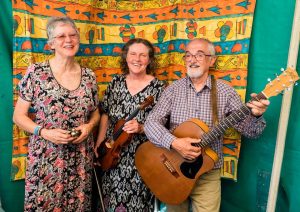
The Goodwills (Bob and Laurel Wilson, with regular guest musician Helen Rowe (centre).

The Goodwills are performing at the Maleny Music Festival on Saturday August 31. You can find us at the Platypus Lounge,  11.45am.

If you want to learn more about the Festival on August 30, 31 and September 1, check out the website, buy tickets or get involved as a volunteer. The festival starts on Friday evening at the Maleny Showgrounds.

If you miss us there, we will be at Club Acoustic at the Maleny RSL on Thursday evening, October 3.

We have been progressively recording new material with our friend Pix Vane-Mason, who has relocated to the Gold Coast after operating Pix Records from Conondale for many years. Watch this space.


Refugee documentaries – preaching to the converted

refugee-documentaries
Still from Nowhere Line, an animated Refugee documentary by Lukas Schrank

As it is Refugee Week, I’ve been reflecting on how my support for refugees and asylum seekers is shamefully passive. I was reminded of this after attending a viewing last Saturday of Julian Burnside’s refugee documentary, Border Politics. Then on Monday I was one of 67 people who devoted the evening to a public viewing in Buderim of the refugee film, Constance on the Edge.

‘Constance on the Edge’ charts the struggles of a mother and her six children on a journey from war-torn South Sudan, via a decade in a Kenyan refugee camp, before being settled in Wagga Wagga, NSW. Constance suffers culture shock, adding to existing (and so-far untreated), post-traumatic stress. She has difficulties fitting in to a rural town, encountering unexpected racism. She also voices frustration that the help refugees receive, well-meaning as it may be, is not always what they want or need.

During question time someone asked how we could ensure more people get to more refugee documentaries like ‘Constance on the Edge’ and develop some empathy for refugees. As he said, the 67 people in the room already know about the issues and how much work needs to be done.

The debate about Australia’s asylum seeker policies resides within disparate echo chambers. First there’s the chamber of humanitarian outrage, where we gather to watch refugee documentaries, drop gold coins in the donations bucket and froth about our disappointing government. Then there are those who do have compassion but feel/believe that the government is right to take a hard line with asylum seekers. Perhaps they have never asked themselves why, merely trusting in their political masters to do the right thing.

While I fully support the expatriation of refugees from offshore detention, an increase in the refugee intake and a more relaxed attitude in general, a few hundred people protesting in King George Square or waving banners outside Peter Dutton’s electorate office is not going to make much difference. Many people who are bothered by the government’s attitude to refugees thought things would change when Labor won the election. Not only did Labor not win, the party’s position on refugees is quite similar to that of the LNP, with the exception that Labor would have entertained New Zealand’s offer to resettle people from Manus and Nauru.

Today I’m asking myself the same question I put to you – how many refugees do you actually know? Had anyone over to lunch recently or for a sleepover? I know a few local people who have opened their homes to refugees, linking up with local support groups like Buddies and Welcome to Maleny. The latter organised the viewing of Border Politics, part of the Sunshine Coast Refugee Action Network’s film festival. This film, co-produced by BBC Scotland, owes a bit to the style of outspoken US film maker Michael Moore in that it tells its story regardless of another point of view. The opposing stance is depicted in carefully chosen media clips of Donald Trump and others defending their position (John Howard is shown stating: “We will decide who comes to this country and the circumstances in which they come”.

This much-used quote comes from a long election campaign speech in 2001 amid the Tampa affair and the ‘children overboard’ claims.

Human rights barrister Julian Burnside certainly got around the place making this film. It revealed some things about refugees I did not know, namely the decision by outlying Scottish shires like the island of Bute to welcome as many refugees as was practical. Burnside also visited the Greek island of Lesbos, which at one stage in 2015 was literally awash with refugees arriving ad hoc from mainland Turkey. Many locals just reacted as they would if one of their own had been tossed out of a boat and was in danger of drowning. They gave food and shelter and helped them find their feet, all in the name of humanitarianism.

The problem with Border Politics, as is the case with many of the refugee-based documentaries doing the rounds, is that it preaches to the converted. It simmers with outrage and absolutely ignores the opportunity to engage in a debate with intelligent but conservative people who are wedded to the government line that an open door policy is an invitation to terrorists to set up camp and destabilise from within.

Some refugee documentaries, like Orban Wallace’s ‘Another News Story’, try for another angle. ‘Another News Story’ turns the camera on the news crew and film-makers. They, after all, are the ones who capture stark images like the photo shown in Burnside’s documentary of a toddler lying dead on a Mediterranean beach. As The Guardian’s Charlie Phillips wrote: “Film crews are shown asking refugees the same things over and over, then moving on to the next story. Their intentions may be honourable, but the scrum to get the most emotional pictures feels unpleasant and desensitising.”

Phillips lists documentaries which have real shock power, notably Gianfranco Rosi’s Oscar-nominated ‘Fire at Sea’ and Daphne Maziaraki’s ‘4.1 miles’, a 28-minute documentary which shows coastguards rescuing refugees arriving on Lesbos.

Australia’s ‘Island of the Hungry Ghosts’ gets an honourable mention. I have seen this film, which deals with the personal struggle of a trauma counsellor working at Christmas Island’s high-security detention centre. Christmas Island counsellor Po-Lin is herself traumatised by the experience of counselling traumatised refugees while battling the indifference of centre management.

The documentary has a twin purpose – to chronicle the annual migration of red crabs from the jungle on one side of the island to the open sea on the other. The analogy is not wasted. h

Documentaries like those mentioned involve us in a passive way, while actually making a decision to go and work with refugees, as many volunteers do, is probably more effective. Many of these films are in limited distribution, tagged on to film festival programmes or being shown to like-minded people who have donated money to make the viewing affordable. But some can be found and viewed for nothing via YouTube or Vimeo or streamed for a small fee.

Some refugee documentaries are hard work: ‘Border Politics’ is harrowing and so too Ai Weiwei’s ‘Human Flow’, a three-hour tour of all the world’s refugee hotspots. Here’s the trailer – the movie is available for streaming or download through Amazon.

Some use comedy to get the message out, for example, ‘The Merger’, (a struggling rural AFL club recruits African refugees to bolster the team’s efforts). When the proportion of refugees living among us is less than 0.25% of the population, we need insights like these to remind us that people escaping wars and persecution are settling here. They need our help, even the small things (like the CWA lady in Wagga teaching one of the African women how to knit).

While Refugee Week (an Australian initiative now in its 20th year) ends tomorrow, I recommend tracking down at least one of the movies mentioned here. They give voice to important stories which are not in general circulation, and that in itself is commendable.

Further reading/viewing:

FOMM back pages

https://www.unhcr.org/innovation/7-videos-guaranteed-to-change-the-way-you-see-refugees/

https://www.unhcr.org/en-au/seeking-refuge-animation-film-series.html

‘Nowhere Line’, Lukas Schrank’s 15-minute award-winning animated documentary about Manus Island.

Get the Kids off Nauru Now”, a song I wrote and a video made in October last year


Fifty years of Cabinet secrets and media leaks

Cabinet-secrets-media-leaks
The magnet to the left of “Cabinet secrets — keep locked’ reads ‘The more people I meet the more I like my dog”.

The Australian Federal Police ‘raids’ on the ABC and a lone News Ltd journalist have been taken to signal a new era of scrutiny when confidential government files are leaked to the media. The media has gone overboard on the ‘journalism is not a crime’ front. As a former journo, I have adopted the Media, Entertainment and Arts Alliance (MEAA) Facebook frame in solidarity. But it is interesting to learn that that on June 5, the AFP was unable to rely on the much-feared espionage and foreign interference laws. An AFP spokesman confirmed that the revised secrecy offences inserted into the Criminal Code did not apply as the ‘alleged conduct’ occurred before the new law was enacted (in late 2018). The same can be said of a separate ‘raid’ on the home of News Ltd journalist Annika Smethurst.

The AFP said in a statement there was no link between the Smethurst and the ABC search warrants, which relate to separate allegations of publishing classified material ‘contrary to the provisions of the Crimes Act 1914’.

Barrister Gray Connolly, commenting in his blog Strategy Counsel, argues that the events of June 5 hardly constituted a ‘raid’. Much like the time on February 1, 2018, when ASIO visited ABC headquarters in Brisbane and Sydney to retrieve classified documents which had ‘accidently’ ended up there, the ABC knew the authorities were coming. On June 5, AFP officers signed in at the ABC front counter and the search was conducted peacefully.

Connolly also argues that just as the media claims it has rights to publish in the public interest, the government has rights and indeed a moral obligation to protect secrets, particularly those applying to Defence matters. And he exposes the folly of media calls for a US-style Bill of Rights to protect journalists, pointing to successive US governments pursuing whistleblowers, itself a threat to press freedom.

Law lecturer Rebecca Ananian-Welsh of the University of Queensland argues that the raids on Australian media present a ‘clear threat to democracy’. Ananian-Welsh, writing for The Conversation, said these developments were hardly a surprise, given the expansion of national security laws, notably enhanced data surveillance powers and the ‘secrecy’ offences introduced in late 2018.

“The crackdown of the past few days reveals that at least two of the core fears expressed by lawyers and the media industry were well-founded: first, the demise of source confidentiality and, secondly, a chilling effect on public interest journalism.”

Former head of ASIO Dennis Richardson told ABC Radio that (government) agencies needed to be “cautious” about referrals to the AFP.

“If you refer a matter to the AFP they take control of that, and it goes where it goes – they drop some, they pursue others,” he said.

Richardson understood the emotional reaction to the raids, but said it was “misplaced” to suggest the AFP was trying to intimidate the media.

“It might have had the consequence of that, but everything I know about the AFP would lead me to believe that the AFP is not in the space of deliberately setting out to intimidate the media.”

Nevertheless, the new secrecy laws have teeth, even if so far they have not bitten anyone. In an unprecedented display of bipartisan muscle, 15 competing media outlets and the journalists’ union last year lodged a submission to Parliament attempting to circumvent the espionage and foreign interference laws. Media publishers unsuccessfully sought an exemption for working journalists and now have to rely upon a ‘public interest’ defence. The new laws expanded the definition of espionage to include mere possession of classified documents, rather than the old offence of ‘communicating’ secrets.

This arguably makes working journalists, researchers and indeed anyone who physically handles leaked documents vulnerable to prosecution. Journalists are also fearful of controversial laws introduced last year which allow authorities to co-opt telecommunications companies to assist them in their investigations.

It’s a long way from the unruly 1970s, when Canberra leaked like Tim Finn’s lyrical boat. Political journalists made free with Cabinet secrets and leaked confidential information, earning the 1970s the sobriquet “the Xerox era”. This was because so many of the leaked documents were photocopied and furtively passed on.

One notable leak was Mungo MacCallum’s detailed story in 1972 of Australia’s rising opposition to the Vietnam War. The story was based on highly classified cables recording the Whitlam government’s criticism of US bombing operations in Vietnam (and the US government’s response).

The Sydney Morning Herald’s Philip Dorling, in a 2013 feature about famous political leaks, explained how MacCallum was so careful to cover his tracks he flew from Canberra to Melbourne to deliver the story in person to his then employers, The Nation Review. As Dorling described it, the story was “the equivalent of a political and diplomatic hand grenade”. Dorling says MacCallum was interviewed by the Commonwealth Police (forerunner of the AFP), and asked to reveal his source and hand over the leaked documents. He did neither, telling Dorling the affair was investigated in a ‘desultory’ way. The source of the leak was never uncovered.

If there’s a point to this, MacCallum, 77, is still writing fearless commentary about Australian politics. Dorling, a senior writer who has himself been raided twice by Federal police, made this prophetic observation in April 2013:

“Given the pervasive use of electronic devices and the evidence they produce, it is probably only a matter of time before a journalist is prosecuted for the little-known federal offence of knowingly receiving an unauthorised disclosure of Commonwealth government information.”

There were no such constraints involved with the 20th century’s biggest political scoop. In 1980, political journalist Laurie Oakes climbed his way to the top of the Canberra Gallery flagpole by publishing the entire Federal Budget, the day before PM John Howard was scheduled to table the document in Parliament. Oakes told The Drum how he delivered one of the biggest leaks in Australian media history.

“I had a copy in my hand for a total of 15 minutes and garbled into a tape and read the whole budget. Later I had to transcribe my own garble, which was quite difficult.”

Governments have themselves been to blame for unauthorised leaking. Last year secret Federal Cabinet files dating back 10 years were found in two old filing cabinets, bought from a second hand shop by an ACT farmer. The farmer handed the documents over to the ABC. After some judicious publication, ASIO ‘raided’ the ABC to secure the Cabinet secrets. The ABC subsequently negotiated the return of the documents.

An investigation by the AFP found there was no criminal or malicious intent involved as the department had simply ‘lost track of’ the files. While the AFP investigation was not made public, Department of Prime Minister and Cabinet secretary Martin Parkinson reported the results of the AFP probe and released a review by former Defence Secretary Ric Smith, urging reforms to security measures.

Smith’s review, which seeks to prevent a repeat of accidental leaking, reveals much about the strengths and weaknesses of government protection of secret data. Not the least is difficulty in recruiting, retaining and training staff. Smith also warns of the potential for similar incidents to occur in every government department.

The more serious implications of accidental leaking are the risks for innocent outsiders being caught by the new secrecy laws. Consider this a warning, should you ever find confidential documents at the local tip.

FOMM back pages https://bobwords.com.au/keeping-cabinet-secrets-safe/


A cold snap, firewood and a short history of chimney sweeps

cold-snap-firewood-chimney-sweep
Image by Steven Helmis, https://pixabay.com/photos/chimney-sweep-roof-chimney-housetop-2792895/

Almost on schedule, a cold snap arrived, coinciding nicely with our completely running out of firewood. Oh you too, eh? I thought as much, queuing up on Saturday at the fill-your-own-boot firewood supplier. It took a while. Chatting to a friend on the same mission, I mentioned that the fire was not drawing very well.

He then told me about an organic solvent you could buy from the hardware store.

“You just get a good fire going then chuck the sachet on the embers,” he said. “It took three (sachets) but it’s burning pretty good now.”

The helpful chap at the hardware store knew which product I wanted and we had a chat about the era when young orphan boys were press-ganged into manually cleaning chimneys in return for board and lodgings.

This same chap also gave me a contact for someone down the coast who cleans chimneys (the instructions on the soot-remover packet recommend having the flue professionally cleaned annually).

“When did we get the chimney swept last?” I asked She Who Pays the Bills.

“Not sure,” she said. “I threw out all the receipts that were older than five years, so that could be a clue.”

Of course, once we had bought more firewood and I had chopped it into wood stove-size pieces, it clouded over and the overnight temperature rose to 15, as opposed to 5 the night before. Fortunately, the cold south-easterlies returned mid-week and my labours were justified.

The nature of a ‘cold snap’ is a sudden, brief, severe drop in temperature. The ‘severe’ was felt in Tenterfield (-8), Stanthorpe (-8) Warwick (-4.7) and Brisbane (3), among other south east Queensland locations (average June low in Brisbane is 12 degrees). There were reports that Quart Pot Creek (which flows through Stanthorpe) froze over. Well, not froze over in the Manitoba sense but yes, a layer of ice.

Yesterday I attempted step two of the chemical chimney clean – remove excess soot from the drop plate. I took a torch and shone it up the stainless-steel shaft of the wood stove chimney. My thoughts turned to the poor urchins of the 17th and 18th centuries forced to climb spaces like this and clean them by hand. Well, perhaps not that narrow a space, but you get the picture.

Master chimney sweeps would suborn young orphans into this line of work and boys were sometimes ‘sold’ by parents who needed the money.  I gleaned some of the following information from a blog written by George Breiwa on behalf of Chimney Specialists Inc. of Dubuque, Iowa.

If a boy was showing some reluctance to climb inside the chimney and navigate to the roof, the master chimney sweep would light a small fire. Hence the expression, ‘to light a fire under someone’.  I never knew that.

As you’d imagine, these boys (and girls), suffered from deformed bones (from cramming themselves into tight spaces. It was a short life span on account of inhaling soot, or if they became lost or stuck inside a brick chimney, (where they subsequently died).

That’s a long way from ‘Chim chiminey, chim chiminey, chim chim che-ree.”

If this subject fascinates you, here is a link to a (5,000-word+) academic article by Karla Iverson.

The most important point in this story is the Act for the Regulation of Chimney Sweeps, passed by the English Parliament in 1864. This was 22 years after, I might add, an act of Parliament which put an end to mining companies sending children to work in underground mines.

Since I have shared my experience with a few people re: the wood stove not drawing properly (the wood should burn cleanly), much advice was imparted. Ironbark and mixed hardwood is still the preferred fuel for wood stoves and fireplaces.

The main issue if you are trying to burn timber salvaged from your own (or someone else’s) property is that it takes a long while to dry out.

Our resident firewood expert, Dr. John Wightman, who harvests firewood from his 12ha property, says drying under cover takes 18-24 months. He saws and splits fallen trees and the occasional tree that is endangering property or whose time has come.

We had our chimney swept a few weeks ago – first time in five years. We only had half a bucket of soot. The sweep said it was because of good quality wood which I took to mean dry wood. 

“I also remove as much bark as possible because certain constituent chemicals can gum up the chimney.”

Dr. John reminisced about the first half of the 20th century, when coal fire smog was a killer.

I lived in London during the 50s and remember the incredibly impenetrable coal- induced smog,” he said. “It disappeared entirely once smokeless fuel fires were made compulsory.”

The Clean Air Act of 1956 followed the great London smog of December 1952, which led to “5,000 more deaths than usual”. U.K. citizens began to use electric and gas heaters and rely less on coal.

The Clean Air Act required coal fire owners to burn coal with low-sulphur content (i.e. ‘clean coal’) or coke, which is the less polluting by-product of gas production.

Those who lived in Scotland in the first half of the 20th century would remember that Edinburgh was once referred to as ‘Auld Reekie’. The dubious nickname referred to the dense coal fire smog which settled upon the old town.

I asked Dr. John (a scientist) to comment on the cold snap and comparative air pollution caused by wood smoke, as I worry about it every winter, and of course it is Climate Week.

“The energy content of dry wood is 17 MJ/kg, and of coal 24 MJ/kg. So a bit less heat and less carbon dioxide from wood combustion,” he said.

 “In theory, the CO2 should be sucked up by the trees around us.

“Coal can have a lot of impurities such as sulphur and sulphur oxides (the killers in London’s smog)”.

But, as he remarks, both wood and coal produce particulate matter when combusted.

“We call it smoke which is bad for the lungs, irrespective of the source – wood smoke can smell better than coal smoke.”

While domestic wood fires are visibly more polluting than electric heaters or reverse-cycle air conditioning, the latter are powered by electricity produced primarily by coal-fired power stations.

Australia’s emissions totalled 538.2 million tonnes of greenhouse gases in 2018, up 0.7% on the previous year. That was the third year in a row of rising numbers under the Liberal government, although the long-term per capita trend is down. The figures were released this week by the Department of the Environment and Energy.

https://www.smh.com.au/politics/federal/energy-minister-defends-australia-s-growing-greenhouse-gas-emissions-20190531-p51t8s.html

Australia has one of the highest per capita emissions of carbon dioxide in the world, at 21.5 tonnes per person, down 38.2% since 1990.

Electricity is the sector producing the most CO2, at 185.5 million tonnes, followed by stationary energy (97 Mt CO2), transport (97 Mt CO2) and agricultural production (71.7 Mt CO2).

On the latest global figures, Australia is the world’s biggest exporter of coal (389 million tonnes) and the fourth largest producer (503 million tonnes). Three quarters of Australia’s mined coal is exported and most of the rest is burned in domestic coal-fired power stations.

‘Clean coal” – an analysis

So don’t feel bad about burning a half-dozen or so hardwood logs tonight – it is comparatively benign.