Cancel my PO Box

PO-Box
Photo of PO Box Warburton (Vic) by Mick Stanic

Some of my rural readers have been writing impassioned letters about a troubling domestic issue (the rising cost of renting a PO Box).

“Dear Mr BobWords, (wrote Perplexed Pensioner of Reeseville)

“When we knew we’d be moving to Maleny, we applied for a PO Box. “When we arrived here on Dec 22nd, 1993, the post office was still in the old house on the corner of Teak St.

“They kept saying (once we presented ourselves in person), that there were no private mailboxes to spare, so we had “poste restante” status for quite a while. Once the new Riverside Centre post office opened, we were finally able to rent our new PO Box: the fee was $40 p.a. (1995-96).

“When I recently received the renewal notice for my standard P.O Box, I could see it was going to cost me $129. Frankly, it seemed a waste of a Pensioner’s Pittance. Australia Post offered a $5 discount if you paid before March 31st (but nothing for pensioners!)

“So, after almost 24 years I have let go of my town lifeline.”

Yes, we hear you, Perplexed Pensioner. We decided there was not enough mail arriving in our private mailbox to justify the expense.

Ironically, when we inquired about getting a six-month mail redirection, we found that these rates too would rise on April 3.

When reviewing essential household mail, I discovered that 80% of our bills and official communiques arrive via email.

In line with similar issues facing postal services in all countries, revenue has been squeezed by online transaction services. Moreover, operating costs in this labour-intensive business (Oz Post employs 36,000 people), keep on rising.

As always, Australia Post is constrained by its obligation to offer postal services to all, no matter where they live.

Next time you gasp at the cost of posting a letter or parcel, Australia Post’s 2016 annual report confirms that losses for its regulated postal service over five years now total $1.29 billion.

Increasing the cost of letter postage from 41c in 1989 to $1 in 2017 does not seem to have done the trick.

Nevertheless, Australia Post returned a profit after tax every year between 2012 and 2014. Though producing its first after-tax loss of $221.7M in 2015, it was in the black again last year ($36.4 million).

Email rules – for now

If I had to mail this newsletter to FOMM subscribers, it would cost more than $500 per week, including envelopes, stamps, printing and labour. That would mean I’d have to pass the cost on to you, dear reader, market forces driving me to embrace the profit ethos.

Australia Post’s letter volumes peaked in 2008, according to its 2016 annual report. In the eight years since, volumes have declined by 41% per letterbox. We have seen this happen in our private mail box too.

Perplexed Pensioner referred us to a blog by Anny, a calendar-maker. She took Australia Post to task in 2014 and again this year for what she sees as price gouging, including a list of PO Box price rises compiled from her records of invoices (from $55 in 2004 to $129 in 2017).

While price increases in recent years have been well above average annual inflation, increases have been smaller since 2014.

“From February, Post Office (PO) Box prices increased by an average of 2.7% across the product range,” an Australia Post spokesperson told FOMM. “Like many businesses, Australia Post is operating in a challenging economic environment with increasing costs and competition.”

Local correspondent Little Bird says the cost of private mail boxes is a can of worms for the minority of Australians who do not have street delivery.

“Because we don’t have street delivery we pay a discounted rate, but I think it’s still a bit rich when everyone else gets their mail delivered for nothing.

“Also, since we live out of town it also means they won’t deliver parcels out here. The Australia Post-aligned couriers won’t deliver here either. (There are some which contract to Australia Post and some which do their own deliveries). So the sender pays a courier rate to have something delivered and it still goes no further than the PO Box.”

Australia Post responded: “Residents living in areas that receive a street delivery service less than once per week can collect mail over the Post Office counter for free. As PO Boxes are an optional delivery service (they), may be eligible to lease a PO Box at a reduced rate.”

Hefty price increases are not uncommon after government-owned essential services are corporatised or privatised.

So let’s be clear about one thing – Australia Post is still 100% owned by the Commonwealth Government. However, since 1989 (when, incidentally, a stamp cost 41c), it has been run as a Government-Owned Corporation.

It is run very much along private company lines – many of its post office shops are privately owned and along the way Australia Post bought its own courier service (StarTrack) to compete with rival courier services.

The Institute of Public Affairs has lobbied for the government to fully privatise Australia Post and found supporters in the Productivity Commission and the Australian competition watchdog (the ACCC).

There are examples aplenty of countries which have done so. Britain privatised the Royal Mail in 2013. Japan Post, which became a government-owned corporation in 2003, was privatised in 2007 and listed on the stock exchange in 2016. Deutsche Post was privatised in 2000.

Australia Post was ranked fourth in a survey of the world’s best postal services, interestingly led by the government-owned and operated US Postal Service

While Australia Post competes with the digital world by offering an array of electronic services, most people just want to post a letter, card or parcel to someone and trust it will arrive within the week.

So while we have cancelled our private mailbox, we can still rely on the humble postie delivering to our letter box. They deserve a medal, going out in all weathers, dodging swooping magpies, skateboarders and hostile dogs. We were given updated figures that show there are 11,000 ‘posties’ servicing 11, 240 postal routes around Australia. Motorcycles are used for delivery on about 6,000 routes, bicycles on 900 routes and about 900 intrepid posties walk their routes, all delivering to 11.6 million locations.

On a round-Australia trip in 2015, we encountered a group of 40 men and women riding 110cc ex-‘postie’ bikes from Brisbane to Adelaide via Birdsville and remote desert roads. Members of the group paid about $5,000 each for the privilege. The cost included an ex-‘postie’ bike, all accommodation and support while en-route and a flight home. Riders were encouraged to donate their bikes to Rotary at the end of the ride.

This seems a worthier use of energy than complaining (futilely) about Australia Post and its ongoing quest for profit. You could instead enjoy a vicarious few weeks experiencing much what it must feel like to be an all-weather ‘postie’. You could send postcards to your friends from every destination (at $1 a time), confident in Australia Post’s claim that it delivers 96.2% of domestic mail on time.


Kelly Cork and Brad Butcher house concert April 23

Our next Maleny house concert on April 23 features two talented alt-country songwriters, Kelly Cork and Brad Butcher​. They’ll be performing in a songwriters-in-the-round format.

Kelly is a third-generation Maleny-ite known around the alt-country ridges as a classy songwriter. He recorded his first solo album, One of These Days, in 2015 after playing in bands including As the Crow Flies and The Rain. Kelly has just finished a new album with a bunch of talented friends including one Kevin Bennett. Find his website here.
Brad Butcher is also heading to the studio this month to put the polish on songs developed on a recent trip to the US. His new album out later this year will follow the acclaimed Jameston. He and Kelly last performed on the same stage in Tamworth but also at last year’s Maleny Music Festival. The concert on Sunday April 23 starts at 2pm. Tickets are $15/$12 and if you want to book (recommended), send Laurel(goodwills@ozemail.com.au) an email or use the contact form on our website.

Solar no easy energy fix

solar-energy-power
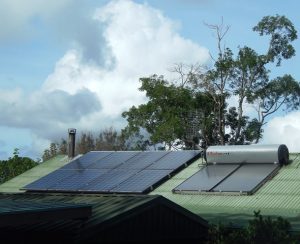
Solar-panels-energy Photo by Bob Wilson

Solar energy is great – we’ve got eight panels on the roof, a hot water system and a portable panel in the caravan. Pretty useless on Thursday, though, with ex-cyclone Debbie sending heavy rain our way. It would be great if we’d had a battery bank under the house to store the energy from the sunny weeks we’ve been having.

But battery bank technology is yet to become affordable for the 1.6 million Aussies who have solar PV panels.

I recently wrote about Australia’s troubled National Energy Network. We cited economist Professor John Quiggin, who suggested governments buy back the power grid and give the people what they want: cheap and reliable energy. Continue reading “Solar no easy energy fix”

Happiness, harmony and Central Africa

Co-cheol-harmony-happiness
Melbourne harmony singers Co-Cheol

A musician friend alerted me on Monday that not only was it his birthday, it was also International Day of Happiness. Once I’d finished doing cartwheels around the room in response to this spiffing news, I wished the dear boy a very happy birthday. As if that was not enough to get the cockles of the heart percolating, the next day She Who’ll Sing at the Drop of a Hat went down town to celebrate World Harmony Day.

Continue reading “Happiness, harmony and Central Africa”

Government buyback could solve power crisis

Wilpena-Pound-Power-Station
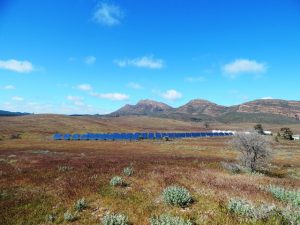
Wilpena Pound solar/diesel power station SA Photo by Bob Wilson

“If you’ve got money in your pocket and a switch on the wall, we’ll keep your dirty lights on.” So goes a song by American alt-country singers Darryl Scott and Tim O’Brien about coal mining and power generation.

Their album Memories and Moments includes a version of John Prine’s Paradise, which remains the definitive song about the downsides of coal mining.

That seemed a noteworthy way to introduce the potentially dry topic of energy, be it coal-fired, hydro, nuclear or solar/wind power. Continue reading “Government buyback could solve power crisis”

Goodwills’ house concerts later in 2017

While you’re here, make a note in your diaries for these other dates for Goodwills house concerts.

Chuck-and-Chrissy-Euston
Mr Chuck and Miss Chrissy

Sunday June 25, 2pm: Brisbane singer-songwriters Mr Chuck and Miss Chrissy are founding members of Brisbane band Stockade. Last year they performed at Neurum Creek Festival, where Chrissy also held a very popular harmonica workshop.

 
Sunday August 6 2pm: Irish songwriter Kieran Halpin (All the Answers, Angel of Paradise, Mirror Town), makes a welcome return to Maleny. He is visiting from Germany and on a tour of Australia. If you are not familiar with his work, go to his website and be amazed.
November: A 20th anniversary surprise. Date and details to be revealed.

If it doesn’t rain soon, mate

rain-soon-dam
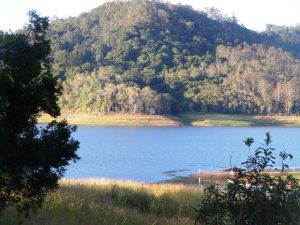
Baroon Pocket Dam March 8, 2017 (Photos by Bob & Laurel Wilson)

Conversations in the street of any Australian town often involve the weather, which over the past four months has been bereft of rain or “dry” (pronounced “droy.”

Tim: “How’s things, Harold?

Harold: “Droy, mate!”

Tim: “Got 10 points last night – hardly worth measurin’.”

Harold: “How’re dams holdin?”

Tim: “Nothin’ but mud and mosquitos.”

Mrs Harold: “If it doesn’t rain soon, mate, we’re gonna move back to the town.”

The latter is the narrator’s refrain from one of my songs; the laconic farmer, chin up as usual, watching the ABC. He’s being harassed by the banks, making do with pumpkin scones and home brew and tells the wife that if she must pay bills, pay the one with the lawyer’s letter – today.

Australian farmers are well-used to Continue reading “If it doesn’t rain soon, mate”

Australia’s hardship index

hardship-poverty-potato
“The Potato Index” Photo by Pat Joyce https://flic.kr/p/asBkcN

There’s an Aussie saying – ‘they’re doing it tough’, which can mean any variation on the theme of hardship, be it financial, emotional, physical or all three at once.

When the word ‘hardship’ is employed, it typically means financial struggle: in other words, privation, destitution, poverty, austerity, penury, impecuniousness and so on.

If you search the word ‘hardship’ online you will find a range of links purporting to explain (if you are doing it tough), how to apply for an early release of superannuation.

Continue reading “Australia’s hardship index”

Blogging and human rights

blogging-human-rights
Protest in Iran photo by Christopher Rose https://flic.kr/p/7CJsu7

In case you were curious, the word blog in Farsi looks like this – وبلاگ. Iranians who didn’t like the way things were going in their country started وبلاگ’ing (blogging) like crazy after the 2000 crackdown on Iranian media. Iranians who interact with the internet are by definition risk-takers.

As recently as late 2016, five Iranians were sentenced to prison terms for writing and posting images on fashion blogs. The content was decreed to ‘encourage prostitution’.

The Independent quoted lawyer Mahmoud Taravat via state news agency Ilna that the eight women and four men he represented received jail time of between five months to six years. He was planning to appeal the sentences handed down by a Shiraz court on charges including ‘encouraging prostitution’ and ‘promoting corruption’.

The immediacy of blogging appeals to those who live under oppressive regimes. They use the online diary to inform the world of the injustices in their country as and when they happen. I cited Iran (Persia) as just one example of a country where expressing strong opinions contrary to the agenda of the ruling government is extremely risky business.

The founder of Iran’s blogging movement, Hossein Derakhshan, an Iranian-Canadian blogger, spent six years in prison (the original sentence was 19 and a half years), before being pardoned by Iran’s supreme leader, Ali Khamenei. Derakhshan also helped promote podcasting in Iran and appears to have been the catalyst that spawned some 64,000 Persian language blogs (2004 survey). Clearly there is/was a level of dissent among people who think the right to free speech is worth the risk of incarceration or worse.

Blogging can be a lot of things in Australia, but risky it rarely is, so long as you are mindful of the laws regarding defamation and contempt of court. Not so for bloggers or citizen journalists of oppressed countries who try to get the facts out.

It is no coincidence that most of the countries guilty of supressing free speech are among the 22 countries named by Amnesty International as having committed war crimes. They include Yemen, Saudi Arabia, Syria, Sudan and, closer to home, Myanmar, where persecution and discrimination persists against the Rohingya. Amnesty’s national director Claire Mallinson told ABC’s The World Today that not only are people being persecuted where they live, 36 countries (including Australia) sent people back into danger after attempts to find refuge.

Amnesty’s Human Rights report for 2015-2016 does not spare Australia from criticism, particularly our treatment of children in custody, with Aboriginal children 24 times more likely to be separated from their families and communities. We are also complacent when it comes to tackling world leaders and politicians accused of creating division and fear.

Still, at least if you live in Australia you can openly criticise something the government is doing (or not doing), apropos this week’s Q&A and the Centrelink debt debate.

According to literary types who seem to have warmed to my turn of phrase, FOMM is not a blog as such, but an example of ‘creative nonfiction’ which I am told is not only a genre, but also something taught at universities.

I never knew that.

Bloggers in comfortable democracies like ours use blogs to write about cats, dogs, goldfish, cake recipes, fashion, yoga, raising babies, travel adventures and produce how-to manuals about anything you care to name.

The definition of a blog is ‘a regularly updated public website or web page, typically run by an individual or small group, written in an informal or conversational style.’

Scottish comedian and slam poem Elvis McGonagall, who you met last week, satirises the blog format with this entry.

Monday:

Woke up. Had a thought. Dismissed it. Had another. Dismissed that. Stared at the cows. The cows stared back. Scratched arse. Shouted at telly. Threw heavy object at telly. Had a wee drink. Had another. Went to bed.

Tuesday to Sunday – repeat as above

The definitive blog is an online daily diary, kept by people while travelling, carrying out some stated mission like preparing for an art exhibition, producing an independent album, dieting or training for a triathlon. Most of these literary exercises are abandoned at journey’s end, or on completion of the mission. A fine example of this is folksinger John Thompson’s marathon effort to post an Australian folk song each day for a year. He did this from Australia Day 2011 to January 26, 2012.

Some of the tunes have ended up on albums by Cloudstreet, Thompson’s musical collaboration with Nicole Murray and Emma Nixon.

The social worth of a blog, though, is when an oppressed human being writes a real time account of what atrocity or infringement of human rights is happening in their third-world village, right now.

There are millions of blogs circulating on the worldwide web, many of which are concerned with marketing, selling, promoting and luring readers into subscribing to the bloggers’ products and/or clicking on sponsors’ links. It is nigh-on impossible to find a list of blogs independently assessed on quality, although some have tried.

The Australian Writers Centre held a competition in 2014 to find Australia’s best blogs, dividing entries into genres like Personal & Parenting, Lifestyle/Hobby, Food, Travel, Business, Commentary and Words/Writing. The competition attracted hundreds of entries which were whittled down to 31 finalists.

The AWC told FOMM it has since switched its focus to fiction competitions but has not dismissed the popularity of blogging. Even so, continuity is an ever-present issue.

The 2014 winner, Christina Sung, combined travel and cooking, two topics which spawn thousands of blogs worldwide, into The Hungry Australian. But as happens with blogs, the author has somewhat moved on since then. As Christina last posted in September 2016: ‘Hello, dear readers! Apologies for my lengthy absence but I’ve been working on a few writing projects lately.’

Likewise, the author of The Kooriwoman, the Commentary winner for a blog about life as an urban Aboriginal in Australia, has not posted since January 2016.

It is not uncommon for finely-written blogs like those mentioned to have a hiatus or disappear without notice, for a myriad of reasons linked to other demands and distractions in the authors’ lives.

The few lists of Australian blogs you can find tend to rank them on popularity (numbers of followers or clickers). The top 10 blogs in this list are all about food or travel.

Hands-down winner Not Quite Nigella is a daily blog curated by Lorraine Elliott who according to blogmetrics has 28,523 monthly visitors. It’s not hard to see why – the blog is constantly updated with recipes, restaurant reviews, travel adventures and the like, featuring mouth-watering photos and a chatty prose style.

So there are those like Lorraine who make a living from blogging and those who start with a skyrocket burst of enthusiasm and fall to ground like the burnt-out stick.

Whatever your absorbing passion in life happens to be – cross-dressing, wood-carving, wine-making, writing haikus, collecting Toby jugs, quilt-making, proofreading or growing (medicinal) marijuana, you can bet someone out there has created a blog.

Just yesterday for no reason other than a bit of light relief after months of heatwave conditions, I searched for ‘grumpy spouse blog’ and got 22 hits. Have a look at this one – it’s choice.


Great wall of Mexico

great-wall-mexico
South Australia dog fence Photo by Bob Wilson

There are precedents for President Donald Trump’s plan to build, or complete a 3,208 kilometre wall between Mexico and the US. The Australian outback features not one but two barrier fences, sprawling the length and breadth of the country.

A tour guide took us on a sunset tour out to the ‘dog fence’ near Coober Pedy in 2014. The South Australian section of the 5,531km fence which runs from the SA border to Queensland is 2,250 kms long.  Built in the 1880s, it’s the longest fence in the world and keeps wild dogs out (or in).

In Western Australia there’s also the 3,256 kms long Rabbit Proof Fence. Possibly because there’s a movie by that name, it is now known as the State Barrier Fence of Western Australia. Having done our share of outback travel, we can tell you that rabbits are still breeding away and undermining parts of Australia, despite myxomatosis, 1080 poison and vermin proof fences. Western Australia’s fence was completed in three stages in the early 1900s as an attempt to isolate the west from the national rabbit plague.

Just so you all know, dingoes and rabbits were not asked to pay for the construction of these fences.

Yes, it makes you think.

There’s no doubt that well-built vermin fences, extending a long way into the ground, have been successful at keeping rabbits and other pests from undermining Australia and also prevent dingoes from savaging livestock. So the cost is defendable, as is the ongoing expense of sending out boundary riders on weekly repair patrols. Feral camels do the most damage, so not surprisingly; there are plans for a taller (electrified) fence.

So what about President Trump’s wall between Mexico and the US? Despite the fact that a 1000 kilometre stretch was completed by George W Bush’s government, this is still going to be a $20 billion exercise. Crikey, that’s about 30% of the US education budget, right there.

And speaking of education, a Pew Research survey found that 61% of Americans think a wall between the US and Mexico is a dumb idea.

Our Albuquerque correspondent, despite living 693 kilometres from the New Mexico border at Juarez, thinks the wall is ‘insulting, a blight and really bad foreign policy.”

Thanks to Bloomberg and heavyweight sources like the Department of Homeland Security, here’s what we know about the challenges facing President Trump’s wall. The notoriously porous border between the US and Mexico is almost 3,208 kilometres long, two-thirds of it tracking the Rio Grande River. The border passes through cities including San Ysidro (California) and El Paso (Texas), rural farmland, desert, mountains and wildlife reserves. The border features 30+ patrol stations and 25 ports of entry.

Barriers already extend along a third of the border, giving President Trump’s contractors something of a head-start. Most of the California, Arizona and New Mexico borders have existing barriers. These range from 5.5m high iron and corrugated metal fences to what our Albuquerque correspondent calls “pedestrian fencing.’

Bloomberg reports that in 2015, the Customs and Border Patrol claimed an 81% strike rate for apprehending and turning back Mexicans attempting to cross illegally (or should that be irregularly).

No-one really knows how many undocumented Mexicans are living in the US but informed estimates figure around 11 million. There have been amnesties in the past, but that does not appear to be an option under a Trump administration.

A Pew Research Centre survey conducted in 2015 found that 72% of Americans (including 80% of Democrats, 76% of independents and 56% of Republicans), thought undocumented immigrants should be allowed to stay “if they meet certain requirements.

Most of the existing border fence was built after 2006, when President George W. Bush signed the Secure Fences Act. I hate to be pedantic, but the act specifically says “Fences” not walls. When President Trump talks about his vision, most of us imagine a Great Wall of China or the 8m high sections of the West Bank edifice.

Al Jazeera reports that the West Bank security fence is the largest infrastructure project in Israel’s history. Nearly 15 years old, the 706km long fence costs Israel $260 million a year to maintain.

The ‘separation barrier” as it is coyly known, comprises mostly 2m high, electrified barbed-wire fences with vehicle-barrier trenches and a 60m exclusion zone on the Palestinian side. But in densely populated urban areas with space limitations, the Israelis built an 8m concrete wall.

Walls built between countries or within countries are always controversial, and, well, brutally divisive.

There’s no space at this time to delve into the tragedies of the Berlin Wall, which divided East and West Berlin for 27 years, for reasons which now seem specious. History shows that barrier walls built for whatever reason are destined to become decaying tourist attractions,

Visitors to Britain often schedule a visit to Hadrian’s Wall, a fascinating relic of 122AD when the emperor Hadrian demanded a wall be built east from Wallsend on the River Tyne to Bowness-on-Solway in the west. Hadrian’s Wall was the north-west frontier of the Roman Empire for nearly 300 years, built by the Roman army (to separate the barbarians from the Romans). Hadrian’s Wall was made a World Heritage Site in 1987.

In 2010 English folksingers Julie Matthews and Chris While joined a group of songwriters to write songs inspired by Hadrian’s Wall. Their song which emerged from the All Along the Wall project, Rock of Gelt, imagines a bored centurion who has been dragooned, if that is the appropriate word, into “building the Empire’s last frontier.”

There are only a handful of inscriptions to be found along the remains of the stone wall, including a piece of graffiti found in the Gelt Valley. It translates to: “Daminius didn’t want to do it,” which becomes the repeated refrain at the end of the song.

So will Donald Trump persist with a plan to build/complete a wall that 61% of Americans do not want? No doubt the 39% who want it would argue it will employ large numbers of people, through the building phase, then on maintenance and security.

Maintenance of walls and fences is an ongoing issue – just ask a fencing contractor called in to repair or replace fences wrecked or washed away in floods. The annual maintenance bill to keep the Dingo Fence in sound repair is around $10 million, according to an article in The Conversation. The authors argue for a re-think of the country’s vermin fence policies, including a plan to move a section of the fence to test whether the now endangered dingo can help restore degraded rangelands.

The humanitarian question is, if you must build a barrier wall or fence, surely you should have to justify the exclusion of a species?

As poet Elvis McGonnagal wrote, inspired by the Along the Wall project:

“Walls entomb, walls divide

Walls barricade the unknown

Berlin, Belfast, Gaza

Walls set difference in stone

 But the same sun that sets on the west bank

Rises up on the eastern wall

A man’s a man in Mesapotamia

A man’s a man in Gaul.”

*thanks to Julie Matthews for the insights