Birthday musings about ageing and mortality

old-man-and-birthday-dog
Old man and dog – photo by Bob Wilson

So I’ve picked a table at the combined 70th birthday party, met the woman next to me and nodded to her husband. It’s an outdoor setting for 40 people with five big tables and much background noise from kitchen activities. We say hello to the hosts, and, according to the way their lips moved, they reply “glad you could make it to our birthday”.

After a while, I set my hearing aids to ‘noisy room’ which basically meant I could talk to the person on my right and She Who Sits on My Left. After the main meal I got up and milled about, having one-on-one discourse with people who tended to lean towards me and say things like “Sorry I missed that?”

The birthday girl made a short but gracious speech without benefit of microphone. We were all lip-reading like billyo.

“It’s good to see you all – and as Keith Richards said, ‘it’s good to see anybody,’ ” she quipped.

The birthday boy also spoke briefly and said that while it was lovely to see us all, he doubted he’d ever see all of us again in the same room. It was just the right sentiment for a 70th, where the guests were either approaching that day or had passed it some years earlier.

Crikey, this is becoming a habit, raising our glasses to people crossing the threshold of seven decades. Who’d have thought?

The conversations ranged around ageing, mortality, health scares, belief systems, technology and Donald Trump. I told someone mortality rarely occurred to me these days though when I turned 40 I’d lie awake observing my heart beat and wondering if and when it would stop. Neurotic, yes, but you knew that.

Comedian, actor and writer George Burns, who died at 100, once said “You can’t help getting older, but you don’t have to get old.” Burns also said that when he was a boy, the Dead Sea was only sick. So he carved out a later-life career making fun of his ability to live into his 90s and still smoke cigars.

Making A Movie About Moses

Some people seem able to reach a great age staying mentally supple. I picked up a book in the library by one Herman Wouk, author of the Caine Mutiny, et al. Turns out this book (The Lawmaker, about a new Moses movie), was written when Wouk was 98. He followed up at 99 with: Sailor and Fiddler: Reflections of a 100-Year-Old Author. He described the latter as “…the story of my life, light-hearted because I’m an inveterate Jewish optimist.” It was released in January 2016 to mark his 100th birthday. Wouk married Betty Sarah Brown in 1945. Betty, who was also his literary agent, died in 2011, aged 90.

I felt a surge of guilt about my long-neglected habit of keeping a daily journal when I read that Wouk has been doing this since 1932. What a trove for historians.

Like Wouk, George Burns advocated staving off old age by continuing to work.

“Age to me means nothing. I can’t get old, I’m working,” he said. “I was old when I was twenty-one and out of work. As long as you’re working, you stay young.”

Yeh, maybe, but Burns also said the key to longevity is to avoid stress and tension. Just how you do that and keep working is a secret many of us have never learned.

So we of the nearly-70 brigade return to our routines, tucked away in our semi-rural house, fans set on high, watching Breaking Bad and waiting for the next invitation to an event that isn’t a funeral. No wonder so many older Australians buy a road rig, preferably with the bumper sticker ‘adventure before dementia’, and traverse this big red continent.

In our society, siblings resolve between them the decision about caring for elderly parents. Some take care of their parents in their own homes, or under the one roof. Others hand-ball the folks to a retirement village, preferably one with an associated nursing home.

The onset of dementia usually accelerates the decision to admit Mum and/or Dad to an aged care facility. It’s not easy caring for people with dementia and it can only get worse.

In some societies, this outplacement of old folk is not culturally acceptable. Seniors, demented or not, are the respected elders of the tribe and take their rightful place at the head of the table.

Global Agewatch maintains an index which measures income security, health, personal capability and whether elders live in an “enabling environment”. Indicators include life expectancy, coverage by pension plans, access to public transit and the poverty rate for people over 60.

Switzerland is the best place to be if you are past 65 and wondering what comes next. Norway and Sweden are 2 and 3 in this important global index, which is to be updated in 2018.

Australia is ranked 17th, below countries including Canada, the UK and New Zealand. Australia ranks highly in some domains (health, social connectivity) but it ranks lowest in its region in the income security domain (62), due to high old age poverty rate (33.4%) and pension income coverage (83%) below the regional average.

So yes, some societies revere the elderly and there is never any question about one’s parents being moved to a retirement village or aged care facility. In China and Japan there is the Confucian code of filial piety, in essence a system of selfless subordinate relationships. An article by Mayumi Hayashi, however, considers the myths surrounding family care, filial piety and how these systems can break down in urban Japan.

Hayashi says the limits of family care were recognised by successive governments in the 1960s. But public residential care was restricted to people lacking financial means and family support. Other problems with Japan’s system include family ‘care’ that involves neglect and abuse. From the 1970s, large numbers of ‘abandoned’ older people became resident in hospitals, often with little need of medical care. This ‘social hospitalisation’ remains stigmatised, says Hayashi, and an option of last resort, like Obasuteyama.

The latter is a Japanese custom of the distant past where frail aged relatives (usually women), were allegedly taken to remote mountain areas and left to their fate. The practice was said to be most common during times of drought and famine. It was also sometimes mandated by feudal officials (although Wikipedia notes a citation is needed to verify this).

Myths persist of similar practices among other societies – for example the Inuit, placing their frail old ones on ice flows and letting them drift off to a certain death.

The notion of a loving son or daughter propping their old Da up against a tree in his favourite part of the forest has (for me) some appeal. The alternative, 24/7 care in an aged care facility, has none. The denouement is the same.

More reading:

Founder and former chairman of National Seniors Australia Everald Compton, now in his 80s, continues to campaign for seniors.

Kathryn Johnston’s blog Scattered Straws has lately has been focussing on the (financial) plight of the Naked Retiree.


Speed dating with Stan

Stan-old-tv-1970s
Photo: Paul Townsend https://flic.kr/p/f9o9TQ

Sometime in December, I signed up for a one-month free trial with a streaming service, just to see how it measured up. A week later I was telling a young friend, “I’ve been speed dating Stan.”

He gave me that WTF look 30-somethings sometimes give their elders: “It’s called binge-watching, Dude.”

And so it is. If you succumb to the marvels of being able to stream TV drama to your mobile phone, iPad, laptop and now even to your big screen TV, you can watch anything, anytime, anywhere.

I rather quickly got caught up in the misadventures of one Walter White, a mild-mannered chemistry teacher who turns to making and dealing methamphetamine as a way of funding chemo for his newly diagnosed lung cancer.

An implausible premise, maybe, but that peerless actor Brian Cranston, as Walter, pulls it off, in each and every improbable episode. His dunderhead brother-in-law Hank, who works for the Drug Enforcement Administration, continues not to see the forest for the trees.

Binge-watching is an unhealthy past-time, though, earbuds in, snuggling into your bed at 7.30pm ready to watch back-to-back episodes of Game of Thrones, House of Cards or Breaking Bad. There is the potential to fragment the family unit more than ever before. Mum’s in the lounge watching catch-up TV episodes of Gardening Australia. Teenage son is downstairs watching who knows what, teenage daughter is Skyping her friends who are backpacking around Europe; Dad’s got his headphones on watching Trapped on his smart phone and Little Dan is playing X-Box in the rumpus room. It’s a long way from the nuclear family enjoying My Three Sons, The Munsters or Mr Ed on a black and white TV.

I rarely watch more than two episodes of Breaking Bad in a night and not every night, but I’m half-way through season two already.

“Have you got to the bath scene yet?” my son asked. Yes I had. And it confirmed the wisdom of my decision to watch this dark comedy alone, as She Who Has an Aversion to TV Violence would have puked.

Oops, I think that’s what they call a ‘spoiler’ in streaming TV circles. Any day now someone will form a covers band and call it The Bath Scene from Breaking Bad.*

Call me a late adaptor, but what drove me to engage with streaming TV was the appallingly sparse fare offered by free-to-air TV in December/January.

Stan’s free trial period expired fairly quickly. I knew this when $10 was deducted from my credit card. Oh sure, I knew they would do this unless I told them not to – but they could have emailed, sent a text?

“Dude, we see you’re a fan of Breaking Bad! Where’s our money, Yo!”

Streaming services offer great value to people who like watching a TV series from beginning to end. The other investment I made, in what amounts to creating in-house entertainment in a time devoid of quality TV programming, was to purchase Google’s Chromecast device. Apple, Amazon and others have their own version of a device which enables you to ‘cast’ a TV programme from your phone or iPad to the big screen at home. These gadgets are inexpensive for what they offer. But most households will have to buy a Wi-Fi extender to ensure the programmes stream and play without buffering or crashing.

If this is old technology, what’s next?

This is already old technology as most “Smart TVs” made after 2014 (obviously not ours), come with Stan and Netflix built-in. So with the variety of ways one can seek out TV content that is not free-to-air (and I have not even mentioned Torrens), commercial TV is seriously up against it. As an extra enticement, most streaming services, unlike Pay TV, can be watched ad free.

Harold Mitchell, chairman of Free TV Australia, launched a campaign in October 2016 lauding the industry’s 60 years of achievements, its 15 million audience reach, stressing how badly Australia needs free TV.

In AdNews, Mitchell defended free to air television, saying it invests more than $1.5 billion in local content, employing 15,000 people.

He warned that commercial TV’s investment in (local) content is under threat from unregulated digital media companies,

 “Australian licence fees are about three and a half times greater than in the next highest market, which is Singapore, and more than 115 times greater than in the United States.”

At its best, free TV offers live events like cricket tests, rugby union, rugby league, AFL and soccer matches, golf tournaments, the Australian Open, the NRL Grand Final, the Olympics, Winter Olympics and, whether it’s your thing or not, 24/7 news.  No matter how generally awful the evening programming is in the summer, if something dramatic happens anywhere in the world, you can be sure the ABC, SBS, 7, 9 and 10 will be right across it, instantly.

Nevertheless, if not for the Australian Open (tennis) or perhaps the Cricket, there would no incentive to turn the TV on in January. There are repeats, repeats of repeats, vapid soapies; Kevin McCloud’s bespoke TV shows about people spending copious sums fixing up falling down buildings, the ubiquitous cooking competitions, and a puzzling show where a man and a woman loll about on a bed in their underwear. I gather there is supposed to be ‘chemistry’. Walter White would give them an F.

A day to mourn dispossession & dispersal

Last night I flicked through TV news to see how Australia Day was portrayed. It was as you might imagine. Flags and more flags, sausages on the barbie, gumboot-throwing competitions, families at the beach, cars with flags fluttering from their windows. Some channels covered the protests in Melbourne, Brisbane and Sydney, the latter ‘erupting in violence’ as one person allegedly set fire to a flag. Tens of thousands gathered in capital cities, all calling for a change of date. Many indigenous people call it “Invasion Day” – the anniversary of the British First Fleet arriving in Australia.

Fremantle Council, despite bowing to pressure from Canberra to hold Citizenship ceremonies, has become a poster child for the #changethedate movement. Council plans to hold a “culturally inclusive” celebration on Saturday (despite WA Premier Barnett urging Councillors to “pull their heads in”.)

Overwhelmed by jingoism, we engaged the ‘casting’ device, which not only allows you to watch Stan or Netflix, but also catch up on ABC, SBS and commercial station programmes. So far we have watched Outback ER, an ABC reality TV doco set in Broken Hill. What does happen when you have a heart attack and you are 500 kms away from cardiac specialists?

We watched Concussion on Stan last night. At $10 a month and no advertising, Stan is a no-brainer option for a media consumer. It is dearer than free TV, certainly, but the options are seemingly limitless.

Meanwhile, I’ll probably have to sign up for Netflix as well, as I see there is a fourth (and maybe even a fifth) season of House of Cards in the wings. I figure I owe Netflix money as I watched all three series of House of Cards last year during my one-month trial (39 episodes).

Now that’s what I call speed dating!

*Cultural reference to a 1990s Melbourne band called The Shower Scene from Psycho.


Trump vs the rest

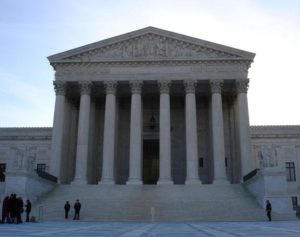
US-Supreme-Court
US Supreme Court – photo by Freeimages.com

President-elect Donald Trump is taking the oath of inauguration tomorrow (our time) burdened by a legacy of some 75 unresolved civil court cases. Trump or his businesses are involved in these cases, all at varying stages, with Trump as plaintiff or defendant. This would normally be business as usual for Trump, but for the fact that he is the President-elect.

Exhaustive research by US Today shows Trump and his businesses have been involved in more than 4,000 civil cases over the past three decades. They include branding and trademark cases, contract disputes, employment cases, personal defamation suits and about 190 government and tax cases. About half of the civil suits involve Trump’s casino businesses and a large number involve his real estate businesses.

US Today set a team of reporters and researchers on a monumental, ongoing task of tracing the litigious President-elect’s track record.

Of immediate concern are the 75 open cases in the background as Donald John Trump prepares to take office as US Commander-in-Chief.

The type of civil action which can prove difficult for an incoming President or Prime Minister is defamation. Some consider it unsporting for the leader of a country to sue someone (usually a media organisation) for defamation. As the number one public figure in a democracy, you’re supposed to roll with the punches.

This may not be the case with Donald Trump. During his presidential campaign, he threatened to sue all the women who accused him of unwanted sexual advances and also said he would sue media outlets who reported the claims. (By extension this ought to be worrisome to anyone who re-posted related remarks on Facebook or Twitter).

US Today say that although Donald Trump has frequently threatened to sue for defamation, he rarely follows through and has won only one of 14 cases since 1976.

It may well have been the case if he had not won the presidency that Trump would have pursued the women he called ‘liars’. However, it would seem a bridge too far to expect a brand-new President to deal with such distractions, which, if pursued to trial, could result in (President) Trump being called to give testimony under oath. So as his presidency begins, can we expect to see more civil cases being dropped or settled?

The BBC reported that Mr Trump faced three fraud cases related to Trump University, which closed in 2010. The first case, brought by students who claim they were deceived by Trump University’s marketing, was to have been heard 20 days after the election.

Although repeatedly saying during his campaign that he would “never settle”, in November Trump closed all three cases in a $25 million private settlement.

The issue of Trump and his legal legacy has not been greatly pursued by the media, but it is an immediate impediment and distraction to his getting on with making America great again.

The President-elect will no doubt make his own mind up whether he can afford to be distracted by these 75 legal challenges, carried over from his volatile business life and the long campaign to establish himself as a presidential contender. None of these cases can be ignored. As plaintiff he must either pursue his claim or withdraw. As defendant, he must defend or offer to settle. In just one example cited by the BBC, Trump is being sued by Republican political consultant Cheryl Jacobus. She filed a $4 million libel lawsuit claiming he “destroyed her career” by calling her a derogatory name on Twitter.

John Dean, former legal advisor to Richard Nixon, analysed similar outcomes for four other Presidents in a Newsweek article. Theodore Roosevelt, Harry Truman, John F. Kennedy and Bill Clinton all carried civil suits into the Oval Office. Most of these cases were quickly disposed of; however Bill Clinton was not so fortunate. Clinton vs Jones went all the way to the US Supreme court, which held that a US president is not immune from civil litigation involving matters occurring before he took office. If you had forgotten or were curious, searching Clinton vs Jones will take you on a journey.

I’ve been pursued by one or two lawyers whose clients claimed I had defamed them (in my newspaper reporting days). Typically, a news outlet can make a claim for defamation go away by printing or broadcasting an apology. Since most cases of libel amount to mistakes (the mistake occurred in the production process), apologising seems the sensible option.

Or the publisher can get on his high horse and defend the charges, which can, as you may have noticed, cost millions and go on for years.

It is often the case for those mounting a defamation case, here or in the US, that the length of time it takes to come to trial and the extent of legal costs increasingly encourages the aggrieved person to settle for an apology and (sometimes) an undisclosed amount.

I worry about people who make heated comments online about politicians. There’s no doubt the people they are castigating deserve a level of criticism. But it has to be defensible.

There have already been cases in Australia where people were sued for defamation over Facebook posts with some payouts approaching six figures. So next time you’re set to post about the neighbour’s barking dogs or the idiots who party till five in the morning every day of the week, take a break, go for a walk, calm down.

Meanwhile, here’s a bit of evidence that politicians may not always be prepared to take the flak that comes with being a public figure, Crikey has compiled a list of politicians who have sued Australian media outlets for defamation. It’s a long list.

As for Donald Trump and his ongoing civil litigation caseload, the length of time it takes for a case to come to trial may be one factor influencing decisions to settle. The average time (in America) from complaint to trial is 22 months and all that time the legal system’s meters are running. According to California Labour and Law’s Eugene Lee, a US Bureau of Justice Statistics national survey revealed that only 3.5% of disputes were resolved by trial. Most are resolved by settlement.

Columnist Sadhbh Walshe writing in The Guardian claims America’s ‘litigious society’ is a myth. He cites data that shows only 10% of injured Americans ever file a claim for compensation and only 2% file lawsuits.

“So we’re really not all that litigious, yet we continue to be treated with kid gloves as though all it will take is a scraped knee for us to be on the phone to our lawyers.”

This will be no comfort at all to incoming President Trump, whose net worth of $3.7 billion makes him an obvious target. US Today also looked into presidential candidate Hillary Clinton’s exposure to the courts. They found her named in 900 actions, most as defendant. More than a third of these claims were lodged by federal prisoners, activists and other citizens seeking redress from government.

The ‘pick a big target’ tactic seems at odds with the argument that the ‘litigious society’ is a myth. What do you reckon?


Cloudstreet Maleny concert Feb 19

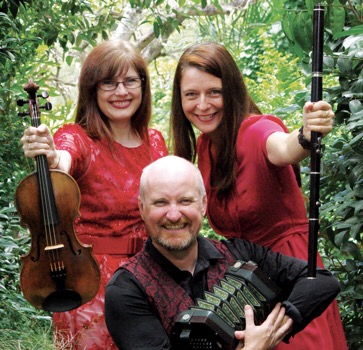
Internationally renowned folk group Cloudstreet return to Maleny on Sunday February 19 for their fifth appearance as guests of The Goodwills (Bob & Laurel Wilson).

Original members John Thompson and Nicole Murray, now teamed up with fiddle player and singer Emma Nixon, performed six times at Woodford Festival 2016. Their latest CD, Clouded House, the 8th Cloudstreet album since John and Nicole began performing together in 1999, was launched in late 2015. Clouded House includes a bizarre song about a colony of beavers relocated to a new home – by parachute! Here’s a more serious trad song from the same album – The Catalpa – performed in two time signatures.

Cloudstreet perform New Australian folk music, a combination of Anglo-Celtic and Australian traditional songs and tunes, coupled with trad-styled original songs. Their music is arranged for an array of instruments including guitar, concertina, flute, whistle and fiddle and now includes the fiddle playing brilliance and vocals of Emma Nixon.

Nicole and Emma have also performed at a Goodwills’ house concert as The Wish List. The duo performed at the Illawarra Folk Festival last month and taught fiddle at the festival school.

Host Bob & Laurel Wilson (The Goodwills) will present a preview of their latest project, a collection of essays written by Bob, each based on the topic of a song. Bob is aiming to publish the book with an accompanying CD, “Goodwills by Request” before Christmas 2017.

This is the 20th year The Goodwills have held concerts in their home, first at Fairfield, Brisbane, then for the past 14 years in Maleny, mostly to full houses so it pays to book ahead.

The Cloudstreet concert starts at 3pm. Tickets are $15/$12 and afternoon tea will be available. Bookings are essential. Email Laurel [goodwills at ozemail.com.au] or use the contact page.

Goodwills house concerts are sponsored by the Queensland Folk Federation (QFF).

Not waving, drowning

<photo by Brian Hartigan www.andyirvine.com>

Veteran Irish songwriter Andy Irvine took a moment during his recent concert in Brisbane to tell a story about the day he was almost a drowning victim off a New South Wales beach. You could hear an intake of breath among the devotees gathered at the Old Museum. A founding member of the 1970s super group Planxty, Irvine visits Australia over and over – loves the place. After his first-half gig, he told us he had to leave almost immediately to drive to Sydney, where he would catch a flight to Tasmania next day. The life of a troubadour.

As he told it, the near-drowning happened when he was swimming at a beach in northern NSW. He got caught in a rip.
“I didn’t even know what a rip was,” he told the audience. “All I knew was the harder I swam the further out to sea it took me.” Close to exhaustion, wondering if his time was nigh, Andy dimly heard a gruff voice off to his right: “Oi, mate, over here.”
“I knew it,” said Andy, “God’s an Australian.”

More later in this piece about drowning and why 83% of victims are males (and 8.83% are overseas visitors). Andy was rescued from the surf and, under protest, taken to a hospital for observation. The local newspaper reported “Irish tourist saved from rip.” If only they knew.
So we savoured that concert, where the humble 74-year-old singer-songwriter and campaigner for social justice took us through a mixed set, including the famous My Heart’s Tonight in Ireland, A Blacksmith Courted Me and a complex story-song about Harry Houdini.
After chatting to fans and posing for photos, Andy and his wife Kumiko loaded up their Landcruiser with his bouzoukis and octave mandolin and set off for Sydney. At an age when many of his generation are playing lawn bowls, going on South Pacific cruises or pushing up daisies, he sets a cracking pace. In late November, he wrote on Facebook about having finished a marathon tour of the UK and Germany – 43 gigs in 59 days, wryly saying he needed a day off.
In December, he headed to Australia, teaming up with young Tasmanian musician Luke Plumb, who is back living in Australia after a decade playing with Scottish folk-rock band Shooglenifty.
The duo featured at Woodford Festival, after which Plumb went home to Tassie where he reunited last weekend with Irvine at the Cygnet Festival. Irvine and Plumb have two more festival bookings (Illawarra and Newstead) with concerts in between.

January, the month of drownings

Some of you might be still saying “Andy Who?” even though some of his May gigs in Ireland are already booked out. He’s as popular as ever among Irish music fans. There’s always rumours of another Planxty Reunion (with former members Donal Lunny, Liam O’Flynn and Christy Moore), last heard together in 2004.

And we owe it all, apparently, to a couple of bronzed Aussie surfers, standing up to their thighs on a rock shelf, willing an exhausted Andy Irvine to paddle his way towards them.

All Australians should be able to swim. It is a necessity in a continent with a 19,320 km coastline. But, whether they could swim or not, 280 Australians drowned in 2015/2016, 83% of them males. They drowned in the surf; they drowned in rivers, creeks, lakes and waterholes. Some were swept off rocks while fishing, some were tipped out of boats, but most were drowned while swimming at beaches.

We all know it is foolhardy to swim outside the flags or worse, at an unpatrolled beach. Many of us have had our brush with death via rips or other misadventures, as happened to me one time in the 1960s.
Clowning around in the east coast surf with my teenage mates I was suddenly dragged out of my depth, a powerful current towing me out to sea. I remembered from a physical education lesson, if finding yourself in trouble; raise your arm as high as you can. So I did and lucky for me that Dave, a member of the school swimming team, was further out than me and grabbed my arm as I swept by.
“What you doin’ out here?” he said, tucking his arms under my armpits and swimming backwards down shore where we emerged tired but happy.
Go on, you all have stories like that. Things you never told your mothers.

Your penance, should you choose to do it, is to download the Royal Life Saving Drowning Report 2016, from which these facts emerge.

Even if you skim through it, you’ll be all over your teenage kids like sand rash. The statistics which chill are as follows:
Drownings: 280
Men: 83% Women: 17%
Average age: 43.1
Age groups with most drownings:
25-34 (19%); 35-44 (15%);
Unhappily, drownings in the aforementioned age groups are increasing against the 10-year average, by 27% and 11% respectively.
The positive news in this sobering, 32-page report is that education programs are working on youngsters and their parents. Drowning deaths are down 30% in the 0-4 years group and 38% in the 5-9 age group.
There were 14 drowning deaths among the young (5 to 17) in 2015-2016, with a somewhat telling increase to 23 deaths in the 18-24 age group.

If I may editorialise, the latter can be largely explained away in the song by Rage Against the Machine− “F**** you I won’t do what you tell me.” Youngsters love to rebel and one clear way to give the metaphorical finger to your folks is to go swimming at an unpatrolled beach.

The Australian Water Safety Strategy has some ambitious targets, the key one being to reduce drowning deaths 50% by 2020.
This includes targeting “key drowning challenges” which are: boating, watercraft and recreational activities, alcohol and drugs, high-risk populations and extreme weather.
Royal Life Saving found that 44 people died with positive alcohol readings in their blood stream. More than half were above the legal limit in most Australian states and territories (0.05mg/l). Of those, 40% recorded a blood alcohol reading four times the limit or higher. Similar figures were quoted around people with cannabis or methamphetamine in their blood.

Who me, swim?

I’d like to say I can swim, after braving adult learn to swim classes in the 1990s. If you threw me in the deep end of a pool I’d paddle my way to the shallow end. But these days, if I were swept off my feet in angry surf, in future you’d be re-reading some of the early FOMMs and saying “Such a shame about Bob”.
If you’d wondered, I’m writing this not because it’s Friday the 13th, but because January is the month when most drownings occur (40 deaths last year). This is the main holiday time for families with young children and inevitably they head for Australia’s beaches. They need to be vigilant.

Some closing words, then, from Andy Irvine, ABC regional radio, circa 2003. He’s set to play his song, “My Heart’s Tonight in Ireland,” about the days in his first band, Sweeney’s Men.

“I’ve reached an age of looking back nostalgically at my past,” he told ABC South West Victoria Radio’s Steve Martin. “I nearly drowned in New South Wales about ten years ago and I wrote that in hospital. I was recovering from my near-drowning experience.”

‘Irish tourist’ indeed.

YouTube: My Heart’s Tonight in Ireland (with Donal Lunny)

Cucumbers and the silly season

cucumber-silly-season
Photo by Scott Elias https://flic.kr/p/iAVph

All through my journalism career I tried to take holidays at this time of year – the peak summer period known universally as the ‘silly season’ It’s called that, here and abroad, to describe the sudden drying up of real news stories (or even cleverly disguised fake stories). The media must continue on its 24/7 quest for yarns, but the fare becomes increasingly trivial, short on detail and (gasp) exaggerated.

In Australia, the ‘do not disturb’ sticker can safely be slapped across the calendar between December 23 and January 26. This is when all traditional news sources and their spin doctors head for the beach. Businesses close, parliaments and law courts go into recess. It’s down to emergency services to keep the media fed, and there’s a limit to the amount of mayhem holiday-makers can digest through the festive season.

Smoke but not much fire

Here’s a splendid example of a silly season story, introduced by a breathless headline: “Warwick church struck by lightning”. The fire brigade turned out in numbers to St Mary’s Catholic Church, a Warwick landmark, as did spectators. St Mary’s administrator Kathleen Cuskelly told FOMM the fire was not serious but could have been without the call to emergency services by a witness to the lightning strike. The blaze, which damaged two square metres of ceiling above the side aisle, was extinguished by a lone firefighter who found his way in through a back door.

The church-hit-by-lightning yarn certainly livened up the week for weather-watchers, braced as always for a natural disaster but more often left without a real story.

Mariah Carey’s Times Square technically-flawed performance on New Year’s Eve had the celebrity writers rolling in oily hyperbole. Carey described by maxim.com as the ‘golden-throated chart-topper’ was left on centre stage unable to cope with lip syncing which went awry. Someone played the wrong track, leaving the lesser-crested warbler nonplussed. The Daily Mail (UK) summed it up:

Mariah Carey has stormed off stage after she lashed out during her botched New Year’s Eve performance, after the wrong lip-sync track played.”

That’s a lot of storming and lashing over a relatively tiny tinkle in a teacup. Besides, Mariah sang the hell out of Auld Lang Syne at the start and that’s what counts, right? And she appeared to know all the words.

A few days prior to this earth-trembling news, like so many other heat-stressed people, I was hanging out in the local supermarket, hovering around the deli fridges, a packet of frozen peas clamped to the back of the neck. My mobile chirped and there was a text message: “jar of pickles pls.” Thus challenged, I quickly grabbed a jar, added it to the week’s supply of groceries and headed for the check-out.

The peak summer months, when Europeans and North Americans lock up and head for the beaches, coincides with the cucumber harvest. So their ‘silly season’ is known in many northern countries as ‘cucumber time’.

The ever-useful Wikipedia reveals that in many languages, the name for the silly season references cucumbers (more precisely: gherkins or pickled cucumbers). Examples given include komkommertijd (Dutch), agurketid (Danish) and agurktid (Norwegian, where a piece of news is called agurknytt i.e., “cucumber news”).

There are other examples: the Sommerloch (“summer (news) hole”) in German-speaking countries; la morte-saison (France) and nyhetstorka or news drought, in Sweden.

Media analysts have speculated that people employed as public relations consultants or media advisors in private enterprise and government now outnumber real journalists by five to one. The highly-paid spin doctors take January off and go to the beach. So their carefully crafted “news” releases, sanitised, scrutinised and signed off on by at least 10 people slow to a trickle then stop.

Meanwhile, the skeleton squads left holding the news forts have to forage for items to fill the ironically larger news holes (in the newspaper business advertising also takes a holiday). So the only thing a reporter or a news crew can do is follow the fire engine. On arrival, take emotive video of the cat stuck up a gum tree and hope (though only deep within their craven souls) that the rescuer in the cherry-picker might take a nasty tumble from a great height. The video editor can lip-sync it later and the presenter can do the nodding I-was-really-there-honest footage later. Back to you in the studio, Brian.

Bob Hawke lobbies for nuclear waste (again)

Perhaps the most egregious silly season story thus far was the reporting of comments made at a Woodford Festival talk by former PM Bob Hawke. Mr Hawke said Australia should embrace nuclear power and become a country where the world can store its nuclear waste. Mr Hawke has said this before, many times, but most news reports lacked this kind of background.

Warming up for Woodford, perhaps, Mr Hawke trotted out the nuclear waste trope at Sydney University late last year.

In 2013 he singled out South Australia, a vast and sparsely populated state, as best suited to (underground) storage of nuclear waste.

At Woodford 2016, the 87-year-old former politician employed much the same rhetoric he used when floating the idea in September 2005:

“Australia has the geologically safest places in the world for the storage of waste,” he then told the 7.30 Report’s Mark Bannerman.

“What Australia should do, in my judgement, as an act of economic sanity and environmental responsibility, is say we will take the world’s nuclear waste.”

Then Labor Opposition Leader Kim Beazley sharply responded to the comments by Hawke (who retired from politics in 1992):

“Bob is a respected father figure in the Labor Party, but that’s well outside the platform.”

In 1999, foreign company Pangea Resources tabled a specific proposal to build an underground radioactive nuclear waste storage facility in central Australia. South Australia and Western Australia swiftly responded by passing nuclear storage prohibition acts. Nick Minchin, Federal Resources minister at the time, said an emphatic ‘no’ and Pangea, a consortium of Swiss and British firms, folded up its tent.

Industry website www.nei.org estimates that the nuclear industry has generated about 76,430 tonnes of used fuel over the past 40 years. Most nuclear plants recycle used fuel, which will ‘eventually’ be permanently stored as high-level radioactive waste. US Congress made a pledge in 1982 to build such a facility at Yucca Mountain, Nevada, but the proposal has been ensnared in political wrangling since and was shelved by Barack Obama in 2010. Bloomberg reported in November, however, that a Trump White House would make the permanent dump site a priority.

Finland and Sweden are meanwhile working towards the first permanent radioactive waste sites in the world, the first of which could be operational by 2023.

But as then Federal Health Minister Tony Abbott told the 7.30 Report in 2005 (and little has changed):

“There are a lot of politics in this. Now, right at the moment, we can’t even get agreement on where to put a nuclear repository for Australia’s waste, let alone a repository for the world’s waste.”

Mark Bannerman closed his 2005 report with this apt quote from a Northern Territory woman:

“If it’s safe, take it down to the Lodge, put it under Kirribilli House. I think they’ve got a hide.”


A crossword in your ear

Photo: Not at all relevant, but one of my better sunset photos from 2016

I lashed out this week and shouted* myself a new crossword book as the old one was (more or less) completed and someone had (a) left melted chocolate fingerprints on pages 19 and 20 and (b) the cover and edges of several pages were festooned with the squashed remains of a cockroach which dared to stray too close to the late-night toast and marmalade.

After a bit of trial and error, I settled for an A5 sized book with 65, large-type crosswords. At just $4.60 that’s astonishing value compared to buying a daily newspaper, about eight cents per crossword compared with paying $3.50 for a weekend newspaper which might have two crosswords, if you’re lucky. Let’s be clear – I don’t do cryptic crosswords because my brain does not work like that. I mean, who can work with clues like this one from a weekend newspaper:

“A cradle of land left after a big bang?”

Oh, I hear some of you crypto fans cry – any dunderhead knows that! We’ll have to wait for tomorrow’s Sunshine Coast Daily to be sure.

One of my readers, closer to 80 than 70, does the cryptic crossword in the weekend newspaper, Macquarie Dictionary opened on a reading stand.

“It might take me all week,” he said, when the subject came up, “but I get it done.”

Newspaper crosswords don’t let you know the solutions until the following day or week, so there cannot be, ahem, cheating, as there is with crossword books, which have the answers in the back. Never let it be said that I sneak a peek. That would be defeating the purpose, which is to keep the mind sharp, test one’s accrued general knowledge, learn new words and whittle away at the cockroach population.

I place a cross next to a word I’ve never come across before, and there are more than a few crosses in my tattered copy of Crosswords for Pleasure, which is being recycled as we speak. Fantail, for example (the overhanging part of a ship’s stern), or deists (believers in God). Grammarians and sub editors might know this one – cedilla (the diacritic put under a c in some languages).

Anyroad (northern English dialect for ‘anyway’), this is not really about crosswords, or even well-tempered words; no, this is about our shared love of the English language and its many foibles. I was telling a reader this week that when I post FOMM to my WordPress website, invariably the Readability program button flashes red. Too many long sentences, it grumbles. Too much use of the passive voice. Last week I did better, apparently, scoring only 9% use of passive voice (below the maximum recommended use of 10%).

I did not fare so well with a recent essay about racism in Australia (hard to sum up in 1,200 words, but I gave it a bash).

Apparently, 45.9% of sentences contained more than 20 words, which exceeds the recommended maximum of 25%. Also, 27% of sentences contained passive voice. But worse, the essay scored only 52.3% in the Flesch Reading Ease Test. Perhaps you don’t remember that one?

To be or not to be (Shakespeare) to be, to be, doo (Sinatra)

William Shakespeare was better known for his use of the subjunctive and prepositions but this is cited when grammarians give examples of passive voice: “Hamlet was written by William Shakespeare (passive) instead use “William Shakespeare wrote Hamlet” (active) although there is a lively debate whereby some scholars claim he did not write the play.

Charles Dickens didn’t mind a long-winded sentence – so much so his critics claimed (wrongly) he was being paid by the word. George Orwell ran on a bit too. I tested the first chapter of Down and Out in Paris and London with my website’s readability tool to find that 29.2% of sentences contained more than 20 words and 22% of sentences contained passive voice. While Orwell’s first chapter scored 69.9% in the reading test (considered ‘OK’), the programme chided him for starting three consecutive sentences with the same word.

“Try to mix things up,” the programme suggested.

Blogger Stroppy Editor says Orwell complained about the passive voice while using it extensively himself, even in the same sentence as his complaint.

The opening chapter of Bleak House by Dickens begins four consecutive sentences with the same word, but also packs 150 words or more into a paragraph (which he does six times) and 35.6% of sentences in chapter one contain more than 20 words.

Smoke lowering down from chimney-pots, making a soft black drizzle, with flakes of soot in it as big as full-grown snowflakes—gone into mourning, one might imagine, for the death of the sun.” 33 words.

What writers love about the Internet is that, having had an idea, one can always find someone out there who has touched on the subject. The Huffington Post compiled a list of famous authors who made it OK to commit grammaticide. Of these, Sir Arthur Conan Doyle often used the passive voice, because unclear writing is a mystery, and Arthur loved a good mystery.

The girl had been murdered’ is more gut-wrenching that ‘someone murdered the girl’ because it puts the focus on the girl without revealing who murdered her.

Or: “No, your boy had been observed, and that gave me a guide where to look.” (Hound of the Baskervilles).

Journalist Constance Hales wrote in the New York Times blog Opinionator: ‘the most pilloried use of the passive voice might be that famous expression of presidents and press secretaries, “mistakes were made”.

Politicians have long used the passive voice to spin the news, avoid responsibility or hide the truth. One political guru even dubbed this usage “the past exonerative”.

Stroppy Editor says one obvious thing you can do with the passive (but not the active), is to omit the agent.

“This is very handy if the agent is unknown, irrelevant, too obvious to mention or too contentious to mention. This technique can also make a passive sentence much shorter and punchier than any active equivalent.”

“Yesterday I got dumped, fired, burgled and urinated on.

Yesterday, armed with an active-voice shopping list and a high school drop-out’s notion of grammar, I went to the butcher shop to pick up the Christmas ham.

“Mate,” I said. “Is there a ham here to be picked up by me?”

The kindly butcher, used to the eccentricities of the locals, called out to his off-sider “If the ham for Mr Wilson be ready, it is to be picked up by him now”.

You’ll be delighted to find, despite the provocative, 66-word opening sentence, that this essay scored 71.7 on the Flesch-Kincaid readability test. And I only used one cliché. A handy tool, but don’t let it fence you in.

We wish you and yours a safe and happy holiday. Friday on My Mind returns on January 6.

*In Australia, to ‘shout’ is to buy (a beer, a meal or a crossword book) for a mate.


Obama’s last Christmas card

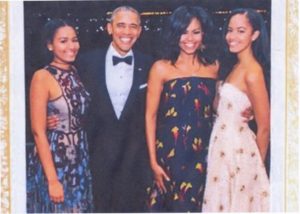
Barack-Obama-family
Image: White House

The first you know it’s getting close is when you receive the first Christmas card. Like many of you, though, we’ve been receiving fewer cards each year as friends and family switch to email and social media.

But it was so nice of Barack, Michelle and the girls to remember us! #dontleave

We are organising a ‘Secret Santa’ gift-giving ritual. This means if there are 10 people coming for Christmas dinner; each person buys one gift to an agreed value. The Secret Santa organiser assigns shopping tasks – “You can buy a gift for Auntie Val. I heard her grumbling last week that her pruning shears have had it.”

So rather than 10 people each spending about $599 (the average Christmas gift spend, according to a Commonwealth Bank survey), you each spend $50 and there’s a good chance the person receiving the Secret Santa gift will get something they actually want/need.

An international survey by ING Bank conducted in October found that 82% of Europeans received one or more gifts in 2015. One in seven (15%) were given something they didn’t appreciate, didn’t like or couldn’t use. The proportions were only slightly different in the US and Australia. Of the 15% who admitted to receiving unwanted presents, more than half kept them anyway. Others gave them to someone else (25%), sold them (14%) or tried to return them to the store (11%).

The Australian Bureau of Statistics has estimated that $798 million of the $8.8 billion spent on Christmas loot goes on unwanted gifts.

There are three basic options if you want to rein in your Christmas gift spending. The family could agree to (a) not buy gifts at all (b) organise Secret Santa or (c) donate money to organisations like World Vision or Oxfam; the latter uses the money to buy practical items for poor African villages. The gift recipient receives a certificate, which says something like, Congratulations (name), you have bought a goat for a village in Sudan. The certificate goes on to explain what a goat can mean for a poor African village. You can pin the certificate to your office noticeboard and feel virtuous for a whole year. (Or as Little Brother says, you could go to a country that doesn’t celebrate Christmas and give the whole circus a swerve.)

Some children get $200 cash and more!

The Australian and Securities Commission (ASIC) website Moneysmart, which aims to educate consumers, compiled an Infographic (see fact sheet link which shows how much money Australians spend on Christmas gifts. The average spent on gifts ranges from $401 (South Australia) to $548 (NSW). Sixty percent used savings when they went shopping, 20% used a credit card, 10% borrowed money from family and friends or used a bonus/tax refund and 10% used lay-by. Of those who used a credit card to pay for Christmas, 80% paid it off within three months.

Nine out of 10 children received some cash as Christmas presents with 20% receiving between $100 and $200 and 22% more than $200! Boys spent the cash on console games (45%), computer games (24%), and other games (22%), put the cash toward saving for a big item (31%) or banked it (43%). Girls spend the cash on clothes (40%), music (22%) and going out (20%), though 29% put the money towards saving for a big item and 45% put the cash in the bank.

Australians will spend all-up around $48.1 billion in the six weeks leading up to Christmas, with this weekend and December 23 and 24 identified as the bonanza shopping days. This massive spend includes $19 billion on food (we all have to eat) and $2.8 billion on on-line shopping. The Retailers Association of Australia and Roy Morgan Research say Victoria will show the biggest increase in spending ($11.6 billion, up 4.6% year on year followed by Queensland ($9.5 billion, up 4.2%).

And if you’re wondering on Christmas Day how Little Johnny could afford to give Dad the boxed set of Game of Thrones, ARA’s research shows that shoplifting will cost retailers $1.4 billion over the six-week period.

Of course buying gifts is only one part of it – then you have to buy wrapping paper and either wrap presents or pay a professional to do it for you. Australian Ethical and Clean up Australia provide some tips for people who feel bad about the 50,000 trees that get pulped every year to make your Christmas gifts look appropriately festive.

Australians use more than 8,000 tonnes of wrapping paper each year and, as Clean Up Australia chairman Ian Kiernan points out, foil sheets are hard to recycle. His suggestions for a sustainable Christmas include:

  • Rather than buying someone a physical gift like a CD, consider buying them a service, like a singing lesson;
  • Buy yourself a real Christmas tree – they smell fresh, last well, and are biodegradable through your green waste (they can also be planted out);
  • Cut back on gift wrapping, resize large cards to make gift tags, get creative with newspaper or magazines for wrapping presents and recycle the wrapping that you can’t use anymore.

“It’s not over till it’s over and you throw away the tree” (LWIII)

There is an unhappy trend to brand someone trying to moderate spending at Christmas as a Scrooge or a Grinch. The inference is we are spoiling the festive season by questioning excessive consumption.

And then there are Christmas cards, which come in ever-diminishing numbers, despite assurances that the market is doing better than ever.

The Greeting Cards Association of Australia says Australians spend $500 million on greetings cards and ours is the world’s third largest market per capita.

In the US, Christmas cards represent about 25% of the $6.5 billion greeting card market, where sales are steady, although profits are declining. Marketing expert Brandon Gaille expects global sales to keep declining as multiple issues confront the industry, including rising postal rates and competition from DIY cards and low-cost e-cards.

The Obama family sent out their last Christmas card this week, which created a sentimental outpouring around the hashtag #dontleave.

The cards are sent only to friends, supporters, White House staff and the media (which explains the hurriedly scanned copies on Twitter, Facebook and just about any traditional media outlet you can name).

The White House can afford to send out at least one million* cards featuring the Obama family’s last hoorah. Since 1960 the incumbent President’s political party has paid for this indulgence.

Back home, listeners told 720 ABC Perth the cost of postage is the overwhelming reason people are resorting to emails, texts and social media messages. I can vouch for this, having spent $70 at Australia Post sending a few calendars overseas and buying a dozen Christmas cards and stamps for friends who don’t do email.

Even though you get a 35c discount when buying card-only stamps, the high cost of postage is pushing more people to compose annual “e-letters” (complete with happy snaps).

But as one ABC Perth listener lamented, “You can’t really put an email on the mantlepiece, can you?”

*Ronald Reagan set the one million White House Christmas card benchmark in 1983 but was upstaged in 2009 by George W Bush Jnr (1.5 million).


What rhymes with rhinitis

Taken with a Nikon D3s and 14-24 lens. 7 shot HDR at f/5.6. www.elviskennedy.com
Photo Elvis Kennedy https://flic.kr/p/a3EtMY www.elviskennedy.com

The proper term for what ails 4.6 million Australians is ‘seasonal allergic rhinitis,’ more commonly known as hay fever. The latter name has stuck, even though scientists have known that grass pollen was the key culprit since the late 1800s.

I surely don’t have to tell you this is one of the worst springs on record for seasonal allergies. But I will.

If you live in Melbourne and suffer from asthma and seasonal allergies, this has been and still may be a life-threatening year.

American and UK media outlets pounced on Melbourne’s “thunderstorm asthma’’ story – six dead and five more on life support, brayed NBC, portraying it as a ‘freak’ event, though Melbourne has previously had four storm-induced asthma outbreaks. The city’s emergency services were swamped, with 8,500 receiving hospital treatment.

NBC (and other media outlets) explained that the storm caused saturated ryegrass pollen grains to ‘explode and disperse’ over the city. About a third of patients reported never having had asthma before. Inter alia, about half of asthmatics have allergic rhinitis or vice versa.

The Telegraph in the UK tracked down the Melbourne scientist who discovered and named the phenomenon in 1992 (when two people died after two consecutive storms). Cenk Suphioglu, from Deakin University, said authorities should be ready to issue public alerts during such events as Melbourne is a well-known allergy hotspot. Previous epidemics occurred in 1987, 1989 and 2010.

So I thought it was (again) time to start taking seasonal hay fever seriously. Like so many of Australia’s rhinitis sufferers, I reach for the antihistamines too late – the pollen has already got to me, hence tissue boxes placed strategically around the house. If we could all be bothered, the early warning systems are in place to take prophylactic action.

Melbourne University botanist Associate Professor Ed Newbigin said in August that hay fever sufferers were set for a worse-than-usual season.  He told ABC Rural a wet winter had contributed to spring growth in grasslands across western Victoria.

These grasslands released “huge amounts of pollen” when flowering and this is then carried to the city by northerly and north-westerly winds.

website, a free service provided by the University of Melbourne and the Asthma Foundation Victoria. This useful website now also includes pollen count forecasts for Brisbane, Canberra and Sydney. Pollen is measured as grains of pollen per cubic metre of air.

Dr Newbigin told FOMM yesterday pollen counts range so widely there’s nothing he can call a ‘norm’. Pollen count ranges are 0-19 (low), 20-49 (moderate), 50+ (high) and 100+ extreme.

A pollen count of 19 to 25 grains can make a sensitive person feel rather unwell. So Melbourne’s extreme count of 154 on Sunday November 6 explains a lot about the pressure on hospital emergency departments.

It starts with itchy eyes and sneezing

Allergic rhinitis symptoms are caused by the body’s immune system mistaking inhaled pollen for a virus, hence chronic inflammation of the eyes and nasal passages.

Symptoms include sneezing, runny, itchy, stuffy nose, itchy, watery and red eyes, itchy ears, throat and palate, headache and a “woolly headed feeling.” Allergic rhinitis predisposes people to sinus infections and poor quality sleep, leading to day-time fatigue.

Writer Suzanne Moore, a new convert to the World of Snot described her world of misery well in The Guardian.

“Wearing my sunglasses indoors, struggling to tear into some new drugs, my daughter looks alarmed.”Mum, what are you doing? You look like a crackhead.”

“I know I look stupid; I feel even more stupid. Hay fever does that.

“Apart from turning your body into a snot factory, you feel perpetually fogged up; not really there at all. It’s a miserable thing.”

So do you find it just a tad worrying that medical science still does not have a cure for seasonal allergic rhinitis? We sufferers form an orderly queue at our local chemist shop, ready to try anything new.

The best known relief remedies are, in no particular order, antihistamines, nasal sprays, steroid sprays, and, for the determined, few, a series of injections designed to desensitise the sufferer.

The newly afflicted Suzanne Moore says 20% of people in the UK are affected by allergic rhinitis. Allergy UK says Brits spend close to a billion pounds on treatments.

The one in five Australians affected spend a total of $120 million a year in over-the-counter remedies, so one could be forgiven for thinking there is no real incentive to find a cure.

The preferred treatment for someone who suffers acute attacks of allergic rhinitis is to start the patient on a preventative (corticosteroid) nasal spray before the onset of the hay fever season (in Australia September-December).

Some will go further to lead a normal life. As a lad, West Tigers prop Tim Grant took on serious treatment. The Sydney Morning Herald revealed that after he was diagnosed as a 12-year-old with a grass allergy, the NRL star endured three years of injections to build up his immunity so he could train and play.

Rhinitis rare in the 19th century

In the 19th century hay fever was regarded as something that afflicted the aristocracy, possibly because the landed gentry could afford to consult the best physicians. Without exception, they prescribed rest and recreation by the seaside or at an alpine lodge in Europe. John Bostock, a British physician, spent most of his life studying an ailment which befell him in June every year from the age of eight. An article in the Journal of the Royal Society of Medicine says a speech by Bostock in March 1819 about summer catarrh is the first description of hay fever as we know it. The condition was so rare in pre-industrial revolution Britain it took Bostock nine years to find 20 other people to put under the microscope. Bostock experimented on himself with remedies and tonics including bleeding, vomiting, opium, mercury, cold bathing and digitalis, all to no avail.

It may come as no surprise to find that Canberra is the hay fever capital of the country, given the woolly-headed thinking emanating from Parliament House. Scientists attribute this status to the diversity of plants in the Australian Capital Territory which produce allergen-laden pollen.

One in 5 people living in the ACT reported suffering from long-term allergic rhinitis, followed closely by Western Australia, Victoria and South Australia. The lowest rates occur in Queensland and New South Wales (half that of the ACT). Dr Newbigin has previously said that as the planet warms and the population grows, it will be important for allergic rhinitis sufferers, health experts and city landscape planners to be aware of what environmental change may mean for population health in allergy hotspots like Canberra.

A map (below) usefully identifies where in Australia you are more likely to be afflicted. That’s not to suggest you should move to a low-allergy location. Some 95% of sufferers are allergic to grass, so their symptoms are destined to return, wherever they live.

But as John Updike once said, I moved to New England partly because it has a real literary past. The ghosts of Hawthorne and Melville still sit on those green hills. The worship of Mammon is also somewhat lessened there by the spirit of irony. I don’t get hay fever in New England either.”


Things go better with Santa

By Guest Writer Phil Dickie*

st-nicholas-low-res
Photo by Susan Brown: A sumptuous Saint Nicholas awaits customers in a Berlin department store. He’ll sit with the kids, but you have to take your own photographs.

Think Santa Claus. Think an overweight gent with a white beard wearing a distinctive red coat with white fur trim and a hat to match.

In the English speaking world, that’s it. But while the tubby one is certainly known in continental Europe, he is not alone. Often, he is not even there in the Christmas accessory departments and when you make discrete inquiries you might be told “Oh, you mean the Coca-Cola Santa Claus.”

A rough census through a well-stocked Swiss Christmas department turned up around 40 distinct Santas, absolutely none in the generic costume of the English speaking world. Most had white whiskery bits, but a goatee could be as acceptable as a flowing white beard. Some were even thin, many sported gold and silver threads and autumn colours were certainly popular.

While we have opted for the single depiction Santa, Europe continues to provide some support for the rich, varied and multilayered traditions that lie between a couple of fourth century bishops and a Coca-Cola casting couch. Our Santa, it must be said, doesn’t look very saintly anymore. On the other hand, some of the multiple Santas of Europe also would look much more at home in a pagan romp through the woods than they would preaching from a pulpit.

It is generally accepted that the original St Nicholas was the fourth century Bishop of Myra. A few remnants of Myra have somehow survived the lack of development controls on building greenhouses around the modern Turkish town of Kale – including the mostly Byzantine elements of the basilica where St Nicholas, benefactor of seamen and prostitutes, was buried in 343 AD.

But St Nicholas is no longer there. Freebooting Italians removed his bones, or at least some bones, in the 11th century. Freebooters from Bari just beat freebooters from Venice with an identical plan, so it was Bari that got to follow the usual trajectory of development in those days – bung the bones in a new crypt, build a new basilica overhead and sit back and enjoy the pilgrim trade. Maybe the Venetians were still sore about this when they diverted a crusade against the Muslims into sacking Christian Byzantium (now Muslim Istanbul) a couple of centuries later.

St Nicholas, meantime, spent the centuries appearing, disappearing and performing unexpected miracles all over Europe. To give the pilgrim trade something to fasten on to in a suitably lucrative way, churches, shrines and even villages dedicated to St Nicholas sprang up. But you have got to be careful. A Swiss St Niklaus kirch is just as likely to be for the 15th century soldier, statesman and saint who helped fit the pope up with a Swiss bodyguard. Having arranged a powerful friend, he then advised the infant nation to prosper by leaving the neighbours alone and staying out of their wars.

Other times, the stories are deliciously obscure. The Matterhorn Valley church of St Niklaus (of Myra) was meant to be constructed safely in the middle of a field but the builders kept losing their tools. Then a boy survived a rockfall, exclaimed “Holy Nicholas wouldn’t permit it” and the church was built on the site of this miracle. The church has had an accident prone existence ever since, being flattened by an avalanche in 1720. The 36-metre steeple of the much rebuilt church is now dressed up as the world’s tallest Santa Claus each December – but still looks more bishop than billboard.

Others will tell you that the ancestor of Santa Claus wasn’t St Nicholas of Myra but Bishop Basil of Caesarea. The Roman Empire had many towns called Caesarea but this one is also in modern day Turkey, not that far north of Myra as it happens. Basil, who lived around the same time as Nicholas, is rather better documented in early church records as an actual preaching, politicking and existing cleric than his rival.

In central Northern Europe, children allegedly began receiving mid-winter gifts from a former demon who had turned virtuous under the influence of a usually un-named saint. This may well have been a Christian rewrite job on earlier tales that the undisciplined Norse god Wodin was also uncharacteristically kind to children when the seasons were hard.

A mix of the Mediterranean and the northern traditions is believed to have provided the basis of both the English Father Christmas and the Dutch Sinterklasse. Sinterklasse emigrated to New Amsterdam, and Father Christmas presumably followed when the American city changed its name to New York.

Not even Coca-Cola claims to have created Santa Claus in the modern image, although he was certainly popularised in 1930s advertising designed to lift the mid-winter appeal of refrigerated soft drinks. Coca-Cola, pundits will be delighted to know, was mainly responsible for the girth of the red-robed one, although the artists were trying to convey jolliness rather than the consequences of drinking too much Coke.

The American Santa then travelled everywhere that Coke did, which was everywhere US service personnel were sent or stationed during and after the Second World War. In other words, nearly everywhere there is.

Coke’s artists were working up an image that had been built up by a succession of earlier American poets and artists who transformed Sinterklaas and his English relative into Santa Claus. A satirist gave him a wagon in 1812, a poet turned that into a sleigh in 1821 and another poet added eight reindeer and a preference for diving down chimneys a year later. Santa gave up smoking (a pipe) in 1849, got the basic costume from a commercial artist in 1863 and a North Pole address from another poet in 1869.

“Which Santa sells best?” I ventured to ask Maurice Schilliger, proprietor of the Swiss store where I conducted my census. He wasn’t sure. “I do design, not commerce,” he said. Maybe, but maybe he also majored in diplomacy.

“Er, where are all these Santas made?” I asked. I was thinking, I must confess, of some vast factory floor in China where the proletarian masses are stitching up Santas to any requirement.

“The North Pole,” he said. Of course. Where else.

*Phil Dickie is an expatriate Australian journalist and author best known for ‘outing’ corrupt police and politicians in Queensland. Together with an ABC Four Corners programme, his series of investigative articles led to the Fitzgerald Inquiry in the 1980s and won him a Gold Walkley award. Phil, now based near Geneva, Switzerland, recently concluded a five-year stint as inaugural global issues manager with WWF International and is again available for interesting assignments or employment.

www.melaleucamedia.com.au

(Bob and She Who Is 10% Irish are on holiday!)