Time to befriend an indigenous person

NAIDOC-Week-Yes-Nawa
Musician Kevin Bennett

Aboriginal and Torres Strait Islander viewers are advised that this blog may contain references to deceased persons.

Reading an online ABC story about Ash Barty and her newly-born baby, I was struck by two things. The first was that the story had clearly been assembled with no direct input from Barty. Since retiring from championship tennis last year, Ash has made it fairly clear she values her private life. All the same, she’s famous enough that a declaration (to friends) on social media was appropriated by deadline-hungry online media. The story was compiled from what old journalists used to call ‘the cuts’, meaning file stories, social media comment (and responses) and a photo of Ash on her wedding day (supplied).

The second thing about this shallow news story was that nowhere in the text was Ash identified as an indigenous person. You’d think that in NAIDOC week, that would be a given.

NAIDOC stands for National Aboriginals and Islanders Day Observance Committee (originally dubbed National Aborigines Day Observance Committee).

The ABC could at least have tried to contact Ash, perhaps in the guise of preparing a NAIDOC week story. The time-honoured protocols of mainstream journalism should at least contain the disclaimer – the ABC made attempts to contact Ash Barty for comment but was unsuccessful.

The most interesting thing about the newly-born son (Hayden) of Ash Barty and husband Garry Kissick is that he is now part of the Barty extended family.

Through her great-grandmother, Ash Barty is a member of the Ngarigo people, the Aboriginal people of southern New South Wales and north-eastern Victoria. Despite being declared Australia’s Person of the Year in 2022, Ashleigh Barty is entitled to her private life, so I will now move on to NAIDOC.

This is a week of observance during which indigenous people can feel free to celebrate their origins. White fellas can use the time to reflect on their attitudes to indigenous folk, hopefully in a positive way. It is probably fair to say (and feel free to let me know if you think this is a generalisation), most white people who are not in some way inter-married, know few indigenous people and fewer still can actually say they have an Aboriginal friend.

She Who Is Going to Canada Soon has been making attempts to meet First Nations people in our home town, with limited success. Her attempts to make eye contact and say Hi will on occasion elicit a shy smile or a nod. (Of course, it’s just possible we already have Indigenous acquaintances, as not everyone chooses to mention their ethnicity. Ed)

It’s probably no wonder that so many Indigenous people are reluctant to engage with ‘white’ Australians If I was an Aboriginal person living in this country I’d probably not want to make eye contact with white people either.Ed

This is a reference to the shocking periods in this country’s history when European settlers squatted on land once used by Aboriginal tribes for hunting, food-gathering and sacred ceremonies. From this arose seldom-mentioned Frontier Wars and the gradual marginalisation of indigenous Australians

We got chatting to a young person in Brisbane recently who we discovered has Aboriginal ancestry, though it was not obvious to us. We found this out because she was visibly upset by an overtly racist comment made in her workplace by a customer.

The comment was not addressed to the young person, but it was gratuitous enough to make her angry and upset.

The young person revealed that her grandmother was one of the Stolen Generation. This refers to a shameful period in Australia’s history (mid-1800s to 1969), when Aboriginal children were removed from their parents and adopted by (usually) well-intentioned white people. This tawdry period in Australia’s colonial past was best summed up by the late songwriter, Archie Roach:

Taught us to read, to write and pray
Then they took the children away
Took the children away
The children away
Snatched from their mother’s breast
Said this is for the best
Took them away.

Even today, people in their 50s and 60s are discovering or tracing back their ancestry and those who have the opportunity to spread the story do just that. Alt-country songwriter Kevin Bennett not so recently traced his family and now writes songs depicting or satirising that era. Check out his song Spaghetti Western and its reference to a ‘stolen land’. Bennett also referred to intermarriage in Goulburn Valley Woman.

“She said she was a Goulburn Valley woman, she felt connected to the land; Her mother was a flame-haired Irish lass, her father was a Yorta Yorta man.”

The ABC this week interviewed songwriters Paul Kelly and Kev Carmody, who did more to raise awareness than most with their seminal song ‘From Little Things Big Things Grow’. I first met Kev at a folk club in Toowoomba and was also aware that he was (like me) one of the mature age students studying at the university. Kev played guitar in a local bush band and on occasions would sing one of his own songs. I had no idea he was indigenous until the night he sang a song about someone being ‘zipped up in black skin’.

“This is a song about my Uncle,” he said, launching into Jack Deelin. Carmody released his debut album in 1988, the Bicentennial year. Along with indigenous bands Yothu Yindi and compadres including Gurrumul, Tiddas, Kutcha Edwards and others, Kev Carmody was at the forefront of raising awareness of indigenous culture and the injustices of the past.

The injustices and inequalities (which still exist) include a mortality rate 1.6 times greater than non-indigenous, chronic health problems, inadequate housing and over-representation among jail populations.

Over time, this led to the Apology by Prime Minister Kevin Rudd in 2007 and the emergence of some now ubiquitous traditions. One is the warning at the start of this blog. This accords with the Aboriginal custom of not referring to the departed by name, unless special permission has been given. Then there is the acknowledgment of country which has become universal.

My attempts at befriending Aboriginal people stall on innate shyness and I suspect it is a two-way street. A fellow sometimes busks outside the IGA in town. He sings, plays guitar and harmonica and is not half-bad. I was tempted to sidle up and join in on the harmony to “Down on the corner, out on the street, Willie and the Poor boys etc.” Opportunity lost.

I remember visiting Derby in Western Australia and seeing the ancient Boab ‘Prison’ tree and reading the bleak history of the region. While the story of that hollow tree used as a temporary prison is said to be a myth, the Boab was a staging post and Aboriginal prisoners were chained to nearby trees. These are stark images which remind us of how European settlers mistreated the original inhabitants. But as is often the case, the historic records are often disputed, many because they were never written down.

It’s not that much different to the Highland Clearances, where my descendants were pushed off their land so the English aristocracy could run their sheep and lay claim to whisky production. The same applies to other colonial conquests around the world, although the mistreatment of Aborigines and Native Americans stand out as egregious examples.

The way I see it on this particular Friday is that come the referendum, we should all be saying ‘yes’.nawa.
 

Multiculturalism under siege

multiculturalism-perilli-monument
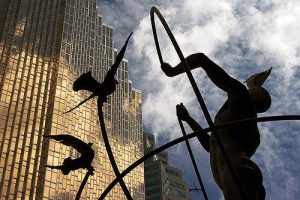
Monument to Multiculturalism in Toronto, a sculpture by Francesco Perilli. Photo by Shaun Merritt https://flic.kr/p/5d7sTp

My plan to write something cuddly and wholesome about Multiculturalism Month in Queensland was derailed somewhat by the egregious maiden speech of crossbench Senator Fraser Anning.

One of our newest politicians, he chose his maiden speech to call for a return to the White Australia policy, suggesting that a plebiscite be held to ask Australians if they want ‘wholesale non-English speaking immigrants from the Third World and, in particular, whether they want any Muslims’.

Politicians who make incendiary speeches are often misquoted, so this is exactly what Senator Anning had to say about Muslims.

“A majority of Muslims in Australia of working age do not work and live on welfare. Muslims in New South Wales and Victoria are three times more likely than other groups to be convicted of crimes. We have black African Muslim gangs terrorising Melbourne. We have ISIS-sympathising Muslims trying to go overseas to fight for ISIS and, while all Muslims are not terrorists, certainly all terrorists these days are Muslims. So why would anyone want to bring more of them here?”

He said a lot of other things too; about countering the growing threat of China both outside and within Australia; about building coal-fired power stations to return us to the cheapest power in the world, and about (ahem) restoring personal freedoms and free speech.

The thing that outraged many, however, was his use of the words, ‘the final solution’, made infamous by the Nazis in WWII. Senator Anning seems unrepentant, amid claims the speech was deliberately structured to be controversial and raise his profile. He claims the use of the term “final solution” (the Nazi regime’s euphemism for exterminating Jewish people), was “inadvertent”. But he has not backed down, saying the outrage is coming solely from political opponents.

The counterpoint to Senator Anning’s divisive speech was a plea for consensus by the Member for Chifley, Hon Ed Husic. His response in Parliament described the experiences of his Bosnian parents, who came to Australia in the 1960s.

“My old man worked on the Snowy Mountains scheme. Dad worked with his hands and Mum stayed home to make sure we had a family that could take advantage of all the great things in this country.

“Like many kids of migrants, I carry a debt – a debt of gratitude to this country that we were able to achieve this. I went to university. I could count on one hand the numbers of folks in my family or from my Dad’s generation that got to do that. Now I get to serve in this place (Parliament) and regardless of my faith, my commitment to the community is what I’m judged on.”

Opposition leader Bill Shorten weighed in, saying  “…As leaders, as representatives of the Australian people, as servants of diverse communities in a great multicultural nation, we cannot stay silent in the face of racism.”

Even former MP John Howard condemned the tone of Anning’s speech, which is a bit rich coming from the bloke who introduced the One Australia policy in 1988, which called for an end to multiculturalism (and opposed a treaty with Aboriginal Australians).

Anning might not have read the spray in the Tweed Daily News from Australian-born journalist Charis Chong, who said that although she drinks all kinds of Australian beer and has a Weber in her backyard, “I’ll never be Australian enough”.

She talks of her negative experiences as an Asian Australia, but also her true friendships with people who don’t talk about assimilation – “they are just nice, decent people who appreciate each individual person for who they are.

“The problem with Senator Anning’s comments is that they seek to exclude people from ever being good enough to be ‘Australian’ simply because they don’t look ‘white’ or want to practice a certain religion.”

Katharine Murphy writing for The Guardian warned that the Anning speech was a sign that Australia was being caught up in global nationalist debates.

What we are witnessing in national politics is the latest manifestation of Australia’s cultural cringe. Far right political operatives, and the media voices prepared to give them succour, are importing the nationalist debates that have sprung up in the shadow of the global financial crisis.”

Murphy is correct in saying that debates about race, multiculturalism, sovereignty and immigration have flared up elsewhere because of deep resentments felt by the losers of globalisation. While Australia was not as deeply affected by the GFC, the ‘outrage consciousness’ that exists elsewhere is being imported, validated and projected here, she said.

The 2016 Census revealed a lot about the ethnic makeup of Australia. Nearly half (49%) of Australians had either been born overseas (first generation Australian) or one or both of their parents had been born overseas (second generation Australians). Of the 6.16 million overseas-born persons, nearly one in five (18%) had arrived since the start of 2012. While England and New Zealand were still the next most common countries of birth, the proportion of those born overseas who were born in China and India has increased to 8.3% and 7.4% respectively. Malaysia now appears in the top 10 countries of birth (replacing Scotland) and represents 0.6% of the Australian population. While 52.1% of Australians identify as Christians, those who listed Islam as their religion numbered 620,200 or 2.6% of the population.

One might imagine that immigrants and refugees settling in regional and rural Australia would receive a chilly reception from the stereotypical ‘rednecks’ of the bush. But Prof. Collins wrote in The Conversation that a research project on immigrants living in regional Australia a decade ago dispelled this myth, with 80% of respondents reporting a warm welcome.

“Our new research confirmed this finding, with 68% of the refugees surveyed in Queensland overall – and 81% in Toowoomba – reporting it was ‘very easy’ or ‘easy’ to make friends in Australia.”

Meanwhile, people who believe in embracing multiculturalism continue to celebrate its existence, which in Queensland is the month of August.

If you live in regional Queensland and support cultural diversity, you could look out for BEMAC’s Culture Train. (BEMAC is Queensland’s leading multicultural arts producer, presenter and artistic development organisation).The train will be making 15 whistle stops on a tour that starts today. A group of five culturally diverse musicians will present free concerts and workshops starting at Dunwich (Stradbroke Island), then on to Dalby, Chinchilla, Roma, Charleville, Longreach, Barcaldine, Emerald, Rockhampton, Gladstone, Childers, Cherbourg, Toowoomba, Ipswich and finishing at the Brisbane Multicultural Centre on August 31. The Culture Train 2018 ensemble is: Sarah Calderwood: Celtic singer-songwriter, flute & whistle player, Chong Ali: Vietnamese rapper and emcee, Marcelo Rosciano: Brazilian percussionist, Ben Kashi: Persian dulcimer and percussionist and Gertrude Benjamin: Torres-Strait Islander folk and soul singer.

Sarah, who is also musical director, said the group would be performing shows which combine songs from the group’s vastly different cultures backgrounds, with individuals performing solo work as well.

“The five of us are thrilled to not only celebrate this diversity through music and storytelling,” she told FOMM, “but to promote inclusion and bring communities together to collectively celebrate multiculturalism in regional, rural and remote communities.”


Racism hurts everyone

racism-hurts-everyone
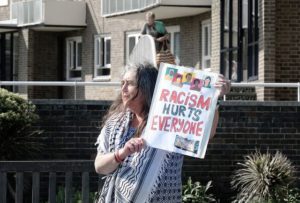
Photo Alisdare Hickson https://flic.kr/p/HDAcMK A lone Dover resident bravely leaves her home to confront a right wing anti-immigrant march

Scottish comedian Billy Connolly at one time waxed indignant about how political correctness was intruding into comedy.

“How dare they,” he fumed, on somebody’s talk-show. “Funny is funny.”

No Billy, not really. Not if you’re the butt of somebody’s bad taste joke, be it about religion, gays, people with disabilities, migrants from non-Christian countries or our indigenous people, who had the misfortune to be colonised in 1788 and not officially recognised in the Census until 1967.

What, you don’t think people make jokes about Aborigines? Try Kevin Bloody Wilson’s “Living next door to Alan”. I’m told this spoof song about a family of Aborigines moving in next door to Alan Bond, which in totality may be more about mocking big business than anything else, is a favourite amongst indigenous peoples in WA. But you can’t generalise like that, and herein lies the central problem with racism and xenophobia.

One cannot know the private thoughts of the racist who never verbalises or the indigenous person who feels persecuted but is too afraid/shy/humble to speak out.

In New Zealand, the Race Relations Commissioner, Dame Susan Devoy, launched the nation’s first anti-racism campaign. Her open letter asked Kiwis to tell their stories about ‘casual racism’ – to go beyond the 400 written complaints received last year.

‘That’s Us’ is the first campaign that asks people to start sharing their own stories about racism, intolerance and hatred.

In her letter Dame Devoy says the overwhelming majority of people never complain or go public when a car drives past and the people in it scream a racist obscenity.

She cites other casual or ‘quiet’ racist encounters “that never feel casual or quiet when you and your family are the ones being humiliated.”

Dame Devoy told The Guardian that overt racism is not as widespread as it is in, say, Australia, but she felt that New Zealanders need to reassert their position as a world leader in race relations.

“We just need to look around the world right now to see what happens when racial intolerance and racism is normalised. We think New Zealanders are better than that and we hope you do too.”

But returning to Billy Connolly’s assertion that ‘funny is funny’.

When I was growing up in New Zealand the most popular entertainment group was a Māori group, the Howard Morrison Quartet, closely rivalled by a Māori/Pakeha comedy duo, Lou and Simon.

The latter were known for parodying popular songs, e.g. West Side Story “I like to be in a Maori car” using gentle, self-deprecating humour.

The Howard Morrison Quartet had a hit in 1960 with ‘My old man’s an All-Black’ based on the Lonnie Donegan tune about a dustman. The song was a protest about the decision to exclude Maori rugby players from the 1960 tour of South Africa.

It contained comic asides such as:

“Fi fi fo fum, there’s no Horis in that scrum.”

Crikey, you wouldn’t get away with that today. The urban dictionary and others define ‘Hori’ as a racial slur, but it was in common use in the 1960s. I recall Dad cuffing my ear (as that generation of Dads were prone to do), saying: “Don’t call Māoris Horis – it’s disrespectful.”

I may have asked, risking another ear-cuff ‘Why do some Māoris call themselves Horis, then?’ and he replied that if a negro (before they were known as African American) called himself a Nigger, that was OK, but it was not OK for us to use the N word, its origins steeped in racial hatred, slavery and oppression.

Wikipedia defines ‘Hori’ as a derogatory, racist slur, but the term (like Nigger in the US) has to some extent been “reclaimed” within the community it was originally intended to insult. Like those epithets used by rappers and hip-hoppers – ‘Wazzup, Nigger?’ Hori is used today as a term of endearment amongst Māori or as a signifier of ‘keeping it real’.

Whatever age I was in 1960, that discussion led me to read To Kill a Mockingbird, Uncle Tom’s Cabin, Black like Me, Go tell it on the Mountain and at least five of the 15,000 books written by or about Abraham Lincoln.

Meanwhile in the UK, present day, five 15-year-old boys and one 16-year-old boy have been arrested on suspicion of murdering a Polish man in Harlow, Essex. A subsequent assault on a Polish man in Harlow is being investigated as a hate crime, as is the murder a week earlier.

There was a noticeable rise in hate crimes after the June 23 Brexit referendum, with more than 3,000 allegations of harassment and threats filed with UK police.

Nothing on this scale to report in Australia, but the seeds have been sown and Pauline Hanson’s anti-Muslim rhetoric just shovelled a whole lot of fertiliser on that particular garden.

Adding potash, if you will, is a new Essentials Media poll showing 49% of Australians support a ban on Muslim immigration. Economist George Megalogenis dug out some historical evidence that 58% of Australians were opposed to taking part in a worldwide plan in 1947 to resettle Jewish refugees from Europe. Just because a survey saying half the people apparently don’t want something to happen doesn’t necessarily mean it won’t.

The 1946 Census revealed that 35,000 Jews lived in Australia. Historian and author W.D Rubinstein said at least 17,600 Jewish survivors reached Australia between 1945 and 1954 – the largest single increase in Jewish numbers in the country’s history.  In 2011 there were 112,000 Jewish people in Australia, the vast majority residing in Melbourne or Sydney,

So then to the Australian Greens who this week urged me (via a ‘personal’ email from Richard De Natale), to support the party’s walk-out during Senator Hanson’s anti-Muslim speech.

I thought the Greens could have served us better if they had stayed. Despite the parliamentary tradition that it is forbidden to heckle or interject during a Senator’s maiden speech, the Greens could have done this (one by one), until all had been ejected.

What headlines would have ensued then? Nevertheless, they walked and this is what De Natale had to say:

“After we walked out on Senator Hanson’s racist speech, my office was flooded with hundreds of calls of thanks. Then in just a few short days over 11,000 of us signed a pledge to stand united against racism. This is an opportunity to bring our communities and voices together with a message of unity that cuts through the noise of parliament. It’s hugely ambitious but I think we could reach 50,000 by the end of this year.”

That seems a small target when the Race Relations Commissioner of a nearby neighbour has pointed out that overt racism is thriving in Australia, even if the NZ Commissioner admitted:

“We’ve always had a problem with racial intolerance in New Zealand – Māori New Zealanders know it is not new.”

Dame Devoy’s Australian counterpart, Tim Soutphommasane, waded into the debate this week.

The Race Discrimination Commissioner argued in a speech at the ANU that racism at its core is about an abuse of power. He appealed to Australians not to be complacent about racial intolerance being some kind of “initiation rite” for new arrivals.

“While we may never eradicate racism and bigotry, it isn’t good enough to say its targets must grin and bear it, or that there’s nothing we can do. Doing so amounts to normalising racism, to suggesting that it should be tolerated.”