Rental crisis raises risk of homelessness

rental-crisis-homelessness
A roof over your head (eventually). Image by www.pixabay.com,

This topic was sparked by news from a near-neighbour who had received the dreaded ‘landlord requires vacant possession’ letter.

All tenants go into a lease today knowing that the landlord can decide to sell the property, at which point they will be evicted. A lot of landlords have been doing that over the last two years, taking a profit as property prices spiralled.

The rental vacancy figures in this town and just about everywhere else would suggest that once a rental property is sold, it disappears from the rental pool – at least for a while. The national rental vacancy is 1.2% – at a time when analysis of Census housing data suggests that 700,000 private dwellings are locked up and uninhabited. More on that later.

We all know people who are renting and finding it increasingly difficult to feed their families. In recent months, there have been many stories in the media about families struggling to find a place to live. Those who find themselves at the end of a lease with no new home in the pipeline are at risk of becoming homeless.

Even when we are told the reasons for the shortage of housing, solutions are less obvious. Mostly due to self-belief and a strong self-image, some people caught between a lapsing rental and a tight vacancy rate will find their way round it.

It isn’t hard to find caravan parks, farm-stays and outback tourism ventures that need residential caretakers. The successful candidates get to park their vans for free and quite possibly pick up a small stipend as well.

People in these circumstances (a) do not regard themselves as homeless and (b) they can enjoy the luxuries afforded by a 22 ft caravan and an annexe.

June quarter data from CoreLogic shows that Australia’s rental market continues to tighten as low supply levels cause national vacancy rates to dive. Rents continued to rise across all capital cities and property types over the past three months.

Dwelling rents in the June quarter were 9.1% higher across the capital cities and up 10.8% in regional areas, compared to June 2021.

CoreLogic report author Kaytlin Ezzy said the recent upwards trend in rents has occurred mostly in the absence of overseas migration.

“This sustained period of strong rental growth has seen national dwellings record the highest annual growth in rental values since December 2008, when rental demand was supported by record levels of international migration,” Ms Ezzy said.

Vacancy rates across national dwellings fell to a record low of 1.2%, down from 2.2% this time last year.

In March, CoreLogic contributed to a report in The Guardian that found rents in Queensland had risen by as much as $200 a week over the previous two years.

The report found that steep rent rises in parts of Queensland forced people into caravans, sheds and poverty – even before widespread flooding displaced thousands more people.

While the ABS has released 2021 Census housing data, it will be “early to mid-2023” until we see the homelessness data. The most recent official data was collected in 2016 and released a year later. The homeless tally then was 116,427.

The Australian Institute of Health and Welfare (AIHW) estimates that in 2020–21, around 278,300 people received assistance from Specialised Homelessness Services (SHS). Around 111,100 clients were homeless when they first began support.

There are different categories of homelessness, apart from those who literally have nowhere to go and end up sleeping rough or in a charitable shelter. Then there are people living in sheds, garages and other unconventional buildings, couch surfing (staying with friends), hostels and unsuitable temporary accommodation.

Since late 2019, the onset of the Covid pandemic, the escalating price of real estate and an ever-increasing scarcity of rental properties has unquestionably added more individuals and families to the homeless tally. There is an increasing cohort of ‘hidden homeless’, that is people who are either not eligible to apply for support or feel they do not need it.

In Australia, some of these people head for the great outdoors. Accommodation demand driven by ‘Grey Nomads’ has produced hundreds of free camps and low-priced camp-grounds run by local show societies. The free roadside reserves, which may nor may not have a toilet/and or shower, usually have rules about how long you can stay. In Tasmania, many free camps allow you to stay for up to a month.

.Everyone’s circumstances are different, but we have met many people who had sold their house and bought a road rig. Many of the so-called Grey Nomads are retired tradies and public servants who can afford a $200,000 self-contained rig and go on the road for months at a time.

But if you travel the country and stay in free camps, you are just as likely to see a couple living in a 30-year-old caravan towed by an equally ancient car.

The big problem waiting for Australia’s new Prime Minister to tackle (after he has settled down our Pacific neighbours), is the housing crisis.

Believe me – it is a crisis. There are simply not enough houses to go around. This is particularly so in Queensland, where interstate migration has put the housing sector under massive strain.

There are reasons for the dire shortage of housing and they include delays in building new homes amid adverse weather in 2022. Then there are homes destroyed by floods or bushfires.

But as residential property analyst Michael Matusik discovered, the housing shortage is in part due to some 700,000 private dwellings that are “deliberately left vacant”.

Matusik reached this conclusion after analysing 2021 Census housing data, which showed there were one million unoccupied dwellings in Australia (about 10% of the country’s private residential accommodation).

The ABS defines unoccupied dwellings as: holiday homes (for owner’s use or rented out); investment properties without a tenant; newly built but vacant dwellings; habitable dwellings being renovated and/or vacant dwellings for sale or lease.

Matusik wrestled with those categories and calculated that after discounting the latter, 700,000 unoccupied dwellings were investment properties that were locked up rather than tenanted.

“Many of the unoccupied dwellings are in capital cities, especially Sydney and Melbourne where more apartments are in the dwelling mix,” Matusik wrote in his regular subscriber bulletin, Matusik Missive. “In these cities the proportion of overseas buyers, especially from Asia, and particularly from China, is the highest in the country.

“It is somewhat safe to say that something like 70% of the unoccupied dwellings across Australia are deliberately locked up.

“Assuming past immigration levels return, then there is a need to build some 150,000 new dwellings across Australia each year.

“If we could unlock these 700,000 empty homes, we would not need to build a new home for 4.5 years.

While admitting this is ‘fantasy land’, Matusik says that any move to open up these dwellings would go a long way to improving short-term dwelling supply.

As we approach National Homelessness Week (August 1-7), some agencies will no doubt be calling for an earlier release of Census data on the homeless.

I asked the peak body, Homelessness Australia, for a comment; but remembered it was de-funded by the Federal Government in 2014. When one of their volunteers gets back to me, I’ll include their comment.

For now I’ll say that however bad the news is, it is better that we know sooner than later.


When Rome Counted its Citizens

Census-Romans
Census taker visits a family of Indigenous Dutch Travellers living in a caravan in 1925. Wikipedia CC

You may not immediately deduce from the headline that we are about to embark upon a discourse about the Census, which will happen in Australia on or about  August 10, 2021.

I say on or about because the online version of the head count can be filled in electronically on or a few days after August 10. You just have to declare where you actually were on Census night.

As you will recall, the Australian Bureau of Statistics (ABS) held its first online census in 2016. There was a major glitch on Census night (August 9) when the ABS website crashed, leaving millions of citizens perplexed. In October 2019, a Census test was held across 100,000 households to assess ‘end-to-end operational readiness for the 2021 Census.

In 2016, about 37% of people opted to fill in the paperwork and wait for an official collector to come calling. This time the ABS says it expects a better than 63% online response, given research that shows Australians prefer to complete the census online.

Taking a once in five years snapshot of the country’s population is an expensive exercise, budgeted at $565 million. The ABS is in the process of recruiting 22,456  field staff and managers.

Named after the Latin word ‘censere‘, meaning estimate, the Roman census was the most developed of any in the ancient world. The Romans (Ed: what did they ever do for us?), conducted their census every five years. The Roman Empire  used this information to extract duties  from its citizens.

An ABS history page says the first known census was taken by the Babylonians in 3,800 BC, nearly 6,000 years ago.

Records suggest that it was taken every six or seven years and counted the number of people, livestock, quantities of butter, honey, milk, wool and vegetables. 

So yes, there is an historical precedent for the (compulsory) collection of personal data from every household in the country.

You may remember Tony Abbott, who was Prime Minister for two and a half footie seasons (2013-2015), tried to axe the census to save money. It didn’t happen (such change requiring a new Act of Parliament). To be fair to Abbott, both the Fraser and Keating governments sought to abolish the census for the same reason.

Sydney Morning Herald journalist Peter Martin unearthed this little-known fact in 2013 while writing about other countries which had tinkered with changes.

As Martin noted, Britain had for a long time been trying to abolish its census (held once a decade since 1801). The government held an inquiry in 2013 to find ways to update the way the UK collects data. This year’s census will be the last. Thereafter, the UK will harvest the data people generate in their everyday lives.

Apolitical, a social network for civil servants, observed that other countries are moving in this direction or have already done so, including the US, Norway and Finland.

Rather than survey citizens, statisticians would collect the data traces left behind by people’s everyday interactions with government. Data is collected from welfare and tax departments, housing and vehicle registrations or our health records. 

Apolitical says statisticians can glean more from the aggregating of all this information (and anonymising it to protect citizens’ privacy).

In 2010, Canada’s Harper government tried to replace its census with a voluntary survey, prompting the shock resignation of Canada’s chief statistician, Munir Sheikh.

Following his resignation, Dr Sheikh, once described by a colleague as ‘the best economist in Canada’, expressed his disapproval of the government’s decision, saying that a voluntary survey could not replace a census. 

Following the reinstatement of the mandatory census in 2015, Canada is preparing to hire 32,000 census enumerators and crew leaders to survey its vast country in 2021. Canada, like Australia, uses data from the census to share resources fairly and accurately  among its widely-scattered provinces..

New Zealand also considered replacing its census, using data from government departments to determine its population. The country’s last census was in 2018 but it is already gearing up for 2023.

Some governments have encountered deep social opposition to certain questions. Former President Trump wanted a Citizenship question in the 2020 Census. He backed off after a wave of hostilities that included a threatened boycott.

In July 2019, he realised there was no time left to have the question included in the 2020 Census papers. So he issued an executive order calling on agencies to turn over citizenship data to the Commerce Department.

In the first few days of his administration, President Biden rescinded this directive. Litigation about this issue argued that citizenship data could have politically benefited Republicans when voting districts are redrawn.

The other controversial question on census forms is the one about religion. In 2001, the UK re-introduced the question (not asked since 1851), largely as an attempt to calculate the size of the Muslim population. Accordingly, some 390,000 people in England listed their ‘religion’ as Jedi, a response which occurred in Australia too, with 70,000 recorded in 2001. In 2016, 48,000 people entered Jedi as their religion. New Zealand  had the highest per capita Jedi response (53,000) in 2001). Statistics New Zealand’s response was: ‘Answer understood but not recorded’.

The US does not ask the question (nor does Scotland), though the US asks about race and ethnicity. In Australia, the religion question has been ‘optional’ since the first Census in 1911. The box ‘no religion’ is a recent addition.

Curiously (well, we think it is curious), the ABS confirmed that 90% of people have answered the question in recent censuses. If your religion is not listed, the form provides space to enter the data. Because of this response, the ABS holds data on 150 religions in Australia.

The idea of trying to run a country without a census horrifies Peter McDonald, Emeritus Professor of Demography at The Australian National University. He thinks scrapping the census would be a nightmare for planners and governments.

“The problem in Australia is that we have no reasonable alternative to the census,” he told FOMM this week. “From an accuracy (and privacy) perspective, the census is better by a long way than trying to combine various administrative data bases. Without the census, the States would continually claim that their population was larger than it actually was. And every other group that received funding on a population basis would do likewise. 

Statistics is a dry subject, but one we encounter every day of our lives, so let’s leave you with this. Mathematician Joey Scaminaci’s clever rap ‘Statistics’ attempts to teach the basics in three and a half minutes. It  impressed one fan who commented:

From Australia I thank you, this is very helpful! Gonna ace my big exam”.


Multiculturalism under siege

multiculturalism-perilli-monument
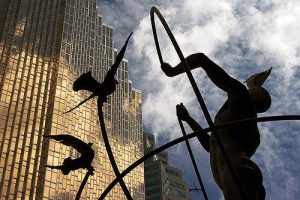
Monument to Multiculturalism in Toronto, a sculpture by Francesco Perilli. Photo by Shaun Merritt https://flic.kr/p/5d7sTp

My plan to write something cuddly and wholesome about Multiculturalism Month in Queensland was derailed somewhat by the egregious maiden speech of crossbench Senator Fraser Anning.

One of our newest politicians, he chose his maiden speech to call for a return to the White Australia policy, suggesting that a plebiscite be held to ask Australians if they want ‘wholesale non-English speaking immigrants from the Third World and, in particular, whether they want any Muslims’.

Politicians who make incendiary speeches are often misquoted, so this is exactly what Senator Anning had to say about Muslims.

“A majority of Muslims in Australia of working age do not work and live on welfare. Muslims in New South Wales and Victoria are three times more likely than other groups to be convicted of crimes. We have black African Muslim gangs terrorising Melbourne. We have ISIS-sympathising Muslims trying to go overseas to fight for ISIS and, while all Muslims are not terrorists, certainly all terrorists these days are Muslims. So why would anyone want to bring more of them here?”

He said a lot of other things too; about countering the growing threat of China both outside and within Australia; about building coal-fired power stations to return us to the cheapest power in the world, and about (ahem) restoring personal freedoms and free speech.

The thing that outraged many, however, was his use of the words, ‘the final solution’, made infamous by the Nazis in WWII. Senator Anning seems unrepentant, amid claims the speech was deliberately structured to be controversial and raise his profile. He claims the use of the term “final solution” (the Nazi regime’s euphemism for exterminating Jewish people), was “inadvertent”. But he has not backed down, saying the outrage is coming solely from political opponents.

The counterpoint to Senator Anning’s divisive speech was a plea for consensus by the Member for Chifley, Hon Ed Husic. His response in Parliament described the experiences of his Bosnian parents, who came to Australia in the 1960s.

“My old man worked on the Snowy Mountains scheme. Dad worked with his hands and Mum stayed home to make sure we had a family that could take advantage of all the great things in this country.

“Like many kids of migrants, I carry a debt – a debt of gratitude to this country that we were able to achieve this. I went to university. I could count on one hand the numbers of folks in my family or from my Dad’s generation that got to do that. Now I get to serve in this place (Parliament) and regardless of my faith, my commitment to the community is what I’m judged on.”

Opposition leader Bill Shorten weighed in, saying  “…As leaders, as representatives of the Australian people, as servants of diverse communities in a great multicultural nation, we cannot stay silent in the face of racism.”

Even former MP John Howard condemned the tone of Anning’s speech, which is a bit rich coming from the bloke who introduced the One Australia policy in 1988, which called for an end to multiculturalism (and opposed a treaty with Aboriginal Australians).

Anning might not have read the spray in the Tweed Daily News from Australian-born journalist Charis Chong, who said that although she drinks all kinds of Australian beer and has a Weber in her backyard, “I’ll never be Australian enough”.

She talks of her negative experiences as an Asian Australia, but also her true friendships with people who don’t talk about assimilation – “they are just nice, decent people who appreciate each individual person for who they are.

“The problem with Senator Anning’s comments is that they seek to exclude people from ever being good enough to be ‘Australian’ simply because they don’t look ‘white’ or want to practice a certain religion.”

Katharine Murphy writing for The Guardian warned that the Anning speech was a sign that Australia was being caught up in global nationalist debates.

What we are witnessing in national politics is the latest manifestation of Australia’s cultural cringe. Far right political operatives, and the media voices prepared to give them succour, are importing the nationalist debates that have sprung up in the shadow of the global financial crisis.”

Murphy is correct in saying that debates about race, multiculturalism, sovereignty and immigration have flared up elsewhere because of deep resentments felt by the losers of globalisation. While Australia was not as deeply affected by the GFC, the ‘outrage consciousness’ that exists elsewhere is being imported, validated and projected here, she said.

The 2016 Census revealed a lot about the ethnic makeup of Australia. Nearly half (49%) of Australians had either been born overseas (first generation Australian) or one or both of their parents had been born overseas (second generation Australians). Of the 6.16 million overseas-born persons, nearly one in five (18%) had arrived since the start of 2012. While England and New Zealand were still the next most common countries of birth, the proportion of those born overseas who were born in China and India has increased to 8.3% and 7.4% respectively. Malaysia now appears in the top 10 countries of birth (replacing Scotland) and represents 0.6% of the Australian population. While 52.1% of Australians identify as Christians, those who listed Islam as their religion numbered 620,200 or 2.6% of the population.

One might imagine that immigrants and refugees settling in regional and rural Australia would receive a chilly reception from the stereotypical ‘rednecks’ of the bush. But Prof. Collins wrote in The Conversation that a research project on immigrants living in regional Australia a decade ago dispelled this myth, with 80% of respondents reporting a warm welcome.

“Our new research confirmed this finding, with 68% of the refugees surveyed in Queensland overall – and 81% in Toowoomba – reporting it was ‘very easy’ or ‘easy’ to make friends in Australia.”

Meanwhile, people who believe in embracing multiculturalism continue to celebrate its existence, which in Queensland is the month of August.

If you live in regional Queensland and support cultural diversity, you could look out for BEMAC’s Culture Train. (BEMAC is Queensland’s leading multicultural arts producer, presenter and artistic development organisation).The train will be making 15 whistle stops on a tour that starts today. A group of five culturally diverse musicians will present free concerts and workshops starting at Dunwich (Stradbroke Island), then on to Dalby, Chinchilla, Roma, Charleville, Longreach, Barcaldine, Emerald, Rockhampton, Gladstone, Childers, Cherbourg, Toowoomba, Ipswich and finishing at the Brisbane Multicultural Centre on August 31. The Culture Train 2018 ensemble is: Sarah Calderwood: Celtic singer-songwriter, flute & whistle player, Chong Ali: Vietnamese rapper and emcee, Marcelo Rosciano: Brazilian percussionist, Ben Kashi: Persian dulcimer and percussionist and Gertrude Benjamin: Torres-Strait Islander folk and soul singer.

Sarah, who is also musical director, said the group would be performing shows which combine songs from the group’s vastly different cultures backgrounds, with individuals performing solo work as well.

“The five of us are thrilled to not only celebrate this diversity through music and storytelling,” she told FOMM, “but to promote inclusion and bring communities together to collectively celebrate multiculturalism in regional, rural and remote communities.”


Men who don’t cook or do housework

cook-housework
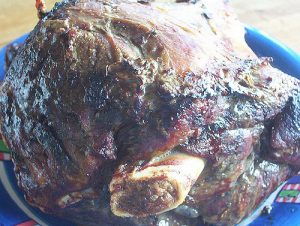
Cook lamb roast photo by Vicki flickr https://flic.kr/p/4u4Dtr

This topic would not have raised an eyelash in my Dad’s era, a generation of men who did not cook or do housework. Many men of my vintage grew up in households where duties were strictly demarcated along gender lines: Dad went to work and paid the bills; Mum stayed home and did all the housework and cooking; knitting, sewing, mending – shall I go on?

We kids had chores to do – washing up, drying, putting away, feeding the chooks, collecting the eggs and so on. Dad would come home on pay day and hand his pay packet to Mum. Later on she’d give Dad an ‘allowance’ for his smokes, haircuts and the like.

Mums from this era did more than cook and keep house; they managed to harvest a lot of the household food, swapping eggs for freshly-caught fish and turning a peach tree harvest into 20 jars of preserves, for example. There were always vegies in the garden (brussel sprouts, yum), and in the pantry multiple jars of homemade marmalade, jams, chutneys, pickled onions and so on. There’s no end to one woman’s ingenuity when making a working man’s pay last a family of five.

When we came home from school there was usually something in the oven – scones, bread, biscuits. The house smelled good and Mum was nearly always there. Dinner times were a bit regimented. Dad would get up about 5 (he worked nights so had an afternoon nap) and sit in his favourite chair reading the newspaper until dinner was served at 6. It wasn’t quite the pipe and slippers routine, but close to it.

Decades later, as a result of living alone or in share houses and with women who had at least read the Female Eunuch, I evolved into what is sometimes called a ‘SNAG’.

There are a lot of us around now – some do all the cooking, bake cakes and make preserves.

If you’ve been paying attention, She Who is Ambidextrous broke her right wrist six weeks ago and although she had the plaster off last week, she’s showing little inclination to oust me from my new-found kingdom.

Like the song says, I can’t do without my Kitchen Man,” she jested, while covertly supervising the preparation of the leg of lamb. (I used a slow cooker, first searing the joint to keep the flavours in, inserting a couple of cloves of garlic and later added potatoes, pumpkin, sweet potato and onion).

This was my second attempt at a lamb roast. The first one was (we both agreed), a little dry. The recipe said cook on low for 10 hours so that’s what I did. I’m only now finding out, after six weeks of being chief cook and rice cooker washer, recipes are only meant to be a guide.

I’ll be the first to admit it takes a bit of gumption to invade the kitchen of a classy cook, although of late SWIA was showing signs of taking a break. I’m sure she did not mean that literally.

My contributions in the kitchen prior to the fracture included sausages and mash, home-made pizzas or pies and vegies for footie nights and the occasional spaghetti bolognaise.

I had precious few disasters during my tour as camp cook and one or two meals (chicken stir fry and a beef curry), drew compliments from the resident chef.

Readers will know I do other chores around the house: vacuuming, laundry, ironing and outside chores like pulling the wheelie bins up a 97m driveway or emptying the Bokashi bucket (don’t ask).

Men who do their share are usually visible (like the young hipster I saw with a baby strapped to his front and a toddler clutching his ankle, navigating a trolley down the organic foods aisle and carefully reading labels).

Such a sight could lull you into thinking 21st century men had moved on and now do their share of unpaid domestic work. Well, not really.

The invisible ones surfaced in 2016 Census data released by the Australian Bureau of Statistics – one in four men who said they did no housework at all. The Census estimated that Australian women spend between five and 14 hours per week doing ‘household work’ while men on average spend five hours. This work is mainly defined as including cooking and housework. Many more hours (up to 30 per week), are spent on unpaid household tasks like laundry, child care and shopping.

Dr Leah Ruppanner, senior lecturer in Sociology at University of Melbourne, suggests women still spend twice as much time on housework as men.

Writing for The Conversation, Dr Ruppanner said Australian Bureau of Statistics data showed Australian working women spend on average 25 hours a week doing housework (in addition to the 36.4 hours spent in full-time employment.

Men working full-time spent 15 hours a week doing housework, on top of their 40 hour week. The data was drawn from a massive but infrequent ABS Time Use Study, last completed in 2006. That data showed women to be doing the greater share of cooking and cleaning up, laundry and clothes care, child care and shopping.

The one area where men prevailed was home maintenance, with time equally divided when it came to household management and grounds and animal care.

Dr Ruppanner said women shoulder the time-intensive and routine tasks such as cooking, laundry and dishes. They are more likely to do the less enjoyable tasks (cleaning toilets and showers). The men are most often found doing periodic tasks like washing the car, mowing the lawns or changing light bulbs.

She said the solution was to bring men into the process as equal housework sharers, not ‘helpers’.

“It also means not penalising men for ‘not doing it right’.

Cleaning the house is a skill men can learn one toilet bowl at a time.”

A 2015 OECD report on unpaid work showed that Australia was relatively high up the list of gender imbalance. The study interpreted unpaid work as including housework, shopping, child and adult care duties, volunteering and other unpaid work.

Australian women completed 5 hours and 11 minutes per day with men lagging behind (just under three hours), which put us in fourth position in a poll where you’d rather be at the bottom.

The pack was clearly led by Mexico, where women spent six hours and 23 minutes a day doing unpaid work. Mexican men put in just two hours and 17 minutes. The gender gap was closest in Sweden, with women and men sharing domestic duties on a more equitable basis (3.26/2.45 hours).

Japanese, Korean and Indian men devoted the least time to domestic work (under 1 hour per day), while at the other end of the scale Danish fellas put in three hours and six minutes.

Meanwhile in Australia, this Aussie househusband is off to make a Shepherd’s Pie from the remains of the lamb and left-over vegies. Sorry, no, you’re not invited.

(Post Shepherd’s pie – and quite satisfactory it was –  SWIA)


Housing affordability and the empty homes scandal

housing-affordability-empty-houses
Housing affordability in world capitals. Photo of Melbourne’s Southbank by Ashley Rambukwella flickr CC https://flic.kr/p/KfdUMR

The inspiration to start writing (again) about housing affordability came from left field. I was sitting back enjoying an American roots band, The Brothers Comatose, at the Blue Mountains Music Festival in Katoomba. Lead singer and front man Ben Morrison introduced the band, saying they were from San Francisco but maybe not for long. “The price of houses is crazy there (man) and most of the musicians I know are moving out because they can’t afford to live in the area.”

“Maybe we could move here,” he suggested, and the audience groaned, knowing that housing affordability is just as big a problem in Sydney and surrounds as in San Francisco, Vancouver, New York or Paris.

“Can we sleep on your couch?’’ he jested, before doing what musicians do to avoid thinking about the cost of living. Great band, by the way (check out this bluegrass old-style tune around one microphone).

Morrison’s complaint rang true – I did a modicum of housing affordability research which quickly showed that the median price of a house in San Francisco’s Bay area clipped $US1.5 million in the fourth quarter of 2017. The California Association of Realtors Housing Affordability Index shows that it would cost $US7, 580 a month to service the mortgage. The average monthly rent for a two-bedroom apartment is $US3, 441.

Housing affordability is a myth in Vancouver, Canada’s biggest West coast city. The 14th annual Demographia affordability study ranked Vancouver the least affordable among 50 American and Canadian cities. Internationally, it is ranked the third least affordable city among 293 locations around the world (Sydney was 2nd). The British Columbia Provincial Government has made several attempts to rein in the city’s galloping real estate prices, including a 15% tax on foreign nationals purchasing metropolitan real estate. Another new measure attempts to tackle a problem that plagues Sydney and Melbourne, Australia’s housing affordability problem cities.

The BC government conducted a survey which found that 8,481 houses in Vancouver were unoccupied during a six-month period. That’s 4.6% of the housing stock. Now the government is going to levy a tax on people who own houses and don’t occupy or rent them. The tax will be calculated at 1% of the assessed value. So the owner of a two-bedroom condo in Vancouver valued at $900,000 and deemed to be unoccupied will pay the BC government $9,000 a year.

Meanwhile, the housing boom in Vancouver is on the downturn, according to the Vancouver Courier, and they should know. Still, with a median house price around $3 million (Dec 2017) and condos going at $1 million apiece, it’s maybe time for that bubble to lose some air.

Meanwhile Down Under, house prices keep rising

Melbourne and Sydney made into Demographia’s top 10 list of the least affordable cities in the world. Sydney’s median house price of $1.11 million assured it of that invidious claim. Demographia ranks middle income affordability using a price-to-income ratio. Anything over 3 is rated unaffordable. On this basis, some of the world’s most affordable towns included Youngston, Ohio (1.9), Moncton, New Brunswick (2.1) and Limerick, Ireland (2.2). There are no affordable Australian cities on Demographia’s watch.

The least affordable city is Hong Kong (19.4) then a gap to Sydney (12.9) and Vancouver (12.6). Melbourne (9.9) is slightly more unaffordable than the aforementioned San Francisco (9.1).

Studies have shown that Melbourne is one of the big culprits in hiding empty houses among its residential property stock.

Australia’s 2016 Census showed that 11.2% of Australia’s housing stock was described as unoccupied on Census night. Empty property numbers were up 19% in Melbourne and 15% in Sydney compared with the 2011 Census. This growing anomaly is a global trend in the world’s biggest cities which have allowed rapid apartment developments.

Just why 1.089 million houses and units were unoccupied on Census night is hard to explain. But it probably suggests the owner/s were not in need of rental income and would rather keep the place in mothballs for use when the wealthy owners or friends and relatives visit (for the Australian Open, Melbourne Cup or the Grand Prix) or are relying on capital gain without the need to bother with tenants.

Hal Pawson of the University of NSW wrote in The Conversation that the spectre of unlit apartments in Melbourne’s night sky prompted the Victorian government to introduce an empty homes tax. Like Vancouver, this is levied at 1% of the property’s value. Similar taxes have been introduced in Paris and Ontario. Mr Pawson, Associate Director – City Futures – Urban Policy and Strategy, City Futures Research Centre, Housing Policy and Practice, UNSW, (try getting an acronym out of that. Ed.)  says the Melbourne tax only applies to inner city and middle suburbs and, there are ‘curious’ exemptions for foreign nationals with under-used second homes.

The flaw in the scheme is that it relies on self-reporting. Pawson says the lack of reliable data on empty homes is a major problem in Australia.

Census figures substantially overstate the true number of long-term vacant habitable properties because they include temporarily empty dwellings (including second homes).

Prosper Australia uses Victorian water records to estimate that about half of Melbourne’s census-recorded vacant properties are long-term “speculative vacancies”. That’s 82,000 homes. A similar “conversion factor” to Sydney’s census numbers would indicate around 68,000 speculative vacancies.

Labor Opposition shadow Treasurer Chris Bowen has proposed a national tax on homes left empty for six months or more.

Pawson says these “cruel and immoral revelations” come at a time when 400 people sleep rough in Sydney every night and hundreds of thousands more face overcrowded homes or unaffordable rents.

He says Australia has a bigger problem in terms of under-utilised occupied housing. Australian Bureau of Statistics survey data shows that, across Australia, more than a million homes (mainly owner-occupied) have three or more spare (read unused) bedrooms. A comparison of the latest statistics (for 2013-14) with those for 2007-2008 suggests this body of “grossly under-utilised” properties grew by more than 250,000 in the last six years.

While authorities are grappling with the issue and how to perhaps tighten foreign ownership laws, the ANZ Bank did its own survey. Foreign buyers were playing an increasing role in spurring demand for new houses and apartments, it found. The ANZ analysed Reserve Bank data to conclude that in 2015-2016, foreign investors bought between 30,000 and 60,000 dwellings in Australia. This equates to 15% to 25% of all new dwellings, 80% of which were apartments, which can be bought ‘off-the-plan’.

There is good reason to suspect that the new apartment markets in Hong Kong, Vancouver, London, Paris and other desirable world capitals are underwritten to some extent by foreign nationals (including Australians).

The problem which could arise, say in the case of a global recession, is what happens in cities like Melbourne and Brisbane where foreign investors have bought up to 35% of new stock, if these owners are forced to sell.

Not to worry, most big box discount stores will give you a large cardboard box in which to live. The dumpster bins behind shopping centres have perfectly good food that’s just been chucked out because it has passed the use-by date.

Trust me.

FOMM back pages

Travel safe this weekend, people