
Bare bones budget for jobseekers

bare-bones-budget
The bottom line (red) shows the unemployment benefit – flat-lining since 1993 apart from the Covid stimulus and the token Budget increase. Chart from ACOSS in 2023 dollars

Just as well the Commonwealth Government Budget wasn’t tabled last week – that would have been too much of a mixed message.

A nation’s budget is all about redistribution of wealth, a concept worth keeping in mind at a time when £100 million of British taxpayers’ money was spent on an unnecessary coronation pageant.

As has been repeatedly pointed out, Prince Charles became King by default on September 8, 2022, on the death of his mother, Queen Elizabeth II. There was no pressing reason to stage a mediaeval pageant, however splendidly well done.

This week, the media’s attention swung back to the King’s southern hemisphere colony, as Treasurer Jim Chalmer presented his budget.

So much had been flagged already that one does have to question is there a critical reason for the media embargo till 7.30pm on Tuesday.

As I started writing this on Tuesday morning, much of the Budget’s headline measures had already been revealed. This included a $15 billion spend on cost-of-living relief; $1.5 billion of it in electricity bill relief for 5.5 million households and 1 million small businesses. I should point out that this is from an ABC article published on Tuesday morning. The ABC’s business reporters Ian Verrender and Gareth Hutchens were all over it.

One of the other measures flagged earlier aimed to change the dispensing rules at pharmacies. Australians will be able to buy two months’ worth of medicines on a single prescription, with the change affecting more than 300 common medicines. This overrides the current rule that only 30 days’ supply of medicine can be applied to one prescription.

The ABC and other media outlets also seemed confident, ahead of the Budget, that Chalmers would produce a surplus and indeed he did. You can’t please everyone, though. Greens leader Adam Bandt said the government had prioritised delivering a ($4.5 billion) surplus over supporting people in poverty.

“Labor’s second budget is a betrayal of people who were promised that no one would be left behind,” he said in a tweet on social media.

Other leaked or pre-announced budget measures included cheaper child care and a (long overdue) pay rise for aged care workers. Welfare recipients received higher payments, but nowhere near the level asked for by lobbyists.

The Budget is a document which sets out how taxes paid by Australian businesses and individuals will be spent. It is a massive number, equating to 29% of GDP. In 2021-2022, $683 billion was raised in taxes across all levels of government. This was 15.2% higher than the previous year. A table prepared by the Australian Bureau of Statistics shows an upward trajectory for taxation revenue. The slight blip in 2019-2020 was due to disruption to employment by the onset of Covid-19 and its attendant lockdowns. Total tax revenue includes all Commonwealth, State and Territory taxes, GST, those indirect taxes that still exist and excises imposed on alcohol, tobacco and fuel.

The cost-of-living package is one thing, but the government has been under enormous pressure to raise the level of unemployment benefit. The Australian Council of Social Service (ACOSS) last month presented a detailed brief to Treasurer Jim Chalmers. A former Commonwealth Treasury head, Ken Henry, appeared on television as the ACOSS brief’s anointed spokesman. In a call to raise the level of NewStart and Youth Allowance, ACOSS said some 750,000 people in communities across Australia live on unemployment and student payments that do not cover the cost of housing, food, transport and healthcare.

The single rate of Newstart is (or was) less than $40 per day and living on Newstart and Youth Allowance presents the biggest risk to living in poverty. ACOSS wanted the rate raised to within 90% of the aged pension, so were almost certain to be disappointed.

In an open letter to the Prime Minister, ACOSS said 80% of people receiving JobSeeker payments have been receiving the benefit for more than 12 months. The same research found that seven in ten people on income support were eating less or reporting difficulty getting medicine or care. In December 2022, Anglicare found that there were 15 Jobseekers competing for each entry-level role.

“The longer people remain on income support, the harder it is to transition back into paid work,” the letter said.

ACOSS chief executive officer, Dr Cassandra Goldie, said post-Budget that while the $20 per week pay rise was welcome, it did not go far enough.

“The (increase) to JobSeeker and related payments is well below the Economic Inclusion Advisory Committee’s findings. The committee said that it needs to rise by at least $128 a week to ensure people can cover the basics.”

ACOSS and others are right to complain. Australia has the lowest rate of unemployment payment in the OECD. One in four people on Newstart have only a partial capacity to work because of illness or disability.

The ABC’s business reporter Gareth Hutchens wrote an intriguing analysis in May 2021 about the ‘full employment’ policies of governments prior to the 1970s. Then followed a policy aimed at creating a permanent pool of unemployed as a means of promoting economic growth and making Australia more globally competitive. Along with rising unemployment came a political ploy to blame the victim. The term ‘dole bludger’ emerged, first used by Liberal MP Bert Kelly, a pioneer of “New Right” political ideas. But the phrase was also promoted by Clyde Cameron, minister for labour in Gough Whitlam’s Labor government (1972-1975).

As unemployment soared in the mid-1970s, being without a job was recast as the fault of workers for being ‘too lazy’. There was much debate about the need for ‘overly generous’ income support. (Anyone who has ever been on it would dispute its  ‘overgenerosity’. Ed)

Policymakers from the early 1980s started using an unemployment rate of 5% as a deliberate policy tool.

“How could everyone be expected to find a job,” Hutchens wrote. “There haven’t been enough jobs to go around, by design.”

Now, almost 50 years later, the long-term unemployed are still being victimised over a deliberate policy to keep them out of work.

If I may hark back to a FOMM from 2018 when we speculated about what one could do were one made King for a Day:

King Bob decreed: “I’d single out the dysfunctional tax and welfare systems and propose the following reforms:

Introduction of a universal basic income for all adults: $25k a year, indexed, no strings attached. Adults are free to earn money over and above the $25k but will be taxed on a sliding scale to the maximum rate for anyone earning more than, say, $100k.

In my Kingdom, all forms of social welfare would be replaced by a new regime, overseen by the Office of Financial and Social Opportunity and Incentivisation (NOOFASOI). The office would oversee payment of the UBI and iron out the inevitable wrinkles in a new and untested system.”

In the real world, countries as diverse as Finland, France, Ireland, Norway, the US, Canada, New Zealand, Holland, Iceland, India and Brazil are either talking about a UBI or trialling it in one form or another. In 2016, the Parliament of Australia published this comprehensive yet concise policy paper by Don Henry, for those who want to find out more.

While I leave you to make of that what you will, I’ll be delving into the 997-page Budget, seeing what’s in it for me. As we all do.
Homelessness and affordable housing

homeless-housing-affordable
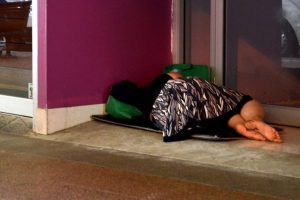
Homelessness and affordable housing, photo by Giulio Saggin

Last week I was walking from Roma Street Station to the top end of George Street, the hub of State Government. I was meeting friends for lunch and on the way passed a few apparently homeless young men on park benches, one tucked inside a doorway, others hovering around intersections, nervously smoking.

One young person was sitting on the footpath with a cardboard sign that read “homeless – please help”. I was too preoccupied on my mission so I ignored the hat, not even dropping a few coins on the return journey.

So now I’m hunting around the house for a decent sleeping bag and a beanie, hoping to make amends for my lapse in empathy by participating in a fund-raising community sleep-out on June 29. (If I chicken out I promise to donate money to the cause.)

Our local member Andrew Powell (Member for Glass House) has agreed to participate in the annual sleep-out.

Mr Powell wrote about this in his regular Glasshouse Country and Maleny News column. He will be among local dignitaries, business people and community members sleeping rough outside the Maroochydore Surf Club on June 29. Participants will be given a sheet of cardboard to sleep on and fed a simple meal of soup and bread rolls. Mr Powell says there are 1,500 homeless men, women and children on the Sunshine Coast.

The St Vincent de Paul northern diocese (which is organising the sleep-out), has provided support over the eight months to March 2017 to 450 homeless people, including 250 children.

The gesture by the Member for Glass House is admirable, but this is a problem that has, at best, been patched up by successive Queensland governments. The Sunshine Coast, which has a paucity of affordable and public housing, is named as one of the regional areas to be targeted by the new housing strategy.

The Rental Tenancies Authority published median rents for the Sunshine Coast region in December 2016. Tenants pay between $315 and $400 a week for a three-bedroom home or a two-bedroom unit. Rents are cheaper in the Hinterland areas like Beerwah, Peachester, Mooloolah, Palmwoods, Hunchy and Woombye, but public transport is limited and one needs a reliable car to live in these areas.

Meanwhile, Queensland has a plan

As the debate continues about the lack of affordable housing and how to find beds for homeless people, the Queensland Government has a 10-year plan.

The Government had some fairly positive (and uncritical), press about its plan to provide more than 5000 social and affordable houses. The $1.8 billion Housing Strategy announced in this week’s State Budget aims to get the private sector involved and utilise State government-owned land.

Treasurer Curtis Pitt said it was the biggest commitment to housing in Queensland’s recent history. The strategy will see more than 5,500 social and affordable homes built over the next decade. Eight hundred homes are to be built each year for the first five years. This is about double the number of social and affordable homes built in 2016-2017.

The Minister said the housing strategy includes $1.2 billion to renew the existing social housing property portfolio. A $420 million housing construction program aims to boost the supply of social and affordable housing. This includes $3.5 million to build two refuges for women and children escaping domestic and family violence.

The Government is also allocating $75 million to advance home ownership in ‘discrete’ Aboriginal and Torres Strait Islander communities.

At first glance this sounds like a bold plan, made with some compassion for those struggling to survive in a competitive housing market. On second glance, it is unlikely to make a dent in Queensland’s 25,000+ public housing waiting list.

Too little, too late?

Public and social housing comprised 4.8% of the total national housing stock, according to the Australian Housing and Urban Research Institute (2011 Census data). AHURI’s research showed that at a minimum, the social housing system would have to have been around 43% larger (on 2011 figures) to accommodate all those who met public housing eligibility criteria and who pay more than 50% rent.

Nevertheless the Queensland strategy has been welcomed by the construction industry and the housing sector, as it is said to provide 450 jobs. One of the more positive aspects of the plan is that 5% to 25% of the land used for these purposes will be land already owned by State Government. This implies vacant or under-utilised land near public buildings like hospitals and schools. So maybe at last the under-privileged will get to live in the middle-ring suburbs of Brisbane rather than 49 km away in fast-growing Logan City.

In December 2016, the State Government announced a $1 billion investment plan to build 3000 new houses in Logan City over 20 years. Minister for Housing and Public Works Mick de Brenni said the Better Neighbourhoods Logan initiative would deliver a range of economic and social benefits, including 410 new social and affordable dwellings over the next five years and over 3,000 new homes by 2036. A spokesman confirmed that the 3000 social and affordable homes are part of the Budget housing strategy. That leads me to surmise that another 4000 homes will be built in other regions over 10 years, on average, 40 new houses per year for each of the 10 regions identified by State Development.

The strategy shows some progressive thinking in that new social or affordable housing strategy should incorporate:

  • Rental bond loans to help tenants meet the private market;
  • Provision for public housing tenants to own their own home through shared equity loans or rent-to-buy schemes;
  • A new Housing Partnerships Office to streamline processes and lower costs and time frames;
  • Private sector involvement through expressions of interest to develop small, medium and large developments in regional centres;
  • $29.4 million to provide front line services for victims of domestic violence and young people at risk of homelessness. This includes a $20 million boost for ‘youth foyers’ – supported accommodation for young people aged 16-25 who are either homeless or at risk of becoming homeless.

Looking after property investors

The State Budget announcement follows a plan revealed in the 2017 Federal Budget to allow a tax break to invest in social housing.

Retail and institutional investors are being offered a 10% increase in capital gains discount (from 50% to 60%). The Australian Financial Review reported that the scheme, aimed at Management Investment Trusts, would allow the discount to MITs and their investors, provided they offer the properties at an affordable rent for at least 10 years. The AFR said the Government also planned to issue bonds backed by rental income from social housing, replacing bank debt issued to approved social housing developers.

While governments play ‘catch up’ with affordable housing, the onset of winter should turn our thoughts to the homeless.

As Andrew Powell observed, it is not a matter of choice.

“In many cases homelessness comes about through factors out of a person’s control – whether this is mental or physical illness, financial instability, lack of education, domestic violence or something else entirely,” he wrote in the GCMN.

Yes, and sometimes all of the above.