Review FOMM 2015

Bob at work 1980s 001My friends at Jetpack (a clever plugin attached to my WordPress website), sent me a performance review yesterday. Here’s a few excerpts and links to the best-read FOMMs in 2015 (one of which was written by She Who Sometimes Also Writes). 

These are the posts that got the most views in 2015: (right click on link)

Jetpack offered this advice: “Some of your most popular posts were written before 2015. Your writing has staying power! Consider writing about those topics again.”

The best-read of 2014 was Crossing the Nullarbor

Website viewers from 75 countries enjoyed FOMM, most from Australia, New Zealand, Canada, the US, Brazil and the UK, although we seem to be building a following in Mainland China and France.

I find it illuminating that this website version of FOMM attracts relatively few comments, probably because I also email FOMM to a rather large list. Some of you regularly send emails of praise and encouragement (and occasional dissent), and some only write when the spirit moves them. Thanks to those who commented online. I’ll be in touch!

Crunchy Numbers about Friday on My Mind!

A San Francisco cable car holds 60 people. The blog on the website was viewed about 3,300 times in 2015. If it were a cable car, it would take about 55 trips to carry that many people. (This is a very odd analogy – ed.)

Some of you may not even have been aware that FOMM exists on a website. Bobwords (the website)  wholly owned my me and She.

My main plan for this column in 2016 is to find wider distribution; you can help by sending friends the link to the latest post. You can sign up as a subscriber by going to the website and entering your email address where it says ‘subscribe to blog via email’. You will be sent an email to verify and thereafter will receive an email each Friday with a link to the website). We promise not to share your email with anyone.

Meanwhile, feel free to read the ones you missed or, if you were impressed the first time, reward yourself with an encore!

The website has a new feature – further reading (a list of 10 blogs you may find interesting -but please come back to mine).

FOMM resumes on January 8. Happy New Year!

Bob & Laurel Wilson

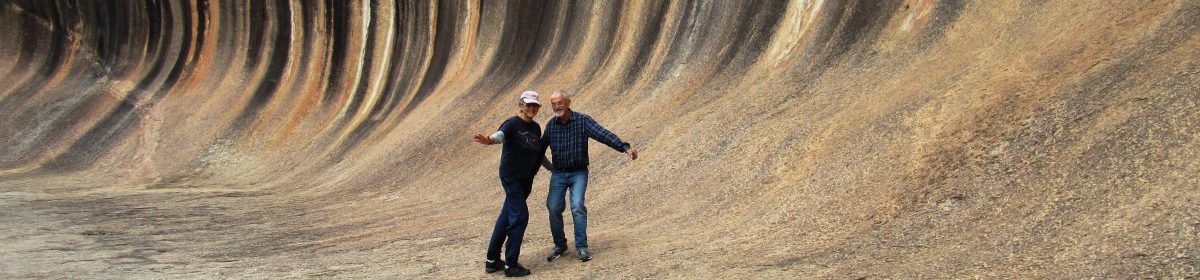
(Photo: Bob working at the Daily Sun, 1980s. Photographer unknown).


A white Christmas for some

Eyeore Eukey July 2015
Eeyore takes shelter, Stanthorpe, Qld, July 2015. Photo by Penny Davies)

Composer Irving Berlin had a habit of staying up all night, writing songs. According to Mark Steyn’s A Song for the Season, Berlin summonsed his secretary one morning in 1940 saying: ‘Grab your pen and take down this song. I just wrote the best song I’ve ever written — heck, I just wrote the best song that anybody’s ever written!

That tune was White Christmas, which if you think about it, must have been a challenging assignment for the Jewish-born composer. The song first surfaced in the 1942 film Holiday Inn, starring Bing Crosby and Fred Astaire. It was not an immediate success, but became a major hit by the end of 1942 as its wistful melancholia and homely images resonated with US forces caught up in WWII.

White Christmas is officially the best-selling song of all time (although there was a debate about that when Elton John recorded Candle in the Wind as a tribute to Lady Di). Fifty million copies of Bing’s version – which features a quaint second verse in which Bing does solo whistling – were sold. There have been 100 million copies sold, once the 632 cover versions are taken into account (Frank Sinatra, Elvis Presley, The Beach Boys, P.J. Proby, Perry Como, Darlene Love, The Drifters, Karen Carpenter, Lady Gaga, the Crash Test Dummies and the Chicago Gay Men’s Choir, to name but a few). Full list at

According to songfacts, though most songwriters would have done hand-stands if Elvis Presley recorded anything they wrote, Berlin called the King’s 1957 cover a “profane parody”. His staffers were told to call radio stations and ask them not to play it.

Darlene Love was one of the few to sing Berlin’s original first verse (with its images of Los Angeles in summertime), on Phil Spector’s 1963 album A Christmas Gift for You. The first verse is missing from most popular versions including Crosby’s hit, which was initially released on a 78 record with its endearing opening line, “I’m dreaming of a white Christmas.”

For the benefit of people under 60, a 78 was a heavy record made of shellac with one song on each side. It was played at 78 revolutions per minute, which accounted for the ‘scrtch scrtch’ sound, which 50 years later was adopted by DJs like a new idea.

My pop music history contact, Franky’s Dad, takes eclecticism to high art by playing two records on Christmas Day, the aforementioned Spector album and Bach’s Christmas Oratorio. If you’re not familiar with Spector’s album, it is a collection of well-known Christmas songs sung by groups like the Ronettes and The Crystals, orchestrated with Spector’s ‘Wall of Sound’. It is said that a then unknown Cher features on backing vocals. The album has lasted and you can even find a downloadable version on Amazon.

As we are now straying into Bah Humbug territory, here’s the tip: if you are faithful to the Christian traditions of Christmas or are just sentimental about it, do not click on the links marked BH as they may offend.

There are myriad examples of musicians taking the piss and lapsing into bad taste and obscenity at Christmas-time. Among them are songs by Kevin Bloody Wilson, Tenacious D, Eric Idle, Weird Al Jankovic, Spinal Tap and Ren and Stimpy. Look them up if you must.

The thing about writing a Christmas song, be it melodic schmaltz like White Christmas or nuanced satire like the 2015 offering by Kate Miller Heidke and The Beards, there’s the potential there for a recurring earner.

In the movie About a Boy, Hugh Grant plays dissolute playboy Will Freeman, who gets by on the royalties from his late father’s one-off Christmas song, Santa’s Super Sleigh. The film was based on a book by Nick Hornby and subsequently spawned a TV series which only vaguely follows the plot line.

The real life royalty winner, White Christmas ($A50 million), is topped in earnings status only by Happy Birthday, written in 1893 by the Hill Sisters and said to have earned $A62 million in royalties, according to a BBC4 documentary. Even if those figures look impressive, that’s not what you’d call huge earnings for the songwriter. The earnings for Irving Berlin and his heirs from that one song amount to $480,000 a year since 1940.

Kate Miller-Heidke’s I’m Growing a Beard…, recorded with Melbourne band The Beards, despite its bouncy insouciance, can be interpreted as a feminist rant against the waxing fad (which is hopefully waning), but also has a go at blokes who wax (so they can wear spandex and go bike riding). Fear not, it’s for a good cause. If you pay for a download of the song (BH), the money goes to Bowel Cancer Australia.

If you were wondering why Christmas songs are cluttering my mind this particular Friday, our acapella choir, Tapestry, has a concert scheduled for this Sunday. We had a warm-up on Wednesday at the local nursing home.

Our repertoire is sufficiently high-brow to please the discerning music lover (Veni Veni Emmanuel, How Shall I Fitly Meet Thee from Bach’s Christmas Oratorio, a beautiful Australian carol The Silver Stars, but with some old chestnuts tossed in – Rudolph and We Wish You A Merry Christmas).

Our version of Rudolph is, dare I say it, somewhat more melodic than this one by rapper DMX (Earl Simmons), inspired by Huffington Post’s 17 Best Worst Christmas Songs (2014).

If you dig around, you’ll find secular songs which have become popular for their own unique spin on Christmas. Franky’s Dad, who maintains a pop trivia website nominated Paul Kelly’s How to Make Gravy. You know the one: Joe’s in prison and he’s written to his brother Dan to make sure the gravy gets made right, although lots of other family emotions are stirred in with the flour, salt, red wine and tomato sauce. Likewise, Shane McGowan and Kirsty MacCall’s Fairytale of New York takes emotions on a sleigh ride. If it’s a message of peace you’re after, John and Yoko’s So This is Christmas is just about right, even if it sounds a lot like Stewball.

Twisted Sister’s Heavy Metal Christmas is, dare I suggest, more entertaining than any of the excruciating versions of TTDOC inflicted upon us by well-meaning carollers who persist with all 12 verses (and the five golden rings). BH

And for the pianists among the FOMM readership (there’s at least 40 exponents of the piano forte), here’s a Boxing Day challenge – an arrangement of Sleigh Ride in 7/8 time by John Eidsvoog.

Ah yes, it just wouldn’t be Christmas without a cat song, so we offer this one, also curated by Huffington Post. Just to prove that all the best ideas originated in New Zealand (Neil Finn, whitebait, pavlova, Buzz Bars, jet boats, me (actually, he’s originally a Scot – Ed) , the Hamilton County Bluegrass Band), editing animal noises into something approaching a melody was done to good effect in the 1960s by the Ashley Clinton Sheep’s Choir. The latter’s classic version of Po Kare Kare Ana is still floating around on a 2012 Kiwiana compilation.

This is attributed to the Jingle Cats – of necessity an instrumental.

Wishing you all the best for Christmas and 2016. Friday on My Mind returns on January 8.

Goodwill housing

While we’re all getting in the goodwill mood, Australians need to think seriously about this country’s housing problem. There isn’t enough of it to go around and what property is available is often out of the reach of low income households.

 Housing affordability chart

(Percentage of age groups with mortgages: ABS Surveys of Income and Housing)

This is no overnight thing. Tax concessions which favour property investors have led to a big swelling of their ranks – some 1.18 million. First there was negative gearing, re-introduced in 1985, which allows investors to claim rental expenses and interest on housing loans against their income. Second, the 50% capital gains tax exemption which property investors have enjoyed since 1999. Most invest on the expectation of future capital gain, rather than negative gearing benefits.

A 2014 article in The Conversation by Kate Shaw revealed that Australia’s GDP contribution of real estate transactions is the highest in the world – three times higher than in the US. Around one in seven Australian taxpayers owns one or more investment properties. Australia also has one of the highest levels of household debt in the OECD, due to mortgage borrowings.

As recent research on Australia’s rental market has found, those in the lowest 40% of gross income group struggle to meet rental costs and in capital city markets like Sydney or Melbourne pay up to 65% of their income for rental accommodation.

As a rule of thumb, low income earners paying 30% or more of their gross income in rent or mortgage payments are suffering housing stress.

Gavin Wood and Rachel Ong writing for The Conversation earlier this year underlined the growing problem of housing affordability. In 1982, the ABS survey of income and housing stated that 168,000 (or 10%) of home buyers spent more than 30% of their gross household income on housing costs. By 2011, those numbers had soared to 640,000, or 21% of all home buyers.

Wood and Ong also found that young first time buyers are finding it increasingly difficult to buy a home. As the chart above shows, the rate of home ownership in the 25–34 year age group slumped from 56% in 1982 to only 34% in 2011.

Wood and Ong say one in six Australians own two or more houses and 30% are holiday houses (2010 figures).

The Australian Housing Urban Research Institute (AHURI) says that while private rental is an important and growing part of our housing system, it has failed to serve the housing needs of low-income people. The 2006 ABS Census showed that 22% of households rent privately. In 2006, private renter dwellings numbered 1.47 million Australia-wide, an increase of 11 per cent since 2001.

But new research by A.C Nielsen for domain.com.au estimates that up to a third of Australians over 18 are renting, with higher proportions in the Northern Territory (43%) and Queensland (36%).

The stumbling block for people looking to rent a house or unit in a capital city is the up-front cost (usually a month’s rent and a bond (assuming $1000), not to mention storage and moving costs. FOMM figures the average establishment costs of a lease in one of five capital cities to be $2,828).

And domain’s rental market research shows it can be a short-lived reprieve, with 47% of Australians living in their current rental property for less than two years, and only 27% in the same property for more than five years.

Housing policy NGO National Shelter instigated the Rental Affordability Index as a response to media and political obsession with house purchase markets. The Index highlights the severe housing stress experienced by renting Australians. The report was produced by National Shelter, Community Sector Banking (CSB) and SGS Economics and Planning.

National Shelter executive officer Adrian Pisarski says the index fills major gaps in housing data, as it tracks household rents against household incomes in capital cities and regions across Australia.

“It reveals deterioration in our rental affordability, a result of 25 years of policy inadequacy and market failure. It shows why our low income households live in poverty and why life is a struggle, often a desperate one for moderate income working families.”

The RAI gives households who are paying 30% of income on rent a score of 100, a critical threshold for housing stress. A score below 100 indicates severe housing stress.

The report’s key finding is that while average rental affordability remained below 30% across all states, households in the lowest 40% of income consistently face severely and extremely unaffordable rents. This is the case in all regions of Australia. In the worst cases, non-family households are spending more than 60% of their income on housing (Sydney and Melbourne). Causes of homelessness, then, are shifting from traditional factors (escaping abuse, substance misuse, mental health issues), to being pushed out of the housing market by those with higher incomes.

People who are struggling to live on a government payment are the worst-affected by the crisis in affordable housing, according to the 2015 Anglicare Australia Rental Affordability Snapshot. The snapshot across all cities and regions shows that of the 65,500+ properties assessed for suitability, less than 1% were available for single people living on government allowances. Single people on the minimum wage would find 3.3% of these properties to be affordable. A working couple would fare better, with 23.8% of these properties suitable for their level of income. An age pensioner couple would find only 3.4% or 2,239 properties affordable.

Pisarski says the basic problem remains the lack of affordable rental properties and the lack of housing supply in general. He says one of the results is an emerging trends towards inter-generational living, with two and sometimes three generations under the one roof.

Australians are afforded little in the way of tenant protection, compared with cities in the US and Europe where rent controls and security of tenure are considered to be an important adjunct to social security.

Shaw makes a few broad comparisons between tenant legislation in Victoria and Germany. Rents can be increased in Victoria every six months with no limit on the amount (though the tenant may have grounds for appeal). In Germany, rent increases are capped at 20% every three years. In Victoria, 60 days is the standard amount of notice to vacate. In Germany notice varies according to how long the tenant has lived there: three months is the minimum for someone who has lived in the property for less than five years. Six months’ notice is required for a tenancy between five and eight years; nine months for longer than eight years.

In a perfect world, the Australian government would be looking to offer tax incentives to investors to rent to eligible (low-income) families at well below market rent. There was such a scheme, called the ‘National Rental Affordability Scheme’, but this only applied to investors building new dwellings, and as of September 2015, at least in Queensland, even this limited scheme was shut down:

To end this penultimate FOMM for 2015 on a cheery note, I read recently of one landlord who gave his tenants a one month ‘rent holiday’ as a Christmas present and thanks for being good tenants.


Travel without regrets

la traffic
LA freeway photo by Jeff Turner flickr

Dedicated readers will know by now my penchant for tinkering with numbers, so you won’t be surprised that I have done an inflation-adjusted calculation on my/our travel adventures over 45 years. O.M.G. We could have bought a second home, or a third; a luxury yacht, a Maserati or achieved the mythical $1 million retirement target.

New Zealand is Australia’s most popular outbound travel destination – 1.06 million went there in the year to March 2015; 483,000 for a holiday, another 603,000 on business or visiting family and friends. The next most popular outbound destination, according to Austrade’s Tourism Research Australia, was the USA (590,000 holiday makers and 286,000 people doing business or visiting family and friends). In third place was Indonesia (830,000), then Thailand (596,000). The UK is up there, with 510,000 Australian visitors. In all, 8.81 million Australians travelled overseas, for holidays, for business or to visit family and friends.
The other 15 million or so stayed home.

Ignoring travel alerts

Surprisingly (well, I was surprised) 77,000 Australians went on holiday in the Middle East and North Africa in the year to March 2015. There’s a risk/reward equation that probably adds a frisson of excitement to travel in unstable regions.
Egypt (population 91 million) attracts tourists who have the Pyramids on their bucket lists. Wikipedia says Egypt attracted a record 14.7 million visitors in 2010, but numbers have dropped significantly since 2013, due to civil unrest and travel warnings.
Reader M took her teenage sons to Egypt in 2008, “for an education”. It was also a rite of passage, as she had travelled there in 1985. She has no plans to return to Egypt, however, disillusioned by the lack of progress in that country since visiting 23 years earlier.
“Back then Egypt was pretty much culturally secular and was atmospherically a wonderful cross of east meets west. Many women wore the head scarf but an equal number did not. Cairo was cosmopolitan, with French, English and Italian influences. People were open, educated and friendly and the country looked affluent.

“Fast forward 23 years and nothing had been progressed in the country. In fact, a real sense of stagnation was evident. Not a road mended or a building finished….. Every woman was covered and there was pollution and filth everywhere.
“Where previously we were invited to people’s homes and the conversation was about global issues, politics, religion and family, this time the conversation was one-way rhetoric-driven, narrow, politically driven. The difference was staggering.”

Renovate or travel?

So far, we have not been that adventurous. In 1990, we’d been doing the sums on a major renovation of our 1930s colonial in Annerley. We planned to claw the $20k back from mortgage payments as we’d been keeping ahead of the game. Suddenly, in 1991, I found myself between jobs, with two months’ leave before I started the new one. We took our son (aged 9) out of school and spent the $20k on a tour of the US, Canada and New Zealand. We parlayed with the boy’s teacher – he had to keep a journal and make notes of all the amazing things he saw (Niagara Falls, the bilingual McDonald’s in Montreal, the Grand Canyon, Universal Studios, Disneyland, Giant Redwoods, Head Smashed in Buffalo Jump (more on that another day), and Fort McLeod, birthplace of Joni Mitchell (and She Who Planned the Itinerary). We hired a 20-foot recreational ‘ve-hicle’ (RV) from a depot at Anaheim and set off on the LA Freeway at 4.30pm on a Friday afternoon. What were we thinking? I later counselled son that “Mum and Dad were screaming in the car” was not the sort of diary entry his teacher would appreciate.

No regrets at all

Looking back, you never regret the money spent on travel, even when it was shitty; when the digs were below standard, when you all had head colds and the exchange rate was unfavourable. I remember nosing the RV into a parking spot at the Grand Canyon lookout. Our son got out, ran over to the rim of the canyon (it was almost sunset) and went “Wow”. We all went “wow”. He took an amazing photo with a cheap Kodak camera. We drove right around the canyon in the next week, shopping at Native American roadside stalls, talking Aussie to people, feeling light-headed from the rarefied air. A lasting family dinner-time catch phrase stems from overhearing this at an Arizona RV park all you can eat buffet:
“Hey Hank, you wants any more?
“Nope, if I eats any more I’ll be sick.”

US road trip

We rattled across four states in that big RV. The odd highlight (for me) was parking it in a 500-lot RV park in Las Vegas, getting a complimentary shuttle bus to the casino, winning $17 on the slots and queuing up for the $3.99 all you can eat buffet at Circus Circus. I tried to persuade SWPTI to get (re) married in an Elvis chapel (you can do that in Nevada), but she couldn’t get out of Vegas quick enough.
Every time we stopped for a meal at a roadhouse or diner, the wait staff would fuss over our boy and say “make him tark”. We did three days at Disneyland, drove up the coast to San Francisco, took a tour to Alcatraz, went camping in national parks, hugged a redwood, made sure we stored our food in bear-proof lockers. We drove across the desert in the RV we dubbed “Horse with No Name” and nearly died of carbon monoxide poisoning because someone left the rear window open.
We ended the adventure the way it began, stuck in a 90-mile traffic jam (between Vegas and Anaheim).

Those inspired to travel reading books by Robert Byron, Evelyn Waugh, Somerset Maugham, Bruce Chatwin and such probably see travel as M does − as a pilgrimage (religious or not), to experience the journey for itself and to walk in other people’s shoes.
Others have a list of famous places, or a list of risky things to do in said places (e.g. running with the bulls at Pamplona, climbing Uluru or bungy-jumping off the Kawarau bridge at Queenstown).

Uluru 02 LW
Photo by Laurel Wilson

On our first visit to the Red Centre, we arrived at one of the elevated spots where one can watch the sun set over Uluru. There were a lot of people there, complete with picnic hampers, bubbles, wine glasses, cameras and mobile phones.
Anyway, the sun began to sink and the rock started changing colour; it should have been time for a bit of hush, right? Not for two old blokes from Queensland who spent the entire time talking about how the Broncos were going and who’d win the State of Origin. They’ve come to this ancient, spooky place and can’t handle the feeling they aren’t really supposed to be there. So they drown the feelings out with white fella tribal talk and a few tinnies.

Next day we walked past 30 people waiting to climb the Rock (the climb was later closed because of high winds), which doesn’t excuse the wannabe climbers from ignoring the wishes of local Aborigines.
We took the Mala Walk around Uluru and I wished I’d gone before I left because (hint for others), there are no public toilets on this 11km walk. Apart from that, it was stunningly beautiful; a bit overwhelming, really.
As travel probably should be.

Coffee anyone?

Coffee farm at Koonorigan (NSW). Photo provided by ASTCA

I’d had a coffee brewing machine at home for about a year before realising the increasingly brackish taste was due to a long overdue need to purge the machine of accumulated mineral deposits. Along the way I also learned that it is a good idea to clean the milk frothing wand after every cappuccino.
A barista at our local café looked over her spectacles when I told her I’d just de-scaled our machine for the first time.
“We do that every day!” she said… “Long black, is it?”

Long black’s my choice and I’ve got the home blend down to a fine art. Most days I have two cups in the morning, but rarely more and it is a hard-learned lesson not to consume coffee after 2pm. Despite the science that tells you that the caffeine in coffee departs the system within four to six hours, coffee at 4pm or later will keep me wide-eyed and twitching until 2am.
Now I don’t know about you, but in my experience not every coffee shop has the right idea about how to make a good long black. It can’t be tepid, it can’t be thin and watery, and it must not have that acrid burnt-bean taste. Not at $4+ a cup.

They’re everywhere

Our little village has 13 places in the main street alone where you can sit and sip your coffee and watch the passing parade, or read their newspapers. Names and faces change all the time. One door closes and another opens. Over the years I’ve probably tried them all but come back to the same one or two.
Australians consumed 16.3 million coffees every day, according to an Australian Bureau of Statistics (ABS) study in 2011-2012, but about two thirds were made with (shudder) instant powdered coffee.
The ABS says coffee (including coffee substitutes), was consumed by nearly half the population (46%). Consumption was closely associated with age, with one in three (34%) people aged 19-30 years and two in three (66%) aged 51-70 years partaking of coffee. Only 4.5% of people aged 2-18 were labelled coffee drinkers.

Aussies spend $16 a week on their brew

A survey by Canstar Blue reveals that more than half of Aussies drink more than two cups of coffee each day. One in three claims they are unable to function properly without their cuppa. The average Australian will spend $16 per week on coffee – $832 per year.
For that for that kind of money you could buy yourself an old Corolla that smells of wet dog and has 300k on the clock. Or you could buy a deadly new coffee brewing machine along with the finest set of Italian cups, a grinder and a month’s worth of beans. After that, your only expense would be electricity, milk and sugar.

Coffee is big business in Australia. Ibisworld’s latest survey estimates revenue at $5.4 billion and profits at $208 million, with a five-year annual growth rate of 7.4%. Ibisworld says there are 7,623 businesses involved in the coffee trade, employing 70,694 people. The industry’s collective wages bill is $1.3 billion.
The key reasons people get involved in this business is that they believe the profit margins are lucrative – (yeah, provided you can snare the right staff and train them to put a perfect latte in front of someone, complete with art, just as they are sitting down). Cafes that get a reputation for slow service and mixing up orders just don’t last.

Small trader says coffee is  ‘hard, hot work’

Although the big franchise chains are increasing their market share, the heart of the trade in Australia is independent traders like my Brisbane coffee consultant, Mr Talkfast (TF). He says the average place selling coffee makes 100 cups a day. But with inner city cafes making many hundreds, and his suburban shop making 300 a day, it seems a lot of places make significantly less. TF says the high profit margin is a myth, unless you are roasting your own beans, but even then you need the volume.

“The average margin is about 10% once you take wages into account. New café operators spend too much on fit-outs and things like top-line commercial fridges and brand-new, expensive coffee machines.
“They often don’t have a realistic view of the business and don’t realise that it is hard, hot work.”

Meanwhile the big chains keep expanding

The key to growth is to control the coffee bean roasting businesses that supply cafes. While the majority of Australia’s 120,000 coffee destinations are owned and operated by sole traders, the big chains are getting bigger, with more than 200 coffee franchise and café chain brands, according to listed company Retail Food Group (RFG).
In Australia RFG owns the Gloria Jeans franchise and other outlets. RFG signalled a growth strategy in late 2014 when buying the national roasting and distribution company Di Bella Coffee, founded in 2002 by Phillip Di Bella.
The big chains dominate in the US and Canada, where coffee-to-go is the preference. Last year US-based Burger King fast food giant bought out the Canadian chain founded by ice hockey star Tim Horton in 1964. Tim Hortons is ubiquitous in Canada, with 3,665 outlets selling coffee and donuts, outranking McDonald’s in that country for fast food service outlets.
US coffee giant Starbucks expanded into the Australian market in 2000, but probably left its run too late, as Australian coffee drinkers were already habituated to their local, boutique cafés. Starbucks closed most of its 85 stores in 2008, with the remaining 24 stores since taken over by the 7-Eleven franchise.

Locally grown coffee a small part of the market

In case you’ve never been to Mareeba on the Atherton Tablelands or visited a coffee farm around the northern rivers of NSW, Australians do grow coffee. President of the Australian Sub Tropical Coffee Association, Jan Fadeli, says the total amount of coffee grown in Australia is 600 tonnes per year.
“In 2014 Australia imported 72,000 tonnes. Roughly, Australia produces less than 1% of what is consumed.” ASTCA’s members promote their product as “clean and green”, that is, free of pesticides and processed free of chemicals.
Australia imports beans from countries including Brazil, Columbia, Ethiopia, El Salvador, Guatemala, Indonesia and Papua New Guinea.

One thing is clear: bad coffee should not be tolerated, at home or away. If you complain to a café that your coffee isn’t hot and they put it in the microwave, it’s time to leave.
Coffee industry lore is that new entrants typically last six months before closing their doors. Risings labour costs and rents are the major impediments.
TF, who also has a day job, has been in the coffee business with his partner for eight years and says the key to the business is quality, consistency and customer service.

“It (the shop) won’t be there forever, but we actually find it quite rewarding in terms of customer feedback.”
He has this advice for anyone thinking they can make a fortune from coffee.

“I would tell them to work out exactly what they’re prepared to lose before going into business. They should work out the maximum they are prepared to lose and make that their budget for the first year. And be prepared for hard work.”

Meanwhile She Who Makes Shopping Lists (While Hubby Swans About Writing Columns) wants to know what we need.
“Coffee, sugar, milk and vinegar.”
“Vinegar?”
“It’s time to de-scale the coffee machine.”

Terrorism and the media

sunset Hydra
The author seeks inspiration on a Greek Island

Deck the halls and all that, it’s the lead-up to the silly season, tainted as it is by relentless media reports about bombings, terrorist attacks and can-it-happen-here scenarios.
Despite the disproportionate Australian media coverage of the Paris attacks that left at least 129 dead, pretty soon it will dawn on Australians that there are just 33 shopping days to Christmas. You already missed surface mail by two months. Cards need to be sent soon, especially if you’re catching overseas airmail (allow three weeks).
Hams and turkeys need to be ordered, family members need to be summonsed (or not). You may care instead to send a Christmas-spend sized donation to the charity of your choice. Or not.

Soon we’ll be swept up in the coming storm and cyclone season and the inevitable bush fires (which appear to have started already). Our parochial media will settle down and report on domestic issues. Between Christmas and New Year, news reports will focus on the Christmas road toll, epic drunkenness outside nightclubs, drug busts, misadventures at the beach, the inevitable ‘year-enders’ (summaries of the year that was) and in desperate times, cat up a tree stories.

But interpretations of reality intrude

Meanwhile, we can all empathise with the French people; after all, about 110,000 people of French descent live in this country. Many people started using a Facebook app, adding the Tricolours to their profiles, as a sign of solidarity, perhaps.
There was also a bombing in Beirut the day before, which killed 46 people and injured at least 249, which was comparatively ignored amid the hysteria about France. Facebook initially copped a bit of flak about not providing a Lebanese flag app.
As many commentators are saying, the hysterical media coverage that followed the Paris attacks is completely disproportionate to the statistical likelihood of being killed or injured in a terrorist attack. Terrorist groups thrive on publicity; it feeds their evil appetites and attracts new acolytes. The more the mass media plays it up, the more it justifies the logic of it to the new recruits.

Alert but not really alarmed

Somewhere caught in the cobwebs of my younger memory, there we are getting on a London underground train and then being told to immediately leave the train and exit to (Oxford Street?) as quickly as possible.
British people take this kind of thing in their stride, calmly riding the endless escalators to the daylight as if they were going to meet a friend for tea and cake.
We were not overly perturbed, although it brought back those conversations with parents when we told them we were going back-packing in Europe, circa 1973. They were panicking, as parents tend to do, about the then current Provisional Irish Republican Army (IRA) habit of carrying out random bombing attacks on targets in London as a response to British troops interfering in Irish business.
Compared with more recent terrorist attacks, the casualties were small, but the attacks frequent and brutal enough to instil fear and anxiety among London’s populace. The IRA had a habit of making telephone calls to police or newspapers shortly before the bombs were detonated, which may have explained the half-remembered tube evacuation.

And still the west interferes

That’s yet another example, albeit 40-plus years ago, of what happens when supposedly superior western powers stick their noses into the religious and political dynamics of other countries. Margaret Thatcher’s 1980s approach to The Troubles did not work, George W Bush’s invasion of Iraq clearly stirred up the Middle East, ditto Afghanistan, while the US-led tactic of bombing raids on ISIS targets in Syria is arguably fuelling more terrorist activities.

Terrorism is not new. While the use of the term to describe random crimes of violence upon private citizens is in dispute, it is said to date back to the French reign of terror in the 16th century.
In the 21st century, the cowardly practise of achieving some sort of pyrrhic victory through blowing oneself up, thereby killing and injuring random citizens, is universally in the public eye via the 24/7 news cycle and the Internet.
Sure there will be some who opted out of the news cycle and may still be unaware of last Friday’s co-ordinated attacks in Paris. But the Australian authorities are taking no chances. The Australian government website smartraveller.gov.au has set its travel advisory for Paris and the Ile de France area to amber: “Reconsider the need to travel.”

Some avid newspaper readers and commercial television watchers will have called their travel agents already to cancel their romantic Christmas in Paris holidays. Others will go ahead and travel, mindful that the odds of dying in a terrorist attack (one in 20 million) is negligible, compared to the likelihood of dying in a car accident (the lifetime odds being 1 in 100, according to lifeinsurancequotes.org. That’s not to be glib or unsympathetic about what happened in Paris, last week and also in January, but you need to look at these statistics.

Nevertheless, terrorism attacks have been on the rise. Wikipedia.org says there have been 289 attacks in the year to date. A report released this month contains evidence that terrorism deaths have risen fivefold since 2000 and steeply since the start of Syria’s civil war in 2011 (see chart below).

global-terrorism-index-data
Global Terrorism Index 2015, the Institute for Economics and Peace

The Global Terrorism Index released by the Institute for Economics and Peace says 32,865 people died in terrorist attacks in 2014, an 80% increase on 2013. But 82% of attacks occurred in just five countries: Iraq, Nigeria, Afghanistan, Pakistan and Syria. The report covers the period 2000-2014 with particular emphasis on 2014.
Points worth noting include:
• Homicide claims 40 times as many lives as terrorism;
• 5% of the 107,000 terrorist fatalities since 2000 happened in OECD countries;
• 50% of all terrorist attacks claim no lives;
• Of the 13 countries at risk of increased terrorist activity, six are in Africa, three are in Asia, three in the Middle East and one in the Americas (Mexico);
• Only 4.4% of terrorist attacks averaged over the past 15 years have occurred in western countries, accounting for 2.6% of deaths;

From my pacifist corner, it seems crystal clear the attacks on France are in response to that country’s commitment to supporting US-led air strikes in Syria. Australia is part of this, so we have to assume we are a target.

There are those who avoid reading mainstream newspapers or watching commercial televisions news because of the anxiety prompted by overblown coverage of terrorist attacks.
Queensland’s Courier-Mail allocated 35 tabloid pages in just three days, making the Sunday Mail’s 10-page wraparound look like a muted response.
But if you don’t trust newspapers, you should also be wary of social media. A reader alerted me to www.thatsnonsense.com, a UK website which explores myths, misleading material and plain mischievous posts. There were many examples this week, not the least of which had US Presidential candidate Donald Trump making insensitive remarks in a tweet about Paris, when the original tweet was made in January, about the Charlie Hebdo attacks.

So yes, terrorist attacks are on the rise, but so is the volume of global media coverage and commentary and the hawkish rhetoric from western countries.
Dial it down, people. Take a breath.

Toilet reading for beginners

Dunny warningSome of you might want to wash your hands after reading this.
I do some of my best thinking in the toilet. The lavatory is definitely the smallest room in the house, unless of course you have a wine cellar, and even then, you don’t go to the wine cellar to think, do you? Ensconced in the loo with the door shut, one can sit and contemplate, for as long as one likes, really. Someone might tap on the door with an “are you in there?”, but the query is rarely loaded with requests to “hurry up about it because the guests will be here soon”.

Best of all, you can multi-task in the dunny (Oz). For instance I got the idea for this column while (ahem) doing number twos. You didn’t really need to know that, but nevertheless, you do. Not that it was anything close to an original idea. Various popular magazines, newspapers and blogs have seized upon this as a topic for a slow news day/week to beat up anxiety about constipation and piles.
The best part about the smallest room in the house is the certainty that no-one will disturb you there. There have been times (thinks: is this too much information) when I just put the wooden seat down and sit on the lid, elbow on one knee, head resting on one palm. I know, I know, Rodin did it first – a classic pose of rumination.

You can establish a certain atmosphere in the loo with the things you put on the walls – The Prophet, Buddhist prayer flags, calendars, framed tickets to great rock concerts, selfies of the family with famous people, postcards from places your friends have never been.

TR a ‘harmless pastime’

As mentioned, some articles will tell you that reading in the loo is a bad habit which can lead to constipation/piles and angry red welts on one’s buttocks.
Dr Ron Shaoul, an Israeli paediatric gastroenterologist, published a study in 2008, possibly the most scientific attempt to shine light under the dunny door. Shaoul thought toilet reading (TR) was woefully neglected by scientists, considering the habit dated back to the emergence of printed books.
Shaoul and his colleagues began with a hypothesis that toilet reading (TR) provides a distraction and acts as an unconscious relaxation technique, thus allowing an easier defecation process. The authors also examined the possible connection between TR and constipation and haemorrhoids. The study quoted an International Cancer Research Fund (ICRF) survey that four out of ten people read in the toilet, with men (49%) outnumbering women (26%). Newspapers were the most popular reading option, while one in 10 flicked through a magazine. Eight percent read a book and 4% perused their bills.

Shaoul’s study of 500 adults found that TR is common, involving 52.7% of the population. The TR group were less constipated (8.0%vs 13.7%) but had more haemorrhoids (23.6%vs 18.2%). The differences were classified as ‘not significant’, leading Shaoul to conclude that TR is a common and benign habit.

In 2011, The Guardian’s Ian Simple quoted author Henry Miller as a TR advocate.
“All my good reading, you might say, was done in the toilet. There are passages in Ulysses which can be read only in the toilet – if one wants to extract the full flavour of their content.”

Comic songwriter Pete Denahy takes a moment in the YouTube version of his song “Lookin’ at my phone” to scroll through texts while sitting on the loo. Denahy has a knack for a catchy song that resonates with ordinary people. He’s the author of Sort of, Dunno, Nuthin’, a father/son non-conversation that went viral. Note how his phone song changes key four times, itself a parody of some country songs.
Surveys in Australia reveal that 75% of mobile phone users browse the web, text or email while in the loo. If you’ve considered buying a second-hand phone, you need to think about this. The New Zealand Herald revealed that more than two-thirds of New Zealanders use their mobile phones while on the toilet. The Colmar Brunton survey found that 23% used their phones on the loo at home, and 19% took their phone to the toilet while at work.

Died on the throne

Speaking of New Zealand, we would often fantasise during that country’s bleak winters about a sheepskin toilet seat cover with a thin element, like an electric blanket. I’d be the first to concede that this is (a) impractical and (b) potentially dangerous (being that water and electricity never mix well).
Speaking of which, some people have died if not on the toilet, then in close proximity. In the latter category the image that first came to mind was the scene in Pulp Fiction when hitman Vincent Vega, played by John Travolta, is caught with his trousers down. For those who like their research buttered on both sides, in the scene where Butch (Bruce Willis) shoots Vega (Travolta), the latter emerges from the toilet, clutching a book (genius.com says it is Modesty Blaise by Peter O’Donnell), whereupon he espies Butch, who is holding the sub machine gun he found lying next to the toaster. The toast pops and a WTF look is soon wiped from Vincent’s face as director Quentin Tarantino adds one more to the body count.
In real life too, people have died on or near the throne. King Wenceslaus III of Bohemia, George II of Great Britain, and more recently, Lenny Bruce are just some of the names on this list. (Elvis omitted out of respect for ‘The King’)
In 1306, King Wenceslaus was murdered with a spear while sitting in the garderobe (a medieval toilet). Another Wikipedia entry tells us that in 1760 George II of Great Britain died on that other throne from some kind of heart event. More recently (1966) comedian Lenny Bruce also died on the dunny (of a heroin overdose).

Exploding toilets and other myths

There are a few urban myths about dunnies. Australia’s notorious redback spider is said to like hanging out in dark, damp places, although this was thought to be more prevalent in the days of outdoor dunnies. The more benign green tree frog also favours the porcelain pool.
Myth-busting website snopes.com consistently debunks the multiple stories about exploding toilets. In the US, ever-exaggerated myths persist about cat-sized water rats, snapping turtles and alligators living in New York sewers. These pervasive tales have made toilet-training difficult for Manhattan mothers.

Redecorate your dunny

I’m proclaiming 2016 The Year of the Dunny, a time when the smallest room in the house can be given a makeover. It should be repainted in soothing colours, have at least some artwork, wind chimes, scented candles, potted plants, a magazine rack and well-located shelves to place your book/mobile phone/IPad/glass of red. Shop around for less prosaic toilet roll covers. Wire a pair of Bose speakers into the ceiling so you can stream dunny music of your choice from paytheartistsapittance.com. May I suggest Randy Newman’s Political Science, Bob Segar’s Night Moves, and (you can never be too careful), instructions for your executor via that Bee Gees song, you know…“In the event of something happening to me…”

$400m bet on one race

sunset Hydra
The author, seeking inspiration on a Greek isle.

Four hundred million dollars is a useful amount of money. In the hands of people who know how to distribute money for a good purpose, it could be dispersed in a myriad of ways. They might take up to 20 percent off the top to administer their charities, but that’s a subject for another time.
For example, $400m, equivalent to about a 20% of the Australian Government’s public housing budget, could be used to alleviate homelessness. If evenly distributed, our 105,237 homeless people would each receive about $3,800, which would easily cover a bond and a month’s rent in most Australian cities.
Another example: For $400m you could set up specialised clinics and buy stocks of prosthetic limbs for people in war-torn countries who lost their arms and/or legs to land mines and IEDs. There’d be money left over to pay medical staff to teach people how to walk again.
Or back home, if you had $400m you could negotiate with banks about forming a Blockies Syndicate to buy farms in WA and NSW, the struggling ones currently the target of acquisitive Chinese investment companies.

Now to the Melbourne Cup

If you were wondering where I was going with the $400 million thing, this is what 14 million Australians apparently gamble on the first Tuesday in November trying to pick the winner of a two-mile horse race with 24 runners. Outrageous, isn’t it? Of course, some of that money is recycled, tipped into the wallets of those who backed the winner. Given that the 2015 Melbourne Cup was won by a 100-1 outsider, though, I’d say a lot went into consolidated revenue.
Sarah Michael of the Daily Mail Australia described the race that stops a nation as just that. Research by HR firm Randstad estimated that 77% of Australian workers spend 3.5 hours or more celebrating the Melbourne Cup. The number of full-time employees who call in sick on the Wednesday after is 25% higher than normal. All up, it’s a loss of productivity estimated at $1 billion.
Not all workers treat Melbourne Cup day like the public holiday it is in Victoria. Randstad’s survey found that 15% said they watch the race and participate in office sweepstakes then get back to work. Eight percent said they were too busy to watch the race at all. And (my observation), an unknown percentage spend time and emotional energy alerting people to the cruel, exploitative side of horse racing.

The Victorian Racing Club says the 2013 Melbourne Cup contributed $364.4 in gross economic benefit to the State in 2013-2014. More than half was estimated to be spent in Melbourne department stores, fashion houses, boutiques and shoe stores and on associated events leading up to Cup day. Pubs and restaurants did OK too.
The VRC’s 2014 annual report tells us that 3.2 million home viewers tuned in to the Melbourne Cup and the race was beamed into 163 countries. Annual reports tend to lag behind, so you need to know they are referring to the 2013 cup. It is a fair bet demand for this horse race to be broadcast live around the world will have risen in the ensuing years.
After all, there was only one Australian-bred horse in the 2015 field (Sertorious). Almost half the horses were imported from wealthy stables in England, Ireland and Japan (which made the $50,000 Kiwi-bred winner look all the better). And didn’t you just love Michelle Payne’s speech, in which she not only hung the flag out for female jockeys, but also (correct me if I’m wrong), she did not mention the ubiquitous sponsors at all, though she did wear the cap.

Not everyone in the nation stops

However, the claim that 13.8 million Aussies place bets on the Melbourne cup tends to ignore the 10.4 million who did not bet at all.
The ‘didn’t have a bet’ brigade probably includes infants in nappies, those with religious and/or ethical reasons for not gambling, tight-arses (Aussie slang for thrifty people) and those with pathological addictions who literally had to hide under the doona for the week to stop the ads from online bookmakers penetrating the part of the brain that succumbs to compulsion.

There is a debate about what happens to the 11,000 thoroughbreds who retire from racing each season. In 2013, the Australian Racing Board commissioned a survey of 1,470 horses that had finished racing: 664 (45%) went to stud, 450 (31%) were sold/gifted as pleasure horses and 205 (14%) were returned to their owners. A further 109 (7 percent) died or were euthanised, while just six (0.4 percent) ended up at the abattoirs. Animal rights groups claim that significantly more horses than that go to abattoirs. A 2008 academic study found that 40% of horses at an Australian abattoir had thoroughbred brands. No-one collects data on pleasure horses, who owns them or what happens to them over time, so the numbers are hard to nail down. ARMB survey author Renee Geelen is now working to broaden the study to include thoroughbreds that never get to the race track.

Meanwhile, the use of whips in racing is again under scrutiny. Jockeys are now fined or even suspended for over-use of the whip. The slow motion footage of Michelle Payne (who was riding hands and heels) madly waving her whip near the winning post is shown to be air whipping of the “OMG, I’ve won the Melbourne Cup” kind.

So the once-a-year punters had their flutter. Insurance group Asteron says the average bet in 2014 was $29. (Apparently this amount of money could provide three chooks to a third world family via Oxfam).

Asteron’s Risky Nation report not only discussed our love of the punt, but used actuarial statistics to alert us to our optimistic, yet risk-taking nature. For example, on average, we each gamble $1,641 a year (losing $1,300), yet comparatively few of us take out sickness insurance and the majority have inadequate life cover.

A third of the people Asteron surveyed reckoned paying $420 a year for sickness insurance was “not worth it” and 31% “didn’t know”. Asteron (an arm of Suncorp), says the odds of needing income insurance are 67-1, the odds of being diagnosed with cancer 200-1 and the chances of having a heart attack 427-1. The odds of picking the Melbourne Cup trifecta, however, are 12,144-1.

The TAB said $15.07 million was wagered on the Melbourne Cup trifecta last Tuesday. I could not find out just how many people managed to pick the 100-1 chance to win, chased home by Max Dynamite and Criterion, both at generous odds.
The trifecta paid $26,045. No-one in our street won it.

The choice is ours. Back up on the Sandown Cup tomorrow, run down to your favourite insurer and bump up your life cover, or make a punter-size donation to the charity of your choice.

The Red Cross chose Melbourne Cup Day to ask people for a donation of “$25 or $60” to deliver clean water and sanitation to villages in Burma.

They’ll probably get a better response than the telemarketer who called our Melbourne Cup lunch host at 1.59pm on Tuesday to sell her a new mobile phone.


Halloween and other imports

V mask
Thumbs up from the Guy photo by Internet’s_dairy https://flic.kr/p/4Wb2AU

The prediction in 1940-something that Mother’s new bairn would be born in late October may have caused some angst. In Scotland, those of a superstitious nature would have been in a ‘swither’ (a state of nervous agitation). But “no worries” as we say in Australia. I was born the day before Halloween, with 22 hours to spare.
My friend Ingrid says that apart from it being her birthday, October 31 is a ‘non-event’. But her American friends are horrified, in a swither, even, because of the tradition that deems the 31st to be the date departed spirits return to earth.

The chances of giving birth on Halloween (October 31) are considerably lower than those who drop a sprog on Valentine’s Day (February 14), according to the journal Social Science and Medicine. Researchers studying birth data a week either side of those dates said the chance of giving birth on Halloween dropped by 11.3%, with 16.9% fewer C-sections, 18.7% fewer induced births and 5.3% fewer spontaneous births. On Valentine’s Day, statistics say the likelihood of giving birth rises by 5% and Caesarean births are 12.1% more likely, prompting speculation that women deliberately schedule C-sections to have Valentine’s Day babies.
I have vague early childhood memories of Halloween in Scotland where bairns wear ghost costumes and go door knocking. You don’t get something for nothing in Scotland. You had to sing, dance or recite poetry to be rewarded with a sweetie.

Cultural invasion

Meanwhile, the traditions of Halloween, or to be more precise, the retail world’s version, have been imported to Australia. It’s a relatively new thing, but gathering pace, year by year.
Former colleague Jeff Sommerfeld, also an October 31 baby, says he was spared trick and treaters for years by virtue of living in an inner city apartment, where door knockers rarely strayed. But since he moved to the country, it’s a different matter.
“Last year I was quietly watching television on October 31 when I heard the doorbell ring and to my surprise there were children, escorted by a parent who cried out “trick or treat”. I did not chase these people away, but rummaged through my cupboard and found some lollies that I have for sweet tooth indulgences.
I presented these treats to the people at the door and they left. That is my first and only encounter with Halloween.”
Jeff and I share a dislike of the incursion of American culture into our way of life.
“What is interesting is the hit and miss uptake of American culture,” he says. “We like The Simpsons and 7-Eleven, but have not warmed to Starbucks.”

Retail therapy for some

The brutal truth of the matter is the retail sector needs to cram its calendar with special days that will boost turnover and present opportunities to sell unique stock. It starts with Australia Day and the related merchandise, which includes flags to fly from your car, real flags, Australian flag flip-flops, stubby holders and cigarette lighters, packs of cards, beach towels and sun hats. The fiscal joy for retailers of this strictly Australian event is that unsold stock can be stored away until next year.
Then comes Valentine’s Day – a big thing in Australia with almost 90% of people aged 18-24 said to mark the day of lovers in some significant way. Ibisworld Research estimated that Australians spent almost $800 million on Valentine’s Day in 2014, $42 million of which went on restaurant meals.
There are other imported anniversaries which cynics dub “Hallmark Holidays”, including Mothers’ Day and Fathers’ Day.

Penny for the Guy

Some of you Brits will notice how I skipped over Guy Fawkes (November 5), a macabre celebration which now barely registers in Australia. It was quite a thing when we were children and the custom is still big in New Zealand, albeit tightly regulated.
The sale of fireworks was banned in Australian states in the 1980s, partly because of injuries and burns, but also because of the risk of bush fires in November.
The custom is still popular in the UK, where people start building bonfires in October while children make “guys” which are traditionally burned on Guy Fawkes’ night. For the benefit of readers under 40, a summary: The Brits foiled a plot to blow up the House of Lords on November 5, 1605. Spanish anarchist Guy Fawkes, who was found guarding a stock of explosives associated with the “Gunpowder Plot”, was arrested, tortured, and executed. Every year thereafter on November 5, effigies are ceremonially burned, with or without Guy Fawkes masks, while fireworks are let off.You may have seen the stylised face mask (pictured above), designed by British artist David Lloyd as part of the 1988 book series V for Vendetta. The mask has become well-known through the movie of the same name. It has also been appropriated by the Hacktivist group Anonymous, worn at protests and rallies, including Occupy Wall Street.
Lloyd created the original mask image for a comic strip written by Alan Moore. He told Rosie Waites of BBC News Magazine the mask had become a convenient placard to use in protest against tyranny.
“I’m happy with people using it, it seems quite unique, an icon of popular culture being used this way,” he said.

The Pagans and the Christians
Before we drive a stake into Halloween for another year, let me tell you about the bizarre ritual that the US blog zine Jezebel dubbed “Slutoween.”
Sydney Morning Herald fashion editor Paula Joye was invited to a Halloween soiree in 2011. After donning a traditionally appropriate outfit, she arrived to find something resembling a Hugh Hefner garden party.
“There was a Cinderella wearing a dress so tiny that it didn’t cover her bottom, but that was lucky because it gave everyone a better view of her white garter belt and fishnets. A latex clad nurse was standing next to the slippery dip talking to a policewoman in hot pants and a ed lace bra. My PG afternoon had suddenly turned Pay Per View.”

The skanky witch takeover is but one diversion from ancient traditions. No wonder there is a Catholic-led campaign to “reclaim Halloween”.
Francine Pirola of www.cathfamily.org says parents are wise to approach the festival with caution. Trick-or-treating can lead children into a “mind-set of greed and an expectation of free handouts”, she wrote in 2012. “Further, the association of Halloween with pagan ritual can feed an unhealthy fascination with the occult.”
Some Christian families want to redeem Halloween from these unsavoury associations because of its links to ancient traditions. Halloween is, after all, the evening before All Saints Day which the Church celebrates on November 1st. All Souls Day follows on November 2nd, when Catholics pray for all the dead.

An apple a day

Meanwhile, Mr Sommerfeld has stocked his country larder for this year’s trick and treaters.
“I intend to answer the door this year and present any children with a fresh apple. I think the spirit of giving is important, so if we are going to be dragged into another American cultural tradition, let us shape it and give children something that is good for them, rather than things that add to obesity and dental issues.”


Tick talk

ixodes_holomale
Paralysis tick – image by Stephen Doggett

The following should not be construed as medical advice. If itching persists, see your doctor.

One Sunday morning in October 2013 I woke early with a weird sensation behind my ear. Half asleep I picked the tick off that was embedded in my scalp. Less than a minute later my body erupted in a full-scale hives-like rash, my lips began tingling and I began wheezing. I jumped in the shower to see if that would ease the dreadful itching (I had angry red welts all over my body). I began to feel quite ill; hyperventilating and feeling light-headed. She Who Took Me To Hospital looked about as worried as I’d ever seen her. Not that I was caring much. By then I was feeling fit to pass out.
At Maleny Soldiers Memorial Hospital, known for its focused care and attention to patients (and a missing apostrophe), staff swung into action. The nurse on duty administered antihistamines and summonsed the doctor. The doctor ordered up Ventolin as he was not happy with the way my lungs were sounding. While that was happening, various nurses and doctors wandered back and forth to see how I was doing, all the while monitoring my blood pressure. The doctor returned and gave me an injection of adrenalin. Instantaneously the rash disappeared, my blood pressure started to normalise and I began to feel well enough to start contemplating my new-found status as being allergic to Ixodes holocyclus, or the paralysis tick.
As a precaution, I was admitted to hospital, remaining for the next 36 hours, during which time I was carefully monitored. The house concert we’d planned for that afternoon passed me by. Our guest musicians, Sarah Calderwood and Paul Brandon played on, and after the gig called in to visit me, along with a couple of friends who’d come for the house concert and found me missing in action.
Hospitals around South-East Queensland reported a higher than normal incidence of tick anaphylaxis that summer. A tick attack in an allergic individual is serious business. An allergic reaction causes the blood pressure to drop rapidly. The issue is that you could lose consciousness before being able to get help. If your airways swell up and become blocked, well, it’s game over.
It’s a bit hard avoiding ticks when you live on the eastern seaboard, as they are commonly found from Cape York to Tasmania and up to 30 kms inland.
The tick is also found in the Australian Capital Territory and a similar tick is found around Launceston in Tasmania. The common hosts are bandicoots, possums, brush turkeys, kangaroos and koalas.

A new way of life

I was sent me on my way with two Epipens and careful instructions on how to use them (as was She Who Hopes She Never Has to Stick a Needle in the Scribe) and a prescription for oral cortisone. It was also suggested I keep antihistamines handy as well as Lyclear, which is an ointment used to treat scabies. The drill is to carefully inspect your body for ticks after gardening or bushwalking (I do lots of both), and if you find one, dab some Lyclear on it and later remove it with tweezers or patented tick removers.

Sorry, I had to stop writing just then and go into the bathroom to inspect my nether regions. You?

Ticks can roam around on your body for up to two hours before latching on in body crevices, armpits, groin, behind the knees, on the head, behind the ears and on the back of the neck under the hairline.

The tick goes through four life stages over the course of a year. The following is a precis from an excellent website maintained by Tiara (Tick Induced Allergies Research and Awareness).

Ticks are commonly found in wet sclerophyll forests and temperate rainforests. The mature female will lay 2,500 to 3,000 eggs in moist leaf litter before she dies. Only a few of these eggs survive to adulthood. The eggs hatch as six legged larvae which must obtain a blood meal before they can moult to the next stage. These are the tiny ticks that show up on your body as itchy red welts. The larva climbs to the top of the nearest vegetation and waits for a passing host. The larva feeds on the host’s blood for four to six days, then drops off the host and moults to the eight-legged nymph stage. Nymphs seek a further blood meal for four to eight days before moulting to the adult tick. Adult female ticks feed for 10 days, drop off the host and then lay eggs over several weeks.

(Sorry I just had to duck upstairs for a quick shower. You?)

Before my body decided it had enough of ticks and tried to reject their toxins, I had numerous incidents where large ticks had embedded themselves in various parts of my body. I was savvy enough to know the tick should be killed before removal. If you try to forcibly remove the tick while it is still alive (guilty as charged), there is a risk the tick will release a toxic dose of saliva into your body. Even if you’ve had a mild to moderate reaction, the next time could be more serious.
By far the strangest allergic reaction to a tick is an allergy to mammalian flesh as a result of a prior tick bite. This used to be an extremely rare condition, but sadly it is now more common than either doctors or their patients would like. Imagine having to become a vegetarian or restrict your diet to fish and chicken because eating red meat makes you desperately ill?
I hear a few of you scoffing – check out this Catalyst programme from February.
The key to avoiding a tick bite is precautions. Some people react by moving somewhere else. But if you think about the distribution, moving is probably futile, unless you plan to move to the desert.
This is not an exhaustive list of precautions but contains the handiest hints I know.
• Wear light-coloured, long sleeved shirts and tuck your trousers into your socks or wear gumboots when gardening or bushwalking;
• wear a wide-brimmed hat;
• Sensitive individuals should apply personal insecticide to exposed flesh and on their gardening/walking clothes;
• Remove gardening/bushwalking clothes outside the house and immediately have a shower, carefully inspecting your body;
• Some people put gardening clothes in the dryer on hot for 10 minutes, supposedly to kill any ticks loitering there;
• Mow lawns frequently and be aware that ticks can crawl up your pant legs;
• If you are allergic, buy an insulated baby bottle pouch and carry your Epipen at all times. Replace every 12 months;
• Guinea fowl and chooks eat ticks. But chooks destroy gardens and guinea fowl have a braying call that might annoy you or your neighbours.
There are electronic gadgets that emit ultrasonic sound that is said to repel ticks up to 3 metres. I bought one last year from the chemist and can report that I’ve not had a tick latch on to me when I’ve been wearing it.
You probably guessed by now I’ve been lured out to the garden to take control of the spring weed growth. So far the ticks don’t seem to be as bad as the bindi-eyes – but it’s early days.