Cape Town water crisis a stark reminder for drought-prone Australia

water-crisis-drought
Water stress map: www.wri.org creative commons licence

Cape Town’s water crisis is making news around the world, but nowhere should it be ringing alarm bells more than in our neck of the woods – South East Queensland. It’s not that long ago since the Millenium Drought (2001-2009) reached a dramatic point in late 2007. Brisbane became the first Australian capital to endure Level 6 water restrictions at a time when the region’s main reservoir, Lake Wivenhoe, dropped to 15% capacity.

In Cape Town, South Africa, the town water crisis is so parlous that taps were to have been turned off on April 16, but conservation efforts by the city’s 4 million people has pushed this out to June 4. Cape Town introduced Level 6 restrictions last month. Reports from the South African capital sound a bit like conditions in South East Queensland, circa 2007-2008.

The so-called ‘Day Zero’ – when water in Cape Town’s six reservoirs drops to 13.5% – means taps will be turned off and residents will have to queue at standpipes for daily rations. (Think dystopian movies like Young Ones or The Worthy).

A news report this week described a sudden sharp shower in Cape Town (10mm or so). People were said to have rushed out of restaurants, bars and shops just to feel the rain on their faces.

Residents are being encouraged not only to limit their showers but also to have baby baths over the shower outlet to collect the grey water for recycling. As was the case in Brisbane, Cape Town residents are being discouraged from washing their cars and flushing toilets (unless really necessary).

According to our local utility, SEQWater, during our own water crisis in 2007-2008, Brisbane residents successfully halved daily water consumption to 140 litres per person under Level 6 restrictions, which included a ban on filling pools. Gardens could only be watered with buckets (with water collected from those three-minute showers). The motto, ‘if it’s yellow let it mellow’ was nailed to many a dunny door.

Conditions are tougher in Cape Town, where residents are limited to 50 litres each per day. The Guardian reported that Cape Town’s water crisis was accelerated by a drought so severe it was not expected for another 384 years. Plans to diversify with more boreholes and desalination plants are not scheduled until after 2020. The city’s biggest reservoir, Theewaterskloof Dam, has mostly evaporated or been sucked dry since the drought began in 2015. The shoreline is receding at the rate of 1.2 metres per week, The Guardian reported.

Tucked away in its two-page feature on Cape Town’s water crisis was the colourful but completely unhelpful statement from an un-named homophobic pastor who blamed the drought on gays and lesbians.

Back home, South East Queensland’s water crisis in 2007-2008 ushered in a new era of water management, resulting in the SEQ Water Strategy, which set a water consumption target of 200 litres per day.

SEQWater spokesman Mike Foster says the biggest single change since the Millenium Drought was construction of a 600 km reverse flow pipeline network that allows treated water to be moved around the region. The utility also now has a ‘drought-ready’ strategy which is triggered when storage falls to 70%. Currently the region’s dam levels overall are at 75.9%, so nobody is losing sleep over the average per capita daily water consumption of 184 litres.

water-crisis-dams
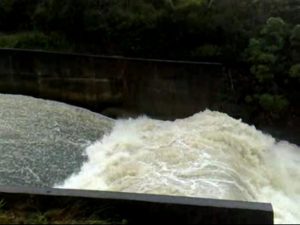
Baroon Pocket Dam spillway January 2011, image by Bob Wilson

FOMM wrote in March that water levels at our local dam, Baroon Pocket, had dropped to 46%. SEQWater supplemented the Sunshine Coast through an extended dry spell in 2017. Baroon Pocket Dam is now back to 78% (this photo of the spillway (January 2011) shows what can happen when 750mm falls in one month.

Blame it on climate change if you like, but the Sunshine Coast region has recorded below average annual rainfall in three of the last six years. What really did the damage was an eight-month stretch from July 2016 to February 2017 with an average rainfall per month of only 43mm. Source: Bureau of Meteorology monthly rainfall.

The South East Queensland Water Strategy aims to maintain regional water security into the future through management and operation of a water grid including a recycling facility and a desalination plant.

SEQWater owns and operates 26 dams, 51 weirs, and two borefields, including 12 key dams which supply as much as 90% of the region’s drinking water. Foster says SEQWater is now planning for far worse events than the Millenium Drought.

“Cape Town never thought they would experience more than two failed wet seasons in a row. South East Queenslanders never thought we would experience two failed wet season in a row either.

“But we went through the Millenium Drought and nearly a decade of failed wet seasons.”

Foster says that if SEQ was again faced with a Millenium Drought scenario, the strategies put in place would allow water supply to be maintained with medium level restrictions.

Meanwhile, in far more parched countries

You might feel relieved to learn that Australia was not one of 33 countries identified by the World Resources Institute as facing extreme water stress by 2040. However, Australia is one of six regions facing increased water stress, water demand, water supply, and seasonal variability over the next 22 years.

The top 11 water-stressed countries in 2040, each considered extremely highly stressed with a score of 5.0 out of 5.0, are projected to be Bahrain, Kuwait, Palestine, Qatar, San Marino, Singapore, United Arab Emirates, Israel, Saudi Arabia, Oman and Lebanon.

The 2015 report forecasts rapid increases in water stress across regions including eastern Australia, western Asia, the Mediterranean, the Middle East, the North American West, northern China, and Chile.

Nothing focuses the mind on the need to conserve water more than a summer camping holiday in a water-scarce national park. At the Bunya Mountains national park, east of Dalby, bore water is available in the national park camp ground. But it is labelled ‘non-potable’ and visitors are advised to boil and/or sterilise the water before using. We have a 60 litre tank under our caravan and we also take two 10-litre containers as back-up. Even so, after five days the van tank was less than half full and by the time we drove home on a stinking hot Sunday, we were sharing the last few mouthfuls from a water bottle.

Fine, just walk into the Kilcoy IGA and buy some bottled water, right? Maybe not. In Cape Town, supermarkets were forced to introduce a per customer limit after a big run on bottled water.

You may recall I was enthralled a while ago by Ben H Winters’ series, The Last Policeman. This cli-fi trilogy depicts the urban chaos developing as the population wait for the cataclysmic arrival of an asteroid which will destroy the planet.

Winters expertly conjured up underlying tensions between survivalists, conspiracy theorists or escapists who have “gone bucket list” or found easy ways to do themselves in. Then there are those with no particular moral code. As of the policemen in Winters’ second book says: “Just you wait until the water runs out…”

More reading: The 11 cities most likely to run out of water

http://bobwords.com.au/doesnt-rain-soon-mate/

http://bobwords.com.au/dont-drink-the-water/


Keeping Cabinet secrets safe

Keeping-Cabinet-Secrets
Keeping Cabinet secrets, image by Ricky Lynch

Zounds, it’s only the ninth day of February and some records have been set, including the biggest ever accidental leaking of Cabinet secrets. In un-related news, the weather bureau said last Saturday (the 3rd) was the coldest February day in 100 years. We didn’t have a fire on because we had no dry wood, but some Hinterland folks were better organised. BOM said it was 18 degrees but with the rain, fog and all-day and all night drizzle, it felt like 16.

Our New Zealand, Canadian and UK friends and relatives would no doubt scoff at 16-18 degrees being described as chilly. But this is the sub tropics after all, and a week earlier we were enduring temperatures in the mid-30s.

Although it was comparatively balmy in Canberra last weekend (25/10, 27/14), the atmosphere was decidedly chillier. Prime Minister Malcolm Turnbull turned up for the ABC’s Insiders programme on Sunday vowing that “heads would roll” over the accidental disposal of two filing cabinets full of Cabinet secrets.

The cabinets went to a Canberra second hand office furniture store and were purchased by a citizen who later drilled them open. The (Parliamentary) Cabinet papers dating back 10 years, many marked Top Secret or AUSTEO (Australian Eyes Only), were handed to the ABC. The national broadcaster published nine stories based on the Cabinet secrets over the following days before explaining how they came into the broadcaster’s possession. The ABC deemed some material too sensitive for publication because of national security issues.

In the meantime, Australia’s spy agency ASIO visited ABC headquarters in Sydney and Brisbane and negotiated secure storage for the documents and eventually reclaimed the Cabinet secrets.

Patrick Weller, Griffith University’s Adjunct Professor at the Centre for Governance and Public Policy, judged that the use of the papers by the ABC seemed random. “The ABC was probably aware they had limited time to play the story before it became public and everyone else jumped aboard,” he wrote in The Conversation.

“The story was more about the filing cabinets than the cabinet papers, about the carelessness rather than the content,” Prof. Weller said.

Prof. Weller argued that the leaking of (historical) Cabinet papers is not such a disaster for governments in that they are often time specific, advising about matters long forgotten and maybe even now seen as minor incidents.

As the rules go, historical Cabinet papers are made available after 30 years; once a year in January we get to see another batch. They make for interesting reading if you are a historian or a political academic, but rarely anything more than that. Prof Weller says most Cabinet papers could be released within five years. Only a few would matter.

International eyes on sloppy Aussies

Nevertheless, the story caught the attention of the world’s media and Australia’s international allies – the US, Canada, the UK and New Zealand. The Washington Post commissioned a piece from Australian writer Richard Glover, who pithily summarised the Cabinet secrets affair as “Deep Drawers”.

As Glover observed, the key problem with the sale of unchecked government furniture is that anyone could have bought them, then handed their contents to a foreign agent or government.

He quoted Andrew Wilkie, a former intelligence analyst now sitting MP: “It sends a signal to our intelligence partners and allies that Australia might not be trustworthy when it comes to sharing information and intelligence with us.”

Prime Minister Malcolm Turnbull said on Sunday the “shocking failure” would be fully investigated and the people responsible held accountable.

The idea that public servants, entrusted with highly confidential documents, would put them in a safe, lock the safe, lose the keys, and then sell the safe without checking what was in it – it beggars belief,” he told Insiders

It’s not just governments. Forbes magazine guest writer Mark Emery, director of a document management company, cited examples of big organisations mishandling confidential data. They included paper documents from four hospitals in Massachusetts found un-shredded in a public dumping facility. Another hospital in the same state admitted that personal records of 800,000 people were “missing”.

In Dallas, Texas, prisoners on parole were allowed to work off community service hours by sorting and shredding confidential documents, such as birth certificates and medical records. The practice was scrapped in 2012.

Richard Glover mentions similar circumstances in the 1990s when diplomatic bags were sent to be laundered at Wandsworth prison in the UK. In 1991, Canada’s diplomatic bags (full of top-secret NATO documents)  were mistakenly sent there too, and went missing soon after.

Mistakes happen, in business, in government and in our private lives. Who has not sent a sensitive email intended for one person to many people? The digital data system is just as prone to this kind of mishap as the traditional paper file system.

When computers first started becoming dominant in business (in the 1990s), we were sold the myth of the “paperless office”. Twenty years later, even a micro-business like mine goes through a couple of reams of paper per month. Most people I know who run any kind of consulting business buy a shredder and keep it working (don’t forget to take staples out first!)

Last year in Sydney and Melbourne there were reports of medical files and legal papers found dumped in unlocked kerbside recycling bins. When stories like this make it into the media, they should at least make individuals aware of the need for safeguarding sensitive information.

In the 1980s, I’d been court reporting in a country city for several years. I always archived my jumbo-size reporters’ notebooks – filled on both sides with untidy scrawl – a mix of shorthand and my unique form of notetaking. The second time we moved house, I looked at the four archive boxes full of musty notebooks and decided I had to get rid of them.

I found a waste recycling firm which offered “secure disposal”. They dropped off a big wheelie bin at my place, the lid secured with chains and a padlock. Once I’d filled it up, I called the firm and they picked up the bin. The firm assured me the notebooks would be “burned or pulped”. This exercise cost $75, but what a salve for my conscience. The majority of matters heard in court never make it into the news or are briefly summarised. More importantly, magistrates and judges may decide to supress reporting. There was an example of a district court trial where I took copious notes only to find out that the defendants’ and plaintiffs’ names could not be published. Later a blanket ban was issued and we couldn’t print anything. Notwithstanding, a good court reporter will write everything down – better to have too much than not enough.

So that’s why I was feeling suitably smug, all these years later, when the strange case of “Deep Drawers” hit the news. It’s hard enough to keep secrets secret in the era of digital ‘cloud’ storage, super hackers and whistle-blowers. But Richard Glover’s oblique reference to “Deep Throat” (nickname of the Watergate source), nevertheless reminds us that if we want to discard sensitive paper files, dispose of them as I did.

If that was all a little heavy for an early autumn Friday, here’s a few songs about February to help you cope with the cold (or the heat).

The list did not include February, a poignant tune by Dar Williams, but here it is anyway.


Evan Mathieson Maleny house concert Feb 25

evan-mathieson-house-concert
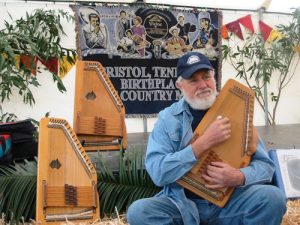
Evan Mathieson at the Dorrigo Bluegrass and Folk Festival

Evan Mathieson is your genuine old-fashioned ‘folkie’ who makes and plays his own unique ‘Aussieharps’. He is also an accomplished guitarist and blues harpist who has a wide-ranging taste in music, from Songs of the Sea through Jazz and Blues as well as Trad and Contemporary. Evan is also known for his recordings of the late Harry Robertson’s songs about seafaring and whaling.

Those who frequented the UpFront Club’s monthly folk sessions, a Bit of Folk on the Side, will remember Evan’s entertaining sets.

His tongue-in-cheek philosophy is: “There are only two types of music- good and bad.”

Hosts ‘The Goodwills’ (Bob & Laurel Wilson) will play an opening set, followed by afternoon tea and then the featured artist.

To book and for venue directions, please phone Laurel 5435-2333 or email: goodwills@ozemail.com.au

Adm: $15. Homemade afternoon tea/coffee and goodies available.

For more info on Evan, see www.evanmathieson.net

Goodwills’ house concerts are sponsored by the Queensland Folk Federation

House concert dates and other news

We are currently juggling dates for house concerts in April, June, August and October. We are pleased to announce that Brisbane trio Tin Star (Cathy Bell, Penny Boys and Dan Grant) have confirmed for June 10. Other dates will be added later.

Hopefully some of our house concert fans got to hear Fred Smith and Liz Frencham play at the Maleny RSL on February 2. Fred has played three house concerts at our place but last time we had to turn too many people away. The RSL gig, which we helped to promote and also played at, was most successful with 130 people attending.

Bob & Laurel


King decrees universal basic income

king-basic-income
King decrees universal basic income Image by Jason Train, Flickr https://flic.kr/p/f1BBQu

The question for the week is, what, apart from introducing a universal basic income, would you do if you were King, President or Prime Minister for a day? The term ‘King for a Day,’ which has inspired more than a dozen pop songs and an obscure opera by Verdi, implies that for 24 hours you get to be loved by the masses. You can loll about in a high-backed chair, gold orb and sceptre in hand, and be fawned over – mint juleps and the like.

In the Silly Season, media outlets tend to ask people questions like this, for a news slot or an inconveniently empty news hole next to a couple of ads. The ABC North Queensland asked a bunch of 11-year-old kids and some senior citizens what they’d do if they were Prime Minister for the day. Some of the answers were predictable enough. Sophie, 11 said, “Give everyone a day off so adults can take their kids out (and make theme parks free).” James (10) said he’d employ more scientists so Australia can get its research skills up (reserve that kid a cabinet post, circa 2030). Keira (11) wanted more national parks; Charlotte (11) wanted a program for kids to do work experience and be taught something they want to do.

If I could be King for a Day, I’d single out the dysfunctional tax and welfare systems and propose the following reforms:

Introduction of a universal basic income for all adults: $25k a year, indexed, no strings attached. Adults are free to earn money over and above the $25k, but it will be taxed on a sliding scale to the maximum rate for anyone earning more than, say, $150k.

Hypothetically, a previously unemployed or under-employed couple could, with a tax-free household income of $50,000, find jobs, start a business, renovate the spare bedroom, and join Airbnb and ramp up their annual income in a myriad of ways. Their only duty would be to the Tax Office.

Treasury boffins would be responsible for reforming the tax system to ensure the universal basic income could be funded and that as few people as possible are disadvantaged. Treasury could find ways to encourage business to work with this new system, for example offering generous tax rebates for research and development.

In my Kingdom, all forms of social welfare would be replaced by a new regime, overseen by the Office of Financial and Social Opportunity and Incentivisation (NOOFASOI). The office would oversee payment of the UBI and iron out the inevitable wrinkles in a new and untested system.

This is not just a FOMM flight of fancy

Countries as diverse as Finland, France, Ireland, Norway, the US, Canada, New Zealand, Holland, Iceland, India and Brazil are either talking about universal basic income or trialling it in one form or another. Switzerland had a referendum, and while the people said no, it shows how front of mind this issue has become. Indeed, Australia has a university-sponsored programme to research income security.

And the Parliament of Australia published this comprehensive yet concise policy paper by Don Henry, for those who want to find out more.

The media went on a feeding frenzy recently after the end of the first year of Finland’s two-year trial to dole out a subsistence amount (no strings attached) to 2,000 unemployed Finns. The Finnish government (wisely) is letting the experiment run and will only look at it the results when the trial ends.

I would not pretend to understand the complexities of financing a universal basic income and the social engineering required to make it work.

An OECD report in 2017 said that despite well-publicised campaigns for a Basic Income, no country has put a BI in place as a pillar of income support for the working age population.

“The recent upsurge in attention to BI proposals in OECD countries, including those with long-standing traditions of providing comprehensive social protection, is therefore remarkable,” the report says.

It’s not so remarkable when one looks into the growing inequality that is being spawned by job losses as a result of automation and digital disruption. As Oxfam said last week, 42 people hold as much wealth as the 3.7 billion people in the poorest half of the world’s population.

This is clearly not sustainable. 

From where I sit, the domination of the contract or ‘gig economy’ and a part-time, casual workforce has left the welfare system behind. Moreover, the welfare bureaucracy is unrealistically punitive, in that it forces the unemployed to prove they are pursuing fast-disappearing jobs to qualify for support.

Mainstream conservative publications including The Economist and the Financial Times have canvassed the UBI debate. As the FT said, it “strengthens a sense that the traditional welfare state is no longer fit for purpose”.

The advances in artificial intelligence (AI) are threatening many jobs around the world, the FT said, adding that most workers have come to accept that the job for life has gone for good.

But if the intent of a UBI is to lift people out of poverty and ensure wealthier people pay their fair share of tax, it’s not that simple.

The OECD report concludes that introducing a UBI in countries with strong social support systems would not solve poverty and would lead to higher taxes. Others warn against dismantling welfare systems, which, however flawed, are at least a safety net for the poor and disadvantaged.

George Zarkadakis, an AI engineer and writer, outlined some of the flaws in an article for Huffington Post. Zarkadakis dismissed talk of taxing the cash reserves of fully automated companies, saying this would affect their ability to invest and innovate; they would lose their competitive position to low-tax or zero tax regimes. Likewise, he was sceptical about the hi-tech and energy companies that are lobbying for (and prepared to help fund) a UBI, arguing that this would give them undue political influence.

The ancient ideal of a UBI (Thomas More’s social satire, Utopia, published in 1516), frees creative people and artisans around the fringes of the commercial world to develop their skills without financial pressure. The ‘shall we tell Centrelink?’ poser goes into the dustbin of history, along with the often inaccurate stereotype of the ‘goddamn, long-haired hippy dole bludger’. People on disability pensions would no longer have to get stressed about the fluctuating cycles of their illnesses. For example, a person receiving the blind pension (which is not means tested), can lose it if they recover some sight. There is also the travesty where workers made redundant find out that 30 years of paying tax counts for nothing. Unless their payout is locked up in super, they’ll have to spend every cent of it before dipping into the public purse.

Even a theoretical discussion about a UBI should alert us to many of the anomalies in our welfare system, which arise from outdated legislation and an institutionalised idea that people are out to rort the system.

As for my Kingly privileges for a day (you can tell how far along we are with ‘The Crown’), I was so busy hunting grouse, inspecting broodmares, dallying with ladies-in-waiting and whatnot, I never got around to doing anything. Terribly sorry.

More reading: Hardship in Australia

Arise Sir Bob of FOMM – Senior Australian of the Year

Readers of Aboriginal or Torres Strait descent are warned that the following text contains names of deceased indigenous people.

australian-of-the-year
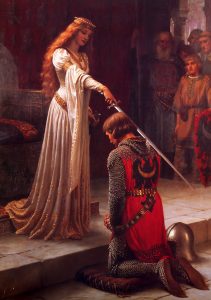
Image: ‘The Accolade,’ a painting by E.B. (Edmund Blair) Leighton (1853-1922), online courtesy Wikimedia Commons.

Gee, wow – I’m speechless. It’s just as well I didn’t wear my “I am not Australian” T-shirt (in English and Arabic). I’d just like to thank my pet fox terrier Spot, who was my idol and a great motivating force in my life. She taught me to always watch my back. Only yesterday I was thinking that Australia needs more maverick voices in the media, people who are not shackled to editorial policies, politics or commercial imperatives. I realise what might have got the panel’s attention was Friday on My Mind’s impertinent suggestion that all those named Senior Australian of the Year still alive and intellectually sharp could run the country better than anyone currently on holidays waiting for parliament to resume.

I was wrenched from this splendid dream, about to take the stage at a lavish black-tie Australia Day function in Canberra (idly wondering why I wasn’t wearing trousers), when the dog barked. It’s a rare thing for the dog to bark so I had to go and investigate. It was nothing, or possum nothing, but I checked the doors anyway and then went to make toast.

Last night the National Australia Day Council (NADC) broke from a pattern of favouring sports and arts, naming physicist Professor Michelle Simmons as Australian of the Year. Last year the committee also went for science, choosing Alan Mackay-Sim, a biomedical scientist specialising in spinal cord injuries.

Professor Simmons, who leads the quantum physics department at the University of New South Wales, was named at a ceremony in Canberra last night.

The Australian of the Year has been dominated over 58 years by the fields of sports (15), arts (10) and medical science (9).

Previously the Australia Day awards have favoured high-profile sports people, including Adam Goodes (AFL), Lionel Rose (boxing), Robert de Castella (marathon runner), Evonne Goolagong (tennis), Cathy Freeman (athletics) and Steve Waugh (cricket).

Musicians, writers and artists too have worn the mantle, so as dreams go, mine was not so far-fetched. Winners from the Arts have included Arthur Boyd, Patrick White, Sir Robert Helpmann, Dame Joan Sutherland, John Farnham, Mandawuy Yunupingu, The Seekers and Lee Kernaghan.

Results have not always been as clear cut. In the 1970s, the rival Canberra Australia Day Council emerged, resulting in two individuals being named on four occasions. This happened first in 1975 (Nobel Prize winner for Chemistry, Sir John Cornforth, and the man in charge of cleaning up after Cyclone Tracy in Darwin, Major General Alan Stretton). They did it again in 1977, choosing Country Women’s Association president Dame Reigh Roe and Sir Murray Tyrrell, secretary to six governors-general.

In 1978 panellists picked candidates from seemingly opposite sides of the tracks – entrepreneur and solo yachtsman Alan Bond and Aboriginal land rights activist Gallarwuy Yunupingu. The first Aboriginal elected to Parliament, Senator Neville Bonner, and naturalist Harry Butler tied for honours in 1979.

Prime Minister Malcolm Fraser put an end to this in 1979, establishing the National Australia Day Council (NADC). The awards were broadened that year to choose a young Australian who had made outstanding contributions to society. The committee chose community service volunteer Julie Sochacki for her work with unemployed people. They followed up in 1980, choosing quadriplegic athlete Peter Hill for his swimming feats at Paralympian events. This year the NADC chose Matildas soccer star Samantha Kerr, 24, as Young Australian of the Year.

But what’s in it for us old folk?

It took the International Year of Older Persons in 1999 to motivate then PM John Howard to add a new category to the Australia Day Awards. He chose Slim Dusty as the first Senior Australian of the Year. There can’t be too much argument about the choice of Slim as the inaugural elder, still pushing his career forward into a new century. He signed his first record deal in 1946 and was still performing in his 70s. Slim released his 100th album, Looking Forward, Looking Back, the year after he won the award.

Howard himself crossed over to the 60+ side of life in 1999 so the issue may have been weighing on his mind. It would have to be said the 18 recipients of the Senior Australian of the Year award so far come from a broader cross-section of the community than the overall award winners.

State winners of the 2018 Senior Australian of the Year awards included a pioneering surgeon, a scientist and diabetes specialist, a hearing health specialist, a biophysicist and an anti-elder abuse campaigner. Each state and territory selects its winner in four categories and the NADC judges all 32 candidates to select the Australia Day Awards (there is now also a Local Hero award).

Last night biophysicist Dr Graham Farquhar, 70, was named Senior Australian of the Year for his work on food security and feeding the world’s population. Dr Farquhar has won many international awards for his research in agriculture and climate change over the past 38 years.

The Senior Australian of the Year awards and others are just one facet of Republican pride in our national day (whether it is ever moved to a more appropriate date or not). The Australian government also doles out more than 700 imperially-inspired honours for services to professions and communities.

As the Sydney Morning Herald quite rightly pointed out last year, men are far more likely to win gongs than women, with men up to 20 times more likely to be nominated in their chosen field.  Not to labour the point, but gender bias seems evident in the Australian of the Year Award, with 48 men chosen and 14 women.

Those of you who proofread for a living may have noticed I referred to Australia as a Republic, when it is in fact a constitutional monarchy.

One may remember (with a sharp intake of breath), Australia Day 2015 when then Prime Minister Tony Abbott, who had re-introduced the system of Imperial honours in 2014, dubbed His Royal Highness Prince Phillip, Duke of Edinburgh (and retired Air Chief Marshall Angus Lawson), as Knights of the Order of Australia.

It is timely to now recognise this as a Trumpian turn of events, particularly Abbott defending his position as a ‘captain’s call,’ dismissing the social media furore as ‘electronic grafitti.’

Abbott‘s decision to recognise Phil for his years of public service (he is patron or president of 800+ organisations), did not help his support in the polls. Abbott reintroduced imperial awards in March 2014, resulting in outgoing governor-general Quentin Bryce becoming Dame Quentin. Incoming governor-general Peter Cosgrove was also knighted.

After Tony Abbott lost the LNP leadership, pro-Republican leader Malcolm Turnbull quietly re-removed Knights and Dames from the honours list in November 2015. Phil and the others got to keep their gongs, but safe to say we will never again see imperial honours in Australia.

Those with a liking for Morris dancing, Game of Thrones and the Age of Chivalry might miss the mediaeval trappings of a good knighting.

It’s sad in a way that we will never again see a Master of Ceremonies decked in the court finery of velvet, silk and lace, dubbing an erstwhile Sir by laying a sword on his shoulder.

Arise, Sir Bob of FOMM.


The near misses that spawned 207 nuclear war songs

nuclear-war-bomb
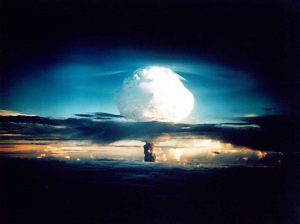
Hydrogen bomb explosion – image by www.pixabay.com

Ok, it’s a rough tally and not all of the songs about nuclear war on the Wikipedia list below were written in the 1980s. But many of them surfaced after the nuclear missile conflict near-miss of 1983. Millennials and even Gen Yrs may have been agog at the two nuclear missile false alarms broadcast in Hawaii and Japan recently, but there are precedents.

In October 1962, Russian naval officer Vasil Arkhipov intervened in the imminent launch of a nuclear torpedo, thus preventing the Cuban Missile Crisis of 1962 from escalating. At the time, US and Russian naval fleets were posturing in waters off Cuba, where Russia was building missile silos.

Arkhipov, a naval officer aboard a B-50 Soviet submarine, somehow knew something his captain did not; that the depth charges being dropped by the US destroyer Beale were practice rounds, designed to deter. As other US destroyers joined in the “mock” attack Captain Valentin Savitsky, assuming World War III had broken out, ordered that the sub’s 10-kiloton nuclear torpedo be prepared for firing. This required the permission of three on-board senior officers, but Arkhipov refused. Had the torpedo been fired (at the aircraft carrier USS Randolph), this would inevitably have triggered US retaliation.

Last year the BBC interviewed retired Soviet Colonel Stanislav Petrov, another brave Russian who averted nuclear war in 1983.

“In the early hours of September 26, 1983, the Soviet Union’s early-warning systems detected an incoming missile strike from the US. Computer readouts suggested several missiles had been launched,” the BBC report began. “The protocol for the Soviet military would have been to retaliate with a nuclear attack of its own.

“But duty officer Stanislav Petrov – whose job it was to register apparent enemy missile launches – decided not to report them to his superiors, and instead dismissed them as a false alarm.”

In doing so, Petrov defied his instructions (to pass the information up the chain of command). But he was right.

Lieutenant Colonel Petrov, now living the quiet life in a small Russian village, used his common sense and decided (risking a posting to Siberia), to bypass his superiors. Bravo, Stan.

“I had all the data [to suggest there was an ongoing missile attack]. If I had sent my report up the chain of command, nobody would have said a word against it,” he told the BBC’s Russian Service, 30 years after that overnight shift.

At least half of the (anti) nuclear war songs in this Wikipedia list were released in 1983 or over the following six years, with another big flurry in 1989. Call it the Chernobyl Factor if you must.

This is by no means a comprehensive list (my 1981 song ‘The Almost Armageddon Waltz’, for example, is not included). The earliest nuclear war protest songs surfaced in the 1950s – Tom Lehrer’s ‘We’ll all go together when we go” and the Kingston Trio’s ‘Merry Minuet.’

Of the earlier material, no-one IMHO will ever top Randy Newman’s ‘Political Science’ (1972) with its wry reference to Down Under (“…we’ll save Australia, don’t want to hurt no kangaroo, we’ll build an all-American amusement park there, they’ve got surfing too…”

(Randy at the piano)

Given the average time nominated between the launch of an intercontinental ballistic missile (ICBM) and the strike (about 40 minutes), you could look up a dozen of these songs on YouTube and spend your last hour on earth with your favourite tipple/best girl or boy listening to these ‘told you so’ warnings from the likes of Peter Tosh, Barry McGuire, Bob Dylan, David Bowie, Bruce Cockburn, Pink Floyd/Roger Waters, Tears for Fears and Sepultura, to name but a few.

You’d think Australian bands would not rate much of a mention on this list – we are after all 5,500 kms away from the nearest nuclear missile threat. Nevertheless, Redgum, Midnight Oil (3), INXS, Men at Work, Icehouse and the Urban Guerillas get a mention. There is also this obscure dance tune, ‘Dream home in New Zealand’, by the British ska band, The English Beat.

You won’t understand a word but you can just put it on repeat and groove the minutes away (ee-yo-yo, ee-yo-yo).

Then there’s Weird Al Yankovic’s merry Yuletide ditty, ‘Christmas at ground Zero’, with its weirdly prophetic line “The radio just let us know that this is not a test.”

I have no idea how this little ripper was overlooked for our Christmas playlist, but there’s always next year, isn’t there?

It’s good to have satirists like Randy Newman and Weird Al to keep us focused on the importance of being dryly fatalistic about the portent of a nuclear winter.

The questions should be: if humble songwriters can be so wise, why are world leaders so dumb? Why are the systems they put in place to avoid accidental nuclear war so downright flawed?

Lately a few stories have come to light that suggest North Korea has the missile capacity to strike Darwin, some 5,500kms away from Pyongyang. I don’t recall North Korea’s leader making direct threats about Australia or our relationship with the US military. But given the presence of a US Marine Corps in Darwin, I’d say we are on the list.

There is understandable global angst about the world’s lack of control over nuclear weapons and the rogue states which have them. The phrase “accidental nuclear war” is now very much in the lexicon.

The Future of Life Institute maintains a timeline of close calls on its website. This is scary stuff.

As commentators have pointed out, since last week’s Hawaiian misstep and this week’s gaffe by Japanese early warning systems, either incident could have sent the respective antagonists in this psycho-drama scurrying to press their big buttons.

People who research nuclear near-misses are careful to point out that they only know about the (de-classified) incidents involving the US. Data on near-misses and accidents in nuclear states like India, Pakistan and North Korea are not so readily available.

These two incidents of operator-error will no doubt result in a slew of reviews and overhauls of early warning systems. They may also give rise to another crop of anti-nuclear war songs.

If you care to delve into the list of (anti) nuclear war songs, be warned, the quality is uneven and heavy metal bands (Anthrax, Iron Maiden, Metallica, Black Sabbath) are over- represented. But there are also some thoughtful ballads (Kate Bush, Fred Small and this one, by The Postal Service (‘We will become silhouettes’).

People of the Left claim that wars of any type are started (and sustained) to keep the military-industrial complex ticking over.

I was so intrigued by the title of this 1982 Dead Kennedys song I checked it out – could have been written yesterday!

‘Kinky Sex Makes the World Go ‘Round’ has little to do with sex, or music for that matter. Instead we have a 508-word monologue accompanied by punk rhythms presented as a telephone conversation between the US Secretary of War (‘the companies want a war’), and a breathless (female) UK Prime Minister (‘oh, that sounds marvellous.’)

“We knew you’d agree – the companies will be pleased.”

Dead Kennedys

Next week, maybe.

Flashback (September 2017), June 2015


Fred Smith at Maleny RSL February 2

Fred-Smith
Songwriter Fred Smith, photo by Geoffrey Dunn. See Trybooking link below

Dear House Concert fans,

We are opening Friday night’s concert at the Maleny RSL for songwriter Fred Smith. Fred, accompanied by Liz Frencham (double bass and vocals) are launching his new double CD, Great. Last year Fred presented his Dust of Uruzgan show at the Maleny Community Centre for the Maleny Arts Council.

After discussions with Fred we decided that as we had to turn people away at his last two sold-out house concerts, this time he’s going to Maleny RSL. Fred organised this gig himself but we are helping him with promotion. Highly recommended.

Fred Smith – album launch, Maleny RSL, Friday February 2, 2018 7.30. Tickets: $20 Adults, $15 Children U18

Bookings:  https://www.trybooking.com/TIRC


In praise of the small caravan

small caravan at Barkly Homestead Roadhouse, NT

It’s hard to estimate just how many kilometres we’ve clocked up touring around in this little Jayco pop-top caravan, but it’s a lot. Probably close to 100,000. We bought the van back in late 2011, after an exhaustive search for a small, older caravan. We decided that as we did not know if we’d enjoy caravanning or not, it seemed wisest to spend as little money as possible.

Eventually we bought ‘The Tardis’ from a retired aeronautical engineer, a Mr Fussy who’d looked after the 1984 caravan meticulously, kept it under cover and added luxury extras like electric brakes and LED lights, as well as small truck tyres to give extra clearance. There was an awning too, stored away under the beds (more on that later).

Done all the dumb things

Caravanners would probably agree, but you never stop learning. You never, ever stop doing dumb things (like not putting the chocks back in the van; instead driving them into the turf as you leave). One of our neighbours at Castle Rock campground at Girraween confessed he had once driven out of a camp site with stabilisers still down. This is not recommended. The same could be said for not properly clipping down the front window, not locking the van door and forgetting to undo the safety chains before you drive the car away! (Guilty as charged, on all counts. Ed)

Most of the National Park campers we encountered recently were in relatively modest rigs – a few A-vans, a couple of camper trailers and one caravan even older than ours. There were also a lot of tents, a lot of kids and not an IPad to be seen anywhere.

Not a small caravan

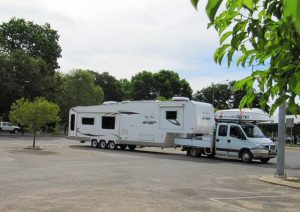
You don’t often see rigs like the one above in national parks. The access defeats them and there’s usually not enough room to park a beast like this (the sides push out, making for a large living room). I believe this one also had a washing machine and dryer. For $100,000 or more (including vehicle), you could have one too.

We saw many rigs like this (and larger) on our three month, round-Australia trip in 2014. There was a rig we saw in Alice that also had a trailer on the back towing a small Suzuki 4WD. On the back of the 4WD was a bike rack and two bikes!

Meanwhile we have learned how to eat, sleep, make love and play scrabble in a 12ft caravan. There have been occasions when we coveted more space, a toilet and shower even, but they are few in number.

Our caravan is simplicity itself. We arrive, pick a spot, reverse in (easy), put the jockey wheel on, detach the car, get the van level and push the roof up. Job done.

We should have kept a log book. The top photo was snapped at the Barkly Roadhouse in the Northern Territory. I was taken by the contrast between our humble rig and the ‘B-Triple’ cattle train.

Our most recent van trip between Christmas and New Year and beyond was to Girraween National Park via Brisbane, Warwick and Yangan. Our sister-in-law had a houseful prior to and including Christmas, so we parked the van next to her house on the bayside and did some ‘home camping’.

Onwards to Girraween where we found a quiet spot near some other campers, who appeared to be camping as an extended family.

This was the trip where, apart from the super moon and the blessed silence after 9pm, we made two amazing discoveries about our caravan. One, I found out how to light the grill! The van has a full-sized oven and cook top that runs off gas. To light the grill and make toast, I finally discovered, you open the oven door, turn on the grill and stick a match underneath. Not what you’d call rocket science, but we had tried various ways of lighting the grill in the past, but nothing worked.

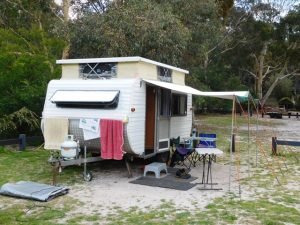
The second thing, given we were going to be staying a few nights, was to put up the awning (left) − an old-style canvas sheet which has to be threaded into a channel along the roof of the caravan, then pegged out with poles and ropes. Believe it or not, this was a first. Now, with a bit of wax for the sail track and a few extra tent pegs, we can achieve this every time we stay more than one night. #feelingsmug
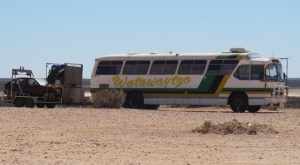
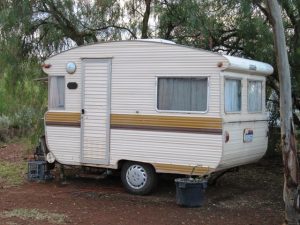
It’s been around, this little van. And, I’d need to add that we have seen smaller ones – 10 footers with a door at the rear. A six-footer with a home-made tilt-top and a few slide-on vans that sit on the backs of utes. There are also bubble vans so small you could probably tow one with a motorcycle.

Ours has been hither and yon – the first big trip in 2012 to the Man from Snowy River festival at Cooma, the National Folk Festival in Canberra and home again. We did a big northern trip in 2013, to Cairns and Karumba, across country to the Territory and back in a loop that took in Budjamulla (Lawn Hill) National Park and home, via western Queensland. Then the big trip in 2014, road-testing our near-new Ford Territory (which had only 9,000 kms on the clock). On reflection, we should have gone for six months, as Western Australia is far too large to whiz through in a month.

We’ve also taken this rig to the Blue Mountains for the music festival and that was when we discovered the leaks we’d fixed were, er, not fixed.

So I went to K Mart and bought a really big tarpaulin for $30 and we threw it over the entire van. Try doing that in a fifth wheeler.

Caravans – a money drain or a hobby for DIY types

We have spent some money on the van, it’s true. The first time was when heavy local rain seeped in and destroyed the kitchen bench top, which we then had replaced with marine ply (after fixing the leaks). Then when our local mechanic checked the tyres, he concluded they were so old they didn’t even have identifier numbers on them. So $400 later we were back in business and feeling safe. We’ve had lots of spot jobs done on the road (the insides of our three-way fridge fell to pieces after being taken on the Lawn Hill road) but a smart young guy in Mt Isa fixed it for $130. Another chap in Mt Isa stayed back on a Friday night to fashion new aluminium hinges to repair the van door which had come adrift. An artful fellow with a van repair business near Sunshine Coast Airport recently fixed everything on the van that didn’t work properly and replaced worn wheel bearings.

Not a small caravan No 2 (is that a quad bike on the back?)

Some people, we found, are permanently on the road, hence the need for impressive rigs like this (left). Others make do nicely with vans as small as the one below.

Very small caravan

I fondly remember on one of our first forays north stumbling upon a former work colleague, retired from newspaper life, travelling with his wife in an old 10ft van with single beds. “It’s all we need,” said Roy, getting his fiddle out for a few campfire tunes.

As an old fella we met in the NT, towing a 30-year-old van with an aged Kingswood* said, when a fifth-wheeler rig roared past: “Aw, he’s just showin’ orf.”

*Holden Kingswood, the classic car for everyman, produced from 1968-1984.

More reading : an outback travelogue from 2014


The changing language of disability

The changing language of disability: I briefly met the deputy editor of The Conversation, Charis Palmer, in December, at the launch of the Yearbook. I handed her my card and told her my weekly blog had been running for three and a half years. I said I often quoted articles from The Conversation as I considered it an accurate and balanced source.

“Well don’t forget you can re-publish any of our articles, anytime,” she said before being descended upon by fans of The Conversation.

In just six years, The Conversation, with its evidence-based stories written by academics and curated by journalists, has gathered an audience of 5.2 million, extrapolated to 35 million via republication in other outlets. The following article by Professor Roly Sussex digs into the background of the language of disability. As he observes at one point, perhaps the pendulum of political correctness has swung too far the other way.

One example of this is the new Mental Health Act in Queensland, where psychiatric wards become ‘mental health units’, patients become ‘consumers’ and family members ‘carers’ or ‘loved ones.’ It has to be said that however stodgy the language sounds, it is an improvement on words like ‘inmates’.

Sad to say people today still use words like ‘moron,’ ‘retard,’ or the less insulting but now redundant deaf, dumb, blind or lame.

I hope you enjoy this erudite piece from Prof Roly Sussex, Queensland’s popular man of letters.

From ‘demented’ to ‘person with dementia’: how and why the language of disability changed

File 20171101 19867 1pqxw8c.jpg?ixlib=rb 1.1
The initial aim of political correctness, to establish non-hateful language was, and still is, admirable.
Nathan Anderson/Unsplash

Roland Sussex, The University of Queensland

In the second half of the 20th century, we came to accept that in certain cases we should avoid deliberately hurtful language. While many deride political correctness for going too far, its initial aim to establish non-hateful language was, and still is, admirable.

In the early 20th century, “moron” was a medical term for someone with a mental age of between eight and 12. “Mongol” was a person with Down syndrome, and also was indirectly a slur on people from Mongolia, some of whose features were supposed to resemble those with Down syndrome. “Retarded” described someone mentally, socially or physically less advanced than their chronological age.

We know these terms now primarily as pejoratives. “Mongol”, following the Australian tendency to form diminutives, has even given us “mong”, meaning someone who is stupid or behaves as such. Yet there is also a consensus such language is unacceptable. How did we get here?

The path to dignified language

In December 1948, the United Nations passed the Universal Declaration of Human Rights. Affirming the dignity of all humans, Article 1 of this landmark document states:

All human beings are born free and equal in dignity and rights. They are endowed with reason and conscience and should act towards one another in a spirit of brotherhood.

Article 2 goes on to specify this should apply

without distinction of any kind, such as race, colour, sex, language, religion, political or other opinion, national or social origin, property, birth or other status.

The declaration, prompted by the dehumanising events of the second world war, soon led to concerted initiatives to avoid hurtful and denigrating language.

Race and ethnicity was the first area to be addressed in Australia, where the philosophy of respect was enshrined in the Racial Discrimination Act of 1975. This included the currently controversial section 18C, which made it an offence to offend, insult, humiliate or intimidate someone else on the basis of race or nationality.


Read more – What is Section 18C and why do some politicians want it changed?


In the 1980s the scope was expanded in Australia to include gender and sexuality, with the legitimisation of terms like “queer”, and an increasing range of different kinds of sexuality now evident in the LGBTQI designations.

Words like ‘deaf’ and ‘blind’ are commonly used in negative ways.
from shutterstock.com

The third big change involved the language for people with disabilities, whether cognitive or physical. Here the English vocabulary was full of terms that mixed description with pejorative overtones.

People first

Words like “deaf”, “blind”, “dumb” and “lame” are not only descriptions of physical ability and disability, but are commonly used in negative ways. For instance, “deaf as a post”, “blind Freddie”.

We have now moved away from such language. Especially unacceptable are nouns like “retard” or adjectives like “demented”. In their place we have the principle of people first. The person and the disability are separated.

Instead of a phrase like “demented person” we have “person with dementia” or “person living with dementia”. The New South Wales Department of Ageing, Disability and Home Care has a list of such terms.

We should avoid terms that suggest deficit in a negative way, such as “disabled”, “invalid”, “retarded”, “handicap”, “spastic” and “cripple”. We should also avoid terms that explicitly specify limitation like “confined” (say, to a wheelchair). “Suffering from” is to be eschewed for the same reason, since it suggests the person is passive and incapable.


Read more – Redefining the (able) body: disabled performers make their presence felt at the Fringe


A number of paraphrases allow us to avoid sensitive terms. Instead of “blind” we have “visually impaired”. People are not “disabled” but “differently abled”.

Some of these terms can go too far and are effectively euphemisms because they sound overdone and excessively delicate, like “intellectually challenged”.

It is preferable to use language that doesn’t exclude people with these conditions from society. A good example of such inclusive language is “ambulant toilet”, often found in airports and public places, which simply indicates the toilet is suitable for anyone able to walk.

The Disability Discrimination Act 1992 consolidated these issues in Australian legislation, which now forms part of an expanding suite of anti-discrimination legislation both here and overseas.

Ambulant toilet is a good use of inclusive language.
shutterstock.com

Talking to someone with a disability

A general guideline for talking to someone with a certain condition is to ask that person how they wish to be described. In some cases, words like “deaf” have been reclaimed by bodies like the National Association of the Deaf in the US. The presence of the capital letter legitimises the term’s use, so long as it is done respectfully. In a similar way, various gender groups have reclaimed the word “queer”, and the fact they use it licenses others to do so too.

The requirement for respectful and considerate speech is not just a matter of good manners; it has teeth. Governments, education systems, companies, societies and other bodies often have guidelines for language use for people with disabilities.


Read more – Political correctness: its origins and the backlash against it


The US National Institutes of Health recommends “intellectually and developmentally disabled” or “IDD” for people with Down syndrome. Bodies like Dementia Australia have language recommendations.

Institutions and governments can apply a variety of sanctions to people who violate this principle in a persistent and hurtful way. These principles are now common in the English-speaking world and countries of the European Union, especially as enshrined in its Charter of Fundamental Rights.

The ConversationIn little more than a generation and half, we have become a more caring and inclusive society, and one much more aware of the importance of avoiding hurtful language. We don’t always get the expression right. But we are getting better at seeing the effect of what we say and write from the point of view of others.

Roland Sussex, Professor Emeritus, The University of Queensland

This article was originally published on The Conversation. Read the original article.

Take me to your leader – the quest continues

leader-politics
(Leader image, old man in park taking time out from politics and spin), Bob Wilson circa 1978

Imagine a flying saucer lands in your back yard and an alien (drooling or not) alights.

“Take me to your leader,” it telepathically commands, as it is from an advanced civilisation, intent upon savings ours.

“Aw yeah, mate.” (pointing). “That’s our leader over there, the one in the striped designer shirt, mingling with the homeless folk.”

If you dig around on the Internet long enough you’ll find lists of world leaders people would rather not introduce to their granny, never mind to an alien. The lists are usually described as ‘the 10 or 20 worst world leaders’ and include despots like North Korea’s Kim Jong-un, Russia’s Vladimir Putin, Syria’s Bashar al-Assad and Sudan’s Omar al-Bashir.

Alas Malcolm Turnbull, PM of Australia; the only list I found him on was the ‘hottest heads of state’ leader ladder, languishing in 12th place behind total spunks like Canada’s Justin Trudeau, New Zealand’s Jacinda Ardern, France’s Emmanuel Macron or Haiti’s Jovenal Moise.

One ought not to touch on politics when striking up conversations at Christmas parties. At one such event, I ventured that the Australian Federal Government was having an ‘Annus Horribilis’ and seemed incapable of making firm and sensible decisions.

I had voiced what I thought was a commonly-held theory, but soon found out what I should have known; on average, at least one-third of people voted for that motley group of indecisive dual citizens who went to work on just 64 days in 2017.

“So what do you think about Turnbull’s piss-weak energy policy?” I began at another Xmas do, when I probably should have said, “Strange weather for this time of year, don’t you think?”

That person moved away, but left me a clean run at the cheese platter.

From my point of view, the LNP in Canberra blundered from one disaster to another in 2017, momentarily making itself look good by introducing marriage equality laws, which in truth should have been enshrined in 1980-something. The poll was estimated to cost the taxpayer $122 million and then we endured weeks of angst while the same-sex marriage law was debated, after 61.6% of the 79.5% of people who voted had told them that’s what they wanted in the first place.

The great shame, or should I say sham, is that the Turnbull government, deliberately or not, distracted the people from more serious issues (climate change, the Adani coal mine, Manus Island), by turning the same-sex marriage debate into an expensive, non-binding referendum-style exercise. They could have used one of those 64 sitting days to have a free vote. We’d have achieved the same result and deployed the $122 million to more laudable outcomes (like finding emergency accommodation for the 6,000 or so Australians who sleep rough each night).

We’ve seen from recent State elections and Federal by-elections that the people are not happy with the mainstream parties. The drift towards the Greens on one side and One Nation on the other mimics the rise of populism the world over.

Political commentator Michelle Grattan, speaking at the launch of The Conversation Yearbook in Brisbane, said so many people in Australia are disgusted with politics they are ‘‘tuning out”

“People think (politicians) are behaving badly, because they are behaving badly. They (politicians) alienate the public – they are aware of it, but it’s beyond them to regain the people’s trust.”

Grattan said focus groups in north Queensland, ahead of the State elections, saw through Malcolm Turnbull’s ploy to cancel a week’s parliamentary sittings. This was ostensibly to allow the House and the Senate to resolve the citizenship issue and to work through the same sex marriage debate.

But here’s the thing: the NQ focus groups didn’t much like Malcolm Turnbull, but neither did they warm to Bill Shorten as an alternative leader.

The Queensland election continued a national, if not international trend: voters are fed up with mainstream parties and are casting their votes elsewhere.

In Queensland, 30.9% of first preference votes went to minority parties, while the informal vote was higher than average, at 4.58%. In the Bennelong Federal by-election, 10 minor parties grabbed 19.15% of the first preference primary vote, although that did not stop the LNP’s John Alexander (45.05%) taking the seat.

So what else happened in 2017?

While it wasn’t a party political issue, the rise of the social media hashtag #MeToo movement had its high point when Time Magazine chose #MeToo as its influential “Person of the Year”.

If you had been living under a rock, #MeToo is a movement where women who have been harassed, assaulted, bullied and otherwise vilified (primarily by men), came out and stood with their sisters.

The movement started with casting-couch revelations about Hollywood movie producer Harvey Weinstein and flushed out similarly bad behaviour all over the world. The Australia media chimed in, outing former TV gardening host Don Burke for a series of alleged indiscretions. Sydney’s Telegraph made an allegation about Australian actor Geoffrey Rush, who responded with a writ for defamation.

On a more positive note, 2017 turned up an unlikely winner of the Nobel Peace Prize. The prize went to the International Campaign to Abolish Nuclear Weapons (ICAN). The organization received the award for drawing attention to the catastrophic humanitarian consequences of any use of nuclear weapons.

There were other examples of positive news in 2017, amid the political scandals, terrorist attacks, humanitarian crises and natural disasters.

A December 19 report by Katrina Sichlau, News Corp Australia Network, found that renewable energy employed 10 million people worldwide.

(Aside – that makes the Queensland Premier’s contested claim that the proposed Adani coal mine would employ 10,000 people look rather sad).

The same article said France and Britain had launched a Clean Air Plan which will make sense to people who have visited either country this year or last. In a year when Queensland’s land-clearing reached Brazil-like proportions, Pakistan planted one billion trees.

If I may add to this optimistic list, New Zealand elected a woman in her 30s as Prime Minister (Jacinda Ardern), largely at the whim of (Queen)-maker Winston Peters, a veteran politician who saw sense in forming an alliance with the savvy young Labour leader.

Probably the less we say about Donald Trump the better, as he seems to thrive on publicity, be it good or bad. Trump continues to use Twitter like a flame-thrower, this year setting diplomatic fires in North Korea, Israel, and Germany and within the US itself.

Trump reportedly plans to go ahead with a visit to the UK in 2018, despite the recent twitter row with UK PM Theresa May. If you’ll recall, Trump retweeted videos posted by radical right group Britain First, inaccurately blaming Muslims in the UK for terrorist attacks.

There has been much misreporting about Trump’s ‘working’ visit to the UK. The White House at one point thanked the Queen for her “gracious invitation” to meet with President Trump at Buckingham Palace. The Guardian Weekly reported on December 15 that a formal state visit was not envisaged. “The Queen is likely to be preoccupied with preparations for a Commonwealth summit.”

As myth-buster Snopes points out, there is a long standing tradition that the Queen does not intervene in political disputes.

We wish you all an ‘annus mirabilis’ in 2018.