Guarding the treasure trove

Buses Commonwealth Games 1982 Photo by Bob Wilson

There’s an archive box in the downstairs cupboard full of black and white negatives. There’s also a proof sheet of 24 photos, presumably from one of the 36 negative folders in the box. I can tell by examining the proof with an eyeglass they date from my years as a rural reporter/photographer in the Lockyer Valley, circa 1980s. There are other random photos, some with information on the back, like the photo (left) of Brisbane council buses waiting on Kessells Road to take punters home from the Commonwealth Games in 1982. Others are a complete guessing game.

Why the hell do I keep these, I ask myself every time the subject comes up: one, I don’t know anyone who has a darkroom;  two, if I did, it would not be equipped to print black and white negatives; three, who really gives a fig?

We lapsed Methodists say ‘toss’ or ‘fig’ when we actually mean something more explicit, you know? But let’s look into this further, whether anyone gives a figgy toss.

The value of hoarding

The documentary Finding Vivian Maier is a stark reminder of the historic value of artistic expression and what could have been lost forever. Maier, an impoverished nanny with an obsessive passion for street photography, died in obscurity. But her legend lives on, thanks to the curiosity and hard work of US film-maker John Maloof.

Maloof pursued Maier’s work after buying a metal box full of negatives from a Chicago auction house in 2007. He set off on a quest to acquire Maier’s unpublished work; more than 100,000 negatives, 700 undeveloped rolls of colour film and many 8mm and 16mm movies. The entire collection has since been digitised so Maier’s work photographing people in the streets of New York and Chicago in the latter half of the 20th century has come to the attention of a wider audience.

Meanwhile in Australia…

If you listen to Radio National, which some FOMM readers do on a daily basis, you may have heard Phillip Adams, historian Tim Sherratt and Peter FitzSimons talking about Trove. Journalists, writers, academics, historians and incurably curious people will know about Trove, the National Library of Australia’s digital archive. You have to sign up to get the best of the database, but it is free and 70,000 people dig into it every day.

The database contains over 473 million books, images, historic newspapers, maps, music, archives and more. But the ANL’s ability to keep up with the all-consuming job of digitising historic records is under threat. Budget cuts, or ‘efficiency dividends’ as PM Malcolm Turnbull is wont to call them, may stop Trove’s work in its tracks.

Adams pinpointed the key advantage of Trove is that historians spend less time searching for data and more time analysing.

“Trove has had a really profound impact on the nature of historical practice in Australia,” agreed Tim Sherratt, Associate Professor of Digital History at the University of Canberra

“All that stuff has always been there in dusty folders, but the revolution of Trove is to have it at your fingertips in two seconds flat. It’s a modern wonder”

Trove was launched in 2009 as a free archive resource and two years later won the Federal Government’s Excellence in eGovernment Award. The irony has apparently been lost on the Turnbull Government, which wants Australian cultural institutions to trim their budgets to save $20 million over four years. The NLA, the National Portrait Gallery, National Film and Sound Archive, and the National Gallery of Australia are among those which have to make some hard decisions.

Fairfax Media obtained a staff letter that said the NLA needed to find $4.4 million of savings by the end of 2017-2018. The Canberra Times said the letter warned that management would cease aggregating some Trove content unless fully funded to do so. Since we’re asking ‘who gives a toss,’ this story was picked up by a London newspaper.

If you’ve ever spent a day or two scanning old photos and documents to save as a permanent digital file, you will know what a labour-intensive job that is. But once it’s done, it’s done and so much easier for students and researchers.

For example, if you are a student or a writer on a mission to write about land rights in Australia, the NLA acquired the entire collection of Eddie Koiki Mabo’s personal papers in 1995.

There are many petitions, Facebook and Twitter campaigns circulating to convince the Minister for Communications and Arts, Senator Mitch Fifield, to #savetrove.

But getting back to who gives a figgy toss.

For all of the 70,000 visitors a day accessing Trove, there are another 21.06 million people who clearly do not feel the need to do so. Yet they benefit in a myriad of ways – tens of thousands of books, magazine articles, movies and TV and radio programmes generated each year which use Trove and other research resources.

If you go digging into the history of Vivien Maier, you’ll find she was a bit of a hoarder. Still, there’s bad hoarding and good hoarding, for example saving the Daily Sun’s film negative library for posterity.

The now-defunct newspaper’s laboriously pasted up paper files went to the tip, but luckily the images from a rare era of media independence in Brisbane (1982-1991) live on. Then there’s my kind of scattergun hoarding which yields images like this one, of a Toowoomba hail storm in the 1980s.

Toowoomba hail storm 1980s Photo by Bob Wilson

This might be a good time to point out that old photographs are not much use to anyone without relevant information written on the back. Like the photo in another box of a WWI regiment in front of an ivy covered building. I can identify my Grandfather front and centre, but that’s all I know.

Years from now, we’ll be grateful to the librarians, archivists and yes, hoarders, who helped save around 200 million newspaper articles and images, especially given the large numbers of publications which have closed their doors. I recently stumbled upon the Australian Newspaper History Group, curated by one of my former journalism lecturers, Rod Kirkpatrick, who has written six books about rural newspaper publishing. What is needed to save our information treasure trove (apart from government funding) is people like Kirkpatrick who care about history.

As for my own ‘trove,’ it has been winnowed out over the years, but there are still boxes full of colour prints (and negatives) and colour slides which need to be saved from the ravages of years in damp cupboards. I have scanned the best of the newspaper writing I did, but having digitised, still cannot bring myself to do a Charles Dickens and build a bonfire.

But hang on a bit. Perhaps we ageing baby boomers ought not to second-guess our kids and peremptorily throw out anything we perceive they would not want. When it comes to family photos, postcards, letters, articles, sentimental documents, all can be scanned and curated into media files.

Audio files and home movies can be compiled into a “best of” collection (good luck with that). Store it all on a portable hard drive and keep it in a metal box labelled: “The Best of Mum and Dad’s Memorabilia” (PG).

Someday your sons and daughters may be glad you did.


House music

Kieran 01
Irish songwriter Kieran Halpin entertaining the audience at a Goodwills house concert, 2011

Check out the audience next time you’re at a classical recital. It’s a fair bet they will be actively listening. There will be no background chatter, no clatter of glasses and cups or the hiss of a cappuccino machine. Classical musicians and house concert performers expect and receive 100% audience attention.
So it was at a private house concert we went to last Sunday to listen to Joel Woods play classical guitar pieces and a difficult Bach composition on a 150-year-old mandolin. The concert was held on the veranda of an old Queenslander and was by invitation, only as the host had a limited number of chairs. The hosts were a little nervous as they’d not held a house concert before and were worried about road noise, birds and other neighbourhood distractions (none of which mattered one bit).

Musical chairs

On Monday night we ducked down to the UpFront Club in Maleny’s main street, a now-ex watering hole and music venue. The sad but inevitable occasion was “The Last Hurrah” – the final Monday night blackboard music night before the venue closed, after a lengthy financial struggle to stay afloat.
A local woman I met in the street yesterday described the music on the night as “fantastic”. I’ll admit, having since watched a few dodgy smart phone videos, that did appear to be the case: if you were in the front two rows, that is.
Sorry, with 150 people milling about outside the venue and on the footpath and standing room only inside, I could not hear much music at all.
I will say this – one’s preference for listening to live music does change as you age (and get hearing aids).
Nonetheless, this was situation normal for the UpFront Club on a Monday night where people gathered to eat, drink and talk while amateurs, semi-professionals and the occasional professional musician soldiered on through their 15-minute sets. As someone commented, people used to listen but the drinkers and the ‘maggers’ got the upper hand.
(For our foreign edition readers, a ‘magger’ is someone who chatters for the sake of chattering).
Generations of Australians have grown up listening to live music in this way (as background to social conversation, usually in a bar where amber fluid flows and conversations become shouting matches). The PA gets turned up to combat the rising volume of human conversation until a point is reached when the audience gives up and heads for the dance floor or the door.

The Talkers vs the Listeners
This is a universal theme in licensed venues. We were in Toowoomba years ago and saw a poster advertising songwriter Penelope Swales at an Irish bar. We went along, fighting our way through the Saturday night throng and high volume hub-bub.
“This must be the wrong place,” I shouted. “She’s not here.” But she was there, tucked away in the corner on a tiny stage with barely room to swing a guitar. We got very close, but it has to be said the intimate impact of a Swales performance was lost. Penelope writes and sings long involved songs, usually introduced by a story of equal length. The next time we saw Penelope I mentioned we’d quietly dubbed it ‘the gig from hell’. “Oh I remember that,” she said. “I got paid $300.”

House music rules!

When we lived in Brisbane in the 1990s, we started promoting a few acoustic concerts at various venues, hiring sound gear and booking emerging artists of the time like Women in Docs and Ohneatasweata. Some concerts were financially successful and some were not, mainly because we stuck to a commitment to pay the artists an agreed fee.
In the mid-1990s, we moved to a larger house in Brisbane – big enough for a house concert, someone said. So we took a punt and asked Margret RoadKnight if she’d perform.
We set up the lounge with as many chairs as we owned, then borrowed others from friends and neighbours as the bookings came in. So on a humid March night, not knowing what to expect, 60 people turned up to hear a set of songs from us (The Goodwills) and then an hour or so from Margret. We performed unplugged, so as a matter of course, the audience paid rapt attention. You would not have heard a pin drop because we had wall to wall carpets, but you get the point.
We were enthused; it cost us next to nothing to stage the concert and Margret got a decent fee, so it didn’t take us long to start planning the next one. We had an ever-expanding email list, so used that to promote a series of concerts with guests including Women in Docs, Penelope Swales, Rough Red, Rebecca Wright, Cloudstreet, Kath Tait and Phil Garland.
The concept is of great value to narrative songwriters, acapella groups or instrumentalists who revel in the rare circumstance of playing acoustic instruments on a hardwood floor (i.e. Celtic harpist Andy Rigby and friends in Maleny last year).

There is a place for an UpFront Club vibe – percussive dance groups revel in the noisy, packed room environment. But it is no place to listen to a songwriter with stories to tell. Renowned Irish songwriter Kieran Halpin strolled into the Monday night chalkboard one evening in winter, circa 2007. He and his family were travelling around Australia in a camper van and making contacts for future tours. He got up, introduced only as ‘Kieran’, sung his three songs, sold a couple of CDs to people at the back who were actually listening, and later pronounced the gig “Pretty good, all things considered.”
“I won the $30 and got a slice of pizza,” he told me afterwards. “It was only $15 to stay at the showgrounds so yeah, it was a good gig.”
Yet the man who wrote “All the Answers”, “Nothing to Show for it All” and “Angel of Paradise” came and went, largely ignored by the Monday night maggers. What they may have missed was a man who has recorded 18 albums and had songs covered by artists including Ilse De Lange, Vin Garbutt, Dolores Keane, Tom McConville, Niamh Parsons, The Battlefield Band and Brisbane singer John Groome.
It would be fair to point out A Bit of Folk on the Side (a monthly folk club) operated at the club for nine years without any amplification and people by and large did the right thing, so it is possible.

Guilty as charged, mate

“You’re a bit precious about that, mate” a young business acquaintance told me once, explaining why he wouldn’t come to a house concert. “I like to stand at the bar and have a few and I’ll listen if the music grabs me, otherwise I’ll talk to my mates.”
Others might say if your music is good enough, people will pay attention, but as the ‘Kieran’ anecdote shows, that is not always the case.
The Guardian’s Indie Professor (anthropologist Wendy Fonarow), analyses this topic in some detail (see link) but I’m tempted to end with her most pertinent quote:
“Ultimately, talking at shows is a bit like watching someone play with their smartphone. It’s irritating whenever it isn’t you.”

A degree of merit

Lee Mylne
(Photo of Lee Mylne by Tommy Campion)

For reasons which may suggest the mind is searching for mental challenges, I have been admiring the initiative of a dozen or so older people who have chosen to go (back) to university. In some cases they are university virgins, spreading their intellectual wings for the first time, post-children, pre-retirement.

Others are going back, 20 or 30 years after their first degree, to take on post-graduate study. The concept of mature age study has been around a long while, but statistics suggest the incidence of older people taking on academia is rising. The Australian Bureau of Statistics says one million Australians aged 25-64 were engaged in study last year, compared with 780,700 in 2004. Merryn Dawborn-Gundlach, a lecturer from the University of Melbourne’s Graduate School of Education, completed a PHD on how mature-age students transition into their first tertiary degrees. Mrs Dawborn-Gundlach told The Age mature age students were motivated by the push for lifelong learning. “These days you don’t have the same job for life, you retrain.”
More than 40% of mature-age students in the study said they found juggling work and study a challenge, and around 60% experienced “a general feeling of stress.”

An expensive learning curve for some

I took on university for the first time aged 30. I’d left school at 15 so was full of trepidation about the challenges ahead. Luckily the academic year was split into four terms, so by Easter I had enough results back to suggest I could finish an Arts degree.

What set me on this subject was a Facebook post by freelance travel journalist Lee Mylne, a former Daily Sun colleague. Lee (pictured above) told her friends this week she was going to university after “many years.”
She was accepted into QUT’s professional doctorate program and in three years will graduate as a Doctor of Creative Industries (Journalism). What surprised me (and Lee) was the enormous amount of support and encouragement from friends; it seems more people would do it if they could afford it.
There is a fair bit of government support out there for study initiatives, including student loans, scholarships and funding for research degrees. For example, a Commonwealth scholarship in 2014 paid just under half the cost of a humanities degree (totalling $11,574), according to data in a piece by Chris Pash in Business Insider. Subsidised or not, it is a big financial and lifestyle commitment. My niece has ventured back into academia, looking to expand on her facility for languages. But at $2000 a subject she is reconsidering.
“Academia has gone through some serious changes in the past 12 years since I last studied. Not only do you have the regular essays/presentations, you also are marked on your contribution to online blogs on the weekly topic, adding to the weight of work you have to do. Everyone can see what you write and everyone can critique what you write, and it can’t just be an opinion piece, you have to cite it.”

Back in my day, oh aye

Wind the clock back 35 or so years and the first and best thing I did at university was a touch-typing course. No email or internet research in my day! Just typing and re-typing.
Luckily there was a coterie of mature age journalism students in the first-year intake at the University of Southern Queensland.
After a week or two it started to feel like home and there was the undoubted bonus of studying Australian literature with Bruce Dawe.
It was a bit of a (financial) struggle). I had a permanent debt at the university book shop and was paying off a large dentist bill at $20 a week. But for those of us who went to university in the late 1970s and early 1980s, tertiary education was still free. As music journalist and USQ graduate Noel Mengel says: “My kids would be outraged.”
In the early days I met Kev Carmody in the university library. I knew Kev from the local folk club where he played in a bush band and had lately started singing his own songs. In the late 1970s libraries were still using index cards. Kev says he had no idea how to take a book out of a library, so he sat there reading a book, quietly watching how people went about using the catalogue system.
You’ll get some sense of this Aboriginal man’s strength of character in the documentary Songman which is being shown on ABC TV on March 15. We had a preview at his live concert in Brisbane last month.

A learned foot in the door

There’s a lot to be said for acquiring some life experience and then going for an education. There was initial resistance inside daily newspapers to the idea of academic journalists. The old school, who had started as copy boys and served lengthy cadetships, resented the slow but steady influx of graduates.
By the mid-1990s, newspaper editors were starting each year with a pile of applications from bright young things, all of whom had at least one degree. Even with a Gap Year thrown in, new graduates emerge from the system aged 20 or 21, well-educated but light on life experience.
Mature age students benefit from having acquired some life skills and wisdom, but more importantly, if you are going to university aged 29 or 30, chances are you will be 100% committed to achieving your goal.
While technically not a mature age student, Noel Mengel went back to uni after working for three years in magistrate’s courts in the Queensland public service.
“I realised I was never going to get part-time study done,” he said. “And I had a disturbing vision of winding up as a country town solicitor.”
Noel recently left The Courier-Mail after 25 years as one of the country’s leading music writers. Along the way he wrote an award-winning book (RPM), played in rock bands and still does (The Casuarinas) and his name is frequently on the lists of judges for music industry awards.

Kev Carmody went on to become an internationally known songwriter with six albums to his name, a tribute album (Cannot Buy my Soul) and a collaboration with Paul Kelly, From Little Things Big Things Grow, which as Kelly remarks in Songman, became universally known without ever being played on radio.
Carmody was and still is an important voice for his people. There will be those who would say he would have achieved all that and more without having to go to university. But then we’d not have the wonderful story about his debate with the University of Queensland over parking fines, land tenure and who owed who money!

Is there a doctorate in the house?

Meanwhile my 40-something friend Kelli is on the cusp of graduating with an honours degree in occupational therapy, some new young friends and no regrets.
“I found it agonisingly difficult at times,” she said. There are commitments and expectations for a mature age student that simply aren’t there for most school-leavers. The other issue is I now have a whacking-great debt to the government which may or may not be paid out before I die.
“But I’m an infinitely more balanced person for having completed this study, although apparently I’ve now lost my mind entirely and intend to pursue a PhD!’
“My kids said ‘Mum, didn’t you tell us that if you started talking about a PhD then we should talk you out of it?’…

“Why yes, I did, but don’t worry about what I said then….”


Bedside manners

DSCN8090
Bedside table – Photo by Bob Wilson

So I’m visiting John in hospital and it’s just as well I didn’t come the day before, he says, because he was in a world of pain. Knee operations are like that. Hospital rooms evoke all kinds of memories, most of them not very pleasant, even a private room with a TV, telephone and a view of the painless world.
John was telling how his daughter phoned on his world of pain day to see how he was. The phone, on the bedside table, just out of reach, rang and rang. Somebody had moved the bedside table so they could set up the contraption that monitors one’s vitals.

Where are the inventors?

There’s a small fortune to be made for someone who invents and promotes a bedside cabinet suited to the largely bed-ridden. It may well be that someone already owns the patents or has actually produced a prototype. They would go well in hospitals.
The standard hospital brand tends to be a metal box on castors, usually with two (lockable) drawers and a cupboard to store your clothes, shoes and toiletries.
What is really needed, if you happen to be supine in bed and unable to roll over and reach out, is a bedside table that will come to you. I’m not an inventor, designer or cabinet maker, but I envisage the patient with a remote control pressing ‘turn left’ and with a barely perceptible whir, the bedside table obediently turns so it is facing the bed. The patient presses ‘rise” and the table rises, until the patient presses ‘stop’. ‘Open top drawer’, and the top drawer slides open, to offer an array of things one might need: reading glasses, hearing aids, wallet, mobile phone, private medical insurance card.
Those of you quick on the uptake will immediately see the broader commercial opportunities of such a user-friendly bedside table. The home model would have a built in power board for mobile phone, e-reader, MP3 player or whatever gadget you keep in the bedside cabinet that might require recharging. Ahem.

But isn’t that dangerous?

At this stage of musing it is important to note the debunking of the myth that one risks brain cancer by keeping a mobile phone next to the bed. The ABC’s Catalyst program is under attack for a program this week linking Wi-Fi and mobile phone use with brain cancer. According to the Australian government’s radiation safety agency ARPANSA, there is “no established evidence” that low levels of radiofrequency radiation from these devices cause health effects. The Conversation, an excellent source of analysis by academics and journalists, asked experts for their opinions. https://theconversation.com/do-wi-fi-and-mobile-phones-really-cause-cancer-experts-respond-54881
If you search ‘bedside table’ you will find hundreds of designs (and prices) but nearly all follow the basic principle of a night-stand – a vertical cabinet with two or three drawers or two drawers and a cupboard. Once you’re in bed, only the top drawer is easily reachable and of course every time you lean over to look for something, there’s a risk you will knock something off the top (where many of us keep things like books, reading glasses, contact lenses, hearing aids, a glass of water, e-reader, wallet, and so on – not unlike the illustration above.
The smart bedside table would have a tissue dispenser built in to the side (also touch of a button) to free up space on the top of the cabinet.

Bedside cabinets for the ages

Bedside tables (the typical bedroom suite comes with two), are not designed with age groups in mind.
The 18-35 groups could get by with a wooden chair, on which to place current reading (e.g. Wild, by Cheryl Strayed, The Art of Asking by Amanda Palmer, On the Road by Jack Kerouac), and the essential accoutrements of the young and impulsive. The 36-49 groups used to favour clock radios so they could get up with the lark listening to classic FM. These days it is likely to be a smart phone alarm and an MP3 player programmed to play your early morning playlist. Books may include: The Seven Habits of Highly Successful People by Stephen Povey or conversely, Summer on a Fat Pig Farm by Matthew Evans.

We elders need a lot of space on the table top. There’s the aforementioned hearing aids, a glass of water (to drink), a glass of water (for our teeth), one or even two of those Monday to Sunday prescription boxes so you don’t forget to take what the doctor ordered. There’s often a torch so those of us with cataracts don’t walk into walls or doors.
The over-65 top drawer is likely to contain a plastic folder with five or six prescriptions repeats, boxes of medications, tubes of ointment for various aches and pains and itches, several old watches, cufflinks (who wears cufflinks?), pebbles, feathers and shells collected from the last beach walk, a Swiss army knife, a pedometer with a flat battery, hearing aid batteries, a scattering of coins, a few buttons that ought to be in the button tin, the thumb splint from last time you had a bout of tendonitis, a well out of date asthma puffer, a well-thumbed copy of Meditations for Men Who Do Too Much, five bookmarks and a card with all your pins and passwords disguised as telephone numbers.

How are we doing so far?
The second drawer of your typical bedside table might be the place you keep bulkier objects like a wheat bag (put in microwave for 40 seconds and apply to aching body part), the leather writing compendium a well-meaning friend gave you for your 21st birthday and which you cannot bear to throw away, even though it is a mid-20th century curio containing five old address books and a Valentine from 1974.
The bottom drawer is where you should keep a pouch containing important personal papers so you can grab it and run if there is a fire.
If your bedside table has a bottom drawer or a cupboard, you could try a psychological experiment: Every Sunday night, list everything that has happened in the news this week that you don’t want to think about and lock it away.
A year later you can read these 52 pages: Cardinal Pell. Who was he again? Oh, the asylum seeker babies. The Hague ruled on that, didn’t they? Anyway, they all went live in New Zealand.
A cluttered bedside table can be a trigger for allergens. At least once a month you should throw everything on the bed and give the cabinet a jolly good clean. Then put back less stuff. Go on, you can do it – who needs two watches that don’t work, an empty floss container or a tube of Dencorub with a 2009 use by date?

Why bedside tables, Bob?

Some of you might wonder why I didn’t write about asylum seeker babies or Tim Minchin’s song about the cardinal, or that proposal by the Australian Chamber of Commerce and Industry – (journalist Paul Syvret called it a ‘brain fart’) – to turn age pension payments into a loan, repayable on the sale of the pensioners’ home.

As you can clearly see, especially if you zoom to 200% and examine the photo above, I had other things on my mind.

Retirement is for wimps

Roses low-res
Photo by Laurel Wilson

Now that we have your attention, perhaps you could advise us what to do about our modest portfolio of shares, the value of which, in line with the rest of the Australian share market, is down 20% from April last year. Retirees tend to be more jittery about share market gyrations than your high-earning 30-somethings who have another 30 or so years to remedy the situation.

She Who Has Been Telling Me To Sell Since April says the solution is to report the diminished value of the portfolio to Centrelink and our part-pension will part-compensate. In response, I wait for the market to bounce back. Methinks the cat is dead.
“Now is the time to buy more of the same shares cheaply and lower our unit cost average,” I opine. (“Idiot” I hear someone say from the other side of the hedge, where we are doing our own trimming due to a lack of cash to hire a robust young person).
Veteran Queensland property developer Archie Douglas gave me some unsolicited advice at my “going away party” at a Brisbane hotel, circa 2005. Friends from my place of employment and city business people who had a grudging respect for me came along for drinks. I was 56 and had opted out of the mainstream media in pursuit of a calmer life, more music and more independence. We had some drinks, there was finger food and I got up on stage and played a half-dozen songs.

Time to smell the roses
Archie, who was 60-something then, backed me into a corner and told me about the dangers of letting the R-word creep into my consciousness. He urged me to never stop working, in one form or another. If I was fed up with what I was doing, step back, have a rest, then jump back into something less stressful and more suited to my temperament.
So advised, I set up one of those consultancies, you know, Bob Wilson and Associates Who Cannot Be Named. The first two years went really well; we got more work than we actually wanted, so in the third year downsized a bit. Just in time for the Global Financial Crisis. Timing, Bob.
Archie’s been good at jumping into something else. He and his brother Gordon, who founded PRD Realty (now Colliers International), started Halcyon, a property development company which creates over-50s communities on the Gold Coast, Sunshine Coast and Brisbane’s fast-spreading northern suburbs.
Although he’s chairman, Archie doesn’t have to go into work (unless he wants to). “I have the time to do the things I want to do,” he said, while agreeing with me that the notion of retirement had changed, probably for the better.

The closet songwriter emerges

When I first ‘came out’ as a singer-songwriter at my 50th birthday, a few of my business acquaintances were perplexed.
“It must be good to have a hobby,” said one.
“There’s no money in it, is there?” asked another.
“Do you get royalties?” asked another.
Seventeen years later, I can answer all of those questions. Yes, it’s great to have a hobby and work at it as part of your day job, to wrap it inside your consulting business and make it official. Is there money in making music? A better question might be “how do you value making music?”
Blood pressure’s spot on, cholesterol not bad at all for a man who could afford to lose a few kilos, no heart problems, no diabetes, no outbursts of nuttiness as long as I take my ‘nutty pills’. Time has become my currency.
Not that the world in general needs to know, but I earned more in royalties than CD sales in 2014. That’s not to say CD sales have been that bad, I’ve been lucky to have songs included on compilation CDs with national and international distribution. A few people even cover my songs. It’s what you’d call an emotionally charged, passive investment.

Eighty is the new 65

There is a growing anti-retirement chorus, notably from former Victorian Premier Jeff Kennett. Some politicians have been urging older people to ‘stay in harness’ as a means of pushing the retirement age out to 70 or beyond, thus deferring the evil day when the state lurches into unsustainable deficit.
The discussion about retirement and whether it is an irrelevant concept has a lot to say about the collective perception of work and the value of work. Whose contribution to the good of the community is more valuable − someone who earns $100k+ advising corporate clients on communicating with their public, or the busker who puts a smile on people’s faces and mows lawns when he needs to pay the rent?
I was steered into this subject via a couple of people I know who ‘pulled the pin’ after working full-time into their early 70s. My advice to older people who want/need to keep working past 65 is to negotiate a four-day week; a rest day, a weekend, and they’ll pay less tax. It should go without saying that people who are still working and earning at 70 are (a) good at their job and (b) either have obligations to their clients that go well past earning an income, or (c) want to stave off the inevitable day when they will have to go home to an empty house, or to a distant partner who has become used to a day-time routine without the other half of the relationship.
Over the past decade I have come to perceive retirement as leaving your paid employment in search of alternatives, which is what Archie was advocating. The main risks for someone leaving the job they have been doing routinely for the past 25-35 years are the loss of social networks with workmates and acquaintances, the loss of a daily routine and the risk to your primary relationship which can happen when the previously absent partner is underfoot, 24/7.

And a word from Citizen Jeff
Jeff Kennett, who visited much rapid change upon Melbourne and Victoria in just seven years, has strong opinions about retirement.
“Retirement equates to death,” he opined in the Herald Sun in 2011. “One of the great lessons of ageing and witnessing ageing is the impact that retirement has on so many people, particularly men.
It can be deathly. I shall never retire.”

Many men are not properly prepared for retirement, he wrote. “You can only fish or play golf so many times a week.”
Kennett observed that as people advanced into retirement they often became less interesting. Their interests narrow as their interaction with work colleagues lessens, along with their interest in current affairs.
Kennett, chairman of the depression initiative BeyondBlue since 2000, is right insomuch that many men, particularly those who have held senior positions in government or private enterprise, feel lost when their networks are severed. The struggle with relevancy can be acute for people who have held positions of power and/or were held in high public esteem. They become the “Paul Who?” of a sarcastic song I wrote about the cult of celebrity.
When I left the orthodox workforce, people urged me to “keep up your contacts – stay in touch”. But as the years slid by it became apparent I did not have much in common with people still locked into high-stress careers and office politics.

Archie, we have smelt the roses and they smell just fine.

Rego and other relics

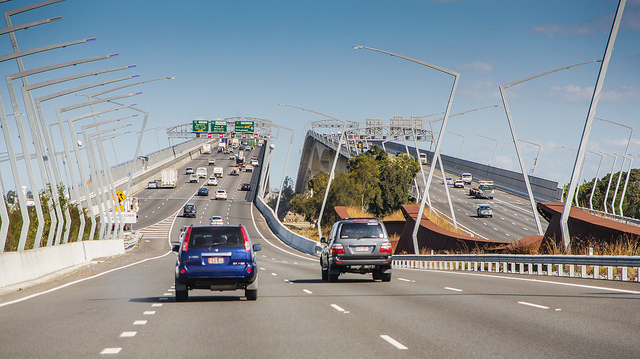
Gateway Bridges Simon Morris

When you are on a fixed income, nothing focuses the mind more than the arrival of the rego notice. It’s not just the heft of the car registration bill, but the knowledge that if you forget to pay, there’s a high risk of adding hundreds of dollars in fines to the tally.
But here’s the thing, and if you have been living under a large rock in the bush you may not know this, car windscreen registration stickers are no longer required. Trucks over 4.5 tonnes and boats still need a label, but for the majority of the motoring public, there should be nothing on your windscreen in 2016-2017 but stone chips, dead bugs and the soapy streaks left by the roadside windscreen washer dude who wouldn’t take no for an answer.
Since the 1920s, motorists in all Australian states and territories had received a personalised sticker in the mail after they paid their registration (which in this country includes a third-party insurance premium). Motorists well know the time-consuming ritual of soaking, scraping or steaming the old one off (and you could be fined for not doing so).
Rego (see how we Australians like to shorten words), lasts for 12 months although increasingly those strapped for cash opt to pay for six or even three months at a time.
Since mid-2013, all states and territories have scrapped the need for a rego sticker, citing a need to cut red tape and strive for efficiencies. The police have electronic mobile tools now, they reasoned, where they can look up a vehicle in an instant and tell if it is registered or not.
The initiative was not all about cutting red tape. The costs of producing and distributing rego stickers varied from state to state, but safe to say the Australian total was well over $3 million a year.

Cutting red tape or raising revenue?

A report in the Sunday Telegraph in late 2014 said the New South Wales government had raised almost $70 million over two years, catching 110,000 unregistered drivers. And 52,871 penalty notices were issued in the first 10 months of 2014, raising more than $32.4 million, almost double the amount raised through issuing 34,085 fines in 2010.
The Tele being the Tele, the reporter talked to an indignant family man (who was fined $600 for being two days overdue), and took pictures of him and his kids (who were in the back seat when he got pulled over).
The rego sticker used to be a constant reminder that the time to stump up another $600 or so was getting closer. In Queensland, rego stickers had a large numeral which showed when the rego expired. Most jurisdictions issue only one notice to pay (about six weeks out), so if the letter drops out of the mailbox on a windy day and a passing dingo takes it back to its lair, that’s just too bad. Some states may post a reminder two weeks after the rego expiry, but by then you will probably have been busted.
Fines are substantial: in South Australia nearly $2,500, in NSW as much as $1,200. NSW authorities offer a ‘free’ reminder service but of course you have to hop on to a computer and register for email and text message reminders.
There is an Apple Iphone app one can download. But if one could afford an Apple Iphone, one could probably afford to pay one’s rego, or failing that, the rego and the fines. It’s a complex world.
The vital thing you should know about rego stickers is this: if yours has expired, take it off the car or risk another fine you didn’t know about. (Oops, didn’t know that. Ed.)

Go go gadget

Meanwhile, an email prompted me to hop on the computer and log into Go Viagra, sorry Go Via, typing a bit fast there. Go Via collects tolls via the electronic tags on vehicles (that’s the beep you hear as you emerge from the Clem 7 tunnel or tool down the Gateway Bridge towards the Sunshine Coast.)
I don’t want this to turn into a whiny rant, but the first two attempts to log on were unsuccessful – problems at their end or mine, who would know. So if you are a bit disorganised, forgetful or impatient, it could be weeks before you get back to the computer to log on to Go Via and ‘top up’ your account.
I actually preferred the old system where you queued at the toll booths until an actual person leaned out of the booth and took your actual cash. We’d keep a stack of coins in the console for the occasion.
About 100 toll booth collectors took redundancies when the Gateway Bridge went fully electronic in 2009. I wonder what they are doing now?
Last week we made one of our rare forays to Brisbane to catch a couple of quality concerts. Kev Carmody was performing at the Brisbane Powerhouse, on the New Farm side of the Brisbane River. We parked the car on the other side and walked down to the ferry, thinking, what a lovely relaxing, romantic thing to do, crossing the Brisbane river by ferry at sunset.
Then my Go Card came up as expired.
Apparently because it is a Seniors Card it has a limited life, but fear not, if I go to the nearest railway station (16 kms away), they will not only give me a new one but transfer the unused credit from the old one.
So how come I don’t feel blessed?
It may be about the Smart State, cutting red tape and giving the city people a fast, efficient service, but with electronics you get glitches.

Where did the people go?

I think we need a small (air-conditioned) booth in a central location (Queen Street Mall, Central Railway Station), where a person can talk to another person about what is not working in fully electronic land.
(Presses ‘speak’ button and talks through grille)
“Excuse me, I want to complain about my Go Card – it’s stuck to my library card and I can’t get them apart.”
“You think you have problems! The sliding door to my booth won’t open and I’m fair busting.”
There is still, despite everything, the notion that a person should be paid for their work. But the work carried out on this side of an electronic transaction is done voluntarily, if grudgingly, because if not done, the electronic system does not work.
I worry about a couple of older folk I know who just cannot get the hang of interacting with the electronic world. One tried a mobile phone but gave it back to the service provider in frustration.
Another has an answering service on his landline but doesn’t use it, so the phone just rings out. I have to write letters or call my older sister on the landline as they don’t have a computer, mobile phone or answering machine. How will they deal with the inevitable time when everything we do is online or on the phone, with no ‘hard copy’ options?
I’m sorry, all of our operators are busy. Your call is important to us. Please listen to The Best of Andre Rieu until an operator is available… in approximately twenty-nine minutes.

Our Australian day of shame

Convict Road
Devine’s Hill convict road sculpture photo by Laurel Wilson

We were on the road somewhere outside Sydney when a hotted-up Mazda zoomed up next to us at the lights, twin cams throbbing. From each rear window protruded an Australian flag, fluttering like when you accidently shut your frock in the door. We sat there, waiting for the green, making cynical old fart, iconoclastic noises about faux patriotism, Bogans and drivers who just cannot sit behind a caravan.

Meanwhile, Australia Day has come and gone; Shane Howard got a gong and used the occasion to highlight the iniquities and injustices of this colonised land. As an accidental Australian (twice emigrated) I hesitate to write anything acerbic about this country, my adopted home. I did not go to school here, so even though I studied Australian history at university and watch Better Homes and Gardens, there are gaps in my education through which you could drive a Holden Ute laden with slabs of beer. But I seize every opportunity to learn more, to lift the rug and look under it for First Nation stories. As chance would have it, we stumbled across two relics of our colonial past while on a circuitous road trip to the Illawarra Folk Festival and back via Tamworth. The first was the remains of a convict-built, 43-kilometre road near Wisemans Crossing in New South Wales.

Working on the chain, gang

The Great North Road was built by convict labour between 1826 and 1834 to provide a freight route from Sydney to the Hunter Valley. From Wisemans Crossing (free ferry service, thanks to the NSW government), you can drive up the road a piece, park and walk your way up Devine’s Hill. It was a hot day, but we persevered, marvelling at the 19th century engineering ingenuity and the harsh life lived by convicts. As we read about the convicts who were sentenced to serve time on ‘Iron Gangs’ to build roads, our aching calf muscles seemed a mere trifle. British convicts who had committed offences in Australia would often be sentenced to work in chain gangs, their legs in shackles. Once they had served their sentences, the shackles were removed and they were transferred to a Road Party.

Easier to work without shackles, but the work was still hard yacker, chiselling 250kg blocks out of the sandstone hills and building buttresses and retaining walls.

The chain gangs used hammer and chisels to make blocks or they bored holes in the sandstone using jumper bars and sledgehammers. The engineers then placed explosives in the holes and sliced large blocks from the hills above. There are tributes to the convicts along the 1.8 km Devine’s Hill walk which tell of the harsh terms of crime and punishment in those times, often being incarcerated for lengthy periods for what we would see as trivial offences.

Stumbling across the First Fleet

Later, we were heading for Nundle, a small town 60 kms from Tamworth, around which something of a fringe country music festival has developed. On the way, we stopped at Wallabadah, which hosts Australia’s only memorial to the First Fleet, which arrived in Port Jackson on January 26, 1788.

The personal mission of stonemason Ray Collins, the First Fleet Memorial is a small park festooned with stone tablets, listing the names of every person who travelled on the 11 ships sailing from Britain. Collins, whose interest in the project was driven by discovering his own convict heritage, has since included a tribute to the second fleet.

First Fleet Memorial
First Fleet Memorial at Wallabadah photo by Bob Wilson

This is more of a pilgrimage site than a tourist attraction. Most travellers find it by accident, stopping at the public facilities which adjoin the memorial. It was strangely moving though, walking around the gardens reading the names of this country’s first European ancestors, who thought Australia was unpopulated (Terra Nullius).

Terra Incognito might have been a more apt term, meaning unknown lands which had not yet been explored. The original inhabitants were there, though seldom seen. Early explorers made ship’s log entries about seeing plumes of smoke, from fires deliberately lit by Aborigines as a means of caring for and regenerating an arid land.

What we were not taught

As most Australians are now aware, even if they were not taught the history at school, the original inhabitants pre-dated the first fleet by at least 40,000 years. Australia Day as we celebrate it now, with thong-throwing competitions, colonial re-enactments and cockroach racing, is grossly insulting to the First Nations people, the Aborigines. I could go on, but you all know the stories of land-grabbing, exploitation, the spread of (European) diseases, genocide and our often misguided removal of children from their families.

There was the grand gesture, the Stolen Generation apology in 2008 by former PM Kevin Rudd. Apology aside, nothing can make that right. All we Anglo-Saxon Australians can do is to make symbolic gestures, like outspoken songwriter Paddy McHugh did at The Dag (a sheep station converted into a wedding reception and conference centre and alt-country music venue).

He began his set by acknowledging the original owners of the land and then, the current owner. We could all do this when the occasion arises, but so few of us do.

Meanwhile on Tuesday

On Australia Day we went on a vintage train excursion from Warwick to Nobby, along with 90 other people, many of them sporting Australia Day paraphernalia and greeting friends with “Happy Australia Day”. Excuse me, but this country’s blood-soaked history is nothing to be happy about. As indigenous journalist Stan Grant said, in a stirring speech which has been seen around the world, Aborigines were “marooned on the tides of history to the fringes of Australian society”.

Still, is there really any harm in tourists using a public holiday to spend some money keeping the smoky smell of our colonial days alive? The Nobby craft shop, run by local volunteers, did solid trade, as did Rudd’s Pub, named not for a twice-ex Prime Minister, but the author Steele Rudd, of the Dad and Dave stories about sheep shearing and dances down the hall on a Saturday night, damper and billy tea.

It is a long way removed from Carnarvon Gorge and its ancient painted rock walls. Songwriter Garry Koehler’s song The Gallery was inspired, he tells me, by the painted hands, which to him appeared to be reaching out; imploring, “Help – can you fix this mess?” Koehler told his audience in Tamworth last week that the rock carvings at Carnarvon date back 30,000 years.

“And we’ve been here only 200 years and stuffed it up.”

Well, 228 years if you want to be picky, but there has not been much to write home about for Australia’s aborigines since 1988. Indigenous musicians and kindred spirits had plenty to say though, notably Kev Carmody and Archie Roach, Yothu Yindi, also Shane Howard and Neil Murray, to name a few.

You’ll have your own views on Australia Day, as do my 298 Facebook ‘friends’, and some of them have far more strident things to say.

She Who Is Finally Mentioned favours calling January 26 “Survival Day”. It’s less negative than Invasion Day and many of this country’s 669,900 Aboriginal and Torres Strait Islander people already call it just that.

They have survived, despite everything.


Three cheers for volunteers


Firefighters Stephen Mitchell
Country Fire Service volunteers, photo by Stephen Mitchell https://flic.kr/p/sviX2

In the twilight hours of the Illawarra Folk Festival, the call went out for volunteers. Not those who had already put in the hours to pull off the biggest folk festival in New South Wales. No, this was an urgent call for paying punters staying over on Sunday night to donate 12 hours of their time on Monday for the pack-down. Those volunteering for this task would be rewarded with a full refund of their weekend ticket.

Most of Australia’s music festivals make heavy use of volunteers – (shortened in typical Aussie fashion to “vollies”). The logistics involved in training and managing 2,500 volunteers (Woodford Festival) or 1,300 (The National Folk Festival) is only one side to recruiting a (free) but willing workforce. The fact is there are very few paid positions behind the scenes at music festivals, big or small. Volunteers do the forward planning, the publicity, the volunteer co-ordinating and, once the festival has started, vollies are assigned tasks such as checking wristbands at entrances and exits, managing venues, MC’ing, helping find lost children, looking after artists, spreading straw on muddy patches and the never appreciated but vital task of collecting rubbish and removing it from the site. Volunteers invariably keep the toilets and showers clean and make sure there is plenty of toilet paper. (Except when other people come in behind them and make a mess).

Sometimes being a volunteer at a music festival can be really cool “I got to MC the main stage and actually shook Harry Manx’s hand”. Or “Kate wrote a smiley face on my plaster cast.”

Volunteering has long been a noble task where those who perform work for non-profit organisations and charities do it for no monetary reward, either in cash or kind. Festival volunteers at least get free tickets. In the case of Woodford, a season ticket with camping now costs close to $700, so that is a good inducement to offer one’s services. In return for a ticket, Woodford volunteers are required to put in five hours a day. If you do the math, volunteers are working for about $20 an hour (in kind) over the six-day festival.

That’s a pretty good deal for festival fans whose budgets do not stretch to paying for a full season ticket. (You might be rostered on somewhere else just when Kate Miller-Heidke is playing, but what the hell – she’ll probably write a song about it.)

Firefighters, lifeguards and emergency services

Circling out into the deeper water of volunteering in Australia, I found some statistics which gave me pause to worry about our youth unemployment rate. Close to six million Australians volunteers each put in an average of 135 hours a year. That’s 743 million hours of unpaid labour (per year). It makes you wonder.

Melanie Oppenheimer, chair of history at Flinders University, who has written books about volunteering, said in a 2015 co-authored article in The Conversation that the rate of volunteering has slipped from a 2010 high of 36%. An Australian Bureau of Statistics social survey found that 5.8 million Australians volunteered in 2014 – 31% of people aged 18 or over.

Why is it so?

A panel of academics headed by Flinders University has begun a three-year study to find out why volunteering appears to be in a long-term decline. They hope to find answers to these questions and more:

  • Are increasingly busy Australians finding it harder to prioritise volunteering as part of their lives?
  • Are we becoming more selfish as a nation and less inclined to help others?
  • Is volunteering “on the nose” with young people, the next generation of volunteers?
  • Does the decline in volunteering reflect the long, slow decline of rural Australia, where volunteering rates have always outstripped those of their city cousins?
  • Has population decline and an ageing population in these areas reduced the supply of willing and able-bodied volunteers?

Adelaide University’s Dr Lisel O’Dwyer has estimated the economic value of volunteering to Australia at $200 billion, using methodology which includes calculating the worth of lives saved by volunteer fire fighters, SES crews and life guards.

But she warned that a focus on the economic value of volunteering can be dangerous, and does not show the whole picture.

Work 70 hours a week for nothing – why not?

Volunteering has come in for a bit of criticism in the past few years, with unpaid internships (sometimes known as ‘work experience’) attracting world-wide opprobrium. Just google “interns and controversy” and you’ll wish you had never started.

There’s also been some media coverage of something dubbed “voluntourism” where predominantly young people can travel abroad and have adventures in exotic locations. The deal is usually food and accommodation in return for a set number of hours working for not-for-profit groups. You can do the legwork yourself, but beware, there are scammers out there all too ready to charge gullible youngsters a fee for finding them an unpaid job overseas.

While volunteers do not get paid for the work they do, local, state and federal governments treat them as part of the workforce. When you volunteer you are covered by workers’ compensation, public liability insurance and the same rules about discrimination and bullying in the workplace apply to volunteers as well.

The biggest exercise in recruiting and training volunteers was in 2000 for the Sydney Olympics, when 45,000 people said “yes” to the concept of being involved in an event that would put Australia on the global stage.

But volunteering is more often about small tasks not even identified as such, like staffing the tuckshop at your children’s school or mending shirts, shorts and skirts for the second-hand uniform shop.

Another star in heaven

Maleny Music Festival director Noel Gardner said even small festivals like the one staged in Maleny last August required 180 volunteers, all of whom were given a free pass in exchange for two shifts of three to four hours over the weekend.

“Festivals couldn’t work without their volunteers,” he said. “The only inducement apart from a free ticket is the joy of helping and perhaps an extra star in heaven.”

Gardner says volunteers often form a family-like bond and friendships are created and cemented year after year.

“I think we (humans) are at our best when we work together for a common cause.”

Friends of ours look after the co-ordinating of volunteers for just one Woodford event (the Fire Event and closing ceremony). Planning for the 120 volunteers needed for this event starts in August, and as our friend said, rarely does a day goes by without something needing to be done.

The upside is that by the time the festival starts, their job is done.

“Obviously we enjoy the tickets to the festival. But we also like the feeling of contributing to a festival we value, and enjoy being part of the organisation and seeing some of the behind-the-scenes planning.”

You, you and you – latrine duty!

Men of my generation probably had fathers like mine (with military experience in World War II). “Never volunteer for anything,” they’d say. Perhaps this is why I have done so little volunteering – car park attendant at the Maleny Wood Expo, MC at Woodford a few times, running a monthly folk club with She Who Only Got Mentioned in the Penultimate Paragraph.

Apart from that, I keep my head down. Evidently there are six million people out there who will do my share for me.


Bowie and the search for heroes

Hadfield
Canadian astronaut Commander Chris Hadfield (photo used with permission)

As I write, the overly-emotional social media tributes to David Bowie have attracted the satirists, lobbing hand grenades amongst the mourners. One which turned up on Facebook purported to be God choosing his “Rock God Supergroup” with Lemmy (from Motorhead) on bass, John Bradbury (The Specials) on drums, Bowie on vocals, and God on guitar (traipsing through a so-so version of Stairway to Heaven). There were other irreverent items, including a few mock tributes to rockers yet to leave the planet.

The legacy of our Golden Years

That aside, it is truly tragic that Bowie has died at 69, of cancer, with any amount of potential to keep on being creative and performing, as elder artists like Leonard Cohen, Tom Jones, Rod Stewart and Petula Clark have shown is possible. I was one of those “Oh yes, I know David Bowie…Major Tom – who doesn’t know Bowie?” But I never bought any of his records, never went to a live show, yet all of those wonderfully catchy tunes – often with one word titles, crept into my consciousness. Just yesterday She Who is in Charge of Camping Logistics asked me to name a few Bowie tunes, apart from Space Oddity. “Well, there was Heroes, ch-ch-ch-Changes, Sorrow, Rebel, Rebel, Golden Years and…(hums a few bars of Let’s Dance).”
“Oh, did he do that one too?”
Yes he did, 20-something albums and many other creative projects; the thin, pale Englishman kept on churning it out, along the way battling drug addiction and obviously getting past that and continuing to innovate.

Still writing about music

My esteemed former colleague Noel Mengel, who left The Courier-Mail in December after a 25-year career as one of the country’s most respected music writers, was prevailed upon to write a tribute.
As only someone with his depth of experience could do, Mengel wrote about Bowie’s first visit to Brisbane in 1978 where the massive stacks of speakers at Lang Park blasted out music at a volume that could be heard at Mt Coot-tha.
Noel recalled Russ Hinze, a former minister of the Bjelke-Petersen government castigating Bowie in The Telegraph: “These pop singers come out here to make a quick quid by disturbing our peace and tranquillity. That fact that he’s a Pommie as well wouldn’t help.”
There is a tangible connection between our emotional lives and popular music and the unexpected death of a prolific artist like Bowie triggers memories and moments.
It depends on what was top of the pops during your impressionable years. For Mengel, it was Space Oddity, which emerged in 1969 when he was 14; I was 21 and Bowie barely 22. I remember the song fondly, just as I remember watching those grainy black and white images of Neil Armstrong making his one giant leap for mankind.

Can you hear me?

Canadian astronaut Chris Hadfield made Space Oddity even more famous than it already was with his own version, sung while free-floating in a space station. The YouTube video has attracted more than 28 million views.
Bowie approved of the cover, saying it was one of the most poignant versions. If you have any doubts about Bowie’s musical acumen, pick up a guitar and try to learn that one. Good luck!

Certain songs snare a piece of our hearts as we travel through life. Perhaps it was the song popular at a time when you were first courting (olde speak for ‘going out’). The emotional connections can be either joyful or sad. Whenever I hear The Carnival is Over it takes me back to the year my Mum died. Dad had locked on to that song as a grand statement about their devotion to each other.
Likewise I get goose bumps every time I hear Toast and Marmalade for Tea, Fool on the Hill or Friends (an obscure Beach Boys tune), or Fontella Bass’s original hit song, Rescue Me, later re-spun by Aretha Franklin. Do not make me explain.

She Who Hangs out Washing on Makeshift Line Strung Between Trees was incurably sad (as were tens of millions around the world) when John Lennon was murdered in New York. We were both sad when the Big O prematurely shuffled off. Roy Orbison was coming into a new phase of creativity at the time, with a famous super group, The Travelling Wilburys, and duets with k.d. Lang.
It sounds a bit bent, but our song is probably one by Warren Zevon, he who wrote of werewolves, excitable boys, accidental martyrs and things to do in Denver when you’re dead. Warren died in 2003 of mesothelioma. Unlike Bowie, who kept his illness to himself, Wazza went out in style with a series of tell-all songs, the most forgettable being his diagnosis song, My Sh**’s F**d Up.
He followed this with the near-death album, “My Ride’s Here” and closed with a collaboration album, “The Wind”, including a version of Knocking on Heaven’s Door and the unspeakably beautiful, Keep me in your Heart for a While.
Ah Wazza, gone but certainly not forgotten.

Some will grieve, others are just sad

If you find yourself truly grief stricken by Bowie’s passing, you will probably trace it to a romance that blossomed in tango with his career trajectory. Or you may have recognised the man for the genius he was, a musical iconoclast who rarely fished in the same pond twice.
To some extent, the star dust and glitter of Bowie passed me by because the music of my teenage years (1960s) was the richest phase in contemporary pop music – the Beatles, the Rolling Stones, Dylan, Joni Mitchell, Crosby Stills, Nash and Young, the Beach Boys, Simon and Garfunkel…
As I edge closer to the age Bowie was when he died, it is becoming transparently obvious that my teenage idols are ageing with me and some are not doing so well. Others, as I said earlier, are still touring in their 70s and 80s, entertaining decades’ worth of fans.

Kamahl, Petula, Rod and Tom

Last year Kamahl did a ‘this is my life’ show at leagues clubs and entertainment venues throughout Queensland. I went to a show in Caloundra, primarily because my musician friend Silas Palmer picked up the gig playing piano. Kamahl, OBE (over bloody eighty), can still hold a tune and is the consummate raconteur. Around that time, the Caloundra Events Centre put on a show with Petula Clark, she of “Don’t Sleep in the Subway Darling” fame. She’s still singing Downtown at 80-something. Petula outlasted many of her contemporaries, including Dusty Springfield and, more recently, Cilla Black. There, you see, I’ve probably struck a chord with someone out there who was falling in love at the same time Cilla was singing her breakthrough hit, Anyone Who Had a Heart (even though producer George Martin wanted it sung by Shirley Bassey).

Blessed are the list-makers

We lost some good ones in 2015, with Bowie just managing to see in the New Year. In no particular order, they included B.B. King, Natalie Cole. Stevie Wright, Percy Sledge, Theodore Bikel, Ronnie Gilbert, Ornette Coleman, Allen Toussaint, Lesley Gore, Rod McKuen, Demis Roussos, Val Doonican and A.J Pero, the drummer from Twisted Sister.

Forgive me if I missed the dead musicians who meant more to you than any of those so named. It will come to us all, heading for the Pearly Gates (perhaps). Much has been written about David Bowie this week – some might say too much. But in case you have not read the best of them – here’s a link to Noel Mengel’s first free-lance piece for The Courier-Mail.

F

Idea for a fireworks display

Darling Harbour low res
Darling Harbour fireworks April 2014 by Derek Keats https://flic.kr/p/s3oVfj

Not everyone oohs and aahs about firework displays. Some go into curmudgeon mode, grumbling about the expense, the air and noise pollution, the way it upsets dogs and budgies. Some even suggest the money could be given to the needy.
The eclectically musical among you may have noticed the Tom Waits reference in the heading. I’m not even sure we’re allowed to do that, which of itself would be a travesty since Tom has not much to do with this essay at all. Apart from a song of his forever lodged in my lizard brain that tells of a man who “came home from the war with a party in his head”.

For years I thought the first line in Swordfish Trombones was “He came home from the war with a parting in his hair.”
I was technically wrong too with a Twitter/Facebook post on January 1 which suggested the $7.2 million which ‘went up in smoke’ for Sydney’s New Year celebrations could have been better spent. I did the sums and suggested the money spent on celebrating New Year in Sydney could have bought 35,000, $200 food vouchers.
This spontaneous aside sparked enough commentary to suggest the topic was worth further exploration. If you want to be pedantic, only $905,000 went up in smoke (the actual cost of the fireworks contract with pyro-technicians Fodi Fireworks).

So where did it all go?

I asked Sydney City where the other $6.3m went – (a lot of it went in wages and the 15-months of planning that goes into an event of this size).
A spokeswoman told FOMM that as well as designing and producing two major fireworks displays, the City produced entertainment on the harbour and managed seven vantage points around the foreshore, which included implementing road closures, installing fencing and hundreds of toilets, and organising security.
The City is also responsible for cleaning up after the event, which by some reports generated 60 tonnes of garbage.
Ian Kiernan of Clean Up Australia thinks the annual fireworks display is old-fashioned and bad for the environment. He told Radio National it was time for a greener approach – bigger, better and brighter light shows and such. RN rightly pointed out that record crowds were voting with their feet (1.6m this year) adding that the New Year event generates economic benefits for New South Wales.
Kiernan called this “selling the environment for commercial benefit” and he has a point, as our Sydney waterfront jogger reckons people were still cleaning up the New Year detritus days later.

But…

Research by Destination NSW found New Year’s Eve has a direct economic impact of more than $133 million, so the City thinks it is money well spent.
“Sydney New Year’s Eve is Australia’s largest public event and one of the biggest and most technologically advanced fireworks displays in the world. It showcases our great city on a global stage,” a spokeswoman said.
“The event attracts more than a million people to Sydney Harbour and is watched by millions across Australia and more than a billion worldwide.”
The major issue with fireworks is that they are not so far removed from the military world of missiles, RPGs, artillery shells and various explosive devices. One of the reasons firework displays are expensive is that there is much red tape and expense involved in acquiring a pyrotechnics license and permission to use said skills in specific locations. Not to mention public liability insurance.

Upstaging

There’s a fair bit of upcityship where New Year celebrations are concerned. Sydney is pushing the boundaries of its annual budget, this year edging close to burning up $1 million worth of fireworks in two co-ordinated displays lasting a total of 20 minutes. The Australian Financial Review said this boils down to $45,000 a minute. Last year, the fireworks budget was just $650,000, but the City is happy to keep upping the ante because of the international focus on Sydney, the first city in the world to celebrate New Year. Nevertheless, Sydney’s bunger spend was almost three times that of Melbourne ($340,000), with the Sunshine State a distant third.
Conversely, London spent 1.8 million pounds ($A3.68 million) on its 11-minute display, which, if you don’t mind, gave ratepayers relatively better value.
Kuwait and Dubai have been jousting with each other over the coveted entry in the Guinness Book of Records. Kuwait took the gong in 2012, reportedly spending $15 million, only to be upcityshipped by Dubai in 2014. If watching lavish videos of fireworks displays is on your to-do list, check out YouTube.

Tourism schmoorism

One of the reasons cities vote to burn up money in short-burst fireworks displays is the opportunity to attract the ever-fickle tourist dollar.
“So tell me, Irina from Iceland, what prompted you to visit Sydney and are you sorry you brought your fur coat?”
“Ha?!” (Icelandic interjection loosely translated as WTF).
“On TV last year we see the firework and the Opera House all lit up like Christmas, also people surfing on beach, playing batball, drink beer in the sunshine. Maybe we will see koala too, no?”
The multiplier effect ensures that billions of dollars, pounds, euros, króna, roubles or shekels get burned up every New Year’s Eve, every 4th of July, every November 5th, every whatever your national day is and, though on a smaller scale, every agricultural show held anywhere in the world. Even in tiny Allora on the southern Darling Downs, the local show society welcomed in the New Year with a modest fireworks display. In Warwick, where we spent NY 2016, the far away pop-pop noise of fireworks in the showground started a ‘trigger dog’ effect.
It does not take too much thinking about this subject, tens of thousands of cities and towns around the world burning money for a few minutes of oohs and aahs, to turn a man into a socialist. And I’m not the only one.

Sign here

An online petition started by Lisa Nicholls under the change.org banner urged Prime Minister Malcolm Turnbull to spend the equivalent amount of money helping struggling farmers. Last we heard she’d attracted 33,784 signatures. Go on, you know you should.

Something for nothing

While we might grumble about ratepayers’ levies being spent on such frivolities, the hard economic fact is that private enterprise is loath to invest in fireworks displays. How do you get people to pay for the entertainment, which is outdoors and visible from vantage points up to 10 kms away? I guess you could hire an army of people to wander around among revellers shaking donation tins. Human nature being what it is, people are unlikely to start paying for something they have been enjoying for nothing, year after year.
The New Year fireworks upship of state will be hard to turn around. As the City of Sydney implies, planning for 2017 started in October 2015.

Ah well, only 19 more sleeps until Australia Day. Now, if only I can get the dog out from under the couch.