
Rainwater tanks save the day Part II

rainwater-tanks-flitration
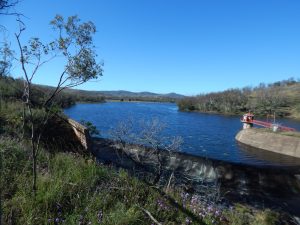
Connolly Dam, Warwick’s town supply, spilling over for the first time since 2011.

I had so much correspondence on this topic last week I took up an offer from guest blogger and rainwater tank owner NEALE GENTNER. He writes about his water filtration adventures working in the PNG Highlands and the hard yakka maintaining concrete tanks and plumbing over a 30-year period.

I totally agree with Bob’s piece last week on water tanks…except for paying extra rates to council for maintenance “compliance”.

Theoretically, under various “Health Acts”, tank water cleanliness is currently enforceable. No one wants to do it because of voter backlash; they will act if disease breaks out.

Over time, when replacement of pumps, filters etc is included, the real costs to install, operate and maintain a good rainwater harvest system is currently more expensive than hooking to the grid and paying water rates. Some have no choice due to location.

In 1984-1985 when I worked in PNG, I gained a lot of experience with filtration of drinking water. We were wildcat oil drilling in the Southern Highlands at 2,000M elev. The nearest village/town was Tari, the only access by helicopter, or a trek through jungle.

Everything broke down into 1,000kg heli-loads, constant heli shuttle flights; mostly diesel fuel once everything was established.

Water supply was rain run-off into an earth “turkey-nest” dam a mile or two away and lower than rig. Yes, everything that lives in the woods also craps and eventually dies in the woods, so lots of opportunity for pathogens. We used a diesel pump and 50mm steel pipeline back up the hill to rig & camp.

All camp drinking water was filtered. We just used wound-string filter elements, in clear plastic housings, elements were white when new, changed when completely brown, Most of the brown was decayed leaves etc, I forget now how long the filters lasted, probably variable, monitored daily, changed as-required.

No chemical treatment, no bad outbreaks of “squirts”, and the few minor cases were likely guys being careless. (If I knew then what I now know about water-borne bacteria, I would have taken more care).

As a child, I lived through Redcliffe City Council’s ban and enforced destruction of household rainwater tanks. But we much preferred the taste of my grandparents’ tank water in Dalby. And even Redcliffe “town” water tasted better than Brisbane reticulated water.

Chrissie’s family have only ever had un-filtered tank water. At 93 years of age, her Mum still does!  We have had two 45,000 litre (10,000 gallon) concrete tanks for almost 30 years.

We’ve never run out of water. The tank filling pipework comes from single storey roofs, goes underground, then back up to tops of tanks. Originally all the underground pipework was 90mm “rainwater” PVC. Subsequently, I have put in additional underground pipes and replaced most of the existing with 100mm “sewer” grade PVC, bedded in sand, because it is more resistant to plant root and reactive soil damage, plus it flows a lot more volume when it really rains.

About 15 years ago, I emptied, ventilated and got inside both tanks (one at a time), de-sludged, pressure blasted, wet-vacuumed, prepped and sealed cracks on the inside so water pressure helps ensure a good seal. I installed a string filter about 10 years ago. It is plumbed straight off the pressure pump, so all house water is filtered.  From what I have learned subsequently about water-borne bacteria, I’m glad the entire house is filtered. Now it just needs an anti-bacterial filter element to take it to the next level. I also installed a “first flush” plumbing system to get rid of most dry weather accumulated crud (inc frogs) to stormwater street drain. I like frogs, just not in my drinking water.

Mozzie mesh-crud strainer baskets at tank top inlets have been replaced once, the filling inlets at tank top strainers have gravity actuated, one-way flaps to stop critters entering, but allow everything out of the pipe.

A Council inspector once insisted that I put mozzie mesh on our three sewer roof vents (septic tank). He said mozzies would fly through vent caps, down vent pipes and breed. Knowing it’s a losing battle arguing with those who flex authoritarian muscle, I bit my tongue. I could have instead asked about the statistics of mozzie breeding in Council-approved stagnant water, within the underground portions of my tank filling pipe-work (before first flush installed), and the number of breeding mosquitoes at the water filled settling ponds of town water treatment plant, not to mention the actual dams & reservoirs.

But I replied “Oh Gee, mate, never though of that. I’ll put some mesh on the roof vents straight away (and I did). The “expert” was happy, I just muttered and shook my head, it was the simplest resolution.

Then there was the “drought proofing” by the taxpayer funded pipelines and pumping stations, intended to shuffle water between municipalities. Apart from its questionable effectiveness, the environmental damage and costs to some land owners was enormous. The pipeline only required a 3M wide clearing to dig the trench and get it in the ground. But the pipelayers insisted on clearing a 10M wide swathe, simply so they could turn the lengths of oversize black poly pipe around, “if required”.

Even gazetted nature reserves suffered this fate. Our illustrious water resources authorities have been vested with the power to do almost anything, with complete impunity.Then the pipelayers carted away and sold off the mostly top quality top-soil removed from trench, before backfilling with carted in “fill”, some of which was building waste.

Creative uses for rainwater tanks

The best suburban use of water tanks I have ever seen was when neighbours replaced their side boundary fence with a string of narrow water tanks, originally intended for under eave use.

Both house roofs feed the huge volume “boundary-tank”, the final over-flow is right at front fence and goes under footpath to road gutter. They chose neutral colour, roto-moulded plastic tanks with integral see-through openings/reinforcements and even left a gap for a gate so neighbours can still be neighbourly. The interconnecting feed pipe is underground for gate and overflow connects above.

Each neighbour only “lost” a 300mm wide strip of yard and it keeps the dog in. Brilliant!  Of course this requires that you get on well with your neighbour. Perhaps this is worthy of a simple Council mandate… all suburban side fences must be minimum of 600mm thick and hold rainwater. NG

Footnote by acreage dweller Joy Duck

The benefits of rainwater tanks aren’t limited to rural areas. People in the burbs used to have smallish (1000 litre) tanks to top up their pools and water their handkerchief lawns. Then the scaremongers went to work and they were removed in droves (sadly the tanks, not the scaremongers), with challenges of maintenance cited as the reason. I bought a second hand, 3000-litre tank for for the shed, from a developer who had dozens in a paddock.  He had removed them (just a year after installation), from a complex he’d built.

There is already a dedicated 22,500 litre tank and fire pump connected to our house with a rooftop sprinkler system. Because it is a fire pump, if necessary, the brigade could connect their hoses to it and use for other purposes. It’s a key start petrol pump so if the fire takes out mains water and power you still have firefighting capability.

Having a stand-alone tank and pump dedicated for firefighting can be very reassuring, if you live on a heavily treed block where the wildlife successfully  protests any attempts to clear vegetation!

Next week: On the road again!


Rainwater Tanks Save The Day

rainwater-tanks-dams
Leslie Dam (reservoir 1,260ha) at 28%. Photo by BW.

Yay – the dams are full, creeks and gullies are running; rainwater tanks are spilling over. Everyone’s happy.

Our three rainwater tanks are full, as you might expect of a region where two water-starved dams reached 100% capacity in just two days.

Not so long ago (2018-2019), things were dire on the Southern Downs, with Warwick’s Leslie Dam at 7.66% (it’s now 28%), and the Granite Belt’s Storm King Dam virtually empty (now 100%).

In January 2020, a national news story told of the local council carting water to Stanthorpe from Connolly Dam in Warwick. The cost, borne by the State Government, was $800,000 a month. Carting ended last week after the March rains brought Storm King Dam back to capacity.

As you might expect, the district deluge was met by the relaxation of severe water restrictions which have been in place now for several years. Southern Downs Council had lifted daily water restrictions from 80 litres to 120 litres in mid-2020. Last week the limit was raised to 200 litres per person per day. There are caveats on this, however, with permanent restrictions applying to the use of hand-held hoses to water gardens or wash cars.

How quickly our mindset changes. We’ve gone from leaving the toilet water to mellow for days and collecting shower water in buckets to using a hose (between 7am-9am and 4pm-7pm) to wash cars. Last time I washed our car I used tank water in buckets.

It’s not so long ago that academics were advocating the use of recycled water to drought-proof houses. Writing at a time when at least seven New South Wales regional towns were in danger of running out of water altogether, Professor Roberta Ryan of the University of Technology Sydney (UTS) wrote that the only real obstacle to using recycled water for a range of purposes was community acceptance.

“Household waste water (which is what goes into the sewerage system from sinks, toilets, washing machines and so on), is a more consistent supply, with 80% or more of household water leaving as waste water.

Furthermore, waste water goes to treatment plants already, so there is a system of pipes to transport it and places which already treat it, including advanced treatment plants that can treat the water to be clean enough for a range of purposes.

You might recall that stories like this in 2019 and earlier were met with community opposition. In 2006, Toowoomba, Australia’s biggest inland city, voted against introducing recycled water.

Those advocating re-cycled water (extracted from treated sewage), suggest using it to operate washing machines and toilets in homes and to irrigate parks and sports grounds. Many Councils already use recycled water for those latter purposes.

As the Millenium Drought (1997-2009) worsened, State and local governments started creating rebate schemes to encourage households to buy and install rainwater tanks.

It’s been a hit and miss affair, with rebate schemes ending as quickly as eager queues started forming. Australia’s building code requires tanks to be installed and plumbed in to all new houses, although this differs from State to State. For example Queensland’s local governments can opt-in (or out).

In 2013, the Australian Bureau of Statistics found that 2.3 million households (26%) used a rainwater tank as a source of water, an increase from 1.7 million (19%) in 2007. The ABS said the increase from 2007 to 2013 may be attributed to water restrictions, government rebate schemes, water regulations and water pricing.

South Australia had the highest proportion of households that used water from a rainwater tank (46%), followed by Queensland (34%).

In the absence of an update, extrapolating the annual rate of growth assumes Australia now has close to three million rainwater tanks. This estimate could be rubbery, however. The unknown factor is the numbers of tanks which are self-installed without going through Council.

Although authorities generally do not recommend that households drink harvested rainwater, the supply can be used for a range of purposes, including washing, bathing, laundry and gardening. In some parts of Australia, it may be the main source of household water, while in others, it can supplement existing mains or town water supplies.

Rainwater Harvesting Australia, a committee comprised of irrigation industry leaders, advocates use of rainwater tanks as part of a blueprint for urban water management. A strategy is suggested (for South East Queensland), to consider re-use of storm water to improve the diversity and resilience of water supply. The strategy also recommends rainwater tanks and a basic form of passive irrigation for street trees.

The main criticism of rainwater tanks is that they breed mosquitoes and testing has shown sufficient pathogens in the water to dissuade many Councils from recommending it be used for drinking.

Despite the development of waste water recycling and desalination plants, Australia is still highly dependent upon rainfall as its main source of town water.

A Productivity Commission draft report in 2020 found that direct rainfall (surface or bulk water) or indirect (groundwater) accounted for 89% of all urban water in 2017-2018. The balance was attributed to recycled water (6%) and desalinated sea water (5%).

The report argued for a (national) integrated approach to urban water management, citing seven impediments to such an approach. The key stumbling block is the management of storm water, much of which flows out to sea.

For purposes of this discussion, the report criticises State government policies for mandating recycling or rainwater tank installation without a full cost benefit analysis.

“Many governments, for example, set recycled water targets, mandate the installation of household rainwater tanks or specify that recycled water is to be used in particular applications (such as for flushing toilets).

These policy decisions are often set without clear and transparent evidence and analysis. They have driven significant investment and have sometimes resulted in higher costs than alternatives and failed to deliver their expected benefits.

The report cited Marsden Jacob Associates, which found that the costs outweighed the benefits by more than $2000 per tank in most cases. Harvesting rainwater tends to be more costly than supply from centralised supply systems. For example, research in south-east Queensland found that the average cost of tank water was $9.22 per kL, substantially higher than the $4.40 per kL for potable water at the time.

The intangible benefits associated with rainwater tanks include reduced town water and storm water infrastructure costs and environmental benefits (reducing local storm water flows).

They also allow households to have flourishing gardens when water restrictions are in place.

A recent study by the CSIRO (apparently a first), found that 96% of participants identified benefits with their rainwater tanks. The most prominent were: watering during restrictions (88%), reduction in water consumption (82%) and benefit to environment (71%).

Cost-benefit analysis aside, I’d advocate for an integrated approach to installing rainwater tanks in every home and business in Australia. Surely we can solve the apparent downsides (including mosquitoes, water-born disease and contaminants (ash and debris from bushfires).

The key may be for Councils to implement an annual maintenance inspection and issue show-cause notices to those whose systems need work. As the CSIRO study found, only 58% of respondents in an ABS survey claimed to undertake any kind of rainwater tank maintenance. At present, householders have no legal obligation to undertake maintenance other than to minimize public health risks.

The practical advantage of a good rainwater tank system is that it ensures your allotment will dry out quickly once the rain stops.

Meanwhile, we have 9,200 litres of water stored to irrigate gardens through the traditionally dry winter.

It can’t be a bad thing.

FOMM back pages