Rainwater tanks save the day Part II

rainwater-tanks-flitration
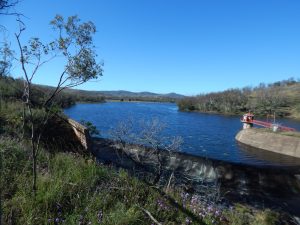
Connolly Dam, Warwick’s town supply, spilling over for the first time since 2011.

I had so much correspondence on this topic last week I took up an offer from guest blogger and rainwater tank owner NEALE GENTNER. He writes about his water filtration adventures working in the PNG Highlands and the hard yakka maintaining concrete tanks and plumbing over a 30-year period.

I totally agree with Bob’s piece last week on water tanks…except for paying extra rates to council for maintenance “compliance”.

Theoretically, under various “Health Acts”, tank water cleanliness is currently enforceable. No one wants to do it because of voter backlash; they will act if disease breaks out.

Over time, when replacement of pumps, filters etc is included, the real costs to install, operate and maintain a good rainwater harvest system is currently more expensive than hooking to the grid and paying water rates. Some have no choice due to location.

In 1984-1985 when I worked in PNG, I gained a lot of experience with filtration of drinking water. We were wildcat oil drilling in the Southern Highlands at 2,000M elev. The nearest village/town was Tari, the only access by helicopter, or a trek through jungle.

Everything broke down into 1,000kg heli-loads, constant heli shuttle flights; mostly diesel fuel once everything was established.

Water supply was rain run-off into an earth “turkey-nest” dam a mile or two away and lower than rig. Yes, everything that lives in the woods also craps and eventually dies in the woods, so lots of opportunity for pathogens. We used a diesel pump and 50mm steel pipeline back up the hill to rig & camp.

All camp drinking water was filtered. We just used wound-string filter elements, in clear plastic housings, elements were white when new, changed when completely brown, Most of the brown was decayed leaves etc, I forget now how long the filters lasted, probably variable, monitored daily, changed as-required.

No chemical treatment, no bad outbreaks of “squirts”, and the few minor cases were likely guys being careless. (If I knew then what I now know about water-borne bacteria, I would have taken more care).

As a child, I lived through Redcliffe City Council’s ban and enforced destruction of household rainwater tanks. But we much preferred the taste of my grandparents’ tank water in Dalby. And even Redcliffe “town” water tasted better than Brisbane reticulated water.

Chrissie’s family have only ever had un-filtered tank water. At 93 years of age, her Mum still does!  We have had two 45,000 litre (10,000 gallon) concrete tanks for almost 30 years.

We’ve never run out of water. The tank filling pipework comes from single storey roofs, goes underground, then back up to tops of tanks. Originally all the underground pipework was 90mm “rainwater” PVC. Subsequently, I have put in additional underground pipes and replaced most of the existing with 100mm “sewer” grade PVC, bedded in sand, because it is more resistant to plant root and reactive soil damage, plus it flows a lot more volume when it really rains.

About 15 years ago, I emptied, ventilated and got inside both tanks (one at a time), de-sludged, pressure blasted, wet-vacuumed, prepped and sealed cracks on the inside so water pressure helps ensure a good seal. I installed a string filter about 10 years ago. It is plumbed straight off the pressure pump, so all house water is filtered.  From what I have learned subsequently about water-borne bacteria, I’m glad the entire house is filtered. Now it just needs an anti-bacterial filter element to take it to the next level. I also installed a “first flush” plumbing system to get rid of most dry weather accumulated crud (inc frogs) to stormwater street drain. I like frogs, just not in my drinking water.

Mozzie mesh-crud strainer baskets at tank top inlets have been replaced once, the filling inlets at tank top strainers have gravity actuated, one-way flaps to stop critters entering, but allow everything out of the pipe.

A Council inspector once insisted that I put mozzie mesh on our three sewer roof vents (septic tank). He said mozzies would fly through vent caps, down vent pipes and breed. Knowing it’s a losing battle arguing with those who flex authoritarian muscle, I bit my tongue. I could have instead asked about the statistics of mozzie breeding in Council-approved stagnant water, within the underground portions of my tank filling pipe-work (before first flush installed), and the number of breeding mosquitoes at the water filled settling ponds of town water treatment plant, not to mention the actual dams & reservoirs.

But I replied “Oh Gee, mate, never though of that. I’ll put some mesh on the roof vents straight away (and I did). The “expert” was happy, I just muttered and shook my head, it was the simplest resolution.

Then there was the “drought proofing” by the taxpayer funded pipelines and pumping stations, intended to shuffle water between municipalities. Apart from its questionable effectiveness, the environmental damage and costs to some land owners was enormous. The pipeline only required a 3M wide clearing to dig the trench and get it in the ground. But the pipelayers insisted on clearing a 10M wide swathe, simply so they could turn the lengths of oversize black poly pipe around, “if required”.

Even gazetted nature reserves suffered this fate. Our illustrious water resources authorities have been vested with the power to do almost anything, with complete impunity.Then the pipelayers carted away and sold off the mostly top quality top-soil removed from trench, before backfilling with carted in “fill”, some of which was building waste.

Creative uses for rainwater tanks

The best suburban use of water tanks I have ever seen was when neighbours replaced their side boundary fence with a string of narrow water tanks, originally intended for under eave use.

Both house roofs feed the huge volume “boundary-tank”, the final over-flow is right at front fence and goes under footpath to road gutter. They chose neutral colour, roto-moulded plastic tanks with integral see-through openings/reinforcements and even left a gap for a gate so neighbours can still be neighbourly. The interconnecting feed pipe is underground for gate and overflow connects above.

Each neighbour only “lost” a 300mm wide strip of yard and it keeps the dog in. Brilliant!  Of course this requires that you get on well with your neighbour. Perhaps this is worthy of a simple Council mandate… all suburban side fences must be minimum of 600mm thick and hold rainwater. NG

Footnote by acreage dweller Joy Duck

The benefits of rainwater tanks aren’t limited to rural areas. People in the burbs used to have smallish (1000 litre) tanks to top up their pools and water their handkerchief lawns. Then the scaremongers went to work and they were removed in droves (sadly the tanks, not the scaremongers), with challenges of maintenance cited as the reason. I bought a second hand, 3000-litre tank for for the shed, from a developer who had dozens in a paddock.  He had removed them (just a year after installation), from a complex he’d built.

There is already a dedicated 22,500 litre tank and fire pump connected to our house with a rooftop sprinkler system. Because it is a fire pump, if necessary, the brigade could connect their hoses to it and use for other purposes. It’s a key start petrol pump so if the fire takes out mains water and power you still have firefighting capability.

Having a stand-alone tank and pump dedicated for firefighting can be very reassuring, if you live on a heavily treed block where the wildlife successfully  protests any attempts to clear vegetation!

Next week: On the road again!


Australia’s flawed human rights record

australia-human-rights
Christmas Island immigration detention centre – cc wikimedia

There’s not too much coincidence about the timing of China’s social media campaign, accusing Australia of human rights abuses.

The photo-shopped meme which has outraged all sides of the Australian government targets alleged war crimes in Afghanistan.

Timely, given that next Thursday (the 10th), is International Human Rights Day.

China, of course, is campaigning from a blood-stained corner, its long record of human rights abuses and accusations thereof, lurking in the shadows. I mention the Tiananmen Square massacre in 1989, the persecution of Uyghurs and other ethnic minorities and so-called ‘re-education’ camps as examples of China’s human rights transgressions. The scary website below depicts the world’s human rights record in a series of charts.

The United Nations lists the main tenets of human rights as:

  • the right to life and liberty;
  • freedom from slavery and torture;
  • freedom of opinion and expressionand the right to work and education;

Everyone is entitled to these rights, without discrimination.

The Cato Institute ranks countries for their adherence to human rights principles. It will surprise no-one this side of the Tasman that New Zealand is at No 1. However, Australia has a strong human rights records, ranked, in 2018, as fourth in the world behind New Zealand, Switzerland and Hong Kong (the latter has no doubt dropped a few rankings since then).

An important indicator of a country’s attitude to human rights is its intake of refugees. New Zealand lifted its annual refugee quota from 750 (unchanged since the 1950s) to 1,000 then in July this year to 1,500. Australia ranks well in the number of refugees accepted – over 12,700 in 2018 (although Canada, with a population of 10million more than Australia accepted more than double that number).

But the issue that won’t go away is Australia’s inhumane treatment of asylum seekers and refugees who have arrived by boat. Australia’s long-held position (set by John Howard in 2012 and upheld by Kevin Rudd), is that no-one who has arrived here by boat will ever be resettled in Australia. The Morrison government would like to set its policy in legislative stone. The Labor Opposition, in weakly supporting this egregious position, said it would only do so if refugees in detention were able to re-settle in New Zealand.

The global scale of the refugee problem understandably allows Australia to sink below the footlights. Our numbers are comparatively tiny, so they warrant little attention on the global stage.

While Australia has re-settled a comparatively high number of refugees, its human rights record is blighted by an offshore detention regime that the International Criminal Court described as “cruel, inhuman, or degrading treatment” and unlawful under international law. But as The Guardian reported, Independent MP Andrew Wilkie’s campaign to bring Australia to justice on this issue fell short.

The office of the ICC prosecutor said that while the imprisonment of refugees and asylum seekers formed the basis of a crime against humanity, the violations did not rise to the level to warrant further investigation.

The one glaring example which fits all of those criticisms and more is the incarceration of a family of five Sri Lankan refugees.

They are the ‘Bilo’ family, adopted by people in Biloela in 2014, where they lived until forcibly removed by immigration officers in 2018. They have been held in the detention facility at Christmas Island since August 2019. They are reportedly the only detainees on the island. Various articles on this subject have speculated that this is costing between $20m and $40m a year.

This timeline by MP Josh Burns charts this sad tale over the past 20 years.

Meanwhile, 1,534 people are being held in Australian-controlled detention centres. Of these, 615 refugees are in Alternative Places of Detention (APOD) or Immigration Transit Accommodation (ITA). Some have been there a long, long time.

The latest Office of Home Affairs report shows that 502 people had been held for between 92 and 365 days. Another 743 have been held longer than a year and 229 held for longer than two years.

From these damning statistics, refugee support groups derive social media hashtags like #7yearstoolong. The latter is a reference to the 99 people the department admit have been in (domestic) detention for ‘more than 1825 days’ (6.5% of the total).

Since January this year, the Office of Home Affairs has been publishing key statistics on the ‘transitory’ refugee population in Nauru and PNG. As of October 31, there were 146 people held on Nauru and 145 in Papua New Guinea (total 291). The department resettled 212 people in 2020.

These statistics show that an unacceptable number of people have had their lives put on hold, indefinitely.

NZ’s leader Jacinda Ardern has tried to show Australia the proper path for fair treatment of refugees. A year ago, Ms Ardern told Australian Prime Minister Scott Morrison New Zealand was open to accepting refugees from Nauru and PNG. Along the way, the country offered safe haven to the distinguished writer and refugee martyr, Behrouz Boochani.

You will see a lot of campaigns surface and re-surface next week as refugee support groups roll out their collection of hashtags and petitions. Rural Australians for Refugees (RAR) has started a campaign to lobby the Australian Government to enshrine a charter of human rights.

As RAR notes, “The ACT, Victoria and Queensland all have Human Rights Charters which cover their States. But because the Universal Declaration of Human Rights is not Australian law, the Australian Government is not bound by it.

The RAR has produced a discussion paper for interested groups to lobby for what is only fair and right.

To personalise the issue, just imagine for a minute that there has been a bloody coup in Australia and the White Australia junta has decreed that 7.25 million people born somewhere else must go back to their country of origin. Already there is a vast convoy heading for the backroads of Queensland and NSW, fleeing persecution. As you’d expect, they do so with dogged Aussie determination, flying their Aussie flags, with an attitude best summed up in the words of Darryl Kerrigan in the iconic Aussie film, The Castle: “Tell them they’re dreamin”).

So, dear reader, your mission on next week’s International Human Rights Day (December 10), should you choose to accept it, is to spend a few hours digesting these numbers. If we accept the position that a forcibly removed refugee is the subject of human rights abuses, these statistics from the UNHCR from December 2019 underline the magnitude of the global problem. At that time there were 79.5 million forcibly displaced people, 45.7m of whom were displaced internally. The UNHCR counted 26 million as refugees under its mandate. Comparatively few find a safe haven. Only 100,400 were resettled in other countries in 2019, with 5.4m returned to their country of origin.

And yet we (the Australian Government and others), campaigned strongly to free one of our own citizens being held in detention in Iran.

Given the Season, I’m ending on a lighter note. A reader submitted this, in response to my whimsical piece on ‘shoe trees’.

Speaking of readers, thanks to those who have responded so warmly to my modest subscriber request. Keep those cards and letters coming. Also, if you feel so moved, buy a Christmas card from RAR and send it to your local MP. #hometobilo