Queuing up for the Covid vaccination

covid-vaccination
Image by Richard Duijnstee, www.pixabay.com

Suddenly, getting your Covid vaccination is becoming a hot ticket item on social media. By that I mean ‘normal’ social media posts from people who actually believe in the science. I got my first shot last Thursday evening, 35 minutes later than the allotted time, but hey, I’m retired. I can watch Antique Roadshow later on catch-up.

I spent the time sitting in a packed waiting room with 50-60 other people in my age group (70+). I traded witticisms with a couple of people who seemed sceptical, but all the same sat and waited to be called.

Once I’d been injected (by my own doctor, no less), a nurse stuck a green sticker on my shirt and told me to ‘sit-stay’ for 15 minutes, to make sure I didn’t have any adverse reactions.

I came back out and sat next to a man who had previously been saying things about the government and their ‘jab campaign’.

“So is Bill Gates tracking us now?”

Apart from a slightly sore arm, it’s just another vaccination to add to the certificate from Medicare which lists them all from 2017. I didn’t even know they were doing that until I noticed an email when logged in to MyGov.

The Covid vaccination rollout may have been on the agenda for talks between Prime Minister Scott Morrison and NZ’s PM, Jacinda Ardern, but the media focused on other issues.

Morrison, who in April claimed Australia was ahead of NZ, has come in for trenchant criticism over the government’s handling of the vaccination rollout. The debate continues about the government’s decision to restrict the Pfizer vaccine to people aged under 50. The reasoning behind this decision is that the AstraZenica vaccine (for the over-50s), which has been linked to a rare clotting disorder, is too risky for younger people.

The online news source ‘The Conversation’ sent out a well-researched piece this week asking was it possible to ‘mix and match’ vaccines.

The premise of research out of Germany is that allowing people to have, say AstraZenica for the first shot and another brand for the second is to speed up the vaccination programme when it stalls due to a vaccine stock shortage

It makes sense to allow the general population to have whatever vaccine is available at the time. But talk of risks and side effects may only serve to increase what is known as ‘vaccine hesitancy’.

The government’s chief medical adviser Brendan Murphy told a Four Corners investigation last week that vaccine hesitancy was having an impact.

“We would have expected at this stage to have had a greater uptake because we’ve now got 5,000 points of primary care presence and we are supplying excess vaccine and we have seen a slight flattening, when we expected growth.”

But Professor Murphy said much of the blame lay with the media.

“I think the biggest impact on hesitancy is, frankly, sensationalist media reporting.”

“We want to be transparent, but we want people to understand that the risk of this blood clot is really tiny, and if you’re a vulnerable person, the risk of severe COVID is high.”

Apropos of which, perhaps, a few weeks ago we started binge-watching Season 17 of the long-running medical soap. Grey’s Anatomy. Despite cries of derision from the gallery (it’s a textbook, isn’t it?), Grey’s is the 8th longest-running primetime TV series. A long way behind The Simpsons (32) and Law & Order – Special Victlms’ Unit (22), but not bad for a series labelled – ‘opera, melodrama and medical procedures’.

I’d best not reveal too many spoilers for fans of Grey’s who have not yet discovered it on the Disney Channel. I had to register for adult content to watch this series, so careful is Disney about protecting kids from M or R-rated content.  There’s not too much spicy action in sex scenes which are more about the before and after. But the well-researched scripts are full of what censors call ‘adult themes’ including sex trafficking, drug addiction, psychiatric disorders and patients presenting with the most complex (and gruesome) medical emergencies.

What is illuminating about Season 17 is the setting (Seattle 2020) with all episodes so far completely immersed in the emergence of Covid and its effect on frontline medical staff.

Executive producer and chief writer Shonda Rhimes has a lot to say through the characters about the disproportionate affect of Covid on black people (poor black people specifically), often living in overcrowded conditions.

It’s no accident Rhimes is known for a social conscience – in 2019 she was involved in a campaign with Michele Obama and others to encourage people to vote in the 2020 presidential election.

Rhimes and her Grey’s Anatomy star, Ellen Pompeo, have been with the show from the start. Pompeo, now 51, shares credits in Season 17 as a producer, as well as remaining as the main actor/narrator.

Pompeo is also one of America’s highest paid actors, earning $19 million a year from syndication rights and her $550,000 per episode salary.

You might recall Grey’s Anatomy (which, BTW, is a famous textbook on human anatomy first published in 1858), getting a panning in this blog. We focused on the now-infamous opera episode, where the story was told in song, over operating tables and in hot sweaty linen cupboard clinches.

This is called ‘jumping the shark’ in TV series’ parlance and usually points to writers and producers running out of ideas.

We let some seasons go by and tuned in again about series 15 when you could watch it on catch-up.

Our bizarre attachment to medical soaps aside, I feel some degree of social responsibility to warn that we have some way to go with the goal of vaccinating all Australians against Covid-19 by October (which October?). Not the least of it is the constant presence on social media of anti-vaxxer scare campaigns, most of them debunked long ago.

It’s not just Australians who are hesitant.

Nature Magazine published a survey of 13,426 people in October 2020 indicating that 71.2% of respondents were willing to be vaccinated against Covid-19 if it were proven safe and effective.

The far-from-universal willingness to accept a COVID-19 vaccine is a cause for concern. Countries where acceptance exceeded 80% tended to be Asian nations with strong trust in central governments (China, South Korea and Singapore).

In April, the Royal Australian College of General Practitioners (RACGP) published a survey of 1,090 people which found just 43% of Australians thought the rollout was being done efficiently (down from 63% in March). About 63% thought it was being done safely, down from 73%; and just over half (52%) were confident the vaccines will be effective at stopping COVID-19.

The slow rollout and changes to the plan also appear to have given rise to vaccine hesitancy. One in six people (16%) said they would never get vaccinated against COVID-19, up from 12% in March. It’s a small sample, but nonetheless a demonstration of how confidence in the administration has waned during the vaccine rollout.

Meanwhile the Covid vaccination tally is two for two in this household. Tip from a friend – ask for a lollypop afterwards!


Residential development – is anything sacred

residential-development
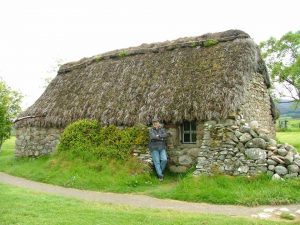
Culloden – residential development – is anything sacred? Photo by Laurel Wilson

To begin this two-part series on residential development and how it became not only unaffordable but also distressingly generic, we ask the universal question – is anything sacred? The example here looks at an unpopular proposal to build luxury houses on the doorstep of Scotland’s famous battlefield, Culloden. Regular readers would be familiar with this image on my website, cheekily captioned ‘Bob’s writer’s cottage’. In truth it is a stone crofter’s cottage within Culloden Battlefield, a spooky windswept moor near Inverness.

The proposal to build 16 luxury homes half a mile from Culloden Battlefield, a war grave, was given planning permission by Highland Council in May this year (12-8 vote). The BBC reported that the National Trust for Scotland, which manages the battlefield and opposed the housing project, said the case “Illustrated why Scotland’s planning system has to be reformed”.

Culloden Battlefield is where Jacobite and government forces clashed in April 1746. The housing development is within the battlefield’s conservation area and campaigners have argued that the fighting took place in a much wider area.

A protest movement continues to agitate, with a petition on Change.org attracting more than 100,000 signatures.

Much nearer to home, the story is depressingly familiar. The green hills of former dairy farms near Maleny Township have largely been given over to sprawling housing estates. It’s even worse on the Sunshine Coast, where houses on new estates are packed tightly together, not a tree in sight and often with only one road in and out. Pro-development people, and I know a few, would tell you that this is the free market at work – supply and demand. Affordable maybe, and eagerly sought-after yes, but not on my housing short-list.

Houses are ‘unaffordable’ – blame the baby-boomers?

We read a lot about how (we) baby boomers created the unaffordable housing market, buying, renovating and selling during a period when house prices doubled and in some cases tripled. Guilty as charged, but we just took the opportunities as they arose, as most people do. And in my experience, most ‘boomers’ bought a modest starter house, not always in a capital city, gradually up-grading as time and savings allowed.

So, apart from profit-taking baby boomers, the factors most prominent in the ongoing cost of housing include the rising cost and scarcity of development land, steadily increasing council infrastructure charges (passed on to the buyer) and population growth. Property investors, drawn to the sector by negative gearing (writing off costs on tax), also contribute to the affordability crisis by steadily increasing rents.

Too much house these days?

The flip side to the ‘baby boomers got rich on real estate story’ is what happens to our generation now, when we are all knocking on 70+ and need to downsize to more manageable properties? Downsizing in the same market, we are finding, is a rat race, as other people in the same circumstances move first. It is hard to find a smaller property of equal standard to the one you now have, and, take a profit on the way through.

Many older people take the retirement village option, the strictly legal but egregious models where you don’t own the real estate and pay rent and other costs which inevitably rise as time passes. Another real downside is that the retirement village unit usually ends up as someone else’s problem: the adult children of elders who are either in care or have died. So, Four Corners exposé or not, this arm of development will continue apace. The main reason, as once voiced by Spike Milligan’s Goons’ character, Eccles: “Everybody’s gotta be somewhere”.

Mobility –sometimes a choice, sometimes a necessity

The tendency is for Australians to be always on the move, looking for greener grass in a drought-stricken country. The 2016 Census found that just under half of Australians moved house between 2011 and 2016, with one in six moving in the previous 12 months.

This is a healthy state of affairs for people who earn a living in the businesses of development, property investment, real estate sales, conveyancing, house removal, storage and retail furniture, whitegoods and hardware. But as any psychologist would tell you, moving house is up there on the stress register with divorce and death of a loved one.

Young people are the most mobile, with one third of Australians aged 20-29 and a quarter of those aged 30-39 moved house between 2015 and 2016.

An earlier Australian Bureau of Statistics survey found that people living in young households without children were very mobile: the vast majority (90%) moved at least once and 40% reported having moved three or more times in the previous five years.  Young households were most likely to be private renters (58%) or owners with a mortgage 39%). Statistics like these do not change much over the years – as one might expect, the age group 75-79 are the least likely to move. although there is an upward spike in the 80+ age group, reflecting no doubt a move into care of one kind or another.

Young people are often forced to move from rented accommodation because of a range of factors including obtaining employment elsewhere, rising rentals, owners selling the rental property or eviction.

Therein lies the beauty of owning your own home – you don’t usually have to move until you decide.  Of course, the housing market may not co-operate when you decide to sell. You may not get the price you want/need or the property might sit on the market for months, if not years.

We moved to the Sunshine Coast hinterland in 2002 and bought half an acre with a two-level brick home. When we think about downsizing to a more manageable property (say 1,000 sqm and a one-level brick house), we find there is little on the market that fits the bill. There are plenty of spacious properties a few kilometres out of town with acreage, sheds, dams and ride-on-mowers. Those people are trying to downsize too. The alternative is to sell the house and buy a unit, with the issues of body corporate fees and the smell of burnt toast from close neighbours.

As we drove around Australia in 2014 and on many forays since, this is a story repeated all over the country. Many retirees, finding they are running short of cash, sell up and move to a more affordable town. They risk becoming isolated and lonely, split from support networks. On the other hand, they are cashed up and can afford to improve the cheaper property they bought in Mungadillabiddy-on-Trent. As for support networks, there’s always Facebook, Skype and travelling to stay with friends you made in your last six or seven moves.

Next week: Can you afford to move back to the big smoke?

Postscript: If you have not heard my song about Nauru, here is the YouTube link. Please share with your friends if you agree with the sentiments.

#bringthemallhere