A cold snap, firewood and a short history of chimney sweeps

cold-snap-firewood-chimney-sweep
Image by Steven Helmis, https://pixabay.com/photos/chimney-sweep-roof-chimney-housetop-2792895/

Almost on schedule, a cold snap arrived, coinciding nicely with our completely running out of firewood. Oh you too, eh? I thought as much, queuing up on Saturday at the fill-your-own-boot firewood supplier. It took a while. Chatting to a friend on the same mission, I mentioned that the fire was not drawing very well.

He then told me about an organic solvent you could buy from the hardware store.

“You just get a good fire going then chuck the sachet on the embers,” he said. “It took three (sachets) but it’s burning pretty good now.”

The helpful chap at the hardware store knew which product I wanted and we had a chat about the era when young orphan boys were press-ganged into manually cleaning chimneys in return for board and lodgings.

This same chap also gave me a contact for someone down the coast who cleans chimneys (the instructions on the soot-remover packet recommend having the flue professionally cleaned annually).

“When did we get the chimney swept last?” I asked She Who Pays the Bills.

“Not sure,” she said. “I threw out all the receipts that were older than five years, so that could be a clue.”

Of course, once we had bought more firewood and I had chopped it into wood stove-size pieces, it clouded over and the overnight temperature rose to 15, as opposed to 5 the night before. Fortunately, the cold south-easterlies returned mid-week and my labours were justified.

The nature of a ‘cold snap’ is a sudden, brief, severe drop in temperature. The ‘severe’ was felt in Tenterfield (-8), Stanthorpe (-8) Warwick (-4.7) and Brisbane (3), among other south east Queensland locations (average June low in Brisbane is 12 degrees). There were reports that Quart Pot Creek (which flows through Stanthorpe) froze over. Well, not froze over in the Manitoba sense but yes, a layer of ice.

Yesterday I attempted step two of the chemical chimney clean – remove excess soot from the drop plate. I took a torch and shone it up the stainless-steel shaft of the wood stove chimney. My thoughts turned to the poor urchins of the 17th and 18th centuries forced to climb spaces like this and clean them by hand. Well, perhaps not that narrow a space, but you get the picture.

Master chimney sweeps would suborn young orphans into this line of work and boys were sometimes ‘sold’ by parents who needed the money.  I gleaned some of the following information from a blog written by George Breiwa on behalf of Chimney Specialists Inc. of Dubuque, Iowa.

If a boy was showing some reluctance to climb inside the chimney and navigate to the roof, the master chimney sweep would light a small fire. Hence the expression, ‘to light a fire under someone’.  I never knew that.

As you’d imagine, these boys (and girls), suffered from deformed bones (from cramming themselves into tight spaces. It was a short life span on account of inhaling soot, or if they became lost or stuck inside a brick chimney, (where they subsequently died).

That’s a long way from ‘Chim chiminey, chim chiminey, chim chim che-ree.”

If this subject fascinates you, here is a link to a (5,000-word+) academic article by Karla Iverson.

The most important point in this story is the Act for the Regulation of Chimney Sweeps, passed by the English Parliament in 1864. This was 22 years after, I might add, an act of Parliament which put an end to mining companies sending children to work in underground mines.

Since I have shared my experience with a few people re: the wood stove not drawing properly (the wood should burn cleanly), much advice was imparted. Ironbark and mixed hardwood is still the preferred fuel for wood stoves and fireplaces.

The main issue if you are trying to burn timber salvaged from your own (or someone else’s) property is that it takes a long while to dry out.

Our resident firewood expert, Dr. John Wightman, who harvests firewood from his 12ha property, says drying under cover takes 18-24 months. He saws and splits fallen trees and the occasional tree that is endangering property or whose time has come.

We had our chimney swept a few weeks ago – first time in five years. We only had half a bucket of soot. The sweep said it was because of good quality wood which I took to mean dry wood. 

“I also remove as much bark as possible because certain constituent chemicals can gum up the chimney.”

Dr. John reminisced about the first half of the 20th century, when coal fire smog was a killer.

I lived in London during the 50s and remember the incredibly impenetrable coal- induced smog,” he said. “It disappeared entirely once smokeless fuel fires were made compulsory.”

The Clean Air Act of 1956 followed the great London smog of December 1952, which led to “5,000 more deaths than usual”. U.K. citizens began to use electric and gas heaters and rely less on coal.

The Clean Air Act required coal fire owners to burn coal with low-sulphur content (i.e. ‘clean coal’) or coke, which is the less polluting by-product of gas production.

Those who lived in Scotland in the first half of the 20th century would remember that Edinburgh was once referred to as ‘Auld Reekie’. The dubious nickname referred to the dense coal fire smog which settled upon the old town.

I asked Dr. John (a scientist) to comment on the cold snap and comparative air pollution caused by wood smoke, as I worry about it every winter, and of course it is Climate Week.

“The energy content of dry wood is 17 MJ/kg, and of coal 24 MJ/kg. So a bit less heat and less carbon dioxide from wood combustion,” he said.

 “In theory, the CO2 should be sucked up by the trees around us.

“Coal can have a lot of impurities such as sulphur and sulphur oxides (the killers in London’s smog)”.

But, as he remarks, both wood and coal produce particulate matter when combusted.

“We call it smoke which is bad for the lungs, irrespective of the source – wood smoke can smell better than coal smoke.”

While domestic wood fires are visibly more polluting than electric heaters or reverse-cycle air conditioning, the latter are powered by electricity produced primarily by coal-fired power stations.

Australia’s emissions totalled 538.2 million tonnes of greenhouse gases in 2018, up 0.7% on the previous year. That was the third year in a row of rising numbers under the Liberal government, although the long-term per capita trend is down. The figures were released this week by the Department of the Environment and Energy.

https://www.smh.com.au/politics/federal/energy-minister-defends-australia-s-growing-greenhouse-gas-emissions-20190531-p51t8s.html

Australia has one of the highest per capita emissions of carbon dioxide in the world, at 21.5 tonnes per person, down 38.2% since 1990.

Electricity is the sector producing the most CO2, at 185.5 million tonnes, followed by stationary energy (97 Mt CO2), transport (97 Mt CO2) and agricultural production (71.7 Mt CO2).

On the latest global figures, Australia is the world’s biggest exporter of coal (389 million tonnes) and the fourth largest producer (503 million tonnes). Three quarters of Australia’s mined coal is exported and most of the rest is burned in domestic coal-fired power stations.

‘Clean coal” – an analysis

So don’t feel bad about burning a half-dozen or so hardwood logs tonight – it is comparatively benign.

A Few Observations About Ice and Glaciers

ice-glacier-climate-change
Fox Glacier image by Cath Singleton

One Thursday night while watching rugby league, I went to the freezer, extracted some ice cubes and wrapped them in a tea towel. The aim was to encase my throbbing thumb in an icy blanket of numbness.

It’s just arthritis, the doctor said, examining the swelling of the thumb joint. Gardening, playing guitar and driving tends to bring on the pain and swelling. Importantly, the doctor did not recommend ice, instead suggesting anti-inflammatories (tablets or gel).

For athletes the world over, ice has for decades been part of the treatment for swelling and pain brought on by sporting injuries. It was quite a revelation, then, to discover that ice no longer has the imprimatur it once had for treatment of bruises and sprains. It seems that doctors and physiotherapists now believe that moving the injured body part helps more with recovery than numbing it with ice.

To digress for a moment, a Deloitte survey of media and entertainment habits cited here a few weeks back found that 91% of survey participants multi-task while watching TV. I scoffed at the time, then started thinking about the things I was doing while ‘watching’ footie.

The ritual of icing my thumb expanded into googling (on my phone) all manner of references to ice (frozen water) as a future FOMM took shape. I may have toyed with my crossword book (seven down: a permanent mass of ice caught in a mountain pass).

I may also have left-handedly replied to two texts and three emails while watching the Brisbane Broncos make multiple mistakes, run sideways, miss tackles and wonder why they got beaten.

When it comes to ice and rugby league, you often footie players sitting forlornly on the bench with bags of ice strapped to their shoulders, knees, thighs or ankles. The most common rugby league injury is what is euphemistically known as a ‘cork’ which is what we kids used to call an ‘Uncle Charlie’, that is, when the schoolyard bully knees you in the thigh muscle. The result is extreme pain, as a deep-seated bruise takes shape within the traumatised tissue.

You will notice I have reclaimed the original definition of ice (the solid form of water). It takes this form when subjected to temperatures of zero and below. In contemporary culture, ice is most frequently used to serve chilled drinks and to create temporary fridges at large family gatherings.

The times when ice (frozen water) most often makes it into the news is when storms drop hailstones as big as golf balls, tennis balls, cricket balls or even bowling balls. It’s no fun being caught out in a hailstorm and can even be dangerous. There have been reports of people dying, going back to France in 1360, during the Hundred Years war, when 1,000 English soldiers were killed in a freak hailstorm. The deadliest of the last century was when 246 people died in Moradabad, India, in 1988.

Hailstorms bring out the worst in headline writers, as they struggle to find four or five letter words that create panic pictures (‘wreak havoc’ is a favourite) and so is ‘freak’, as in ‘a very unusual and unexpected event or situation’.

Hailstorms also play freakish havoc with the balance sheets of general insurers. The Insurance Council of Australia reveals its biggest payout in recent times was the $1.7 billion in losses a 1999 hailstorm caused to Sydney’s city’s east. Then there was the $31 million in losses caused by Sydney’s Anzac Day hailstorm of 2015. Not to mention the trauma and loss of production suffered by crop farmers and fruit-growers and the long queues of car owners waiting for their turn in the panel shop.

You may have already gathered I might steer this conversation from freak hailstorms to what climate change means for the world’s glaciers and arctic ice sheets.   

As Sarah Gibbons wrote in National Geographic this week: “Like an ice cube on a hot summer’s day, many of Earth’s glaciers are shrinking.”

The article is based on new data from researchers at the University of Zurich. They found that melting mountain glaciers contribute roughly a third of measured sea-level rise. This is about the same sea level rise as the Greenland ice sheet and more than the contribution of the Antarctic. Their research also highlighted that many of the world’s glaciers may disappear in the next century. Sea levels rose 27mm between 1961 and 2016, roughly half a millimetre a year. NASA now says sea levels are rising at the rate of 3mm a year, with melting glaciers contributing about a third of that volume.

Glacial movement is caused by variations in temperature with snow accumulating or melting, the evidence seen at the glacier terminus. The sheer weight of the glacier causes it to move slowly downhill, whether or not the glacier is advancing or retreating.

New Zealand’s Fox Glacier advanced between 1995 and 2009 at the rate of a metre per week. Since 2009, the glacier has begun retreating again, as it did in the decades prior to 1995.

Fox and neighbouring Franz Josef are not typical glaciers, though. They retreat or advance 10 times faster than glaciers located in other countries. This is partially to do with the excessive precipitation on New Zealand’s west coast, but also the extremely large neve* above the Fox and Franz Josef glaciers.

(*that’s glacier-speak for snow accumulated above a glacier).

The New Zealand situation seems anomalous, however, as US scientists found that 2017 was the 38th year in a row of mass loss of mountain glaciers worldwide. According to the State of the Climate in 2017, the cumulative mass balance loss from 1980 to 2016 was 19.9m, the equivalent of cutting a 22m-thick slice off the top of the average glacier.

My original premise of using ice to soothe pain arose again when friends came over to watch A Star is Born. You know that scene where Bradley Cooper’s character Jackson Maine drags Lady Gaga’s character Ally into a suburban all-night supermarket? This is not long after Ally has biffed an off-duty cop in the face and apparently damaged her hand.

“Better get something on that, before the swelling starts,” Maine says.

So he scurries around the supermarket, putting together a makeshift icepack to soothe Ally’s bruised knuckles. (I read this as a bit of rock star foreplay, giving Jackson an excuse to stroke Ally’s hand).

Gabe Mirkin, author of “The Sports Medicine Book,” where the RICE (rest-ice-compression-elevation), acronym first appeared in 1978, now says the rest and ice part of the cure is no longer recommended. He changed his mind after reviewing the latest research, which includes a study published in 2014 by the European Society of Sports Traumatology, Knee Surgery & Arthroscopy. The report found that icing injured tissue shuts off the blood supply that brings in healing cells. “Ice doesn’t increase healing — it delays it,” Mirkin says, and the studies back him up

It would seem the rugby league fraternity did not get this memo.

Perhaps they should take the tip from commentator Gus Gould, who, despite a seven-year footie career marred by injuries, appears to advocate stoicism.

“Aw that’s nothing,” says Gus. “It’s just a cork – he can run that off.”

#shutupgus

The budget that forgot climate change

climate-change-power-station
power station image by Benita Welter from Pixabay

‘The budget that forgot climate change’ may be a slightly misleading headline, even though Greens Leader Richard Di Natale essentially said as much when interviewed on 2GB. He was elaborating on a press release issued on Budget night which castigated the Federal Coalition for virtually ignoring climate change.

“(Treasurer) Josh Frydenberg said in his speech that we owe our children budget discipline,” Di Natale said. We owe our children a plan for their future, and that should mean tackling climate change through a managed transition away from fossil fuels to a clean, green, jobs-rich renewable economy. By any measure this budget fails to do that.”

The Australian Youth Climate Coalition (AYCC) was blunter still, describing it as a “nightmare” budget.

“Scott Morrison’s government has given us budget that sets more money aside for a ring road in Cairns than for dealing with climate change – the biggest social and environmental crisis facing our generation,” the AYCC said.

“The LNP intends to set aside just $189 million over the next four years to deliver their so-called climate action plan – which, by the way, fails to so much as mention a transition away from coal and gas”.

To be fair, climate change did get two mentions in a Budget loaded with tax cuts to woo the nation’s middle-income earners (and an ‘oops we forgot the poor people’ moment, when the energy supplement was later extended to include NewStart recipients).

You know the old adage about shutting the barn door after the horse has bolted? The Coalition’s idea of dealing with climate change is to create a $3.9 billion Emergency Response Fund which will be used to mop up after severe storms, floods, bushfires and cyclones. The fund will grow to $5 billion over the next decade, the Treasurer said.

The Australian Financial Review’s Queensland Bureau chief Mark Ludlow outlined where the government had found the money for the Emergency Response Fund.

The fund, which will need to be passed in legislation, will be created from the leftover allocations from the former Labor government’s Education Investment Fund as well as money that had previously been allocated to the National Disability Insurance Scheme which is no longer needed.”

One ought to mention, as Ludlow did, the government already picks up the tab for post-disaster funding under the existing Natural Disaster Relief and Recovery Arrangements. The NDRRA comes into play once State or Territory funding has been exhausted.

More promisingly, the government announced a $3.9 billion Future Drought Fund, which at least acknowledges that Australia needs to plan on the assumption that drought will continue to plague the outback, if not the entire eastern seaboard.

The Climate Council took to Twitter on Budget night to spell out its disappointment.

“The divide between the parties when it comes to Coalition’s focus on tax and surpluses, and Labor’s focus on climate policy, might come down to this: would you rather leave your children with a smaller federal debt or a worldwide climate crisis.”

The tweet was linked to a University of Melbourne Budget analysis which said Australia was not on track to meet its Paris Climate commitment of a 26% to 28% reduction in emissions off 2005 levels.

“We are projected to achieve a 7% reduction, and the budget on Tuesday night offered little to suggest we can change course.”

The Climate Action Tracker (CAT) rates Australia’s position on climate change as “insufficient”, which is the same rating given in 2011. CAT is an independent scientific analysis produced by three research organisations tracking climate action since 2009. CAT tracks progress towards the globally agreed aim of holding warming well below 2°C, and pursuing efforts to limit warming to 1.5°C.

The Climate Action Tracker’s latest verdict (December 2018) notes that Australia’s climate policy has further deteriorated in the past year, “as it focusses on propping up the coal industry and ditches efforts to reduce emissions”.

“The Federal government is ignoring the record uptake of solar PV and storage and other climate action at State level.

“The Australian government has turned its back on global climate action by dismissing the findings of the IPCC Special Report on Global Warming of 1.5°C and announcing it would no longer provide funds to the Green Climate Fund (GCF).”

The 2019 Budget confirmed that Australia’s contributions to the UN’s major fund would end in December, with a final contribution of $19.2 million. Australia has given $187 million to the fund, which finances developing world projects that cut emissions or promote resilience to climate impacts.

You may recall when John Howard belatedly made a pre-election commitment in 2007 to establishing a national Emissions Trading Scheme, starting no later than 2012.

Dubbed the Climate Change Fund, it promised that revenue from emissions trading was to be re-invested into climate change initiatives.oward made

I mention this only to point out that Tuesday’s announcement was just a rebadged Climate Change Fund – a new name for the same objectives.

The Morrison Government pre-committed $2 billion to the ‘Climate Solutions Fund’, which aims to reduce greenhouse gas emissions across the economy. It does so by (continuing) to purchase low-cost abatement through the existing Emissions Reduction Fund. Already there are claims that the government plans to use ‘Kyoto carryover credits’ to reduce our greenhouse gas pollution, even though comparable countries have ruled out doing this.

Ah well, at least we signed up for the Paris agreement, well after incoming Prime Minister Kevin Rudd honoured a pre-election promise and ratified the Kyoto protocol in 2007.

Some 195 member countries including Australia agreed to the Paris agreement in late 2015. The agreement’s long-term goal is to keep the increase in global average temperature to well below 2 °C above pre-industrial levels, and to limit the increase to 1.5 °C.

So it has been a long journey from the first Australian greenhouse gas emissions reduction proposal 30 years ago. In 1989, Senator Graham Richardson, who must have had an inkling of what lay ahead, made a Cabinet submission for a 20% reduction in 1988 Australian greenhouse gas emissions levels by 2005.

So what does the future hold after the budget that forgot climate change, some six weeks out from a crucial Federal election where the Opposition Labor Party offers a mixed bag of policies, including a big commitment to renewable energy and climate change mitigation?

A book delivered to my mailbox yesterday delivers an unpalatable verdict. Author Anna Skarbik says Australia can be a carbon-neutral country by 2050 – “if we just get on with it”.

Skarbik is a contributor to Advancing Australia – ideas for a better country, just published by The Conversation through Melbourne University Press.

She states that the Federal Coalition’s current emissions reduction target of 26% to 28% by 2030 is not enough to meet the zero target by 2050. Federal Labor will also have to boost its promise of a 45% reduction in carbon emissions to meet this target.

“Australia would need to cut emissions by 55% below 2005 levels by 2030 to get there without undue economic disruption,” Skarbik wrote.

As she observes: “Lack of consensus on climate policy over the last two decades has cost us dearly.”

Recommended viewing:

Y dig up coal? Maleny’s contribution to the Stop Adani campaign:


Moving North Queensland water to Murray-Darling

North-Queensland-Water-Murray-Darling
Barron Falls demonstrates North Queensland water excesses. Photo by Coral Sea Baz

Australia’s mismanagement of water is coming home to roost now, with the highly visible deluge in North Queensland in sharp contrast to the water-starved Murray-Darling Basin.

Far North Queensland residents and emergency workers are still struggling to cope with the worst floods in living memory. Tully, arguably the wettest place in Australia, had 955mm over 27 days since New Year’s Day, about a quarter of its annual rain. Townsville broke all records with 1,200mm falling in just nine days, which accounted for unprecedented flooding and the decision to open the floodgates of Ross River Dam.

Residents of the seaside Townsville suburb of Balgal Beach, seemingly impervious to flooding, found out otherwise.

The Bureau of Meteorology (BoM) recorded North Queensland rainfall totals in January and the first week in February ranging from 1,036mm (Cairns) to 1,325mm (Townsville) The highest weekly total in January was 766mm at Whyanbeel Valley. Crikey, that’s a few millimetres more than the annual rainfall for Australia’s second-largest inland city, Toowoomba.

Last time we were in that fair city (September), the only green grass around was in the city’s three parks, watered by Council to celebrate the Carnival of Flowers. That was the month parts of the Western Downs were added to the 53% of Queensland’s drought-declared local government areas.

Meanwhile in Southern states, BoM made the telling observation that annual rainfall in 2018 was the seventh-lowest on record (since 1900) for the Murray-Darling Basin.  Rainfall was low over the south-eastern quarter of the mainland in 2018, with much of the region experiencing totals in the lowest 10% of records.

This is brought into sharper focus when we are told that parts of Australia’s mainland from around Newcastle in NSW to Euroa in Victoria are now included on the United Nations’ list of the Top Ten Global Water Hotspots (see further reading).

Many readers will be familiar with the crisis facing the Murray-Darling system: blue-green algae, millions of dead fish, the Darling River drying up; water being diverted for irrigation to grow water-intensive crops like cotton and rice. The recently published report by the South Australian Royal Commission found that the 2012 Murray-Darling Basin Plan must be strengthened if there is to be any chance of saving the river system. Professor Jamie Pittock of the Australian National University writes that the Commission found systemic failures of the Basin Plan, adopted in 2012 to address over-allocation of water to irrigated farming. The Commission’s 111 findings and 44 recommendations accuse federal agencies of maladministration and challenge key policies that were pursued in implementing the plan.

Amid revelations of water theft, the awful legacy of dead fish in the oxygen-deprived Darling River and outback towns running out of water, plenty of people are having their say.

This week, South Australian independent Senator Rex Patrick dared to confront the cotton industry, demanding that growers justify the use of water and the right to grow that export crop. (The same could be said of rice, Ed.)

This is a long-running saga. In 2011 an article published by the Permaculture Research Institute explored a report that revealed Australia as the world’s largest net exporter of ‘virtual’ water (exported virtual water is defined as water consumed to create crops, livestock and industrial products for export). The report blamed the agricultural sector for the vast majority of the total volume of water exported from Australia in this way (72,000 gigalitres of virtual water exported overseas every year).

I’m not a scientist, hydrologist or environmental engineer, yet the answer seems desperately obvious. We need to channel and export North Queensland water to the arid south-eastern states and inland Queensland, NSW and South Australia.

One only has to think for five minutes about the Snowy Mountains hydro-electricity/irrigation scheme to see we are more than capable of funding, building and maintaining large and ambitious infrastructure projects.

Sydney food technology engineer Terry Bowring told The Courier-Mail in 2010 about his $9 billion plan to move water from the Burdekin and other north Queensland rivers to arid parts of inland NSW, Victoria and South Australia. Mr Bowring’s plan involved channelling about 4,000 gigalitres of water a year. The water would be transported 1,800kms by canals, with 60% of the water sold to irrigators. The rest would go to cities such as Toowoomba and Brisbane for domestic use.

Mr Bowring told FOMM yesterday the plan was similar to the Bradfield scheme proposed in 1938. Until Mr Bowring’s plan surfaced (he’d been working on it for years), no-one had taken Dr John Bradfield’s scheme forward to include costings.

Mr Bowring said the costings were based on experiences from the US, where he worked for some five years. The system would take six years to build but only four or five years to recover costs.

As with the Bradfield scheme, critics said the Bowring plan was uneconomic and impractical. The telling thing is that it would only take about 13% of the water that flows from the Burdekin to the ocean. Typically, more water flows to sea from the Burdekin than the Murray-Darling Basin and all city dams combined.

Mr Bowring, who is in his 80s, said he has no intention of pursuing the plan, but will make his research available for future use.

The other side of this argument was provided by the (then) Federal Department of Sustainability, Environment, Water, Population and Communities.

The 28-page report generally scotches the idea, which is often raised when there are weather extremes in the north or the south.

“Moving water long distances is costly, energy intensive, and can have significant environmental, social and cultural impacts,” (item 1 under Key Facts).

“Using water that is locally available is generally more cost effective than transporting water long distances. Current studies show that local options, such as water conservation, desalination and recycling, cost around $1–2 per thousand litres; a supply from 1500 kilometres (km) away would cost around $5–6 per thousand litres.”

However the immediate problem is to make the Murray-Darling system a Federal and State priority, no matter the financial or political cost. It is shocking to consider that outback towns like Walgett, Wilcannia and Bourke have either run out of drinking water or are under extreme water stress. These events seem to have flown beneath the media radar that picked up on the early 2018 water crisis in Cape Town (South Africa).

The real danger is the risk to the fragile ecosystem of a river system that spans 77,000 kilometres of rivers over one million square kilometres across four States and the ACT. Environmental challenges include excessive water being diverted for agricultural, the blue-green algae that killed millions of fish, and salinity (in 2016-17, 1.84 million tonnes of salt was flushed out to sea through the Murray mouth).

As the Australian Conservation Foundation summed up, in an advertisement posted on social media:

“The heart-breaking death of these fish is no natural disaster. Powerful corporate interests and their cashed up lobbyists are bleeding our rivers dry. For too long, state and federal governments have let them get away with it.”

Further reading: https://www.fabians.org.au/australia_s_water_crisis (a (long), technical article by Watermark Australia’s Dr Wayne Chamley).

FOMM backpages:


Australia Day and the beach

mindil-beach-australia-day
Mindil Beach, Darwin, 2013 (not Australia Day). Photo by Bob Wilson

There’s nothing much planned here for Australia Day (aka Invasion Day) except a trip to the (doggie) beach and an evening neighbourhood gathering at a local park.

You won’t find much flag-wearing/waving, lamb eating, dunny-racing, gumboot-tossing fervour in this essay, probably because I am among the 16% of Australians who think a national day of commemoration is unnecessary.

(Robbie Burns’ birthday (today) being the exception to the rule – Ed).

The headline item in a recent Australian Institute survey was that 84% of Australians believe it is important to have such a day. The Australian Institute survey also found that 56% of us don’t care which day it is held, just as long as we have one.

Then, if you want to buy into the ever-growing Australia Day shouting match between the extremes of the conservative side of politics and the so-called bleeding hearts, 49% of people surveyed said Australia Day should not be held on a date that is offensive to our indigenous people. (Here, here – Bob and Ed)

The other 51% probably thought there was nothing ill-timed or insensitive about Prime Minister Scott Morrison’s announcement (a year ahead), of the 250th anniversary of Captain Cook’s first voyage to Australia. Earlier this week the PM said the government will spend $6.7 million to sail a replica of Cook’s boat, The Endeavour, around Australia in 2020. The circumnavigation would be managed ‘sensitively’, Arts Minister Mitch Fifield added, and will present views both from the ship and from the shore.

The circumnavigation should, all things considered, lead to a lot of beach traffic, where sightings will be sought of The Endeavour in full sail. No mention of the fact that then Lieutenant Cook didn’t circumnavigate Australia on his journey here.

Life’s a beach – unless you live in Birdsville

If you were one of the 225 people in the national survey of 1,417 who don’t see the need for a national day of commemoration, you should at least spend part of Australia Day at a beach.

Although Australia’s vastness straddles three oceans, we are in but 7th place when it comes to countries with the longest coastlines. Canada wins, by a long margin.

Where Australia has the advantage, when it comes to people who like to surf, swim, fish, walk or just lie in the sun, is that we have 11,761 beaches, about 3,000 of them suitable for surfing. Furthermore, the weather is suitable for beach activities all year round in most States.

It could be argued then, that the quest for an ideal beach is far easier in Australia. Ideal in this context means a beach where there are as few people as possible, like one of the remote beaches of New Zealand’s East Cape. Of course, I am assuming you prefer to walk on a deserted beach instead of sharing a swathe of sand with 40,000 people (Bondi). And there are plenty of seldom explored beaches to go around if you are keen. You can get to them by driving (4WD), walking, or by boat or helicopter. No mystery as to who uses them: Australia has 5 million fishermen, 2.5 million surfers and 110,000 members of Lifesaver clubs, for a start.

Beach-loving surfer Brad Farmer wrote a book in 1984 documenting the country’s best 1,200 beaches across six states. It didn’t stop there. In 2000, Farmer and his pal, coastal scientist Professor Andy Short, agreed to collaborate and produce the benchmark of Australia’s ‘best 101 beaches’. (Queenslanders may be miffed to find there were only four beaches in the top 20 for 2018, even if No 1 was Fitzroy Island’s Nudey Beach.)

cape-hillsborough-beach
Cape Hillsborough, kangaroo beach, photo by Bob Wilson

I have not read Farmer’s book, but hope that Cape Hillsborough near Mackay got a mention. This relatively small beach, surrounded by a national park with steep, walkable headlands, is inhabited by kangaroos, often seen on the beach and in the water. We’ve been there twice, the second time (left) it rained.

Farmer, who is now Tourism Australia’s global beach ambassador, wrote a piece in The Guardian Weekly in which he did not mention Australia Day once, although he believes beaches form an integral part of our national identity.

Even if you don’t belong to the majority who believe it is important to celebrate Australia’s place as a first world, mostly tolerant democracy, you could at least look to some of the nation’s virtues. A quest for the ideal beach is not a bad way to appreciate living in a spacious, mostly convivial and civilised country. Since 85% of us live within 50 kms of the coast, it is an inevitability that most of us will spend some time at one of the 11,000+ beaches catalogued by Brad Farmer.

Within an hour’s drive of our well-populated coastal strip, one can find a surf beach, a beach where the snapper are running, a flat, shallow beach suitable for small children, a (long) stretch of beach where dogs are allowed off-leash and so on.

Those of us who like to combine bush-walking with beach-going can have the best of both worlds in places like Cape Hillsborough or Noosa National Park. If you’re not fond of crowds and looking for some splendid isolation, you can clamber down a makeshift track to a small rocky beach and just enjoy it; sketching, writing poetry or just contemplating (until the tide comes in).

However, you can see how beaches can become crowded at peak times. Sydney’s Bondi Beach (2nd) somehow made its way into a list of the world’s top five most crowded beaches. The others are Ipanema (Rio de Janeiro, Brazil), Coney Island (New York, US) Brighton Beach (UK) and South Beach (Miami US).

Tourism Australia research reveals that 75% of inbound tourists nominated visiting beaches as their number one choice of experiences. Occasional media reports of bluebottle plagues, shark attacks and crocodile sightings never seem to dent visitor enthusiasm.

Farmer, a beach enthusiast since he started surfing at 24, recommends choosing your beaches discerningly, based on all the elements you are looking for. In our case, a long, windswept beach where the tide goes out a long way is an ideal beach upon which to let dogs off the leash. Of course it must be a designated dog beach and owners must carry poo bags at all times.

He suggests that, increasingly, people are looking to combine their beach holiday with a digital detox. To do so, one must seek out the unfashionable, hard to get to beaches with poor Wi-Fi. As Farmer says (and perhaps he had Straddie, Bribie or Moreton Island in mind), they must be the beaches with “weathered characters with yarns as deep as the salt in their veins and a pristine natural environment”.

“These low-key, under-the-radar beaches are often the ones that create lasting, formative memories for our children and the beach child in all of us.”

So think of that on Saturday, while you are sun-baking, swimming, walking, surfing, fishing, playing cricket with a tennis ball or just simply walking the dog.

The lamb roast is happening on Monday.

Further reading: FOMM back pages

My friend Angela writes lively travelogues including this tribute to Queensland.

A final reminder that the (optional) FOMM subscriber drive closes on January 31. Thanks to those who already subscribed $5, $10 or more to help cover website administration costs.  If you want to know how to do this, email me directly at bobwords <at> ozemail.com.au.


Confessions of a Tree Hugger

tree-hugger
Bob the Tree Hugger, somewhere in Queensland

The derogatory label ‘tree hugger’ is worn with pride by environmental guerrillas, the ones who chain themselves to trees in a bid to prevent them being chopped down.

The Merriam Webster Dictionary defines tree hugger as ‘someone who is regarded as foolish or annoying because of being too concerned about protecting trees, animals, and other parts of the natural world from pollution and other threats’. Yes, well, that’s objective.

Although chaining yourself to a tree as a form of conservation protest is more often associated with North America, you’ll find many such tree hugger examples in Australia. In Tasmania’s Tarkine forest, conservationists protested logging by direct action. Suburban tree hugger types arc up when councils decide to fell established trees for public liability or other specious reasons.

Trees, as the occasional crossword question will remind us, are the largest plants in the world. They not only provide animals and humans with shade and shelter, they pump out oxygen, suck up carbon, stabilise the soil and provide homes for native birds and animals. Trees are great for children to climb and big ones often support tree houses and swings. And as anyone who lives in a timber house could attest, once removed from the landscape, trees make permanent shelters for humans. Moreover, generations of young lovers have carved their initials in tree trunks. The latter is not world’s best practice, though, as damaging a tree’s skin (bark) can start a deterioration of the plant’s health.

tree-hugger-ooline
Tree hugger paradise – ancient Ooline forest

On our six-week outback trip last month we visited one of the few remaining stands of Ooline forest in Tregole National Park, which only achieved that status in 1995. Tregole’s Ooline forest survives in semi-arid, south-western Queensland, between two of the State’s natural regions, the Brigalow belt and the Mulga lands. As the National Parks website tells us, “the park protects a small but pure stand of ooline Cadellia pentastylis, an attractive dry rainforest tree dating back to the Ice Age”.

Ooline has been extensively cleared and is now uncommon and considered vulnerable to extinction.

In Queensland, a very large northern state of Australia, trees have been under siege and remain endangered by forestry activities and by clearing for agriculture or mining. Only 9% of Queensland is forested, compared to 16% of Australia overall.

​The ABC did a fact checking exercise during the last state election, to verify the claim that Queensland was clearing more timber than Brazil.

Some 395,000 hectares of regrowth and old growth vegetation was cleared in 2015-16, a 33% increase over the previous year. Queensland accounts for more than half of Australia’s total losses of native forests. This dire statistic generated critical editorials in international media.

The ABC fact checkers vindicated the claim by the Queensland Greens that more than one million hectares of native bush and forest was cleared in Queensland over four years.

“Land clearing in Queensland is now on par with Brazil,” the Greens said.

Unhappily, the rate of land clearing tends to increase under the management of conservative governments (voted in primarily by farmers, miners and the businesses that profit from agricultural and mining commerce).  One of the infamous innovations of land clearing was the ‘ball and chain’ method, involving two bulldozers, a giant steel ball and a ship’s anchor chain. The chain was secured between two bulldozers (with a third bulldozer often following on behind to add weight to dislodge larger trees).

The felled trees were swept up into a giant pile and left to dry for up to a year before being torched (in itself an ecological disaster).

Although the use of a five-tonne steel ball has largely been discontinued, many landowners still engage contractors to use the dozer and chain method to clear light scrub and forest. A good contractor can clear 40 hectares a day.

Fortunately, Labor governments tend to block or reverse the worst of the land clearing excesses. Queensland’s Palaszczuk government passed new legislation in May limiting broad scale land clearing. Farmers demonstrated outside Queensland parliament as the bill was being debated.

Meanwhile, the deforestation of Indonesia, South America and other continents and countries continues unabated. The World Resources Institute says that more than 80% of the Earth’s natural forests already have been destroyed, with clearing continuing at the rate of 20,000 hectares per day.

Tane Mahuta and the risk of dieback

If you have visited New Zealand and saw the country’s oldest and largest Kauri, Tane Mahuta, you were indeed fortunate. Two thousand year old Tane Mahuta, held sacred by the Maori, is at risk of infection from Kauri dieback, a disease which has already picked off many old Kauris in the surrounding forest in Northland and elsewhere in NZ.

New Zealand’s once massive Kauri forests were plundered over the centuries for ships’ masts, houses and other buildings and simply to clear the land for agriculture. In the 1700s, Kauri covered 1.2 billion hectares. Today the coverage is less than 4,000 hectares.

Meanwhile in Maleny, Australia, we ‘small c’ conservationists nurture the native trees on our half acre block, which remains well wooded. We rid the bottom of the block of every bad weed known to man or woman, circa 2002, planted several natives and allowed the area to regenerate as native forest.

The downside is a straggly line of giant camphor laurel trees which straddle the boundary between our block and a neighbour. We felled the biggest and oldest camphor as it was too close to the house, its root system undermining the driveway, massive limbs swaying about during storms. We felt bad about hiring someone to remove that huge old weed tree, imagining its psychic pain as chainsaws did their fatal work.

Did you know the term ‘tree hugger’ can also mean someone who physically hugs a tree to become more at one with nature?

“Good morning, tree.”

“Morning, Elspeth, coffee smells good. Ahem, I don’t suppose I could have a glass of water?”

BBC culture writer Lindsay Baker found that the recent emergence of ‘tree literature’ is no new thing, quoting the likes of William Wordsworth (It Was An April Morn), John Clare (The Fallen Elm) and German poet and philosopher Herman Hesse (Trees: Reflections and Poems).

“Trees are sanctuaries,” wrote Hesse. “When we have learned to listen to trees… that is home.”

New age and literary tree-isms aside, ‘small c’ conservationists can do their bit to save trees without necessarily chaining themselves to bulldozers or a Wollemi Pine (critically endangered, according to the Canberra Arboretum, which hosts 31 endangered species).

In 2014, we set ourselves a carbon-neutral cap after towing a caravan 15,000 kms around Australia. Our carbon footprint for this epic journey was 4.77 tonnes of CO2, based on driving 15,000 kms at an average 14.5 litres per 100 kilometres. This translated to $24.15 per tonne or $115.95. We donated this amount to Barung Landcare, where we often purchase trees, plants and ferns from their native nursery.

Our 2018 outback trip (6,000 kms), which ended on Monday, should cost us around $50 as our version of the ‘carbon tax’. Or we could just wander around the block, hugging trees (hose in hand).

Recommended reading: The Bush – Don Watson, Barkskins – Annie Proulx, The Hidden Life of Trees – Peter Wohlleben.

FOMM back pages

Rising sea levels and apocalyptic fiction

rising-sea-levels
Photo of Kulusuk, Greenland by Nick Russill, flickr/cc https://www.flickr.com/photos/nickrussill/146760303/

I’d always thought my song about the mountain dwellers ending up on waterfront row because of rising sea levels was not to be taken too seriously. It was an apocalyptic view of what might happen if it didn’t stop raining and, moreover, not a terribly original idea as it turned out. But the risk of flash flooding from above-average rainfall is only half the problem for people living down there, at sea level.

A loyal reader, visiting the coast from cooler climes down south was discussing his theories about rising sea levels and coastal tourist locations like Noosa, given news of the Arctic region’s third winter heat wave in a row. His attention had been drawn to Greenland, where temperatures have remained above freezing at a time of year when it should be at least 30 below. Clearly such weather extremes in the fragile ecosystem of the Arctic region must accelerate the process of rising sea levels?

As The Independent reports, this is happening even though large parts of the Arctic Circle are trapped in perpetual darkness.

New global projections forecast a sea level rise of 2m by 2100, compared to a 0.74m rise in a 2013 study. So far, the forecasts that oceans would rise on average by 3mm a year has provoked a scornful debate between believers and climate sceptics. Yes, the science is not wholly believed. There are people in high places who have made naïve and disturbing statement such as “coal is good for humanity”, at a time when most scientists agree that CO2 emissions, produced largely from human activity, must be reduced.

The spectre of melting polar ice bringing an apocalyptic end to civilisation as we know it has been a favourite theme of science fiction writers for a long time. Now there is even a fiction sub-genre known as ‘cli-fi’ which has spawned many cataclysmic climate scenarios.

The spookiest forecast, before cli-fi was a thing, was The Drowned World, J.G Ballard’s second novel, published in 1962. Ballard’s main character is a scientist in charge of a floating research station, drifting above a submerged London, beset on all sides by encroaching tropical jungle. A 50th anniversary edition (with an introduction by Martin Amis) has been released and it is available as an ebook. I’ve not read it, though, relying on Peter Briggs’ review for the synopsis.

Ballard eerily conjured up a world where polar ice caps have melted and solar storms have left us in an irradiated world. Europe is a series of lagoons, devoid of human life, although the tropical bugs love it!

The most recent book in the cli-fi genre which I have read is The Ice by Laline Paull. Her 2017 mystery novel begins with wealthy tourists aboard the Vanir, traversing previously frozen Arctic oceans. The mission is to find a (now rare) polar bear, but instead they find the thawed body of an explorer who went missing years ago in mysterious circumstances.

Fiction aside, the alarming temperature rises in the frozen north have had a bizarre impact on Europe, the US and Canada in 2018, which at this time of year ought to be seeing the first thaws of spring. A day temperature of 1 degree celsius in Greenland might not seem too warm to us Aussies, but typically the days are often up to 30 degrees colder. And this is not confined to Greenland. The most northern US city (Utqiaguik, Alaska), has also been enjoying a balmy 1 degree celsius − again that’s 22 degrees above average.

Meanwhile,The Independent observed that a relatively high pressure system over Russia and the Nordic north and a relatively low pressure system across the UK resulted in freezing Artic air being drawn towards the UK and causing exceptionally cold weather there.

The chorus of Waterfront Row ponders: “Little did I think when I moved to the mountains, I’d end up on Waterfront Row, renting out my shed to all those who fled the torrents and the foment down below.”

Imagine my chagrin upon writing and recording this song to be told (by a country music fan), that the song was similar (in theme) to Graeme Connors’ A Beach House in the Blue Mountains. I had not heard of the song but googled it (as you do).

We’re not the only ones taking ‘cli-fi’ into the realms of songwriting. Sunshine Coast songwriter Noel Gardner made up this cheery tune about the low-lying island nation of Tuvalu. He takes the role of the climate sceptic to satirise the controversy about Tuvalu and rising sea levels.

Some years back, the tiny Pacific island nation was said to be so prone to inundation its citizens might have to become New Zealanders. As it happens, some 2,400 Tuvaluans have already moved to NZ or neighbouring islands, according to a not-for-profit group that monitors world poverty.

They may have moved too soon, if, as the article below says, Pacific atolls like Tuvalu actually grow and float, becoming impervious to rising tides.

Now, a study confirms what we’ve already known – atolls, and in particular Tuvalu are growing, and increasing land area, writes Anthony Briggs. “So much for climate alarmism”.

Nevertheless, the highest elevation on Tuvalu is 15 feet and it is perpetually exposed to rising sea levels, cyclones and tsunamis.

An article in The Conversation says previous studies examining the risk of coastal inundation in the Pacific region have been conducted in areas where the rate of sea level rise is ‘average’ – 3mm to 5mm per year. A team of authors, led by The University of Queensland Senior Research Fellow Simon Albert unearthed outlying examples.

At least five reef islands in the remote Solomon Islands, where sea level rises are in the order of 7mm-10mm a year, have been lost completely to rising sea levels and coastal erosion. A further six islands have been severely eroded. These islands range in size from one to five hectares and supported dense tropical vegetation that was at least 300 years old.

Last year, new projections from the National Oceanic and Atmospheric Administration (NOAA) in the US revealed that global sea levels could rise by 2 metres by 2100 if emissions remain at their current levels. As the ABC reported, this is substantially higher than the 74cm increase proposed in a 2013 Inter-governmental Panel on Climate Change (IPCC) report. Under these new projections, Sydney’s Circular Quay, Brisbane Airport, Melbourne’s Docklands and North Fremantle would be among locations at risk. So too Stradbroke Island, the Gold Coast and Sunshine Coast, while in South Australia the seaside suburb of Glenelg would also be in trouble.

Scarier predictions have been made, with scientists taking into account the prospect of Antarctica melting, as well as the Arctic, doubling predictions of a 2m rise by 2100.

Should we care? By 2100, the youngest person I know will be 89, so maybe she will care. Her children and grandchildren definitely will.

And what does this mean for Australia, where the majority of the population live along narrow bands of coastal land on the east and west coasts?

You can scare yourself (or reassure yourself) by checking out this interactive website which allows you to see the predicted results of sea level rises wherever you happen to live.

FOMM back pages


Renewable energy vs climate sceptics

renewable-energy
Renewable energy – Mount Majura solar farm, ACT (image courtesy Climate Council)

Have you ever noticed, after giving your dog a bath, how it will head straight for the nearest patch of renewable energy? Ours has a favourite sunny spot next to the dining room table where he will happily bask, while our solar-powered camping lamp, calculator and torches are recharging on the window sill.

Free sunshine – what’s not to like? As it happens, we have been preparing our little caravan for a weekend music festival in the bush. The 160 watt portable solar panel slides snugly under the bed. At $159, this has proved to be a worthy investment for our outback and bush music weekend adventures. It means you can keep topping up the caravan’s battery (if the sun is shining) and go to bed early if it’s not.

We are not expecting rain. No-one is expecting rain.

Australia’s Bureau of Meteorology has confirmed the winter just past was the hottest since records began in 1910. It was also the 9th driest winter on record. The average maximum temperature was almost 2 degrees above the long-term average.

Meanwhile, Texas is suffering unprecedented flooding courtesy of Hurricane Harvey, the reporting of which has somewhat overshadowed devastating monsoon flooding in South East Asia. So far, in the latter disaster area, 1,200 people have been killed and almost two million children were unable to get to school.

As we ironically say in the privacy of our own home – “Just as well there’s no such thing as climate change, then!”

Now all, some of, or only a small part of these extreme weather events could be ascribed to global warming/climate change, which, 97% of scientists agree, is mostly caused by human activity.

Despite this consensus on behalf of an apparently overwhelming majority of scientists, sceptics disagree. I happened to read that former Prime Minister Tony Abbott is set to deliver a speech, “Daring to Doubt,” at an annual climate sceptics group meeting in London on October 9.

You might remember Tony Abbott – his reign as PM at one year and 361 days (cumulative terms), was longer than that of Harold Holt and Billy McMahon, but not by much.  Abbott the Climate Change Sceptic is infamous in some quarters as the man who canned the government-funded Climate Commission as part of a Budget cost-cutting exercise.

The Climate Commission bounced back as the privately-funded Climate Council. A new report by the Climate Council concludes that the individual States are going their own way, with mixed results.

South Australia is a clear leader in the renewable energy field, the stakes raised by the government’s decision to replace ageing coal-fired power stations with a 150 megawatt solar thermal power plant.

FOMM foreshadowed this in 2014, when the SA government was trying to negotiate the future of the coal mine which fed its Port Augusta power stations. Now, after five years of lobbying and debate, the SA government is aiming to invest $650 million in renewable energy.

It hardly seems worth mentioning that 1,900 kilometres away, the Queensland Government, in a contrarian move, remains committed to the country’s largest Greenfield export coal mine. The Carmichael mine, which includes a dedicated railway line to take coal north to Abbott Point, is deeply unpopular among environmental groups because of the potential damage it could cause to the Great Barrier Reef, both by the number of ships traversing the narrow channels, and through coral bleaching as a result of human-induced temperature increases.

On the other hand, Queenslanders’ love affair with domestic solar panels is demonstrated by the fact that  32% of households are covered in 2017. Lobby group Solar Citizens (almost 100,000 members), welcomed last week’s decision by the Queensland Government to increase the regional feed-in tariff (FiT) program. This will allow solar systems up to 30kW to receive 10.1c per kWh – six times more than what was previously agreed.

Solar Citizens has an ambitious target of one million solar roofs by 2020.

“Queenslanders know a sensible idea when they see it – with 520,000 solar homes, our State has the highest rooftop solar uptake in the country,” a spokeswoman said.

However, critics of domestic solar energy say the flaw is that those who can afford to become self-sufficient do so, and those who cannot end up paying disproportionately more for energy.)

This week, the Climate Council presented its annual ‘state of the States’ renewable energy report. CEO Amanda McKenzie said the State survey showed a major step up from last year. All States and Territories (apart from WA), have strong renewable energy or net zero emissions targets. South Australia is building the world’s largest lithium ion battery storage facility, and over 30 large scale wind and solar projects are under construction across Australia in 2017.

“The good news is that many States are surging ahead and doing the heavy lifting for the (Federal) government.”

Last week, the Victorian government flagged new legislation which would increase its renewable energy target to 40% by 2025. There is also an intermediate plan to lift Victoria’s clean energy target to 25% by 2020.

So yes, it does seem as if individual States (and Councils) are setting their own renewable energy policies, in the absence of clear leadership at a national level.

Noosa Mayor Tony Wellington did not miss an opportunity to talk up his region’s commitment to solar panels. Noosa Shire, which de-merged from the larger Sunshine Coast Regional Council (SCRC), claims 9,000 households in Noosa Shire have solar installations, which is better than the State average. Cr Wellington told the Sunshine Coast Daily Noosa’s goal was to be ‘carbon neutral’ by 2050.

Not to be overshadowed, the SCRC opened a 15 megawatt solar farm in July. The SCRC was the first local government in Australia to offset 100% of its electricity consumption with energy from a renewable source.

But what can humble citizens do, as pro-coal lobbyists clash swords with the solar and wind farm warriors? The go-it-alone mentality arises from a failure on the part of our Federal Government to stimulate investment in the renewable sector. Australia has already promised, under the 2015 Paris Climate Agreement, to reduce greenhouse gas emissions by 26% to 28% on 2005 levels by 2030. But Tony Abbott’s call as PM to reduce the renewable energy target (and now he advocates scrapping it altogether), was unhelpful.

Whatever way you judge it, a former PM addressing the Global Warming Policy Foundation is not a good look. The last Australian PM to do so was John Howard in 2013 (when he claimed global warming had stalled and was sceptical about the possibilities of an international agreement on climate change).

There have already been reports in the UK media which seized on old quotes by Mr Abbott referring to climate science as ‘bullshit’ and recycling his coal is ‘good for humanity’ comment. 

As readers will know, we spent a week out at Carnarvon Gorge in July, a time of year when it is common for the temperature to dip below zero at night. We packed accordingly, then spent four nights kicking off the doona and keeping each other awake as the mercury stayed above 15.

It should be cool at night for the Neurum Creek Folk Festival, but I packed my shortie pyjamas, just in case there is such a thing as climate change.

 More reading:


The dangers of plastic waste

plastic-recycling-dangers
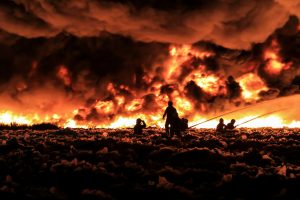
Photo of plastic recycling plant fire in Birmingham (2013) courtesy of West Midlands Fire Service Photographic 2017

I wish someone had told me about Plastic Free July before August arrived. But hell, it’s never too late to start learning new tricks, eh!

In case you missed it too, this is a global initiative started in Western Australia. From its humble beginnings in 2011 with 40 people in Perth, Plastic Free July has now spread across the country and around the world. In 2016, 100,000+ Western Australians and more than 1 million people worldwide took part.

Every bit of plastic ever made still exists and in the first 10 years of this century the world economy produced more plastic than the entire 1900’s.”

The initiative aims to educate people to cut down on their consumption of single-use plastic. The main thrust is to get people to stop using disposable shopping bags. Australians already have an incentive, in that there is already a ban in Tasmania, South Australia, the Northern Territory and the ACT.

About a third of the plastic consumed in Australia ends up at recycling plants to be ‘down-cycled’ into other products. Plastic, as we know, lasts forever, unless of course it catches fire, in which case it burns as fiercely as oil or natural gas. Fire is an ever-present risk at waste and recycling plants because of the highly combustible nature of the stored materials.

In mid-July, a major fire broke out amid stockpiles of paper and plastic at the Coolaroo Recycling plant north of Melbourne. The political fall-out from this fire spread further than the smoke plume, sparking a class action threat and a move by the Victorian government to audit all recycling plants in the state.

Victoria (and other States) would probably want to avoid something like the UK’s record of fires at waste and recycling plants (300 per year), including the one depicted (above) at a recycling plant in Birmingham. 

Meanwhile back home…

No-one knows for sure how many recycling plants there are in Australia because many are private companies licensed by their respective Councils. However, Deakin University environmental science lecturer Trevor Thornton, writing in The Conversation, quoted 2013 figures from the Department of Environment and Energy which estimate there are 114 waste recycling plants in Australia.

Thornton says the industry needs a national registry, updated annually. Governments need to provide tax breaks so plant operators can upgrade their equipment and also provide manufacturers with an incentive to use recyclable material in their products.

“At the same time, we should consider penalising businesses which use non-recyclable packaging when alternatives exist,” Thornton said. He cited retailers who sell goods in multi-material packaging like polystyrene and plastic without providing an alternative.

I was musing about all of this and more after realising I need to break a habit of asking for bags at the supermarket. I’ve been kidding myself that they are being re-used at home as rubbish bags. Just because a plastic bag gets used twice or even three times doesn’t make it any better for the environment.

Major supermarket chains Coles and Woolworths have already made a commitment to phase out single-use bags within a year. Woolies has revealed it uses three billion bags a year. Coles has not released data but it is probably of a similar scale.

Plasticfreejuly.org says six out of 10 Australians are already refusing single-use bags and using a variety of alternatives, all of which involve bringing your own container when you go shopping. But it’s not just a shopping problem – cling wrap, plastic water bottles, drinking straws, plastic takeaway containers and plastic cutlery are all potential sources of pollution. But as we’ll read later, it’s not as simple as chucking everything into the yellow bin.

​The Waste Authority of WA says Australians use one million tonnes of plastic a year (most of it packaging) and 320,000 tonnes of it goes to landfill. But even the refuse, reuse, recycle mantra won’t be enough to hold back the tide of plastic garbage which is engulfing oceans.

Some plastic ends up in waterways and the ocean – where scientists predict there will be more tonnes of plastic than tonnes of fish by 2050.

​The Plastic Oceans Foundation says the world is producing nearly 300 million tons every year, half of which is for single use. More than eight million tons is dumped into our oceans.

As for the oceans becoming a massive plastic rubbish dump, how in hell does plastic end up there? Some of it is microbeads from the manufacturing and recycling process which finds its way to the ocean via drains and runoff. Containers carrying plastic product to foreign ports fall off ships. The best-known example is the container full of thousands of yellow toy ducks lost at sea in 1992. You can read more about this phenomenon and how ocean currents play their part by browsing this educational website created by clever people at the University of NSW.

Data from plasticoceans.org underlines the impact of this pollution on the planet (plastic manufacturing uses 6% of the world’s fossil fuels). Every year 500 million bottles and one trillion bags are discarded as waste (not to mention 24.7 billion disposable nappies). On the scale of things, it’s good that a third of this waste is recycled.

While Australia seems on track to phase out single-use  bags, we need to do something about our addiction to bottled water. A Choice Magazine story in 2014 highlighted the fiscal folly of choosing bottled water over tap water. If you drink two litres a day from the tap, you’ll pay about $1.50 a year, Choice said. Drink the same amount from single-serve bottles you could be looking at more than $2,800 a year.

The Australasian Bottle Water Institute says ours is a $500 million a year industry selling the equivalent of 600 megalitres (600,000,000 litres) of water a year, 60% of which is sold in single-serve bottles.

If we do use plastic, then we should at least know how to sort the different types of waste for recycling. The ABC’s Amanda Hoh, following up on the ABC’s popular War on Waste TV show, interviewed Brad Gray of Planet Ark for some tips.

Gray says the most common mistake is that people throw soft plastics such as bags, food packaging or “scrunchable” plastic in with containers. These soft plastics get caught in the conveyer belt and the whole recycling system has to be stopped so they can be removed.

“All “scrunchable” plastic including shopping bags, plastic food packaging, fruit netting and dry cleaning bags can be recycled, although most often not via your home recycle bin,” says Gray.

“The best method is to bundle all your plastic bags into one bag and take it to a REDcycle bin located in most metro and large regional supermarkets. These plastics are then recycled into plastic school furniture.”

So now I have finished this week’s FOMM, it’s hi-ho to the supermarket and co-op, sturdy hemp shopping bags in hand. Well, that’s the goal.


Carnarvon open for business

carnarvon-business
Carnarvon Gorge – The Ampitheatre by Bob Wilson

It doesn’t seem too widely known that the once-notorious black soil road from the Rolleston turn-off to Carnarvon Gorge is now completely sealed. True, there is an unsealed section between Takarakka Resort and the National Park headquarters, but it’s a few hundred metres at best.

In the 1970s, a hired car full of adventurous Kiwis set off for Carnarvon, 720kms west of Brisbane, having heard it was a must-do wilderness experience in Queensland.

“Mind you, it’s four-wheel drive country only,” we were warned. Even with a four-wheel drive vehicle, after heavy rain, the black soil roads to Carnarvon from Injune or Rolleston could become impassable. You either couldn’t get in or couldn’t get out. We naïve Kiwis of course hired a conventional six-cylinder sedan and went close to running out of fuel as the car made slow and slippery progress. We turned back and kind people we met in the pub at Injune offered space in their homes for our tired bodies.

In 2017, the 40 kms of new sealed road from the Rolleston turn-off to Carnarvon completed in June, makes it a dream run. Even last year, when the road between the turnoff and Takarakka Resort was still unsealed, Carnarvon Gorge attracted 65,000 visitors.

The gorge is a spectacular sight after driving across the seemingly endless central Queensland plains. It’s a scenic drive in from the A7 Carnarvon Highway between Rolleston (100 km to the north) and Injune (150km to the south). The only tip for the novice in 2017 is to make sure you have plenty of fuel and to realise that you might need to forego Facebook for a few days.

There was a long period when the remoteness of Carnarvon Gorge and the spirituality of a place held sacred by local Aborigines was the key attraction for hikers keen to soak up the solitude and silence. Friends who recently stayed at Carnarvon Gorge during school holidays were disenchanted with the numbers of people staying there. They have a four-wheel drive vehicle so also visited Mt Moffat, which they said was less spectacular but comparatively devoid of people.

After spending four nights at the gorge (during school holidays), I’m wondering what sort of growth pressures the park will face in coming years. But I’m thinking that Carnarvon Gorge visitor numbers will stay fairly constant. Unless you like a 10-hour driving day, you’ll have to stay overnight at least once between Brisbane and your destination.

The Environmental Protection Agency’s 2005 management plan for Carnarvon noted there were 27 separate tourism operators allowed to do business within the national park. These include coach and helicopter tour operators but no flying in the park itself – drones, as the sign at the headquarters said, are not allowed either. Accommodation and camping ranges from a camp site at the National Park headquarters (36 sites), which, for some reason, is only available in school holidays. At Takarakka Resort, 4 kms outside the park, one can choose between pitching a tent, hooking a caravan up to power and water or staying in one of the powered safari cottages (canvas roof and walls and timber floors). Alternatively, there’s the Carnarvon Gorge Wilderness Resort just down the road where you can enjoy most of the comforts of home.

Unlike some travel articles, which carry coy disclaimers that (writer) was a guest of (airline-travel agency-resort), this blog pays its own way. She Who Organises Things paid in advance for the four nights (powered caravan site at $46 a night). We also signed up for the Sunday night roast dinner ($25 per person).

If I found anything at all less than satisfactory it was the cleaners with leaf blowers.

That minor irritation was offset by the free outdoor movie night (The Castle), which is cornier than I remember but somehow very dinky-di.

Carnarvon Gorge is rugged and remote, and even with its well-marked tracks and the support of local rangers, it would not be hard to get into a spot of bother. One has to rock-hop over the six creek crossings and there are ladders and vertical steps involved with other walks. We walked about 12 kms on our first day and ran out of water by the end of the trip. So you evidently have to carry at least one and probably two litres per person. A reasonable level of fitness is required.

If you are a serious bush-walker with a four-wheel drive vehicle you could spend some weeks exploring this 164,000ha national park and the unsealed roads into nearby Mt Moffat and Ka Ka Mundi national parks.

Carnarvon Gorge was surrounded by pastoral properties, parts of which have since been incorporated into the national park.

In the mid-1880s, white explorers Thomas Mitchell and Ludwig Leichhardt made the public aware of the area’s permanent water. This led to settlers taking up blocks in Central Queensland and sparked off two decades of open aggression between local indigenous groups and the newcomers.

Libby Smith’s historical account of European settlers living on Carnarvon Station (now owned by Bush Heritage), chronicles the hardships suffered by successive owners of the 59,051ha station north-west of Carnarvon Gorge.

They had to battle droughts, floods, bushfires and invasive pests like prickly pear and feral animals. Above all was the remoteness of the property, which sits between Mt Moffat and Ka Ka Mundi.

Even in 2001, the resident managers described Carnarvon Station as more remote than their last posting in Kakadu. Co-manager Steve Heggie said the biggest challenge was the inability to enter or exit the property after the rains. A trip to town involved four hours of hard driving ‘before you even hit the blacktop’.

“We had to plan for adequate supplies of food, fuel and work stores, medical emergencies and for volunteers stranded after rain.”

Smith writes that Carnarvon National Park was extended in the 1960s and 1970s to include pastoral holdings which had been surrendered. They include Salvatore Rosa National Park (1957) and Ka Ka Mundi (1973). The park was also extended west in the 1980s and 1990s. Smith notes there was initially fierce opposition to proposals to expand national parks into pastoral leases.

“There was a fear of any change in land use and ‘locking up country.’

Smith’s story deals only with pastoral history, but considering that Aboriginal history in Carnarvon long preceded European settlement, the reaction by pastoralists to the conservation ‘threat’ is quite ironic.

In 2001, Bush Heritage purchased Carnarvon Station for conservation. It has since been found to contain 25 regional ecosystems, including seven that were endangered.

Feedback from last week

The Prickly Pear column, also inspired by this trip, engendered a lot of feedback. One reader wrote to say her grand-father had to walk off the land near Roma as a result of prickly pear infestation and became a land valuer instead. Some readers were keen to say the pear has been maligned and that many people grew up used to eating the fruit, which is tasty and nutritious. Another emailed to correct us, saying the river at Nindigully is the Moonie, not the Balonne.

Perplexed Pensioner of Reeseville once again took issue with my claim that white settlers introduced cats. A topic for another Friday, perhaps.

Ah well, Queensland still won!

Further reading: