Lockdown vs Covid easing

Lockdown-covid-easing
How soon we forget. Musician Silas Palmer checking off the first of 112 days of lockdown in Victoria (see music video link further down

So let me see if I can understand this – almost 50,000 people crammed, yes, crammed) into Suncorp Stadium/Lang Park amid a global pandemic. It was the largest sports crowd in the world since Covid restrictions were applied in March. Biosecurity protocols involved in buying tickets and entering the venue, was proof enough for the Queensland Government, given that anyone attending could be contacted after the event.

Yes, amazing what governments, big business, broadcasters and multinational betting agencies can achieve.

Last time I went to Brisbane’s footie stadium with that many people, it was everything that social distancing is not. Ladies, as few of you will have ever seen a urinal, we stand shoulder to shoulder at the trough. If it is busy, there will be a row of blokes behind us, waiting for a gap to appear. Many, faced with a tedious wait for the wash basins, often dispense with the formality.

Just one example.

As of 4pm on Tuesday, rules were relaxed for pubs and restaurants in Queensland and ‘normal’ crowds welcomed back for entertainment venues, including theatres.

As of the 17th, we can now have 50 people in our homes (though why would you, I thought).

The State government allows itself an ‘out’ by being able to declare a restricted Local Government Area, should the need arise.

In this case, only 10 people are allowed in your home, and that includes people who already live there.

Queenslanders can travel anywhere within the State for any reason, with no limit on distance. You can stay overnight within the State for as many nights as you like.

It’s not a level playing field, though. Queensland Health says that special visitor rules apply for aged care facilities, hospitals and disability accommodation providers.

At the same time these changes were pending, an outbreak of Coronavirus cases in South Australia demonstrated once again that Covid-19 is the gift that no-one wants, yet it nevertheless keeps on giving. Queensland too was finding new cases, most associated with quarantine from people returning from overseas.

But regardless of mixed messages, Queensland Health advice is still that you must practise physical distancing as much as possible and wash your hands regularly with soap and water. Use (60%+) alcohol-based sanitiser, avoid hugs, kisses and handshakes and keep 1.5 metres away from other people. Or as we say here – a kangaroo apart.

While Queenslanders are getting all enthusiastic about the ‘return to normal’, the Covid cluster that emerged in South Australia is a timely warning that this virus is not going away. SA is dealing with its untimely cluster by re-introducing some restrictions, the oddest of which is that you are not allowed to stand and drink in a pub.

“Mate, don’t stand at the bar coughing over everyone. Come over here to my table and cough on us instead.”

SA was to go into a six-day severe lockdown to hopefully stamp out the growing cluster of cases (34 and counting). However, today the ABC news advised that the lockdown would end on Saturday night, three days early.

I realise that my somewhat cautious approach to full slather mingling may upset people who think Covid restrictions are too much-too long. I chatted to a few people who have either been through the quarantine ritual or are Aussie ex-pats looking on from a distance.

Morocco-based Suzanna Clarke, who operates an accommodation business in Morocco and France, can’t believe what she is seeing on social media. A Brisbane friend posted photos of musicians mingling at a ‘session’ (where folkies gather at an ale house to play diddly tunes and sing songs).

No social distancing, no masks needed! Consider yourselves extremely lucky,” Suzanna wrote. There is no way I would be attending a similar event on this side of the planet.”

Morocco (pop 36 million), has recorded 307,000 cases and 5,031 deaths. Suzanna says it is hard to know what’s currently going on.

“It’s also very hard to get a PCR test – even if you can afford it. So the numbers are likely to be much higher. The government doesn’t want to go into lockdown again because people will starve. Literally. Unemployment benefits are only available for a few. My business here has been shut since March. My business in France was starting to pick up, and they went back into lockdown.

So every booking I had was cancelled. We still have wages to pay, so we’re trying to get by on what we have, and raiding our savings. We are, of course, are among the lucky ones.”

Musician friends Silas Palmer and Sarah Busuttil recently posted a series of videos on Facebook depicting 14 days of life at the Howard Springs quarantine facility in Darwin. They flew from Melbourne to the Northern Territory, en route to Queensland and northern NSW to visit a gravely ill family member.

Since this week’s missive is somewhat dire, I thought I’d share this cheerful video the duo made during Victoria’s 112-day lockdown.

(Collins’ Dictionary word of the year, by the way!).

 Meanwhile, the world’s share markets have, as usual, over-reacted to news that Big Pharma has a vaccine ready to go. Global share markets rose 10% in a week.

FOMM reader Mr Shiraz, a strict follower of Covid prevention protocols, had this to say on Facebook:

I have been thinking about the excitement elicited by Covid vaccine announcements (Ed: described in share market reports as ‘vaccine optimism’).

It has taken us more than three decades to get polio 99% eradicated. To imagine a Covid planetary vaccination program being anywhere near good enough for “normal” life to resume in five years is silly.”

A recent article in the UK’s pre-eminent medical journal, The Lancet, advised that we get used to social distancing, hand sanitisation and wearing masks because it will be with us for “several years”.

Science magazine Nature concurred, citing a team of researchers  in virus hotspots at Anhembi Morumbi University, São Paulo, Brazil. They ran more than 250,000 mathematical models of social-distancing strategies.

The team concluded that if 50–65% of people are cautious in public, then stepping down social-distancing measures every 80 days could help to prevent further infection peaks over the next two years. Bear in mind that this research was published in August, which in the context of a fast-moving pandemic is probably a bit old.

Current international statistics are extremely worrying:

  • US 11.6m cases, 250,000 deaths;
  • India: 8.91m cases, 131,000 deaths;
  • Brazil: 5.91m cases 171,000 deaths;
  • France: 2.71m cases, 46,698 deaths;
  • Russia: 1.99m cases, 34,387 deaths’

Australia looks comparatively healthy when you consider there have been 27,777 cases and 901 deaths since January.

However, there have been 93 recent cases, including 21 reported in the last 24 hours. Drilling down into Queensland’s stats, we have had 1,190 cases, 6 deaths and 12 active cases, including 3 in the last 24 hours.

Well excuse me. Much as I loved watching Queensland snatch the Origin series away from New South Wales, I won’t be going to any major sporting events, this year or next.

As Mr Shiraz says: “Let’s adopt a new normal expectation.

Government buyback could solve power crisis

Wilpena-Pound-Power-Station
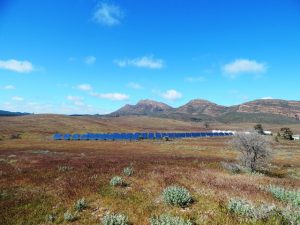
Wilpena Pound solar/diesel power station SA Photo by Bob Wilson

“If you’ve got money in your pocket and a switch on the wall, we’ll keep your dirty lights on.” So goes a song by American alt-country singers Darryl Scott and Tim O’Brien about coal mining and power generation.

Their album Memories and Moments includes a version of John Prine’s Paradise, which remains the definitive song about the downsides of coal mining.

That seemed a noteworthy way to introduce the potentially dry topic of energy, be it coal-fired, hydro, nuclear or solar/wind power. Continue reading “Government buyback could solve power crisis”

Not good with crowds

hong-kong-low-res
Photo by Laurel Wilson: Chilling out in Kowloon Park, Hong Kong.

It was the sight of the  crowds – 83,625 screaming footie fans at Sydney’s ANZ stadium that set me thinking, looking at that roaring sea of blue – it’s the last place on earth I’d want to be. Players interviewed after the Cronulla Sharks beat the Melbourne Storm 14-12 said they could not hear the referee’s calls, could not hear players calling to them and had tinnitus for hours afterwards.

I’m not good with crowds or noise. So I should have known better than to pick a four-day stopover in Hong Kong last time we travelled overseas. On the third day I went in search of a quiet place with as few people as possible around me. Luckily, our hotel was close to Kowloon Park, a 13 hectare green space with public gardens and aviaries, surrounded by some of Hong Kong’s most striking 19th century British buildings.

I found a spot under a tree, its leaves dripping with humidity and lay down for a spell. On a lawn near me 30 or so older Asian people spread themselves out for a spot of Tai-Chi. You could still hear and feel the city hum and strum, but the impact was muted by the tranquillity of this well-tended spot; well-tended because there is almost full employment in this island nation, now governed by mainland China. People have all kinds of jobs and walking around with a pole spiking trash and wind-blown leaves and putting them in a garbage bag is just one of them.

Those who have visited the former British protectorate (returned to Chinese rule in 1997), will know what it is like for an Aussie to visit Hong Kong, where 6,400 people share every square kilometre.

Some of the land has been reclaimed from the ocean; to build a new airport, but also to build yet more apartments in this vertical city.

Hong Kong apartments on average comprise 14.86sqm of living space. Compare that with your standard Aussie ‘McMansion’ with its five or six bedrooms, three or four bathrooms and two or three-car garage (around 241.54sqm).

So if being one of over 83,000 people doing the Mexican Wave in a tiered stadium gives you the jim-jams, don’t have a holiday in Hong Kong, Singapore, London or Manhattan.

One thing world travel does to a man brought up in the sparsely populated and wide open spaces of Australasia is to appreciate how quiet things are when you come back from New York, London or Tokyo. As my pal Ed said, on returning from a three-month stay in Mexico City: “The air here is so sweet and fresh – hey, do you know a place that does good burritos?”

So where do you go if the weight of people is getting to you?

The least populated country on earth is Greenland, though that may change as arctic ice keeps melting and exposing more living space. Greenland’s ice-free population density is 0.03 persons per square kilometre, which is about one person to every 3,350 hectares, if you really needed to know.

As it happens, Australia also ranks among the least densely populated places on earth, but as in many such examples, this is misleading. As we know, the majority of Australia’s population live in a narrow coastal belt between Cairns and Melbourne. Some also live in Tasmania.

All sorts of anomalies and oddities arise when you start looking at the world’s most densely populated countries in terms of people per square kilometre of land area. The World Bank’s list (as of 2015) ranges from Greenland 0.03, Australia 3, New Zealand 17, China 146 and Japan 348, to Bangladesh 1,247 and Hong Kong 6,958.

Small island nations like Malta (1,348) and the Maldives (1,264) suffer from a lack of physical space rather than too many people. The most crowded of all is China’s 25.9sq/km gambling mecca, Macau, with 19,393 people to the square kilometre.

Those who have spent a splendid week or two roaming around the sparsely populated South Island can attest to the southern half of New Zealand’s population density of 7 (not counting sheep). Stewart Island (0.4 persons per sq. /km) is also nice at this time of year.

Seriously, though, the world’s population distribution is seriously out of whack. The herd mentality takes over when humans move about.

The Chinese government spent billions creating vast new urban cities in the interior where they planned to resettle people, taking the pressure off Beijing, Shanghai and Shenzhen.

Officials created the “Dubai of northern China” in Ordos, northern Mongolia in 2010 (Ordos is 700 kms from Beijing). The city has a capacity to house 300,000 people yet only 20,000 to 30,000 people have moved there, hardly a satisfactory return on a $161 billion investment. The answer according to this blog is that the government has failed to persuade people to move there.

Amid many such examples, China’s population remains concentrated in three key cities the population per square kilometre being: Beijing (11,500), Shanghai (13,400) and Shenzhen (17,150). Capital city population densities in Australasia look well contained by comparison: Sydney (2,100 per square kilometre), Auckland (2,000), Melbourne (1,500), Adelaide (1,350) and Brisbane (950). The above figures are a few years old but they still paint a vivid picture.

Our most under-populated state is South Australia, with 74% of its 1.67 million people (including 8 FOMM readers), living in Adelaide. SA’s population density is just 1.62 people per square kilometre.

South Australia is dry, flat and exposed to the elements. The state is surrounded by the 100km-long Bunda Cliffs (the Great Australian Bight), the Nullarbor Plain and the Simpson Desert.

If you really want to get away from it all, becoming a Jackaroo or Jillaroo (ranch hand), on one of SA’s vast cattle stations (up to 24,000sq/km) is the way to go. The climate is unforgiving in the interior, however, so much so that many residents of outback mining town Coober Pedy live underground.

No doubt their air-conditioning packed it in when last week’s storm event (SA Energy Minister Tom Koutsantonis equated it to a category five hurricane), took out 22 electricity transmission towers. The ensuing seven-hour state-wide power outage (some lost power for up to three days), should hardly have been a surprise. Some politicians used the crisis to give renewable energy a good kicking although exactly why has not been satisfactorily explained.

Australia does not have a national electricity grid as such and much of its transmission business has been privatised so there is a user-pays mentality.

After the SA crisis, Federal Environment Minister Greg Hunt called for a “more integrated system of providing consumer and investment security”. In an Australian Financial Review column Mr Hunt said: “This means that the states will have to consider new or upgraded interconnectors between Tasmania and the mainland, and South Australia and the eastern states.”

As always, the squeakiest wheel gets the most oil. The New South Wales government has invested $30 billion in energy infrastructure to ensure its 7.54 million residents can keep their porch lights on. Meanwhile, the SA Government, knowing the Port Augusta coal-fired station had just been decommissioned, made an ironic decision in the July State Budget.

Tucked away in the $209 million provided for infrastructure was this lone item for energy: $500,000 towards a feasibility study to explore options for greater energy inter-connection with Eastern states to allow for more base load power. A necessary part of the equation, but not much help when the transmission towers (and the lines between them), are out of action. Any electricity experts out there with a theory?