Septuagenarian motorbike dreams

motorbike-septeugenarian
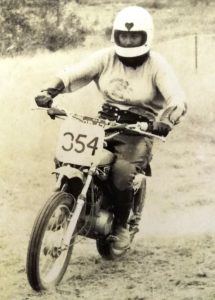
She who also used to ride a motorbike, Mt Coot-tha, circa 1970

I’ve been having recurrent (and happy) motorbike dreams lately, a few days short of a significant birthday. I had no idea what septuagenarian meant. Also, as my spell-checker immediately informed me, I did not know how to spell the word either. A septuagenarian is a person between the ages of 70 and 79.

There’s a lot of this about, with the quintessential baby boomers (those born in the immediate post-war years (1946-1950), throwing big parties and telling people not to bring presents. Some have a late flirtation with their youth, buying a motorbike they couldn’t afford then or taking bucket list cruises to exotic climes.

We graduated from ‘sixty is the new fifty’ to feebly claiming that seventy is the new sixty. A few say I could pass for that, but they don’t see me in the morning, in the harsh light of the ensuite mirror.

Septuagenarianism causes one to reflect on mortality. Indeed, it makes one think of times when a premature exit was on the cards. In my case, this was a bad motorbike accident in 1969. If you fall off a motorbike at speed or hit something, you are always going to come off second-best.

A study by the Federal Department of Transport found that motorcyclists are 41 times more likely to sustain a serious injury than car occupants. Moreover, the study found that 10% of motorbike accident victims were not wearing crash helmets at the time.

Not that the statistics put people off riding motorbikes or indeed competing in motor racing, be it on dirt tracks or professional circuits. The Federal Chamber of Automotive Industries estimates there are one million registered motorcycles in Australia, and twice that number of off-road bikes.

My accident (it traumatises me still to recount) resulted in smashing both kneecaps, breaking my jaw and a lip laceration requiring 37 stitches. The latter was the least of my problems. I had both kneecaps removed and lay in a hospital bed with both legs in plaster for months. I became close to the pigeons roosting on the roof outside my narrow window. And I took up studying racing form to pass the time.

It is a good thing the brain does not retain the memory of pain. Let’s just say when the IRA decided on kneecapping as a form of punishment, they were inflicting great pain and future disability on their victims.

In those days, hospitals routinely doled out synthetic forms of morphine ‘PRN’ (Latin for as required – pro re nata). After several months, they weaned me off Omnipon (synthetic morphine) as my body was starting to crave the drug. Thus began a difficult period.

We can skip over the bad parts, which are chronicled in a highly romanticised song, Motorbike Dreams.

After getting out of hospital, I went to a (physical) rehab unit where daily therapy aimed to get my legs back to normal. As those who have had a patellectomy would know, full flexion is rare. I kneel with difficulty, cannot squat and take extra care to avoid having awkward tumbles. Apart from not having much of a head for heights, I avoid climbing ladders beyond the third step and have never been on the roof of our house.

Rehab and the sci-fi hallucination

Rehab was a hoot, after four months of being cooped up in a public hospital. It was only when I first got on crutches and struggled up the halls of the orthopaedic ward I stopped feeling sorry for myself. There in rooms by themselves or shared with others, was a coterie of ex-bikies, all of them in various degrees of pain and disability far worse than mine.

In rehab, I learned to play pool, always being defeated by a Vietnam vet whose left arm was frozen horizontally at chest height. It made the ideal place to rest a pool cue but was otherwise quite inconvenient.

This impish Polynesian chap, whose name now escapes me, decided one night we should all disobey the curfew and slip down the road to the pub. The rehab unit was located in a dodgy south Auckland suburb. But as Tipu (let’s call him that) said, “Otara’s not as bad as it’s painted, Bro.”

We had a great night out, temporarily forgetting the daily struggle to regain our version of normal fitness. I dimly recall a fabulously rowdy public bar rendition of Ten Guitars (New Zealand’s unofficial anthem).

In July, the surgeon who operated on my right leg decided to try manual manipulation, in a last-ditch effort to improve on 97 degrees. An ambulance came; I was taken back to hospital, given an injection of pethidine and then anaesthetised. I woke up in recovery 20 minutes later, with the surgeon shaking his head. The ambulance took me back to the rehab unit (I’d had a shot of pethidine, remember). The rehab crew were gathered in the rec room watched a flickering black and white RCA TV set. In my altered state it seemed like a bad sci-fi movie.

That’s one small step for a man,” said Neil Armstrong, as he stepped on to the surface of the moon, “One giant leap for mankind.”

‘Tipu, mate, is this for real?”

He grinned at my dilated pupils and patted me on the shoulder.

“It’s all fake mate, shot on a Hollywood film set.”

Maybe that’s when the rumour began?

By the way, if you didn’t know, there are (still) persistent myths about the Apollo 11 moon landing being faked. In 2008, the TV series Mythbusters came up with one of the more entertaining attempts to debunk the un-debunkable.

Later in ’69 I was discharged from rehab, having made four wooden collection bowls on a foot-operated lathe. It was a sad day, as we had all formed a bond forged by physical adversity.

I went back into the world, to a series of unsuitable jobs where my physical limitations became painfully obvious. The hardest one was steam-cleaning refrigerated railway wagons at 4am. It wasn’t a difficult job once you had clambered up into the wagon, but getting there was pretty problematic.

Just try going for a week without squatting when performing daily tasks and you will have some idea how I adapted to ‘bottom-drawer’ world. No complaints here, though. I got off lightly, as people who have had their kneecaps removed typically develop arthritis and other ailments as time wears on. As a physio once told me, “You’re a lucky lightweight”.

In my 40s, playing soccer with the kids at a birthday picnic, I did the quick about-turn and felt something go ‘pop’. Weeks of pain and hobbling later I ended up in the rooms of an orthopaedic surgeon. He examined the X-rays and asked me to perform a few basic knee movements.

“Is this coming good on its own, do you think?”

“Yeah, I think.”

“Well, forty year old knees with the surgeries you’d had, if it’s coming good, I’m not touching it.”

I give my knees a good talking to, most days, and keep them going with daily walking, weekly yoga and by avoiding the scourge of the over-60s (having a fall).

“Good and faithful servants,” I mentally tell my knees every morning, “Carry me through another day.”

I don’t ride motorbikes anymore, but I’ll never forget the free-wheeling euphoria of a downhill run. And I still have motorbike dreams.


Terrorised in London (still)

terrorised-in-london
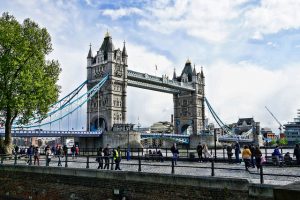
London Bridge image by Mirko Toller (https://flic.kr/p/Uq9nBc)

There’s a Waifs’ song with a plaintiff chorus that defines the homesick expatriate – “I’m in London still, I’m in, la la London still.”

I’m a Waifs’ fan but never thought much of London. The capital city of England, despite its numerous parks and gardens, museums and galleries, ancient monuments and centuries of history etched into every building, was never among my peak travel destinations.

Sure, I was broke, lonely and depressed on my first two excursions in the 1970s. But subsequent visits, when not broke, lonely or depressed still left me with those negative impressions: the sooty smell, the pressing crowds, the awful smelly tubes, the poor huddled masses waving flags outside the gilded palace. I could go on.

There were magic moments; hearing a choir sing in St-Martin-In-The-Fields, visiting the Tate Gallery on a day when there were very few people about; a lovely day at Kew Gardens with a broke, lonely and depressed friend, back in the early 1970s before the tranquillity was ruined by flight paths in and out of Heathrow.

But those moments and memories are supressed beneath the intangible air of menace which permeates some London boroughs. Even when living among Aussie and Kiwi expats who gathered in Shepherd’s Bush and Earl’s Court, there was (to me), an air of something violent about to happen.

My broke, lonely and depressed Aussie mate advised. “Mate, you should leave the weed alone – it’s making you paranoid.”  But even when I took his advice, the loneliness and depression persisted.

We were living in a suburban squat, which is something poor people can still do in London, where squatter’s rights hold firm.

Back in London 1970-something, we pooled our money, pinched a bit from the household petty cash and went to see the new Martin Scorsese movie, Mean Streets. It’s about a wannabe mobster who gets in over his head. The violence and desperation cheered us up no end.

I’ve been thinking about those la-la London days in the aftermath of the callous, premeditated attack on innocent bystanders at London Bridge, which left eight people dead and 48 injured.

In the early 1970s, the Irish Provisional Army had London in a state of fear. In case you’d forgotten, the IRA’s reign of terror in Ireland and in the UK between 1969 and 1997 makes the attacks by fanatics in Manchester and London look like random, unrelated incidents.

Regardless, the level of violence shown in the 2017 attacks on May 22 and June 3 drove British authorities to escalate the threat level to ‘critical,’ then ‘severe’ (‘severe’ meaning a terrorist attack is highly likely).

Parents of young people determined to head off to Europe for an adventure are in a state of high anxiety. According to DFAT there are more than 130,000 Australian residents living in the UK. As of June 7, 10,610 Australians had registered with Smart Traveller as currently visiting the UK. When you add in exchange students and people on two-year work visas, the collective angst at home is understandable

Our parents were similarily horrified when in the early 1970s we left for the obligatory OE (overseas experience) with our brand new backpacks and passports.

“The IRA is leaving parcel bombs on the Tube,” my Dad warned. “And in pubs.”

Dad, I could get killed crossing Karangahape Road,” I replied.

Teenagers and people in their early 20s have the carefree mindset “it’ll never happen to me.” It will, however, happen to someone. And ‘it” does not have to be a random terrorist event. On average 171 people have been murdered in Greater London every year since 1990 – more than three per week.

And you might get killed or maimed by accident. Pedestrians and cyclists are always at risk on London roads, though a mitigation campaign seems to be working.

Transport for London (TfL) figures show that the number of people killed or seriously injured on London’s roads fell by 3% in 2015.

The June 2016 report, the latest available, said the numbers of people killed or seriously injured fell from 2,167 to 2,092 compared with 2014. There were 84 fewer serious injuries (2,040 to 1,956) over the same period. However there was a 7% rise in traffic fatalities (from 127 to 136). Fatal and serious injuries involving cyclists fell by 10% compared to 2014 (nine fatalities down from 13).

TfL says it is making “good progress” on its target for reducing death and serious injury on our roads by 50% by 2020.

These are just a few examples of how living in a city of 8.75 million carries a correspondingly higher level of risk. The rate of crime against Londoners jumped substantially in 2015, according to Metropolitan Police. The murder rate was up by more than 14% with 113 murders occurring in the capital in the 12 months to September 2015.

But as people who watch Lateline know, London, with a murder rate less than 2 per 100,000 is a long way down the list of the world’s most dangerous cities.

This Wikipedia entry lists 50 cities where the murder rate ranges from 34.43 (Durban SA) to 130.35 (Caracas, Venezuela).

If you are the nervous type, scratch these 50 cities off your wish list. While 19 of these high-murder risk cities are in Brazil (where nine-year-old kids armed with hand guns prowl the streets), four cities are in President Trump’s United States of America (St Louis, Baltimore, Detroit and New Orleans).

Not that any of this makes the attacks on London Bridge or at the Ariana Grande concert a fortnight earlier any less serious. But I find myself pondering the faux bravado of politicians who bluster and bluff, saying “enough is enough.” It’s exactly what the parents of uncontrollable teenagers say, when trying to deal with the latest escapade, be it drugs, drinking, truanting or under-age sex. As actions plans go, they are futile.

There’s an air of futility and misdirection about the current focus on Muslim radicals and how the ‘tread softly’ approach is not working.

The far right in Britain and here in Australia simplistically call for a ban on all things Islam. Maybe my memory is hazy (I was drinking in those days), but I don’t recall anyone calling for a ban on people from Northern Ireland living and working in the UK.

Australia’s shameful mood of xenophobia (fear of foreigners), is not restricted to Muslims.

An editorial in the New Zealand Listener last month, “They’re just not that into us,” used modern dating argot to discuss how Kiwis are being marginalised. And it’s government-sponsored. The list of discriminatory policies includes:

  • Full user-pays fees for New Zealand students;
  • Summary detention and deportation for Kiwi felons;
  • (Scientifically unjustified) bans on NZ apples;
  • New citizenship barriers;
  • Open criticism of New Zealand’s foreign policy.

The leader writer adds: “The one affront we can be sure wasn’t deliberate is Australia’s export of myrtle rust.”

As the editorial says, penalising New Zealand residents is a handy (and popular) way to distract attention from the Turnbull government’s political and fiscal woes. It would not surprise to see the UK Prime Minister (whoever that May be), misuse Muslims in the same way.