
Concussion and the slow demise of contact sport

contact-sport-concussion
Image: John Hain, www.pixabay.com

As you might know, one of my unlikely ‘hobbies’ is watching rugby league games on television. It’s as exciting as things get around here, especially if your team is winning. Once or twice a year we go to a live game (at least $100 admission for two).

The technology used to televise contact sport has led to a level of live scrutiny the game has never known before. Back in the day you could tackle someone and give him a ‘facial” (mashing your forearm into his face), and if the referee didn’t see it, you got away with an unsporting, illegal ‘dog act’.

The advent of The Bunker (a small team of referees armed with the technology to forensically replay on-field incidents), has changed the game forever. There is only one referee, and he/she can’t be in all places at once. That is why the Bunker alerted the referee to an incident last week where Parramatta Eels forward Reagan Campbell-Gillard slid his knees into the back of Titans hooker Chris Randall (who was already on the ground). It didn’t look good and the player on the ground was in apparent agony.

Campbell-Gillard was sent to the ‘Sin Bin’ and later suspended for four weeks over a grade three dangerous contact charge.

Repeated replays of such incidents prompt mothers (and fathers) around Australia to say, ‘no son of mine is playing that brutal sport.’ Then they sign them up for under-12s soccer, even though 22% of injuries in the round ball game are concussions.

Australia can’t be too far away from a class action brought by former contact sport players for whom repeated head injuries have left a legacy. There have been a few individual cases brought in Australia. Former Newcastle Knights winger James McManus eventually settled out of court after suing the National Rugby League (NRL).

One does wonder how much longer contact sports like rugby league and rugby union can be justified when there is so much evidence to show what repeated head trauma can do to an individual.

Research published in the British Medical Journal canvassed the extent of head injuries/concussions and the risk of under-reporting. The research found that 17.2% of Australian rugby league players suffered a concussion in the previous two years and did not report it to the coaching team or medical staff. About 22% of NRL first grade players admitted to not reporting at least one concussion during the 2018 and 2019 seasons. The most common reason was the player ‘not wanting to be ruled out of the game or training session’ (57.7%) and ‘not wanting to let down the coaches or teammates’ (23.1%).

Rugby league has changed immeasurably since I first started watching the game in the 1980s. Many rule changes occurred, technology worked its way into the game and now, it seems, an entire game is played with player welfare a priority. Back in the day, players commonly used their shoulders to tackle an opponent, usually resulting in the foresaid opponent being concussed and having to leave the field. Players who led with their shoulders inevitably spent time off the field having shoulder reconstructions. Even now, when shoulders are much less utilised than they were, it is not unusual to find a player in his mid-20s who has had two or even three reconstructions.

The shoulder charge is not the only banned ‘tackle’. There is the crusher tackle, the hip drop, third man in and any tackle involving contact with the head. The latter usually ends with a player being sent to the ‘sin bin’. This means the team is a man down for 10 minutes. This commonly leads to the good teams putting on 10 or even 20 points in the period where they have a numerical advantage.

You’d have to ask why rugby league players persist with high contact tackles which sports administrators have agreed are dangerous. At times it seems malicious. True, you might get sent off for 10 minutes, but the bloke you tackled into oblivion is going off for an HIA (head injury assessment) and will not return to the field. The player in the sin bin, perversely, is allowed to return to the field.

Since the tightening of concussion rules in 2016 a few players have retired prematurely because of repeated concussions or ‘head knocks’ as they were once known.

Many instances of high contact are accidental, such as head clashes (at times with your own teammate’s head). Others come from fatigue – the opponent has already beaten you, but you instinctively throw your tired arms up and hit him around the throat, chin, and head.

The NRL, the professional body which administers the game, has in recent years initiated a range of measures designed to protect players from repeated head injuries.

Any contact with the head, be it an accidental head clash, a careless or deliberate high tackle or the unconscious player’s head hitting the ground is reviewed. The Bunker can intervene and order a player off the field to be assessed by an independent doctor.

Typically, the injured player goes off for a mandatory 15-minute HIA. The player may pass the test and return to the match, but more often if it is graded category two or three the game is over for that player. If the contact is deemed serious he may be banned from playing for several weeks.

Some players seem prone to head injuries and in recent years there have been plenty of premature retirements. In the UK, law firms are leading two court challenges, one against World Rugby and another against the promoters of rugby league in England. In all there are some 350 former players involved, all alleging that the sports’ governing bodies failed to protect them from concussion and non-concussion injuries. They allege that these injuries caused various disorders including early onset dementia, chronic traumatic encephalopathy, epilepsy, and Parkinson’s disease.

Despite an older study reporting that 23.2% of parents discouraged their children from playing rugby league, about 480,000 Australian adults, juniors and school children are engaged in the sport.

Speaking of school children (about 30,000 are involved in school programs every year), many will have reached adulthood thinking that sports betting is all part of the game. Sports betting has been legal in Australia since 1983. Lately there is much talk about placing constraints on the industry’s saturation advertising. So far the controversy has led to preposterous warnings after sports betting ads about the dangers of gambling addiction.

Gambling ads are a genuine issue given that NRL games were watched by 119 million viewers cumulatively over the 2022 season, an average of 620,000 viewers per game. The 53% increase in viewers on Channel Nine is reflected in a similar rise on Foxtel, with most games attracting 50,000 to 60,000 viewers.

The choice of betting types is large and varied. Punters can bet on the outcome of league games with novelty bets thrown in: first (and last) try scorer and in big games, man of the match, exact score, and exact winning margin. You cannot yet bet on which player will go off for an HIA, or which player will be sin binned, but never say never.

Australians have bet on stranger things.

More reading https://www.aans.org/Patients/Neurosurgical-Conditions-and-Treatments/Sports-related-Head-Injury
 

An eye for an eye – sports injuries and brawls

eye-sports-injuries
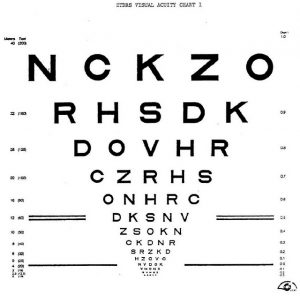
Eye chart image courtesy of Community Eye Health, CC https://flic.kr/p/cenNDu

The news photo of rugby league player Dylan Walker’s fractured eye socket made me feel anxious, like I get when I have an eye infection or it’s time for the annual glaucoma test. If I cover my left eye with my hand, I can navigate my way around the house, but that’s about it. No reading, watching TV or movies; definitely no writing, although I know vision-impaired people who have found ways around reading and writing.

What the auld aunties called a ‘gleyed ee’ or lazy eye was diagnosed in the late 1940s. I don’t remember wearing an eye patch when I was two, but I’ve seen the photos. It didn’t work. I say this only as an explanation if you passed me in the street and I did not say hello, it is possible you passed by on my right side.

Yes, so a serious injury to my left eye would probably see me lining up for the blind pension, although as I understand it, the aged pension replaces the (non-means tested) blind pension when the recipient reaches retirement age. An essay for another day, perhaps.

Last week the Australian Institute of Health and Welfare and Flinders University produced a report on eye injuries in Australia. The report shows 51,778 people were hospitalised due to eye injuries in the five-year period, 1 July 2010 to 30 June 2015. Two thirds of these were males. Falls (35%) and assaults (23%) were the most common causes of eye injuries. The most common type of eye injury was an open wound of the eyelid and periocular area (27%).

However, the report also showed that 86,602 people presented to an emergency department with an eye injury in the two-year period, 1 July 2013 to 30 June 2015. Only 1% of these cases (866) were admitted to hospital.

Sports-related eye injuries were seemingly uncommon by comparison, with just 3,291 males and 595 females reporting that the injury was sustained while participating in a sporting activity. However, information on what activity resulted in the injury was not reported for 69% of cases, so this is likely to be an under-estimation.

Of the known causes, more than one-third (37%) of males were participating in a form of football when they sustained an eye injury. Trail or general horseback riding (12%) was the most common sport-related activity resulting in eye injury reported by females. Over half (55%) of the sports-related cases resulted in an orbital bone fracture.

Such was the case during the Melbourne Storm-Manly rugby league game when a melee turned into a serious scrap between Manly’s Dylan Walker and the Storm’s Curtis Scott, with Scott throwing several punches, one of which broke Walker’s eye socket. Scott was sent off – red-carded as they say in soccer. Walker was given 10 minutes in the sin bin (for throwing a punch) and then had to be assessed for a head injury. Manly player Apisai Koroisau was also sent off for 10 minutes for running in and throwing a punch at Scott.

The National Rugby League (NRL) has been cracking down on such behaviour – Scott was the first person to be sent off for punching since 2015. All rugby league players know if they throw a punch they will at least be sent to the sin bin; angry flare-ups in recent years have tended to be of the push and shove variety.

But whether you follow rugby league or not, it was a bad look, for the sport and for all sports. Imagine the conversations over breakfast.

“Right, that’s it,” says Mum, whose son Billy (8) has been pestering her to play footie. “If you want to play sport you have two choices – soccer or table tennis. Those league blokes are thugs.”

Discussing the Manly/Storm fracas on the Sunday Footie Show, former Jillaroo Allana Ferguson commented: “If they did that in King’s Cross on Saturday at midnight and someone was injured they’d be off to jail.”

She makes a valid point.

A study last year by Dr Alan Pierce from La Trobe University found that repeated concussions in rugby league players have a long-term effect. He compared 25 former league players in their 50s with a control group of a similar age. The men carried out cognitive tests to measure memory and attention spans and dexterity tests to assess motor skills.

“What I’ve found is that the responses of retired rugby league players were significantly different to the healthy controls with no history of head injury,” Dr Pierce told the ABC.

The NRL took steps in 2015 to introduce mandatory head injury assessments (HIA), where players who have suffered a head knock have to leave the field for 15 minutes and be assessed by a doctor. If found to be concussed, they are not allowed to return to the field that match. An NRL injury surveillance report by Dr Donna O’Connor found that head injury assessments increased from 210 in 2015 to 276 in 2016, largely due to strengthened concussion guidelines. Sixty-six per cent of these cases were cleared to continue playing in 2016, compared to 54% in 2015.

If you have seen the excellent Will Smith movie Concussion (about brain injuries in American football), you may well ask why it took the NRL so long to act.

Cheek and eye socket fractures are common injuries in rugby league. They come about through (accidental) contact in tackles, as big bodies collide. Sometimes it happens through ‘friendly fire’ collisions with teammates.

Such was the case with Broncos forward Josh McGuire, whose injury in 2011 required surgery and he is now effectively blind in one eye.

Sports Medicine Australia says the incidence of sports-related eye injuries is low, but severity is usually quite high, as injuries to the eye can result in permanent eye damage and loss of eyesight.

“Research has shown that 30% of sports-related eye injuries in children have the potential for permanent loss of eyesight.

“A blow to the eye from sporting equipment, fingers or balls can lead to injuries ranging from lid haemorrhages or lacerations, corneal abrasions, retinal detachments and hyphaema (bleeding inside the eye) to permanent loss.”

Rugby league is rated a ‘moderate’ risk sport (in relation to sustaining eye injuries) compared to high-risk categories including baseball/softball, basketball, cricket and racquet sports. Any sport that involves small projectiles moving at speed is considered high-risk.

Our family GP once told me most serious eye injuries he had encountered were caused by squash balls and champagne corks.

If you lose an eye, the alternatives are an ocular prosthesis (a glass eye) or an eye patch, the latter having a bad press courtesy of movie bad guys. Think John Wayne’s bullying Rooster Cockburn in True Grit, Adolfo Celi’s menacing Emilio Largo in Thunderball, or John Goodman’s itinerant bible salesman Big Dan Teague (O Brother Where Art Thou).

If it came down to it, I’d opt for a good quality prosthesis, although the price (from $2,500), makes a $10 eye patch look like a bargain.

I’d make it a different colour just because I love that line in the Paul Kelly song about falling for a girl with different coloured eyes.

In the meantime, I will keep wearing Australian Standard safety glasses when I mow the lawns or use the brush cutter. You should too.