Cigarette Butts Still Polluting Our Highways

cigarette-butts-highways
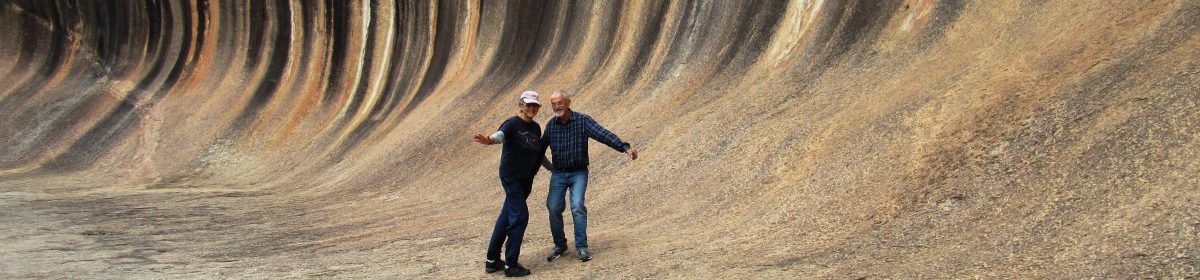
Emu and family, on patrol but not picking up cigarette butts! Photo by Laurel Wilson

While resting in our caravan at Winton on a sultry outback day, the stench of tobacco smoke came wafting through the open window.

Going outside to investigate, I found neighbours on either side, sitting outside their vans, puffing away.

I have found, over long periods suffering from respiratory problems, that I am incredibly allergic to cigarette smoke. For years now when anyone rummages in their bag and asks do I mind, I say, yes, I do mind. Outside would be great.

It’s our one inviolate house rule, so much so an old mate in Toowoomba still recalls the night (in the dead of winter) where he was told to go outside to smoke at one of our parties. The hard-arse attitude led to a ditty called ‘If you smoke in my kitchen I’ll fart in our bedroom.’ Not high art, but the kids loved it.

I had intended this week to write about Australian road travellers and our less than perfect track record at cleaning up after ourselves.

Somewhere outside Longreach there is a roadside rest stop, very tidy and well serviced, except for items of trash left on the ground. There were seven wheelie bins there and two small bins in the toilets. So why did I pick up two stubbies and an empty packet of Berocca (a vitamin C supplement) within a metre of the bins?

It might not sound like much, but do the sums; 365 days a year and soon this pristine rest stop will look like the ones where no bins are provided. You’ve probably stopped at one of those, to change drivers or have a quick pee against a tree. These rest stops are usually littered with empty bottles, cans, milk cartons, streamers of toilet paper and, scattered like mucky confetti, hundreds of cigarette butts.

According to Clean up Australia, we discard 7 billion cigarette butts a year. It is the number one litter problem in Australia. The seriousness of the problem becomes obvious when you learn that a third of smokers dispose of their butts outdoors.

The only way to rid rest areas, parks, beaches and other public places of discarded butts is to fastidiously pick them up. Volunteers form ‘emu patrols’ to pick up cigarette butts by hand (gloves and rubbish bags), and then dispose of them in the approved manner.

The term ‘Emu Patrol’ was invented by school teachers who encouraged children to tidy their playgrounds by advancing in a line, bending down and picking up trash. The actions mimic the emu’s feeding habits, frequently bending down to feed on leaves, grass, fruit, native plants and insects.

The upside is that over the last two decades, millions have given up smoking tobacco. The most recent data estimates that 14% of Australian adults smoke tobacco products. The figure is a good deal higher for the 15-18 cohort (54%), well known for lighting up behind the bike sheds.

The figure is also 14% in the US and 13% in New Zealand, where MP Winston Peters has announced a pre-election policy to reduce excise on tobacco products. That old-school tactic reminds me of Budget night in the 1960s which was only ever about two things – will beer and fags cost more?

If you look at statistics on tobacco smoking in 1980, the proportion of Australian adult smokers was 35% (men 46%, women 30%). Forty years on, the numbers have more than halved.

This gradual reduction can be linked to the connection made between smoking and cancer. A vigorous health campaign began which would, over the years, persuade more smokers to quit and hopefully result in their children being less likely to start.

In recent years, the odds have been stacked against tobacco producers, with high excise, restrictions on advertising and compulsory warnings on packaging. The game changer was when smoking was banned in workplaces, pubs, clubs and restaurants.

It’s all a long way from the end of WWII (1945) when 72% of Australian men (and 30% of women) smoked tobacco.

Many took up smoking while serving in the armed forces, which routinely gave troops a tobacco ration. Like many children of fathers who fought in WWII, we had to endure a post-war life of living in a smoky fug. People smoked anywhere and everywhere in that era; no-one gave a thought to passive smoking or health risks.

To my shame, I took up the habit in late teens until giving it away in my late 20s, due to persistent lung infections. Smoking is bad for the health of individuals, but carelessly disposing of butts puts everyone in harm’s way. We already know that cigarette butts are one of the four main causes of grass and bush fires. There are other issues with discarding cigarette butts in the great outdoors.

National Geographic covered this topic in great detail last year. Problem number one is that cigarette filters are made from cellulose acetate, a form of plastic. They can take up to 10 years to break down completely.

Clean Ocean Action executive director Cindy Zipf told NG that cigarette butts are the number one target during beach clean ups. The real problem occurs when butts find their way into rivers and oceans. The tars and heavy metals in cigarette butts leach in to waterways and have a deleterious effects on marine life.

Australia’s problems seem minor, when National Geographic reports that 4.6 trillion cigarettes are smoked and discarded around the world every year.

As The Beatles once famously said in the lyrics of ‘I’m So Tired’ – “We curse Sir Water Raleigh, he was such a stupid git.”

Raleigh introduced tobacco to the UK in 1586. The use of tobacco, most often smoked in pipes, worked its way up to high society and royalty and so became the habit of the masses.

Contrast that with the relentless Quit campaigns of the last 30 years, which, according to the statistics, seem to have worked. And the litter problem is improving. The Keep Australia Beautiful National Litter Index (NLI) measures what litter occurs where and in what volume. In 2017/18, the NLI counted an overall litter reduction of 10.3 per cent fewer ‘items’ than in the same period in 2016/17. The most significant included a 16.8% reduction in take away food and beverage packaging, a 14% reduction in CDS beverage containers and a 6.4% reduction in cigarette litter.

It might not seem like much, but it shows a positive response to increasing attempts to educate smokers.

Some conscientious smokers I know carry a coke can or similar in the car and cram their butts into it (having left a small amount of liquid at the bottom to extinguish the embers). It’s a crude plan but better than other methods, such as grinding the butt into the soil and worse yet, tossing the still-smouldering butt out of the car window, where it could start a conflagration.

Tom Novotny, an epidemiologist at San Diego University, one of the first to start researching the effects of tobacco waste on the environment, is pessimistic:

“It’s the last remaining acceptable form of littering,” Novotny told National Geographic writer, Tik Root.

“People are more likely to pick up their dog poop than cigarette butts.”

FOMM back pages:
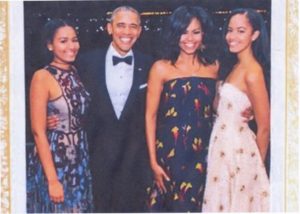
Obama’s last Christmas card

Barack-Obama-family
Image: White House

The first you know it’s getting close is when you receive the first Christmas card. Like many of you, though, we’ve been receiving fewer cards each year as friends and family switch to email and social media.

But it was so nice of Barack, Michelle and the girls to remember us! #dontleave

We are organising a ‘Secret Santa’ gift-giving ritual. This means if there are 10 people coming for Christmas dinner; each person buys one gift to an agreed value. The Secret Santa organiser assigns shopping tasks – “You can buy a gift for Auntie Val. I heard her grumbling last week that her pruning shears have had it.”

So rather than 10 people each spending about $599 (the average Christmas gift spend, according to a Commonwealth Bank survey), you each spend $50 and there’s a good chance the person receiving the Secret Santa gift will get something they actually want/need.

An international survey by ING Bank conducted in October found that 82% of Europeans received one or more gifts in 2015. One in seven (15%) were given something they didn’t appreciate, didn’t like or couldn’t use. The proportions were only slightly different in the US and Australia. Of the 15% who admitted to receiving unwanted presents, more than half kept them anyway. Others gave them to someone else (25%), sold them (14%) or tried to return them to the store (11%).

The Australian Bureau of Statistics has estimated that $798 million of the $8.8 billion spent on Christmas loot goes on unwanted gifts.

There are three basic options if you want to rein in your Christmas gift spending. The family could agree to (a) not buy gifts at all (b) organise Secret Santa or (c) donate money to organisations like World Vision or Oxfam; the latter uses the money to buy practical items for poor African villages. The gift recipient receives a certificate, which says something like, Congratulations (name), you have bought a goat for a village in Sudan. The certificate goes on to explain what a goat can mean for a poor African village. You can pin the certificate to your office noticeboard and feel virtuous for a whole year. (Or as Little Brother says, you could go to a country that doesn’t celebrate Christmas and give the whole circus a swerve.)

Some children get $200 cash and more!

The Australian and Securities Commission (ASIC) website Moneysmart, which aims to educate consumers, compiled an Infographic (see fact sheet link which shows how much money Australians spend on Christmas gifts. The average spent on gifts ranges from $401 (South Australia) to $548 (NSW). Sixty percent used savings when they went shopping, 20% used a credit card, 10% borrowed money from family and friends or used a bonus/tax refund and 10% used lay-by. Of those who used a credit card to pay for Christmas, 80% paid it off within three months.

Nine out of 10 children received some cash as Christmas presents with 20% receiving between $100 and $200 and 22% more than $200! Boys spent the cash on console games (45%), computer games (24%), and other games (22%), put the cash toward saving for a big item (31%) or banked it (43%). Girls spend the cash on clothes (40%), music (22%) and going out (20%), though 29% put the money towards saving for a big item and 45% put the cash in the bank.

Australians will spend all-up around $48.1 billion in the six weeks leading up to Christmas, with this weekend and December 23 and 24 identified as the bonanza shopping days. This massive spend includes $19 billion on food (we all have to eat) and $2.8 billion on on-line shopping. The Retailers Association of Australia and Roy Morgan Research say Victoria will show the biggest increase in spending ($11.6 billion, up 4.6% year on year followed by Queensland ($9.5 billion, up 4.2%).

And if you’re wondering on Christmas Day how Little Johnny could afford to give Dad the boxed set of Game of Thrones, ARA’s research shows that shoplifting will cost retailers $1.4 billion over the six-week period.

Of course buying gifts is only one part of it – then you have to buy wrapping paper and either wrap presents or pay a professional to do it for you. Australian Ethical and Clean up Australia provide some tips for people who feel bad about the 50,000 trees that get pulped every year to make your Christmas gifts look appropriately festive.

Australians use more than 8,000 tonnes of wrapping paper each year and, as Clean Up Australia chairman Ian Kiernan points out, foil sheets are hard to recycle. His suggestions for a sustainable Christmas include:

  • Rather than buying someone a physical gift like a CD, consider buying them a service, like a singing lesson;
  • Buy yourself a real Christmas tree – they smell fresh, last well, and are biodegradable through your green waste (they can also be planted out);
  • Cut back on gift wrapping, resize large cards to make gift tags, get creative with newspaper or magazines for wrapping presents and recycle the wrapping that you can’t use anymore.

“It’s not over till it’s over and you throw away the tree” (LWIII)

There is an unhappy trend to brand someone trying to moderate spending at Christmas as a Scrooge or a Grinch. The inference is we are spoiling the festive season by questioning excessive consumption.

And then there are Christmas cards, which come in ever-diminishing numbers, despite assurances that the market is doing better than ever.

The Greeting Cards Association of Australia says Australians spend $500 million on greetings cards and ours is the world’s third largest market per capita.

In the US, Christmas cards represent about 25% of the $6.5 billion greeting card market, where sales are steady, although profits are declining. Marketing expert Brandon Gaille expects global sales to keep declining as multiple issues confront the industry, including rising postal rates and competition from DIY cards and low-cost e-cards.

The Obama family sent out their last Christmas card this week, which created a sentimental outpouring around the hashtag #dontleave.

The cards are sent only to friends, supporters, White House staff and the media (which explains the hurriedly scanned copies on Twitter, Facebook and just about any traditional media outlet you can name).

The White House can afford to send out at least one million* cards featuring the Obama family’s last hoorah. Since 1960 the incumbent President’s political party has paid for this indulgence.

Back home, listeners told 720 ABC Perth the cost of postage is the overwhelming reason people are resorting to emails, texts and social media messages. I can vouch for this, having spent $70 at Australia Post sending a few calendars overseas and buying a dozen Christmas cards and stamps for friends who don’t do email.

Even though you get a 35c discount when buying card-only stamps, the high cost of postage is pushing more people to compose annual “e-letters” (complete with happy snaps).

But as one ABC Perth listener lamented, “You can’t really put an email on the mantlepiece, can you?”

*Ronald Reagan set the one million White House Christmas card benchmark in 1983 but was upstaged in 2009 by George W Bush Jnr (1.5 million).