Dangerous Australia Revisited

This week’s essay is brought to you by the letter S – snakes, sharks, spiders, scorpions, stingrays, stonefish and sand flies. Some might dispute the description of the saltwater sand fly or midge as deadly. But itchy bites can sure take the edge off a beach holiday. The odds of being bitten by a sand fly in their territory (saltwater marshes) are probably 2-1, with longer odds for those experiencing extreme reactions (me and She).

Of course there are many other potentially deadly Australian critters, names starting with other letters – blue ringed octopus, crocodiles, dingoes, marine stingers, mosquitoes and so on.

At Cape Hillsborough, North of Mackay, sand flies dominated every casual conversation. The trick is to slather yourself with insect repellent before you go outdoors and avoid being out in the early morning and late afternoon. The other sensible tip (which few people heed when at the beach) is to cover as much skin as possible with long shirts, trousers and socks. Some swear by taking vitamin B or variants but this has not been clinically proven to make you less attractive to midges/sand flies.

When my nephew in New Zealand was first planning to bring his kids over for a tour of the Gold Coast theme parks, he had been watching a National Geographic TV series, Australia’s Deadliest. The weekly tales of snake bites, shark attacks and rogue crocodiles all but put him off. Yes, it is true we have some lethal critters, but the chances of becoming a victim are not high.

A study by the University of Melbourne concludes you are more likely to be killed by being trampled on or thrown from a horse.

While we would not want to diminish the horror of a shark attack, fatalities averaged two per year between 2000 and 2013. The number of crocodile fatalities was lower still – 19 deaths over 13 years. Having said that, if a shark or croc gets you, chances of survival are slim.

Near the end of an amphibious vessel tour at 1770, the skipper encouraged guests to enjoy their stay, but added a warning. Four people had recently been stung by stonefish in the shallows around this estuarine settlement. Stonefish, as the name implies, camouflage themselves in the sand, trying to look like the spiky rocks they so resemble. If you stand on a stonefish, it will inject a barb into your foot causing immediate and dire pain. Stonefish stings are not usually fatal, but the pain is such you may wish you were dead. First aid measures include putting the affected foot in a bucket of warm water, gradually adding hot water until it is as hot as you can stand. This is an interim pain relief measure while you wait for paramedics to arrive and administer heavy duty pain killers. You will probably be taken to hospital and, if necessary, have the barb surgically removed. Some intrepid reporter may well track you down and write a story.

Having taken this information on board, we were cautious when strolling on the Cape Hillsborough beach at low tide. My sister-in- law took pictures of sea creatures around exposed rocks, including today’s photo. We say it may or may not be a blue ringed octopus, as we have sent the photo in for ID and have not yet heard back.

Blue ringed octopus rarely bite people, but if they do, the venom can be fatal. They live in tidal pools, remaining out of sight during the day and hunting by night. As with all small marine critters, best left alone, eh. The more common venomous sea critters in North Queensland, which keep people from swimming between October and May, are marine stingers. All manner of jellyfish live in the warm tropical water, the most venomous being the Australian box jellyfish. If stung, the best medical advice is to pour vinegar on the stings and carefully remove tentacles (this will stop more stinging but not the pain).  Call 000.

As for snakes, I can identify tree snakes, pythons and Red Belly Blacks. The latter are venomous but shy and will rapidly retreat if you leave them room. Not so the Eastern Brown, which will look for an excuse to attack. If you are out bush walking in Australia and spot a snake, stop, then quietly back up. We did this recently on a bush walk in Maleny, when spying two pythons who were either fighting or making baby snakes. Either way, we gave them a wide berth. The Royal Flying Doctor Service says 3,000 people were bitten by snakes in 2020. There were 550 hospitalisations and two people died.

Not to mention funnel web spiders

We were planting a tree down the  bottom of our half acre block and I pulled out the remnants of a tree root. Up jumped this big black hairy spider which reared up on its back legs. (I went inside and made a nice cup of tea and googled funnel web spider). Some members of the funnel web family produce venom which is toxic to humans. There have been no reported deaths since development of antivenene. All the same, if you see a large black hairy spider which appears to be aggressive, move well away.

Snake, shark and croc attacks are page one fodder for media hyperbole, so here’s some perspective to balance the shock horror headlines. A study by Melbourne University found that In the period 2000-2013, 26 people were killed by sharks and 19 by crocodiles. In the same period, 74 Australians died after being thrown or trampled by a horse.

Dr Ronelle Welton, from the University’s Australian Venom Unit, looked at hospital admissions data from the Australian Institute of Health and Welfare, as well as Australian coronial records from 2000 to 2013.

During that period, snakebites killed 27 people, the same number as bee and wasp stings, she told the ABC. Hornets, bees and wasps accounted for 27 deaths, some of them people allergic to stings. I did note that five people died from tick bites, recalling my three-day stay in hospital in 2017 after suffering an allergic reaction.

Australia’s venomous and dangerous animals can and do harm humans, but let’s keep it in perspective; 1,217 Australians died in traffic accidents in the year to March.

Three of the six people in our family convoy experienced extreme reactions to sand fly/midge bites, Our resident nurse inspected our bites and asked if anyone was feeling unwell.

“Irritated, yes. Unwell, no.”

Today we’re arriving on the Atherton Tableland for a family gathering. I expect midge bites will be a topic of conversation:

“Check out Bobby’s welts – poor bastard!”*

*Aussie term of endearment
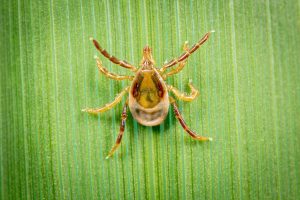
The scary truth about the paralysis tick

paralysis-tick
Paralysis tick (Ixodes holocylus) The Conversation

It is sometimes difficult to separate the facts about the paralysis tick from the myths and home-grown remedies suggested by well-meaning folks. You may have heard some of the suggestions on how to combat the tiny, toxic parasite that can kill dogs, cats and humans. The home-spun remedies include (for removal) kerosene, a hot needle, a hot match, Vaseline or methylated spirits.

No, you need to first kill the tick, by freezing it or using a scabicide. The Australian Society of Clinical Immunology and Allergy (ASCIA) recommends using a ‘freezing’ spray commonly used to treat warts and available at pharmacies.

A cream used to treat scabies also does the trick but you need to leave it on for 20 minutes before removing the tick, with tweezers or patented tick removers (firm grip and a slight twist). Or if you have freeze-killed the tick, it should just drop off at some point. Experts are divided on which is the best approach.

While there are 75 different tick species in Australia, the primary culprit which can kill animals and cause a life-threatening anaphylactic reaction in humans is the paralysis tick or Ixodes holocylus. The paralysis tick occurs along the Eastern seaboard of Australia, primarily in wet sclerophyll forests (the ones with ‘gum’ trees and a lower layer of rainforest plants or shrubs) and temperate rainforests).

Since I went to an information workshop organised by Barung Landcare in Maleny, I have been somewhat over-zealous in my daily inspections of the moist parts of the body where ticks latch on. At times, I imagine I have a tick, when it is more likely a mosquito bite, but one can never be too cautious.

In the last month She Who Picks Peaches without Wearing a Hat reported in with ticks (i) behind her ear and (ii) on the crown of her scalp. In both cases these were the paralysis tick at the nymph stage which I killed with a scabicide then removed in the recommended manner.

“Little bastards,” quote SWPPWWAH.

Everyone agrees: the abnormally cool spring coupled with recent rains has raised the paralysis tick threat to critical. Then other day I ran out to the washing line to take in clothes before a storm arrived. This was the classic mistake – running barefoot on to the lawn where ticks can promptly run up one’s trouser legs. Imagine the horror when I picked up the (empty) laundry basket and saw two paralysis ticks scuttling around inside.

“WTF,” I exclaimed to SWPPWWAH. “How do they do that?”

According to a rural myth, the little bastards can jump, like fleas. Well, no, I left the laundry basket sitting on the lawn! But ticks do ‘quest,’ that is, they hang off the end of a blade of grass or a plant/tree branch waiting for a host to brush by. Ticks go through three life stages from the time a female lays about 3,000 eggs (larva, nymph and adult).

As dedicated readers may recall, I had what was described as a mild to moderate anaphylactic shock reaction to a paralysis tick bite in 2013. (Jeez, what must it be like to have a major reaction?) If you want to relive the ordeal (I don’t), go here:

I now carry an Epipen everywhere I go. I also kit myself out in light coloured gardening clothes, gumboots, hat, smother myself in insecticide and hang a tick repeller around my neck. The latter emits an electronic pulse said to repel ticks up to three metres.

There were two speakers at the Maleny workshop, retired vet Leigh Findlay (who spoke about dogs, cats and ticks) and Dr Ted Chamberlain, senior medical superintendent at Maleny Soldiers Memorial Hospital. The 69 people who attended mingled outside the function room exchanging tick anecdotes and describing their most recent attack.

Attendees included several people who have a recently diagnosed type of tick bite allergy called Mammalian Meat Allergy or MMA. Once their lives have been saved the first time, MMA sufferers will doubtless be advised to avoid eating red meat. Mammalian meat allergy is the result of acquiring the carbohydrate, alpha-gal, from ticks.

Dr Chamberlain told workshop attendees that Maleny hospital sees people with a tick bite on average once a week and 20 serious cases of anaphylaxis each year. He added that before he came here, he’d seen two cases over a 25-year medical career.

Dr Chamberlain identified two ‘hot spots’ for ticks – the Blackall Range (Sunshine Coast hinterland) and the northern beaches of Sydney. He believes there are two reasons for the increase in ticks. One is the change in climate, the other is that people unwittingly create tick habitat by allowing native vegetation to flourish. The main issue with maintaining natural habitat is that it encourages tick hosts including bandicoots and possums.

But are there ways of ridding your habitat of ticks in general? The number one solution is the insectivorous Guinea Fowl. There is a practical problem with keeping guinea fowl on your land as you can tell by (listening) to this 30 second YouTube video

Guinea fowl eradicate ticks (and other insects) by systematically stripping grass and plant stems with their beaks. Free-range chooks will also peck away at ticks and other insects, but not so effectively.

A few myths busted

Ticks do not fly or fall out of trees. If there is one latched on to your head it has been crawling around on your body for at least two hours;

The size of the tick bears no relationship to the severity of the allergic response;

Do ticks cause Lyme Disease? You may have seen an episode of Insight on SBS last year when host Jenny Brockie asked that question. The science says ‘no’ but an acrimonious debate has arisen as people succumb to strange illnesses which seem related to tick bites.

Certainly more research needs to be done to explore the genesis of “lyme-like illness” but for now, I’ll stick with the science answer: “…there is no definitive evidence for the existence in Australia of B. burgdorferi, or any other tick-borne spirochaete that may be responsible for a local syndrome being reported as LD.”

Nevertheless, a tick bite can cause swelling and infection and induce flu-like symptoms. Cases of tick-borne Rickettsia and Babesia have been documented in Australia. Some ticks bites can result in life-threatening illnesses including tick typhus and severe allergic reactions. It is now broadly accepted that forcibly removing a tick without killing it first may increase the severity of any allergic reaction.

The University of Sydney, which has been conducting research in this field for 12 years (with input from Dr Chamberlain), says the best method of avoiding ticks is to stay away from known tick infested areas.

Right. I’m looking out the window here at our serene country environment, the green rolling hills, the native trees blowing in the wind, native birds flitting about, the creek burbling away at the bottom of the block; the peace and quiet.

Not bloody likely.

(Paw note: I removed a 2mm long tick from the dog’s lower eyelid(!) last night. Amazing to me was that he lay passively in my lap while I poked around trying to get a good grip on the nasty little parasite that was causing him discomfort. The dog is on tick/flea preventative medication, but it is important to check them regularly anyway. Ed)

F

What rhymes with rhinitis

Taken with a Nikon D3s and 14-24 lens. 7 shot HDR at f/5.6. www.elviskennedy.com
Photo Elvis Kennedy https://flic.kr/p/a3EtMY www.elviskennedy.com

The proper term for what ails 4.6 million Australians is ‘seasonal allergic rhinitis,’ more commonly known as hay fever. The latter name has stuck, even though scientists have known that grass pollen was the key culprit since the late 1800s.

I surely don’t have to tell you this is one of the worst springs on record for seasonal allergies. But I will.

If you live in Melbourne and suffer from asthma and seasonal allergies, this has been and still may be a life-threatening year.

American and UK media outlets pounced on Melbourne’s “thunderstorm asthma’’ story – six dead and five more on life support, brayed NBC, portraying it as a ‘freak’ event, though Melbourne has previously had four storm-induced asthma outbreaks. The city’s emergency services were swamped, with 8,500 receiving hospital treatment.

NBC (and other media outlets) explained that the storm caused saturated ryegrass pollen grains to ‘explode and disperse’ over the city. About a third of patients reported never having had asthma before. Inter alia, about half of asthmatics have allergic rhinitis or vice versa.

The Telegraph in the UK tracked down the Melbourne scientist who discovered and named the phenomenon in 1992 (when two people died after two consecutive storms). Cenk Suphioglu, from Deakin University, said authorities should be ready to issue public alerts during such events as Melbourne is a well-known allergy hotspot. Previous epidemics occurred in 1987, 1989 and 2010.

So I thought it was (again) time to start taking seasonal hay fever seriously. Like so many of Australia’s rhinitis sufferers, I reach for the antihistamines too late – the pollen has already got to me, hence tissue boxes placed strategically around the house. If we could all be bothered, the early warning systems are in place to take prophylactic action.

Melbourne University botanist Associate Professor Ed Newbigin said in August that hay fever sufferers were set for a worse-than-usual season.  He told ABC Rural a wet winter had contributed to spring growth in grasslands across western Victoria.

These grasslands released “huge amounts of pollen” when flowering and this is then carried to the city by northerly and north-westerly winds.

website, a free service provided by the University of Melbourne and the Asthma Foundation Victoria. This useful website now also includes pollen count forecasts for Brisbane, Canberra and Sydney. Pollen is measured as grains of pollen per cubic metre of air.

Dr Newbigin told FOMM yesterday pollen counts range so widely there’s nothing he can call a ‘norm’. Pollen count ranges are 0-19 (low), 20-49 (moderate), 50+ (high) and 100+ extreme.

A pollen count of 19 to 25 grains can make a sensitive person feel rather unwell. So Melbourne’s extreme count of 154 on Sunday November 6 explains a lot about the pressure on hospital emergency departments.

It starts with itchy eyes and sneezing

Allergic rhinitis symptoms are caused by the body’s immune system mistaking inhaled pollen for a virus, hence chronic inflammation of the eyes and nasal passages.

Symptoms include sneezing, runny, itchy, stuffy nose, itchy, watery and red eyes, itchy ears, throat and palate, headache and a “woolly headed feeling.” Allergic rhinitis predisposes people to sinus infections and poor quality sleep, leading to day-time fatigue.

Writer Suzanne Moore, a new convert to the World of Snot described her world of misery well in The Guardian.

“Wearing my sunglasses indoors, struggling to tear into some new drugs, my daughter looks alarmed.”Mum, what are you doing? You look like a crackhead.”

“I know I look stupid; I feel even more stupid. Hay fever does that.

“Apart from turning your body into a snot factory, you feel perpetually fogged up; not really there at all. It’s a miserable thing.”

So do you find it just a tad worrying that medical science still does not have a cure for seasonal allergic rhinitis? We sufferers form an orderly queue at our local chemist shop, ready to try anything new.

The best known relief remedies are, in no particular order, antihistamines, nasal sprays, steroid sprays, and, for the determined, few, a series of injections designed to desensitise the sufferer.

The newly afflicted Suzanne Moore says 20% of people in the UK are affected by allergic rhinitis. Allergy UK says Brits spend close to a billion pounds on treatments.

The one in five Australians affected spend a total of $120 million a year in over-the-counter remedies, so one could be forgiven for thinking there is no real incentive to find a cure.

The preferred treatment for someone who suffers acute attacks of allergic rhinitis is to start the patient on a preventative (corticosteroid) nasal spray before the onset of the hay fever season (in Australia September-December).

Some will go further to lead a normal life. As a lad, West Tigers prop Tim Grant took on serious treatment. The Sydney Morning Herald revealed that after he was diagnosed as a 12-year-old with a grass allergy, the NRL star endured three years of injections to build up his immunity so he could train and play.

Rhinitis rare in the 19th century

In the 19th century hay fever was regarded as something that afflicted the aristocracy, possibly because the landed gentry could afford to consult the best physicians. Without exception, they prescribed rest and recreation by the seaside or at an alpine lodge in Europe. John Bostock, a British physician, spent most of his life studying an ailment which befell him in June every year from the age of eight. An article in the Journal of the Royal Society of Medicine says a speech by Bostock in March 1819 about summer catarrh is the first description of hay fever as we know it. The condition was so rare in pre-industrial revolution Britain it took Bostock nine years to find 20 other people to put under the microscope. Bostock experimented on himself with remedies and tonics including bleeding, vomiting, opium, mercury, cold bathing and digitalis, all to no avail.

It may come as no surprise to find that Canberra is the hay fever capital of the country, given the woolly-headed thinking emanating from Parliament House. Scientists attribute this status to the diversity of plants in the Australian Capital Territory which produce allergen-laden pollen.

One in 5 people living in the ACT reported suffering from long-term allergic rhinitis, followed closely by Western Australia, Victoria and South Australia. The lowest rates occur in Queensland and New South Wales (half that of the ACT). Dr Newbigin has previously said that as the planet warms and the population grows, it will be important for allergic rhinitis sufferers, health experts and city landscape planners to be aware of what environmental change may mean for population health in allergy hotspots like Canberra.

A map (below) usefully identifies where in Australia you are more likely to be afflicted. That’s not to suggest you should move to a low-allergy location. Some 95% of sufferers are allergic to grass, so their symptoms are destined to return, wherever they live.

But as John Updike once said, I moved to New England partly because it has a real literary past. The ghosts of Hawthorne and Melville still sit on those green hills. The worship of Mammon is also somewhat lessened there by the spirit of irony. I don’t get hay fever in New England either.”