When depression is not just a dip in the road

Steve Andrews Black Dog Ride

English is a curious language. Often there are two or more words that sound the same but are spelt differently and mean different things. Sometimes a word can have two or more meanings, even with the same spelling. At Purnululu National Park in Western Australia (previously The Bungle Bungles), we woke at 6am after what used to be called a three dog night (the dogs get on the bed to keep you warm). We rugged up and went to the camp kitchen where a young German backpacker was making breakfast.
“Chilly this morning,” I said, as you do.
“Sorry? What is this chili?”
I explained that chilly mean cold, brisk, crisp etc.
“No, no – chili is hot. How can chili be cold? That makes no sense.” (Tempted to  start an ESL teacher’s explanation of homophones, but desisted.)
The word “depression” has several different meanings in the language, although most of us would immediately identify with what used to be called melancholia. Its other meanings include: An area sunk below its surroundings; a hollow; a region of low barometric pressure. The word is also used to describe the economic collapse of the early 1930s.
This train of thought picked up speed after we encountered 65 people riding 55 motorbikes around Australia to raise awareness of depression and suicide. Led by Steve Andrews, an organised man on a mission, the Black Dog Ride aims to circumnavigate Australia in 32 days, along the way taking its message to small communities, schools, mining towns and areas of large cities, where Steve says the incidence of depression among young people is serious.

As all sufferers will have found out, many after years of self-medication, depression is a psychiatric disorder characterized by an inability to concentrate, insomnia, loss of appetite and apathy. Sufferers can also have feelings of extreme sadness, guilt, helplessness and hopelessness, and thoughts of death. When you put it like that, a prolonged weather low over the coast isn’t so hard to take.

We caught up with Steve and convoy at the Nanutarra Roadhouse, 293 kms south-west of Tom Price, on Monday. The roadhouse was doing exceptionally well from this scheduled stop, with fuel at $1.94 a litre and a big run on pies, sausage rolls and chips.

The Black Dog Ride left the central coast of New South Wales on July 24 and is scheduled to arrive at Bondi on August 24. Each day these 55 motorbikes, some with sidecars or trailers, rack up between 400 and 800 kilometres. (Quite an ask, says Ed. – we struggle to do more than 300km in a day and we don’t have to worry about keeping our balance.) The charity ride has three support vehicles (sponsored by Holden), and organisers keep in touch via mobile phones provided by Telstra. A film crew is also travelling with the group.

I tracked down Steve, a fit-looking 60 year old whose sunburnt face is showing signs of the constant exposure of riding a 1200cc BMW into the head winds they’ve been experiencing out in the desert.

He says the incidence of depression and the air of hopelessness that goes with it is rife among adolescents in the top end of Australia, particularly among indigenous communities.
“But it’s not just restricted to indigenous communities – it just happens to be worse there.
“We’ll be going to visit schools down south and talk to kids about the importance of looking after your mental health.
“It’s a serious problem among the young kids today and a lot of it is to do with the social media and 24/7 connectivity which is putting a lot of extra pressure on them.”
Steve decided to ride around the country on his own in 2009 to raise awareness of depression and suicide after having personal experiences with family and friends. He posted his itinerary and people gradually started taking an interest, and over time he started to make connections with bike riders all around the country.
“I had the feeling that there were other people that had the interest and the passion that I had and the back story.
“That led me to start what became known as the Black Dog Ride to the Red Centre the following year. We’ve done that ride for four years, with 300 riders last year.
“I thought it was time to do something different this year. I felt like a ride around Australia and thought it would be great to bring members of this Black Dog family along with me. People have it on their bucket list of things to do and support a great cause at the same time.”
Tragically, the Black Dog Ride lost one of its members this week when the WA co-ordinator, Les James, was killed after being involved in an accident with a truck on the highway near Geraldton. He had been about to join the group, who were devastated by the loss, but determined to continue the ride. 9NEWS reporter Simon Bouda, who is on the ride, said Mr James was a devoted family man who had a passion for motorcycling that led him to become involved with the Black Dog Ride.
“This accident has shattered everyone on the ride, there’s no doubt about that,” Mr Bouda said. “But the ride will continue because we feel it should continue as a mark of respect for him and what he believed in, which is starting the conversation about depression.”
As someone who has put up with every kind of black dog there is for many years, I salute these champions of the cause, taking their message to remote Aboriginal (Let’s start using the term First Nations- Ed.) communities like Halls Creek and Fitzroy Crossing.
As I now only pay $6 a month for my regular maintenance dose of anti-depressants compared to the ‘non-concession’ cost, I’m going to donate the difference every month to the Black Dog Ride. These generous people have raised more than $1.5 million for mental health services. This year half the money is going to Lifeline and Mental Health First Aid. Send these guys some money or at least send this story to someone you know who has an affinity with the subject.
Postscript: We were saddened to hear about the death of brilliant actor/comedian Robin Williams, who reportedly suffered from depression. I have posted a separate piece on my website about this story and the media’s approach to the subject of suicide. http://bobwords.com.au/suicide-and-the-media/

Suicide and the media

Not so long ago suicide was something you rarely read about in the press, due to an informal agreement between the media and the “helping professions” not to overly publicise the how and where aspects of suicide, as it is believed to spark copycat suicides. The advent of online journalism, social media and the 24 hour news cycle has more or less consigned that gentlemen’s agreement to the too-hard basket. The Australian mentioned the word suicide in almost 4,000 articles in the past five years. While not to say all or any of these articles were reports of specific suicides, it means the subject is in the news on a fairly regular basis.
Apart from these instances when someone famous tops themselves (Aussie parlance), the media usually behaves itself and writes about suicide in a restrained way. But when it comes to celebrity suicide, the media feeding frenzy is awful to behold. Whenever someone as well-known as Robin Williams takes his own life, the media cannot ignore it and instead of the coy shorthand (“police say there are no suspicious circumstances”), which is even now used by the ABC or local newspapers, we get a detailed description of where and when, the method used and much speculation about the why of it all.
There is a view that some suicides are newsworthy, and coverage could raise awareness in the community about the need to seek help. But as a report this week in the Sydney Morning Herald observed, going into such detail about the circumstances of Williams’ death, including the means of his suicide, could have a negative impact on vulnerable members of the community. Releasing such detail could increase the likelihood of distressed individuals making similar attempts on their own lives, Lifeline chairman John Brogden said. And there has been a high degree of criticism on social media about the media’s careless reporting of the Williams’ death. A family spokesperson said that saying it was a suicide ought to have been enough.
Suicide remains the leading cause of death for Australians aged between 15 and 44. The Australian Bureau of Statistics Causes of Death, 2012, reported deaths due to suicide at 2,535. Men accounted for three out of every five deaths. The suicide rate was 2.5 times higher for those of Aboriginal and Torres Strait Islander descent.
But despite colourful claims in the media that suicide is “out of control”, the incidence remains in a band of between 9 and 11 people per 100,000. (By comparison, in 1963 the incidence of suicide was 17.5 in every 100,000 people and has never been surpassed).
Whatever the actual rate, it is a needless waste of life in any event. As the ABS observes, these preventable deaths point to individuals who may be less connected to support networks, less inclined to seek help or less intimately connected to people who might otherwise be aware of problems.
Whether the incidence of suicide is declining (and data from the past decade suggests it is), this is a notoriously difficult field for statisticians and one is advised that interpreting this data can be misleading. The fact remains that 1901 males and 634 females took their own lives in 2012. In the prosperous, first-world country that is Australian in 2014, we need to do more work on figuring out why.

The Pilbara – a Google-free zone

Kalamina Gorge – Karajini National Park
Pilbara wide load

When I started this weekly essay three months ago, I was aware that from late June it would tend to have the flavour of a travelogue, given that we were about to set off on a three-month expedition across remote parts of this magnificent land. Now at the half-way point, coming to the end of a three-day stop at a bush camp in Karajini National Park, I’m doing it the old-fashioned way: who, what, where, when and why, the basics salted with philosophical musings about why the world is the way it is. My writing method is to start with an idea or a theme and cross over to the Internet when I want to find out stuff or check facts. We have all become so dependent on Google and other Internet search engines (yes, there are others), and what is (at present) a free service. It is like someone taking a 99-year lease over your memory and maybe someday making you pay when you want to remember things.
Here at Karajini National Park in Dales Gorge (known in local dialect as Nyingbungwana) campground, we have neither power nor mobile signal and only enough water to last us until we get to Tom Price on Friday. There are people here who have satellite dishes sitting outside their caravans, so I guess if you could be bothered you could find out what’s going on in the world. Last time we heard a radio news bulletin it began with reports on three separate murders in WA and then went on to talk about a sex offender who had breached release conditions by being around teenagers (he was fined $1000).
So now, in this remote part of the Pilbara, I can imagine how it might have been for the monkish scribes of yore, scratching away with a quill pen on the most rudimentary parchment; or for our original inhabitants, painting their handed-down stories on rock walls.
So I’m hammering away at my laptop in the shade of a Cypress tree, aiming to keep on writing until Windows 7 warns me to plug in to a power source or risk losing work that has not been saved.
If that happens, I will revert to pencil and notebook. If it’s good enough for David Malouf, it should be OK for me.
Meanwhile the tree under which I sit interrupts to admonish me for calling it a Cypress.
“I’m a bloody Mulga, you ignorant tourist. Your botanists named me Acacia aneura – you’d think they might have asked the local aborigines if we had a name.”
“Oh, you mean like Mount Nameless,” I say (biggest mountain in these parts). “I’m told the local name for that is Jarndunmunha.”
“That’s outstanding,” says the Mulga, shaking his branches in excitement. “You’re spot on, even if your pronunciation is shite.”
Just then She Who Has Gorn Orf Newspapers puts her cool palm on my clammy forehead.
“You need to drink more water,” she advises.
Shade is good out here in Karajini. While the temperatures are nothing like they were in the Kimberley, it is still hot and dry and those keen on bushwalking are warned to drink a litre of water for every hour of walking. We had just returned from a day of two-hour hikes down gorges to waterfalls and back, some of it in the middle of the day, which might explain the talking bush.
Wednesday our walks took us along the rim of Dales Gorge and then to the steep descent into the gorge, where walkers can either hike to Circular Pool or have a swim under Fortescue Falls. Or you can go further on to the Fern Pool (Jubula), a beautifully serene place of significance for local Aborigines.

Once the party of people from South Australia who were talking about AFL moved on, it was indeed a special place with its cobalt blue waters and bright green ferns growing around the base of ancient native fig trees, clinging tenaciously to the rock face.
One’s sense of place and awareness of the spiritual nuances of the land becomes finely tuned when sitting in the midst of Western Australia’s second biggest national park. If I had the Internet I could tell you which one is the biggest. Maybe you already know?
We came here from Port Hedland, a strangely fascinating industrial town, dominated by the iron ore shipped out on giant ore carriers every day of the week. Every day except Monday August 4, apparently.
The Information Centre, the Museum, and every shop was closed and all pubs bar one were closed for Port Hedland Cup day. We wandered around the deserted town, following the self-guided interpretive walk. It was a quiet day in port too, with only a couple of ore carriers moored in the harbour, but at least a dozen sitting way out on the horizon.
So we pressed on, after making sure we had enough good water to last four days, to the ancient gorge country 263kms south-west of Port Hedland. The road to Karajini is between Port Hedland and the major mining towns of Newman and Tom Price, so road trains are frequent, as are wide loads.
We have no idea what the equipment is or where it was going, but we were happy to leave it parked at a roadside rest area while we went on ahead.
Karajini National Park was declared in 1969 (it was then called Hamersley National Park), but it part of it was excised in 1986 to allow a new mine to start operations. There is a constant clash of values out here, between the needs of conservationists, tourists and miners. The traditional owners have a lot of say in how the park is managed today, but the prospect of more mining in the park is ever-present.
Karajini’s majestic scenery was brought about when massive rivers gouged away at the mountains over millions of years, creating distinctive gorge walls – layers of iron ore-laden sedimentary rock. The gorges are particularly special at sunset when the rock walls turn molten red. No comparison to the Grand Canyon, as it is hardly commercialised at all. The only public communication is limited to one card-operated public telephone.
So, now we’re in Tom Price, having done the mine tour (“know your enemy” –Ed) to pick up some WIFI and send this out. And we still don’t know who won the Port Hedland Cup.


Other People’s Dunnies

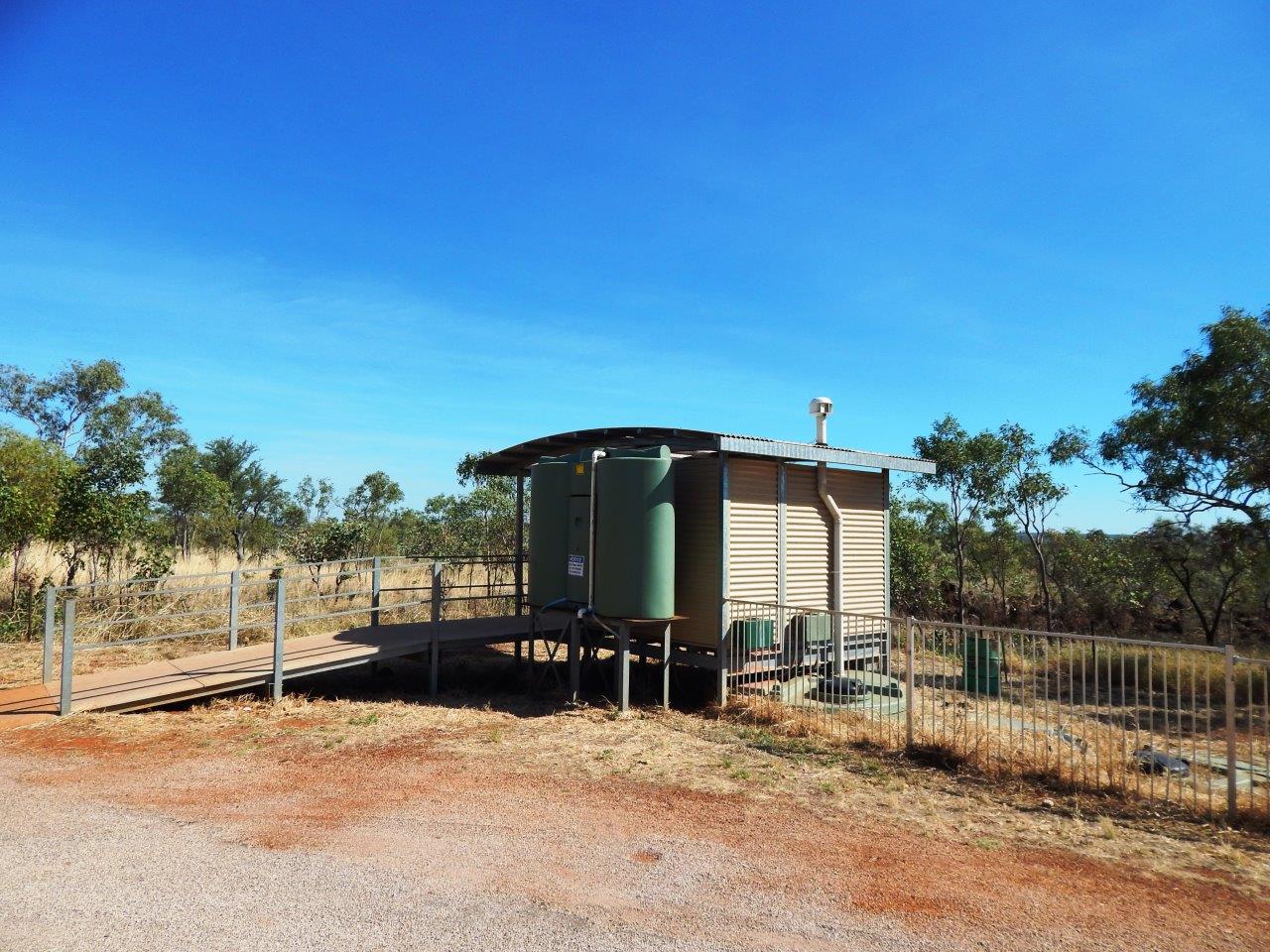
Dunny near DerbySo I’m standing in front of a smeary mirror in an outback caravan park washroom having a shave when this old bloke walks in.
“Owya goin?
“Great thanks,” (continue shaving while Old Bloke goes into a cubicle nearby).
“Whereyaheadin?” says the voice from behind the door (rustling of clothing and clang of belt buckle as pants hit floor).
“Goin’ to Katherine then headin’ west to Broome,” I say, going with the flow of outback caravan park talk.
The conversation continues, punctuated with a few strained noises, the kind of which we all unconsciously make at one time or another in such circumstances. I nick my face, distracted by this curiously intimate dialogue and the steam on the mirror. Old Bloke finishes his ablutions and (good thing) washes his hands.
“Safe travelling then,” he says, disappearing into the starry night.
When you set out in a 12-foot caravan to ply the highways and byways of this vast land with nothing save the Thunder Down Under portable loo, it is a given that you will end up using other people’s dunnies. For my non-Aussie readers, dunny is Aussie for toilet (or WC, Washroom, Bathroom etc)
This bush toilet (top photo) at a roadside rest stop just before the turn off to Derby in the western Kimberley, is a good example of what we call “the long drop”. At Karlu Karlu (Devil’s Marbles) in the Northern Territory, National Parks provide a number of these unplumbed toilets at the unpowered camp ground. Each is a fair distance away from the camp ground.
If you go at night and switch off your torch when you get there, the night sky lights up with panoply of stars, the likes of which city dwellers rarely get to see. A torch is an essential piece of equipment when traversing even a short stretch of desert at night. Shoes are a good idea too. And when venturing outback and using these sorts of facilities, it is a sound idea to take your own preferred brand of toilet paper with you, as often there will be none, or worse, those small boxes with 200 wafer thin tissues (17.5mm by 11.5mm in case you were wondering).
This brings me to a persistent urban myth out here in caravan park land. Grey Nomads, we keep hearing, steal toilet paper. Yes they do, one woman insisted. They take their battery-powered drills into the loos, dismantle the dispensers and liberate the rolls. If author and folklorist Bill Scott were still around I’d ask him if he’d heard of that one (Bill wrote a book about urban myths called ‘ Pelicans and Chihuahuas and Other Urban Legends’).
I’m sure the loo roll-stealing granny is an urban myth (a fictional story re-told so often it assumes veracity). I mean, if you can afford a 30-foot caravan and a V8 truck to tow it, why would you flog $2 worth of toilet paper? That would be a selfish and tight-arse thing to do. (tight-arse being Aussie for cheap, overly thrifty, etc).
One of the joys of getting to use other people’s dunnies is that you get to collect examples of over-zealous sign-writing. The most common ones in washrooms and public loos are reminders about flushing, what not to put down the toilet and instructions on how to use toilet brush (and when). Some are ambiguous: “Please flush” and underneath “Water is scarce – be considerate.” Some are poetic: “Even if you’re in a rush, don’t forget to flush.” (and a coy reminder to flush twice to get rid of the evidence).
The inside walls and doors of some dunnies are festooned with philosophical and sometimes unprintable remarks from fellow travellers, some of whom one might guess are sorely disaffected. In 2014, with a mean-spirited Tory government beating up the poor as if it were their fault, a theme is developing: “Retiree bludgers with $100,000 fifth wheelers ripping off social security,” reads one. “Stop grey nomad welfare cheats,” says another. A socialist scholar urges us to “Subvert the dominant paradigm.” “Frankie and Donna were in this stinky toilet,” reads another.
Those Grey Nomads who travel all the time and have their own amenities have one pressing need when they come to civilisation: they need some place to empty their chemical toilet cartridges. Some towns provide a dump point, which is like a public septic tank. The oddest sight I’d seen for a while was in Emerald, where we’d stopped to admire the giant Van Gogh replica painting in the park. Four large caravans, each towed by a $70,000 4WD, drew up to the kerb one after the other. From these vans emerged men of retirement age, each carrying a long heavy metal box. They proceeded in convoy to the public dump point, rid themselves of the week’s takings and returned to their vans, having also had their exercise for the day. Did they stop to admire the scenery? Nuh.
In bigger towns which get swamped with backpackers and other travellers, it is not so easy to find a public toilet. Increasingly, service stations, libraries, information centres and cafes are keeping the keys behind the counter, in a bid to keep out the riff-raff. In Katherine, a sizeable town in the Northern Territory, a local shopping centre provoked some outrage and claims of racial bias last year after hiring a security guard to police the toilets and ask for a $2 “donation”. “That’s un-Australian,” I protested, as we went to the information centre instead. I often wonder what Riff and Raff think about being denied a basic human right.
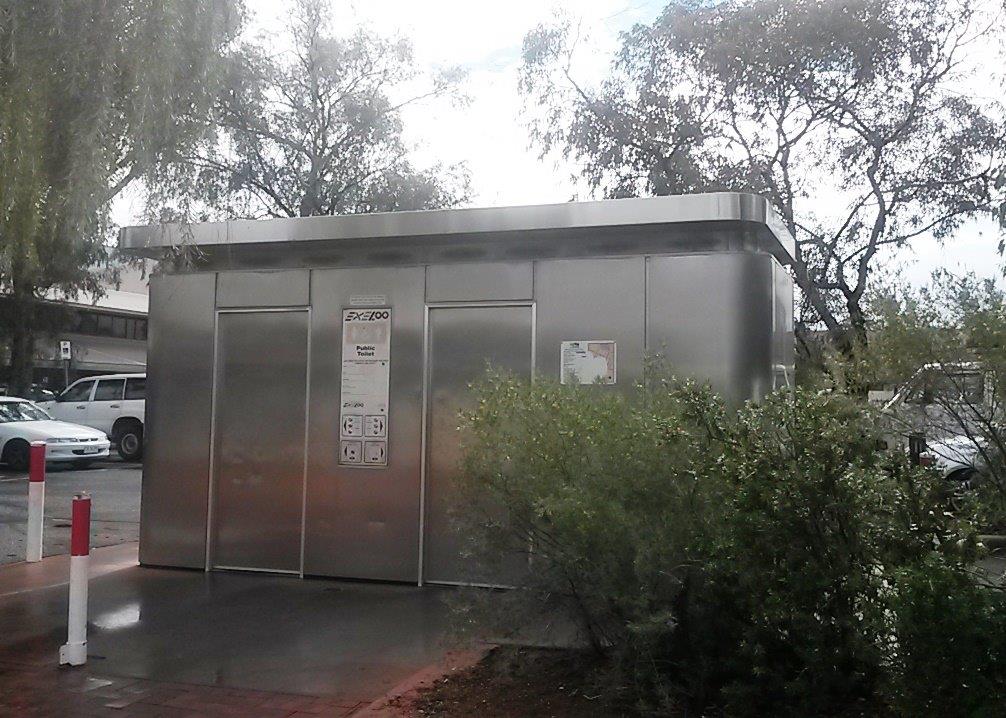
Hi-tech dunnyTown Councils are increasingly installing smart toilets to help combat instances of people vandalising toilets or using them as meeting places for purposes nefarious. So far we have found dunnies like this one in Alice Springs, also in Armidale and Hall’s Creek.
When you press the green button, the door slides open then closes with a metallic swish.
“Door larked,” says a metallic voice in an American accent. “You have 10 minutes before the door will un-lark. ” Well thanks for that – now I can’t remember why I came in here in the first place. Ah, right, the curry.
“Door will open in one minute 30 seconds…”

Defending our sovereign borders – Hoo-ah (0oRah)

US Marine convoy NTI was sitting outside a remote Northern Territory roadhouse in the sun, enjoying a Mars bar, musing on the whys and wherefores of life when I was somewhat startled by the appearance of a troupe of US Marines. I know we’ve been out of touch for a while, but surely this was a ‘friendly’ force…
They had stopped off at the Victoria River Roadhouse to buy snack food, use the latrines, saying y’all and howdy and that. She who reads Facebook when she can’t buy Newspapers said she encountered a few Marines coming out of the ladies loo. Neither of us was aware there were women in the US Marines, but there was the evidence right in front of us, wearing attractive salmon pink fatigues, faces already pink from the relentless northern sun. It wasn’t the first convoy of the day. A variety of road vehicles rumbled by, including a low loader carrying a grader, supply trucks and several armoured vehicles which I lack the technical know-how to accurately identify and describe.
The locals say the US Marine presence is building up. Private Nonamenopackdrill (Ms) from Oklahoma told our investigator they were bound for Bradshaw. Our reporter said “I don’t know where that is” and the private replied “Neither do I” and they both laughed – having a moment.
The Bradshaw Defence Area, 8 kms west of Timber Creek, is a training camp owned by the Australian Defence Force (ADF). The Bradshaw Defence Area is what Kevin McCloud would call ‘vast’. The ADF bought Bradshaw Station from private owners for $5 million and generously allowed the former owner to keep his cattle, on the proviso that he cleared the 990,000ha property of livestock. So Bradshaw then became a defence asset, sprawling 8,700 square kilometres in all directions, with rivers on two sides and pastoral properties on the other boundaries.
The first thing the ADF did when it bought Bradshaw was to spend $10 million building an all-weather bridge across the Victoria River.DSCN3138 Citizens are not permitted to cross the bridge, although it is quite the photo stop on the route that takes in historic monuments like explorer Augustus Gregory’s monument and a big old Boab tree thoughtlessly carved with the dates it was “discovered” by white explorers.
Most of the information about Bradshaw comes from the US-based Nautilus Security Institute www.nautilus.org, which keeps track of all things military. The Nautilus Institute says it is used by Australian, US, and forces and those from other countries (including Singapore) for infantry and armoured formation manoeuvres, ground and air live firing and bombing.
We got a bit more personal run-down on Bradshaw on a sunset river cruise 35 km down the 800 km long Victoria River, while being expertly piloted by skipper and tour guide Neville Fogarty, a long-time resident of the nearby town of Timber Creek, population 300, including four Aboriginal communities. This is one of the longest permanent rivers in Australia, named after a then newly crowned Queen of England, after Captain J.C Wickham sailed up the river on the HMS Beagle in 1819.
On our three-hour sunset cruise Neville regaled us with stories of crocodiles taking on Brahman cattle when they come down to the river to drink. Even though Bradshaw was destocked, about 40 head of unbranded cross-breed cattle, descendants of those that were shipped elsewhere, still run wild on the property. Apparently a bold croc will lie in wait, just under the water, and then lunge, grabbing the beast by the nose, dragging it into the water. The drowned beast is left to decompose some and then ripped up later by one or more crocs. Lovely.
If you can appreciate the analogy, amphibious apex predators patrol the banks of the river, making sure no rogue beasts cross their borders, while on dry land thousands of soldiers play war games, ostensibly for training purposes, but ready to repel boarders.
There is a long tradition of border patrols up here in the Territory. After the Japanese bombed Darwin and other NT locations, an Army unit, nicknamed ‘The Nackaroos’ kept vigil, patrolling the northern shoreline on horseback, aided by local aboriginal guides. It seems a futile task, given the vast expanse of shoreline across the top of WA and the Territory. Nevertheless, the Bradshaw pastoral lease is doing its bit to protect our sovereign borders. US Marines took part in exercises last year that involved the strange-looking Osprey, a tilt rotor aircraft with both a vertical take-off and landing and short take-off and landing capabilities. It is a bit hard to bring aircraft like that into the remote NT without people noticing.
The 2011 decision to allow a US Marine battalion to set up camp in northern Australia raised fears that it makes us more of a target than we were when it was just Pine Gap and other US-linked bases around the country. Nautilus says the main reason the ADF chose Bradshaw is the abundant space, a long, long way from large-scale human habitation. Despite the growing popularity of the Kimberley as a tourist destination, the area around Bradshaw is sparsely populated, not counting the 2,500 single accommodation units on Bradshaw.
US Marines last ‘invaded’ this part of the world back in September last year for full-scale military exercises. There is much speculation that exercises will be held earlier this year, with September in the Territory maybe a bit on the hot side for the Americans. Now most of you would know that there is a battalion of US marines permanently based in Darwin. It was controversial at the time and it still ought to be. We can put this one down to Kevin Rudd and Julia Gillard cosying up to the latest Sheriff of Washington, but we doubt Tony Abbott has plans to change this arrangement any time soon.
As the latest batch of marines milled about in the hot noon-day sun at Victoria River Roadhouse, a tall black man with the bearing of someone in charge shouted something that sounded like “H’okay. Move’m out.” The response was a chorus of “Hoo-ah” or maybe OoRah, a common Army and/or a US Marine response to command which apparently means “anything and everything except no”. “Hoo-ah” is also said to date back to the 19th century British army acronym for Heard, Understood and Acknowledged. Again, it could have been an appropriated from Indian (ie American First Nations’-ed.) chant.
On the other side of the Victoria River from the Bradshaw Defence Area lies the vast (there’s that word again) Auvergne pastoral holding, once owned by the listed Australian Agricultural Company and now owned by a British group. I once had shares in AAC but sold them after discovering the extent of that company’s involvement in live cattle export. In that sense, a big wide river separates our ability to stop funding something on ethical and moral grounds, while on the Bradshaw side of the river, our tax dollars ($29.2 billion 2014-2015) are put to work, with no right of veto.

The Pittsworth Solution

Afghan Mosque Alice Springs
Afghan Mosque, Alice Springs

Here’s a radical plan to help rejuvenate small-town Australia and send a message to the world that yes, we do have compassion for those less fortunate than ourselves. The Pittsworth Solution (I just picked a small town at random), calls for all 2,017 detainees on Manus Island and Nauru to be re-patriated to Australia to live in rented houses in small, affordable towns like Pittsworth. This is not an ideological plan; it is about economics, humanity and giving people a fair go.
In March, Australian management firm Transfield Services won an A$1.2 billion contract to run the country’s two troubled Pacific island immigration detention centres. The centres on Nauru and Papua New Guinea’s Manus Island together house about 2,107 asylum seekers (January 2013 figures). Transfield’s contract runs for 20 months, which works out to a weekly bill of $13.86 million, or about $6,600 per person per week. About eight times the cost of keeping someone in jail in Australia. The offshore detention model demonstrably does not work: it is broken and should never have been created in the first place. Nothing happens in these centres except boredom, despair, riots, suicides, mental illnesses, assaults and abuse. If this was a town of 2,107 people in mainstream Australia, the government would have declared a Federal Intervention by now.
My back of an envelope scheme envisages about 200 detainees repatriated to 10 small towns throughout Australia to live in rented houses, paid for by the Federal Government. The former detainees would receive the Asylum Seeker Allowance, (a fortnightly payment not unlike the dole, which lasts until the asylum seeker’s claim is heard and assessed). The Government would pick up all the basic costs, rent, bonds and utilities. After the maximum two-year period has elapsed, those whose claims have not been heard are automatically given a two-year visa extension with the same conditions. Once the asylum seeker’s claim has been assessed, he/she is either sent back to the country of origin, or given permanent resident status. Free market rules apply from that day on.
This subject was expertly canvassed in The Age last month by prominent barrister and human rights advocate Julian Burnside. I concur with his summary that the alternatives are more effective, humane, and less expensive than our present approach. The regional solution, as Burnside calls it, should restore our reputation as decent people – “something which has been tarnished and degraded by our behaviour over the past 13 years”.
The best part of any such regional solution is that the Federal Government money invested in a more humane scheme would be spent in local communities. While Burnside does not name specific rural towns, the National Farmers Federation says there are more than 90,000 unfilled jobs in rural areas. Asylum seekers would no doubt pick up work and everyone would benefit, if such a scheme was ever approved.
Even with a proportion of these small communities resenting the new Australians, it is surely a better option than locking up people who have not been charged with an offence or proven guilty of one. The 200 or so temporary residents moved to each of the towns would spend their allowance in local shops and, good grief, some of them might go to English language lessons and work on their plan for permanently settling in Australia.
Last time I looked, a lot of rural towns were doing it tough. A scheme like this could contribute about $6.5 million a year to struggling local economies – the kids could go to local schools, and if jobs were not readily available, the Asylum Seekers could be offered a scheme not unlike Work for the Dole, which would get them out into the community.
Now that Iraq has once again flared as a world trouble spot, there will be people saying that we don’t want religious zealots in our country, stirring up trouble. From what I read, the people stirring up the trouble don’t want to go anywhere else – they just want to run their own country according to their religious and political beliefs. The asylum seekers are the people who don’t want to know about sectarian violence; they want a better future.
This is not so different to the people from Belfast, Killarney and Carrickfergus who fled Ireland during the Troubles to settle in Australia. The Pittsworth Solution (or the Maleny Solution if we want to be even-handed about it), has a bit more going for it than the current model, which is to “Stop the Boats”, incarcerate the ones who got this far outside our sovereign borders, then sit on their hands and wait for the next government to come up with something better.
It is hard to believe that a year has passed already (July 19) since the Abbott government introduced Sovereign Borders. Shame on the Labor Opposition for failing to vote in the affirmative to close Nauru and Manus Island.
This issue has been clumsily handballed by governments of all creeds for far too long. It’s time to show some compassion and at the same time breathe some new life into rural communities.
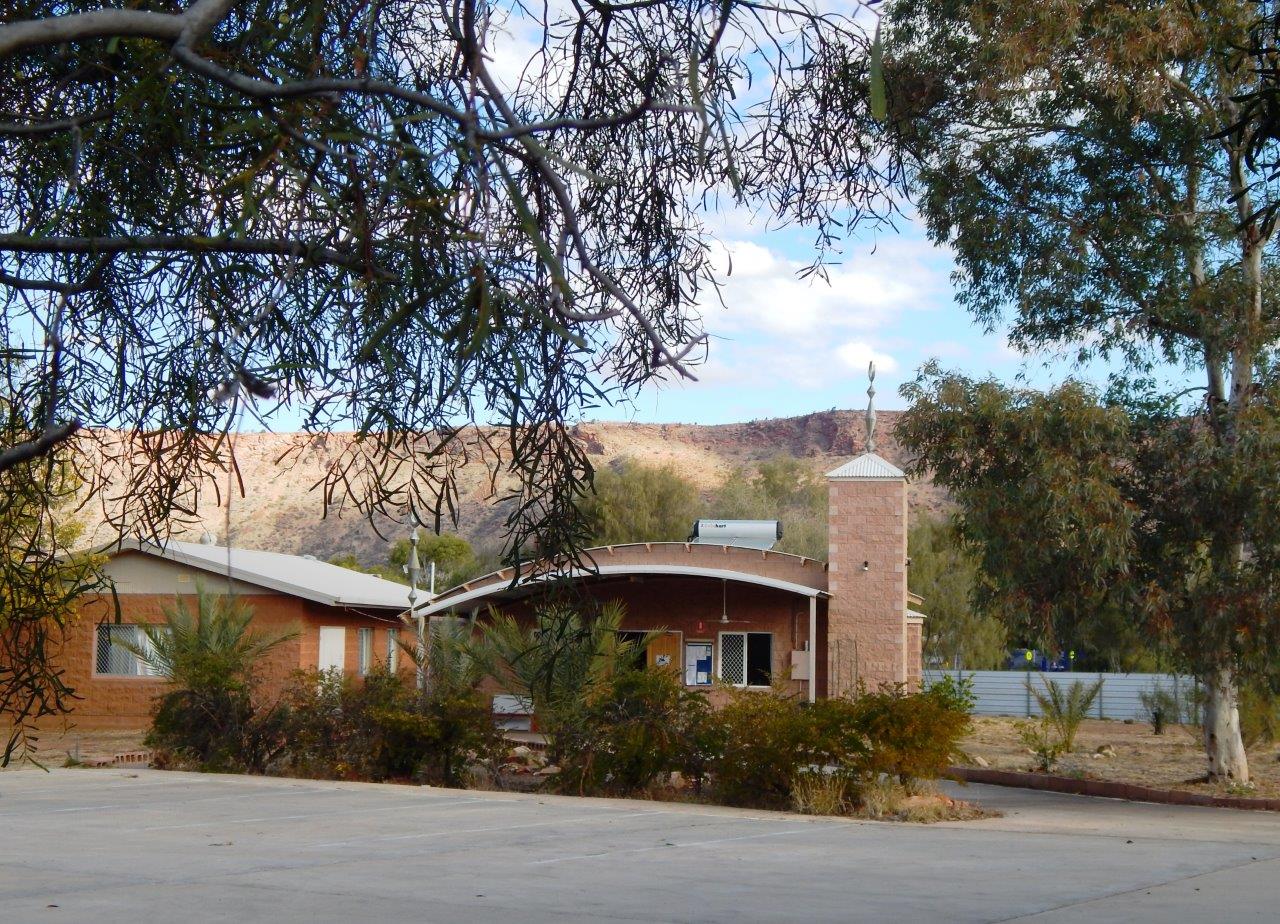
It all comes down to one thing: what are we afraid of and how can we overcome our apparently entrenched xenophobia? Take a wander through any suburb that has been tagged “ethnic” and you will find a colourful slice of life that deserves to be shared by all. Here in Alice Springs, where I’m finishing two of these essays to email before we set off into the NT/WA outback, there is an Afghan Mosque. It is not so surprising (though not widely known), that Alice Springs has an Islamic Society. It dates back to the pioneer days of the 1880s when thousands of cameleers from Afghanistan and Pakistan served as the railway of the outback. The Afghan Mosque is a modest building, nestled in a corner of the suburb of Larapinta with the McDonnell Ranges as a backdrop. It looks like it belongs there.

Don’t Drink the Water

Bob Obi Obi flood 2011Australia’s fickle weather can pick you up one day and dump on you the next; months of drought can turn in a heartbeat to flooding rains that ruin crops, damage property and erode the land. Rainfall can be prodigious – notoriously wet places like Tully in far north Queensland or Springbrook and Maleny (south east Queensland), can receive 100mm in 15 minutes and some of those places have recorded up to a metre of rain in a week or two. Unhappily for farmers in the arid interior who depend on water to grow food and sustain livestock, much of this precious water runs out to sea. Some is captured in dams, but Australia’s notoriously high evaporation rate together with the country’s growing population (not to mention industry), soon enough sucks the water level down to normal, then low. Authorities impose water restrictions, although the constraints are usually self-imposed. If the Toyota Prado’s been out in the bush, the owner is probably going to wash it, water restrictions or not.
We all waste water, alas, even those of us who claim to be conservationists. Washing dishes – run the tap until the water turns hot, and then put the plug in. You just let four or five litres run away down the storm drains. When brushing their teeth, most people let the tap run. There are so many ways in which first world householders waste water. Think of impoverished African villagers making the daily trek to the well to cart a bucket of not very clean water. Much about how we manage water comes down to common sense and having an unselfish attitude to this most precious resource. Without water, everything dies.
So we need to share it around. As Nelson Mandela once said: “Let there be work, bread, water and salt for all.” This nicely distils life’s necessities into one terse sentence.
Water is becoming big business in Australia’s agriculture sector where big global investment groups like Kidder Williams (not to mention a few mainland Chinese companies), are buying up water rights – legislated water allocations for farmers and irrigators.
It is not difficult at all to find registered water brokers, whose job it is to stitch up irrigation entitlements for landowners.
Meanwhile, the United Nations estimates that 780 million people lack access to safe drinking water. By 2030, 47% of the world’s population will be living in areas of high water stress, according to the Organisation for Economic Co-operation and Development’s Environmental Outlook to 2030 report The OECD says water scarcity will worsen, due to unsustainable use and management of the resource as well as climate change. The number of people living in areas affected by severe water stress is expected to increase by another 1 billion to over 3.9 billion by 2030.
“Do Something” – a community organisation which tries to raise awareness about environmental issues, says that while Australia has the luxury of quality tap water, Australians have developed a habit of buying bottled water. According to <gotap.com.au>, we spend more than $500 million a year on bottled water. In 2009, Australia produced 582.9 million litres of bottled water, and these figures would only have increased since then. In most cases, a litre of bottled water costs as much or more than a litre of petrol. Moreover, the manufacturing process of producing, packaging and selling bottled water is not environmentally sustainable.
This subject came to life for me again while driving through South Australia. The Murray River provides 40% of the State’s water, which probably explains why South Australians get twitchy about irrigators upstream in other States tapping into an ever-diminishing resource. In South Australia, a network of above-ground water pipelines keep people focused on the fact that they live in one of the more arid parts of a dry continent. We followed one such pipeline 143 kms from Keith, a prosperous grain growing centre not far over the border from Victoria, to Tailem Bend. That particular pipeline was built in the 1960s, including 800 kms of branch mains, so someone had a long-term plan. Fifty-plus years on, a lot of one and two-term governments faced with crippling drought opted for expensive, power-hungry desalination plants. SA has one of those now too, but it gets mothballed when it is not needed, which raises all sorts of questions about the cost of water conservation. As we trekked northwards to Port Augusta, we followed another water pipeline, which brings water from the Murray River at Morgan to Port Augusta, Whyalla and Woomera. This too was built years ago to provide water security to remote, arid towns.
We lived through a lengthy period of dire water restrictions in south east Queensland when a combination of drought and over-use saw the major dams dwindle to below 30%. It was amazing how quickly the conscientious among us adapted to collecting shower water in buckets, restricting hand-held garden watering to our allotted days/hours and driving around in dirty cars. But once the crisis was past and torrential rain had filled the dam, we tend to lapse back into our wasteful ways.
A study by Rheem Australia found that almost half of Australians spend six minutes or more in the shower and 26% of Australians have two or more showers a day. When one is in a caravan and winter temperatures remain in single figures through the day, one sometimes forgets to have a shower at all. Here in Coober Pedy we have to stump up 20 cents for a three-minute shower – the morning is looking good!
We have all developed middle class, first-world attitudes to water – we expect it to be of pristine quality, and if it isn’t, then off we go to the supermarket to buy a 10 or 15-litre carton. I confess to buying a lot of bulk spring water last time we went to the outback; it doesn’t take long for our treated city water stomachs to start heaving with frequent changes in water quality as we travel. Bluegrass band Uncle Bill recorded a song called “Don’t drink the water” which resonates loudly in the outback where aquifer water often smells so much like unleaded petrol you don’t want to believe that after boiling it is OK to drink.
On this outback trip, after filtering local water and finding it unpalatable, I went into a local Coles and bought 20 litres of spring water for $10. Hypocrite? Maybe, but I feel less queasy already.

Freight train, freight train

Oversize truckNow that we are traversing the country’s highways, cruise-controlling along at 95 towing a small pop top caravan, we become very aware of semi-trailers. I can see a couple right now in my extending wing mirror, closer than they ought to be and itching to go faster than the 100 kms they pressed me to attain on the Great Western highway between Melbourne and Adelaide. A passing lane appeared and I gratefully ducked into it, still doing 100. They soared past like I was nailed to the ground.
We have been using our GPS planner to pick out routes which will get us to where we want to go and avoid major roads wherever possible. It takes a little longer but the pressure eased as we skirted through Maryborough and Avoca via the Pyrenees Highway. A pleasant country road and not a truck in sight, although there are many signs saying to beware of kangaroos for the next 25-45 kms. On the first leg of our trip from Brisbane to Warwick, every second vehicle on the Warrego Highway was a truck, a semi-trailer or a B-double (a prime mover and two trailers) and much of this traffic cluttered up the Newell Highway heading south. As all Grey Nomads know, as you move into the interior, B-doubles become triples and, in some places a prime mover and four trailers. http://www.melbournecyclist.com/ produced a scale drawing which shows 13 cyclists alongside a B-triple, so you’ll get the picture.
To be absolutely fair, the number of truck drivers who drive responsibly and pass when it is safe to pass far outnumber the tail-gaiters and those who cut back in too quickly, their rear trailer swaying and almost taking the front bumper bar with them. The wide and over-size loads (pictured) are well telegraphed by escorts so no real problem there unless you are not paying attention. I sometimes watch a show called “Outback Trucker” and sympathised with the truckie who found himself stuck behind Mavis and Bill doing a steady 80 kmh in their Prado 4×4 towing a 20-foot van. In their defence, a lot of outback roads are sealed, but the bitumen is a narrow strip with soft dirt shoulders sloping away into the scrub. Many a Nomad has found themselves upside down in a paddock, their dream of spending a year doing the big circuit cut short.
Over the years spent writing for newspapers I have taken something of an interest in the various schemes to build new railways to carry freight across this vast land. The road transport and distribution businesses that send fleets of trucks out on our highways day and night might not like the idea, but there would still be business for them in distributing goods from rail ports to local destinations. But it would end the realm of the long-haul truckie, freeing the nation’s highways for domestic traffic. There would be fewer pile-ups and roll-overs, much less wear and tear on the roads and truckies, re-deployed to deliver local freight within a city’s boundaries, could spend their nights at home with family.
Company director, railway pioneer, seniors’ advocate and fundraiser Everald Compton, 83, published his memoirs earlier this year. City Beat columnist James McCullough reported that Compton, a long-time advocate of inland rail, felt he should simply put his life into some sort of record before he forgets it all.
He printed 400 copies off his 350-page book Tracks to Somewhere to give away to family and friends. Compton is a friendly, intelligent old character I have met on numerous occasions. In 2008 he proposed an inland railway from Melbourne to Darwin, linking with other inland rail links (Toowoomba to Moree, Toowoomba to Gladstone). Compton has to be credited with putting the concept of long-haul inland rail freight on the agenda and he has kept hammering away at it for years.
In 2008, the Federal Government asked the Australian Rail Track Corporation (ARTC) to assess the feasibility of a proposed Melbourne to Brisbane inland railway and to identify the optimum route. Preliminary analysis by ARTC showed that the cheapest version of the inland railway would allow freight to be moved from Melbourne to Brisbane in just over 27 hours. Running from Melbourne via Albury to Cootamundra, Parkes, Narromine, Dubbo, Werris Creek and Moree to North Star near Goondiwindi in Queensland, new track would then have to be laid from North Star to Toowoomba and on to Brisbane.
The Australian Logistics Council now says the $4.7 billion inland route could achieve transit times between Brisbane and Melbourne of 20 hours over 1,700 kilometres, seven hours faster than the existing coastal railway. The route would be more competitive on transit time, reliability, availability and door-to-door freight prices, compared to road transport using the Newell Highway. Mayors of inland New South Wales and Queensland towns have started serious lobbying to make sure the rail passes through their town. One option is for the route to pass through Warwick via the Cunningham Rail Link on its way to Bromelton/Beaudesert and the Port of Brisbane. The alternative is Toowoomba//Brisbane via the new, privately owned airport at Wellcamp and Toowoomba’s industrial suburbs.

Echuca paddle steamer We were mulling the rail versus road traffic debate as we spent a couple of chilly days in Echuca, on the border of New South Wales and Victoria. Echuca was a wealthy town in the late 1800s and early 1900s, built on the monopoly of steam-powered river traffic. Fortunes were made carrying wool from distant pastoral properties down the Murray River to Echuca and then on to Melbourne and foreign ports.
The great depression of the 1890s, combined with rail being extended into NSW killed off the river boat freight trade by the 1920s. A handful of paddle steamers from that era survive to take curious tourists on a brisk one-hour trip down the Murray, recalling the days when paddle steamers, powered by a seemingly endless supply of red river gum, dominated freight and distribution.

Fast forward to 2014 and the continually rising cost of fuel, together with the immense cost of expanding and maintaining the country’s main road freight corridors, is putting immense pressure on the Federal Government to commit to an inland rail freight system. Given that road freight is expected to double by 2030 and triple by 2050, they’d best get on with the job of building the alternative rail infrastructure. The Abbot Government found $300 million to spend on the rail study, so what’s another $4.4 billion? (Sounds like a huge sum, but it’s only $176 each, folks). Clearly Mr Abbot has a thing about transport infrastructure. Taking responsibility for building this railway network could be his lasting legacy

Listing to Starboard

20140627_082143As we prepared to embark on a three-month trip to Western Australia via NSW, Victoria, South Australia and the Northern Territory, we were drowning in lists. My better half is a Capricorn, which as you know, is the star sign which likes to organise other people. There are six packing lists – one each for our clothes and personal things, one for the caravan, one for the car, a list of medications and the all-important technology list. The latter is my department and what a tangled shoebox full of crap it is: chargers, USB sticks, keyboards, mice, earphones, Internet dongles and all of the usefully useless ephemera of daily life in 2014.
But don’t diss the list. I have been keeping a to-do list notebook for at least 20 years. As a former editor of a specialised section of a daily newspaper, I’d have to say that without a list or two, nothing would have got done. The habit persists today, my personal to-do list notebook (as distinct from ancillary lists provided by She Who Reads Newspapers), can contain up to 20 items per day, but rarely more. The real challenge, as we advance into our 60s, is remembering where we left the bloody list. I try in vain to persuade SWRN to take up the notebook habit as opposed to scribbling things down on the backs of envelopes, scraps of paper, flyers advertising something else and the latest version, a magnetised notebook stuck to the fridge. It would not be the first time (as I cross “washing” off my list), to find a wet soggy paper mess in the pocket of her gardening duds. (Don’t you check the pockets first? Ed.)
I still do a modicum of consulting work from the home office, so I start the day with an A4 notebook page divided into six sections: consulting, music/social, SMSF/pension, domestic, private and bills etc. Sound familiar? We busy folk who work from home need to have a system as there is no chief of staff or office manager to chide us about things that slipped our minds.
It was this system of establishing order into the life of a semi-retired person that made me realise there were too-few things in the “private” list. Much of my time was given over to domestic chores, doing the tedious but essential paperwork needed to run your own super fund and keeping enough cash coming in to balance the household budget. So it was that I took a big breath, arranged to take a lump sum from my one remaining external super fund and started recording an album of songs I had written over the past year or two.
A recording project, mind you, is far more about lists than it is about the creative process; then again, who says making a list is not a creative action? Ironically, the first song we recorded, “Another Year with You”, explores the list-making mania of those who have seen the movie “The Bucket List” and set out to do all of the things they always wanted to do, or things they think other people would admire them for doing.
The so-called bucket list is supposedly all of the things one must do before kicking the bucket. (Squeamish people ought not to look this up.)
In this context, the bucket list is a summary of one’s grand life ambitions: a corporate box at the State of Origin; Niagara Falls and a night in the honeymoon suite with the heart-shaped bed; jumping off the Kawarau Bridge with a rubber band attached to your ankles; tandem skydiving; trekking in the Himalayas, or pilgrimages to the Grand Canyon, the Pyramids, Uluru and the Kimberley.
Italian author Umberto Eco has a thing or two to say about lists: “The list is the origin of culture,” says Umberto. “It’s part of the history of art and literature.”
He believes that people make lists because they want to escape thoughts about dying. Death is finite, whereas a list is infinite.
Lists run contemporary life: the guest list, the short list, the who is being retrenched list, the VIP list, the shit list, the friends of the band list and the ever-present shopping list. As someone once said (perhaps it was me?) “people without lists are listless”. Former opera singer Jamie Frater, creator of the website Listverse, www.listverse.com developed a thriving business by providing a one-stop-shop for all manner of trivia lists. He employs copy editors and moderators to sift through list submissions (Listverse will pay $100 for a list). Lists currently being written about at Listverse (link) include “10 lucrative ideas sold for almost nothing”, “10 historical figures with hidden talents” and “10 cool facts about The Hulk”. The website explains how Frater, a former software developer who became entranced with opera, gave in to “an insatiable desire to share fascinating, obscure, and bizarre facts”. He now makes do with singing in the shower.
Those of you who go abroad or on the road for months know all about multiple lists. As I write this we have been condensing our lists into one master list. Unhappily, I had somehow let “check caravan water tank for leaks” drop off the list. So by the time we were ready to pull out of the driveway on Wednesday, a tell-tale damp patch on the bitumen told the story. So we stayed an extra night with a friend in Warwick while the helpful people at a local trailer repairs shop sealed the 60-litre tank. This proved to be a useful delay as we had time to tick the last items off our master list, including making an on-line application to perform at the National Folk Festival in 2015 (describe your act in no more than 300 characters (including spaces).
The trouble with making lists is that we slip into the left side of the brain where logic and order overpower impulse and romantic notions. I realised with a pang there was one thing missing off the list, best described by reference to the Simpsons episode where Homer thinks he has eaten a poison blowfish and has 24 hours to live.
Homer’s list of the 13 things he needs to do to get his house in order range from “Make a list” to “Be intamit (sic) with Marge.”
Friday on My Mind is published by Bob & Laurel Wilson Consulting Pty Ltd. To catch up with earlier columns or snippets from Deadly Diary, go to www.bobwords.com.au where you can also read our privacy policy and disclaimer.

Singing for peace and harmony

Tapestry June 2014
Tapestry, Maleny

We were 200-strong and asked to sing Salaam (Peace will come upon us), written in both Hebrew and Arabic. Singers from 10 community choirs had been taking part in the annual Sunshine Coast Choral Festival, this year held at the Kawana Community Centre. All choirs had been sent the dots for the two songs we were to sing together, and everyone was assumed to have done much work on the finale, Handel’s Hallelujah Chorus. Conductor Kim Kirkman (right), who also directed three choirs, said after our second run-through at morning rehearsal: “Some of you need the music! So either watch me, or read the music.”
The day began with a combined choir rehearsal, bending to the will of directors, some wanting us to “feel the music” (as in a song about Nelson Mandela and the aforementioned Salaam), while Kim Kirkman wanted precision, pitch and breath support for the high (and low) notes in the Hallelujah Chorus.
Doors opened at 1.30, the punters streamed in and pretty soon all 500 seats were taken. Each choir was introduced by celebrity MC Louise Kennedy, a much-experienced opera singer who briefly terrified judges in Australia’s Got Talent with her comedic take on the dark art of opera. The show got off to a terrific start with the Oriana junior choir, golden-voiced children of various ages who showed why the Oriana adult choir has become such a good group. As an audience stacked with singers, we yelled and hooted and applauded as loudly as possible for every group.
Just before interval, it was time for Louise Kennedy’s unique take on opera, turning the Queen of the Night Vengeance aria from Mozart’s Magic Flute into an hysterical, slapstick story about a menopausal chook. You had to be there.
The second half went by in a blur – our choir, Tapestry, was on last, so stage nerves were building. We had to quietly thread our way out of the auditorium while the choir before us was walking on stage. Then we gathered back stage for a pantomime warm-up, remembering all of our cues, what to do and not to do when the song is over. All the things we’ve been rehearsing every Tuesday for months. In the end it was all over in a heartbeat. We sang three short pieces – Mozart’s Ave Verum, Till There was You from The Music Man and that old ear worm of a tune, Java Jive. The audience clamoured, as they’d been doing all day. Our director made sure we all bowed at the right time and off we went, with just enough time to shed our gold brocade scarves, catch a breath then head back on stage for the massed choir performance.
That too went by in a blur, but I do remember the bliss on the face of Yvonne Coratorphin, who led Mosh Ben Ari’s song Salaam, as we all shared in that mysterious connection, perhaps thinking about the resurgent troubles in Iraq as the song reached its crescendo – Salaam (live performance by New World Rhythm).
Singing for joyful good health
While I’ve been appreciating music since Santa put a harmonica in my stocking when I was eight years old, I was well into my 50s before I joined a community choir. In the intervening years I eventually got over chronic stage fright and started performing, first in a jug band, then a bush band, then a band which played my own songs, then as a duo with my partner and as a solo singer/songwriter.
I thank Brian Martin for helping to transform the shy boy, who had to be quiet after school because father the baker was sleeping, into someone who is able to sing out loud. Brian Martin runs The Joy of Singing at Camp Creative, held in Bellingen in January (Brian and Imogen Wolf also run a winter camp there in July).
Brian’s approach is that everyone can sing and everyone should. After attending this class a few times, I have witnessed a few miraculous things. Many people seriously feel as if they want to sing, they should sing, but something has held them back, usually a bad experience at school, their aspirations crushed by unthinking, unfeeling idiots, sometimes known as mates or parents. Brian somehow manages to coax even the most fear-paralysed person, to voluntarily stand in the centre of the room surrounded by 39 other people who are all feeling the love. It is indeed a joy to hear this person finally sing out, alone, jumping over the fear barrier and joining the world of those who can’t get enough of the endorphins released by the joy of singing.
If only more blokes would join mixed choirs. A survey of 200 choirs by Communities Australia found that only 30% of mixed choir members are males. Tenors are hard to come by and many choir directors assign women to the tenor part. I’ve always been a tenor, but as a self-taught guitarist and singer-songwriter I’d have to say that stage nerves and a lack of practice and technique did not always produce a pretty sound. Now, after seven years of singing with a choir, I understand so much more about breathing, body awareness, communicating with an audience and blending my voice with others.
The teacher at our primary school who doubled as music mistress had a none-too subtle method of hand-picking a choir. Everyone in the class would stand in rows and start singing. She would then walk along the front of each row with her head inclined, listening, listening. People would be plucked from the group and made them go outside and run around the oval until the lesson was over. As I recall, there were many so plucked, their dreams of being another Elvis nipped in the bud. I was never thus plucked, although I did try singing tunelessly, in a bid to join my mates running around the oval. Teacher would whack me behind the knee with a long ruler and say, “Sing properly! I know you can.”
A natural musical ear is a gift, I know that now. You get it from your parents, grandparents, or some distant relative who used to be an opera singer or played the trombone in a jazz band. One ought not to waste such a gift. If you have such an ear, and a good sense of pitch and rhythm, you can be an asset to a community choir.
You will make new friends, learn a lot about music and about yourself. I prescribe singing as a way of improving your quality of life and mental health: take daily with a glass of water.
Friday on My Mind is published by Bob & Laurel Wilson Consulting Pty Ltd. See our privacy policy and disclaimer at www.bobwords.com.au