Last drinks at the Paradise Motel

alcohol-last-drinks
Image: Michael Jarmoluk, Pixabay.com

As I gave up drinking alcohol some 36 years ago, it was probably not surprising I forgot the essential ingredient for a house-warming party.

“Um,” said She Who Trusted Me with the Catering, “What about the ice – for those who are bringing something to drink?”

Off I went on a mercy dash to buy a bag of ice. The first guest had arrived before I returned and showed me the best way to prepare ice for an esky (drop it on the concrete driveway).

There was quite a bit of wine left over at the end, which suggested our guests were moderate drinkers (or intended that wine be left for mine hosts). In all, it was an enjoyable christening of the Paradise Motel (named after one of my more fanciful songs).

My mind turned to this subject with a timely new report from the Australian Institute of Health and Welfare about the effect of drugs and alcohol on the health of the general public.

This intersected nicely with an observation made by an emergency medicine veteran. His view was that if everyone gave up drinking alcohol and taking illicit drugs, Emergency Department staff would then have ample time to care for people who are genuinely sick.

The National Hospital Morbidity Database showed that in 2017-2018, there were 136,000 same day or overnight hospital admissions for a drug-related principal diagnosis. On its own, alcohol accounted for 53% of these admissions. No prizes for speculating about the other 47%.

Ah, you are thinking, the wowser’s view: “all health problems caused by drugs and alcohol are self-inflicted.”

Perhaps the ER veteran’s views would also include people whose health has deteriorated over time as a result of smoking tobacco.

The AIHW report confirms a noticeable decline in the use of tobacco in the 14 and over age group (from 24.3% in 1991 to 12.2% in 2016). Despite this impressive statistic, smoking is still the leading cause of cancer in Australia (22% of the cancer burden).

Alcohol abuse, however, is a far more worrying problem. The World Health Organisation found that 3 million deaths result every year from harmful use of alcohol (5.3 % of all deaths). The harmful use of alcohol is a factor in more than 200 disease and injury conditions.

It is generally accepted that (excessive) alcohol consumption and its aftermath contributes to more than 6000 deaths in Australia every year.

You’d never know it, but sometimes in the privacy of our own lounge room, we watch the reality TV show, RBT (the ex-probation officer and the (sober) ex-journalist relishing the opportunity to make snide comments). We did sympathise to a degree with the young chap who freely admitted to using cannabis every day (‘but I don’t drink alcohol at all’). Nevertheless the law finds that he is still driving under the influence and he thereby paid a price.

A month or so ago I had to drive to Toowoomba for the day and was stopped by a roadside breath test crew. Did I say this was at 9.10am on a weekday? She Who Still Enjoys a Drink or Two observed that such roadside blitzes often catch people who are still over the blood alcohol level limit after a night of partying.

The AIHW report found that while the majority of Australians drink alcohol, the overall daily intake is on a downward trend. The proportion of people drinking in excess of lifetime risk guidelines continues to decline.

The apparent consumption of alcohol in 2017-2018 was equivalent to an average of 2.72 standard drinks per day per consumer of alcohol aged 15 and over.

That is a fair way below the binge drinking and ‘pre-loading’ that goes on among the must-get-drunk-to-socialise cohort.

Almost 40% of Australians aged 18 and over exceeded the single occasion risk guidelines by consuming more than four standard drinks in one sitting. About 1 in 6 (17.4%) Australians aged 14 and over put themselves or others at risk of harm while under the influence of alcohol in the last 12 months.

I guess these are the people the RBT teams are out to catch.

Alcohol consumption inevitably increases on festive occasions like Christmas, New Year and public holidays like Australia Day. Special birthday and anniversaries are also vulnerable times for those who find it difficult to stop after two or three.

So how much is too much? The Australian Bureau of Statistics defines binge drinking as more than 7 drinks a night for men, and more than 5 for women. The NHMRC Australian Alcohol Guidelines defines excessive drinking as more than 4 standard drinks per night.

So how did we all go after those festive season parties? Many start at home and stay there. Others start with a few at-home drinks (sometimes known as pre-loading), before partygoers wisely catch taxis to the next venue, where the drinking continues.

Drink-driving laws have done much to help drinkers self-regulate. Many of the people stopped by officers on RBT were consciously monitoring their drinking.

But not everyone is as keen to avoid losing their drivers’ licence. In my court reporting days for a daily newspaper, I recall cases where the defendant was found to have a blood alcohol level of (extreme example) 0.34 – quite a long way beyond the Australian limit of 0.05). Quite often people with this level of blood alcohol have been found asleep at the wheel of a stationary vehicle (and a jolly good thing too).

Not that it should fall to me to make such withering observations, but I sometimes wonder how the evening ended for three young women, so much under 18 and under the influence after the footy (about 10pm) that they took off their high heeled shoes and wobbled down Milton Road.

Are we going clubbing?” I heard one of them ask a less-than sober friend. “Do you reckon we should we catch a cab to Valley or walk?”

Given that a round of four beers at the footie will set you back $40 or so, this type of drinker is unlikely to belong to the ‘average’ household that drinks $32 worth of alcohol per week. Did you notice that the NIHW report implicates adolescents as young as 14? In a country where the legal drinking age is 18, this implies that older friends (or family) are buying alcohol for the under-agers.

The AIHW report found that 9.1% of adolescent males and 6.8% of females aged 12-17 exceed the adult guidelines for single occasion risk.

Young people are arguably more likely to be influenced by alcohol advertising at major sports events, prompting targeted opposition from alcohol education lobbyists.

You might have heard tennis ace Nick Kyrgios say to John McEnroe after Tuesday’s night’s Australian Open win – ‘he’s had too many beers’ – a response to a spectator who yelled out something incomprehensible.

The National Alliance for Action on Alcohol is taking on the Australian Open, urging organisers to consider the role of advertising in youth drinking. An e-petition to this effect has so far gathered 151 signatures.

Another critic observed: “…exposure to alcohol advertising places children at greater risk of drinking earlier and at more dangerous levels than they otherwise would.”

This is a long way from my youth in 1960s rugby-mad New Zealand, where drinking beer to excess was considered to be a badge of manhood. It’s not, but I guess the statistics in 2020 show that more of us realise that now.

More reading: alcohol and mental health

https://bobwords.com.au/mental-health-psychiatrist-walks-bar/

Heavy lifting and hernias

heavy-lifting-hernias
Bob avoids heavy lifting by hiding out in the garage

On Monday afternoon, two wiry young men backed a furniture van into our driveway and began unloading our goods and chattels. My nephew’s wise words rang in my ears – “Hopefully the movers are doing all the heavy lifting, Uncle – LOL.”

One of these blokes was wearing a knee brace. I made a mental note to ask him about it, as furniture removalists are prone to injury, hernias in particular.It turned out he had injured his knee playing soccer with his kids (sound familiar?) As you may have read (see link at the end) I had serious knee injuries in the late 1960s, so now go to some trouble to avoid doing anything which might inflame either of my knees.

Apart from our furniture, we had approximately 110 packing boxes of various sizes and weights. I did not lift any of these boxes, which came off the truck on a trolley and down a ramp four or five at a time.

Those two lads deserve a medal. Their day started early, loading the truck from a storage unit in our former town. Then they drove four hours via back roads (the Cunningham Highway was closed). It was also very hot and humid but they persevered with the work until finished. We directed traffic – put this here, take that there, but mainly instructed them to stack boxes in the garage.

As a bonus, these lads put our two beds together, having no clue as to how much domestic angst was avoided in the process. (They seemed surprised, but pleased that we presented them with a slab of beer. They promised not to drink it on the way home.)

Once they left, it became apparent how difficult it would be for two people over 70 to stick to a self-imposed ban on lifting anything heavier than 20kg.

When I had an inguinal hernia repaired in 2004, the surgeon at Nambour Hospital assured me it was so common he had done 600 repairs that year alone.

As I recall, he said the injury was most common in furniture removalists and farmers (and sedentary office workers). An inguinal hernia occurs when part of the lower intestine protrudes though the inguinal canal. The injury commonly occurs through straining (e.g. improper lifting, constipation or persistent coughing). Wind instrument players (trumpet, saxophone) are also prone to inguinal hernias.

Check out Weird Al’s disco tribute to hernias.

In my case, the hernia dated from when I bought an old ex-government desk (a heavy one with a metal frame).

“Bend your knees and don’t strain,” I instructed my son, “or you’ll give yourself a hernia.” At the first ‘one, two, go’ I felt something pop in my groin area. Next day I had a noticeable lump. Our family GP at the time took hold of the lump and told me to cough – twice.

“Yep, it’s a hernia. You’ll need to get it repaired eventually.”

He did not put any time frame on this, other than to add that if I had excruciating pain, get to hospital ASAP because sometimes hernias become strangulated.

So in May 2005 I took two weeks’ sick leave to recover from the operation. On returning to work, I found that sitting down for eight hours was very uncomfortable. I bought one of those doughnut cushions commonly found in nursing homes.

Last year, Australian surgeons repaired 100,000 hernias and many more went undetected or ignored. The lifetime risk for males is about 1 in 5 (1-50 for females). In 90% of cases, surgeons use a fine nylon mesh patch to reinforce the muscle wall of the lower abdomen, as it greatly reduces the risk of recurrence.

Updating my 14 year old story, I discovered a new medical term – ‘mesh migration’. This is when (in 5% of cases), the mesh insert moves to another part of the lower abdomen. While relatively rare, the problem does exist and can occur years after the operation. Most of the literature is contained in medical journals, but I did find one or two in blogs generated my personal injury lawyers.

Occasional groin twinges and aching knees aside, at 71 I am still relatively fit and agile. The test, as Billy Connolly once quipped, is how long it takes you to get out of a bean bag.

When moving boxes to the relevant room, we employed a much-used luggage trolley – a big one with rubber wheels. When something felt like a two person lift, I would summon She Who Had a Laminectomy Years Ago and we carefully manoeuvred the object onto said trolley.

There are good reasons to avoid heavy lifting or poorly executed lifting.

In 2013, musculoskeletal injuries comprise 90% of claims made to Worksafe Australia (our workers’ compensation organisation).

As Axis Rehab notes, lower back injuries make up the large majority of work-related injuries. They can range from less serious muscle strains, or joint sprains, to more serious injuries (disc prolapses).

“These injuries can occur from a traumatic event, but can just as often result from something as innocuous as rotating to reach for something, bending to tie a shoe lace, or picking up something unexpectedly heavy or awkward.” (So, Bob, forget about carrying me over the threshold-Ed.)

Most injuries involve large and complex joints – shoulders, hips, knees, ankles and wrists. The modern answer to chronic knee and hip paint is to replace the joint with an artificial one. If you live long enough, you may need a second one! A large study by The Lancet, which used thousands of cases in Australia, concluded that the average life span of a hip or knee replacement is 15 years.

An article in New Daily stated that hip and knee procedures are the most common type of joint replacement surgeries in Australia. More than 850,000 hip and knee replacements have been recorded in the past 20 years,

The Australian Orthopaedic Association’s National Joint Replacement Registry last year reported 63,577 knee procedures and 47,621 hip procedures,

The anterior cruciate ligament (ACL) injury is the one all professional sports people fear more than most and not just because of the intense pain. It can take six to nine months to recover full mobility after an ACL reconstruction, as the graft needs time to heal. Australia now leads the world in the number of ACL joint reconstructions.

A Medical Journal of Australia study of ACL injuries found that the incidence is rapidly increasing among young people. During the study period, (2000-2015) 197,557 primary ACL reconstructions were performed. The annual incidence increased by 43 during the study period and by 74% among those under 25 years of age. Direct hospital costs of ACL reconstruction surgery were estimated to be $142 million.

The big question is whether a young person who has had an ACL reconstruction (or two) will need a knee replacement in the future. The cost disparities are obvious. In 2013, some 400,000 inpatient primary hip and knee procedures cost Medicare more than $7 billion for hospitalisations alone. Medicare spent an average of $16,500 to $33,000 per patient for the surgery, hospitalisation, and recovery from hip and knee replacements.

Apart from being costly to the nation (and private health funds), knee replacements are quite radical operations. I know a few people for whom they did not go smoothly. Given my chequered history of knee surgery, I have decided that unless I am literally unable to walk, I will take my old knees to the grave. You read it here first.

https://bobwords.com.au/septuagenarian-motorbike-dreams/

Thanks to those who have joined the annual subscriber drive to keep FOMM on the road. If it slipped your memory, here is the link.

https://bobwords.com.au/friday-on-my-mind-subscriber-drive-2019/

Bushfire smoke, dust storms and asthma

Bushfire-smoke-Brtisbane
Image: Bushfire smoke over Brisbane CBD from the Convention Centre, November 11, 2019. David Kapernick © David Kapernick Photography

Images of Brisbane shrouded in an asthma-inducing smoky haze on Monday reminded me of Queensland Ballet’s season launch in 2009. We had driven down for the matinee on a day when a massive dust storm was predicted. By the time we came out, the dust haze was so thick you could barely see the ABC headquarters across the road from the Lyric Theatre.

No doubt those of you who remember that were reliving it on Monday, only this time it was bushfire smoke, drifting in from all sides: NSW, the Sunshine Coast or from Cunningham’s Gap where the highway has been closed since Sunday .

ABC’s 7.30 report invited an air quality specialist on to the programme who judged Brisbane’s air quality on November 11 to be 6 times above the level when air pollution starts to cause problems for people with respiratory problems. On that day, air quality in Queensland’s capital city (population 2.28 million) was worse than China’s biggest city, Beijing (population 21.24 million).

We tend not to get such alarmist warnings on days when plain vanilla air pollution is bad. It is the obvious nature of bushfire smoke (the smell, the poor visibility, the 24/7 media attention), that raises it to public alert level.

The reason health authorities get worried about bushfire smoke in the atmosphere is that the fine particulate matter in the smoke is hazardous to health. Moreover, the longer it takes to clear, the more serious the risk of exposure becomes. Particulate matter known as P10 and P2.5 are harmful to humans and animals: other sources of these fine particulates include power stations, vehicles, aircraft, and dust from unsealed roads, residential wood fire smoke, bushfires and dust storms.

Brisbane’s topography doesn’t help – the city lies in a basin and is prone to temperature inversions, which trap polluted air. Many cities around the world share this fate. Temperature inversions happen when the air is warmer above the pollution that the air on the ground. The smog is trapped, to the detriment of inhabitants in cities including Beijing, Los Angeles, Chengdu, Lima, Milan and Mexico City.

Before we get into air pollution and air quality monitoring, let’s run a short history of asthma, for the benefit of the nine out of 10 lucky Australians who don’t suffer from it.

In 400 BC, Hippocrates came up with the Greek word for asthma (άσθμα), to describe noisy breathing, the characteristic wheezing which so often signals an asthma attack.  Hippocrates (himself) was the first physician to link asthma to environmental triggers and specific, hazardous trades like metalwork.

In layman’s terms, asthma is describes the situation in which you can breathe in but have difficulty breathing out. Someone in the throes of a bad asthma attack is over-inflating their lungs, quite possibly making it worse by hyperventilating.

Medically, it is described as a narrowing of the airways, usually averted by the administering of an inhaled bronchodilator medication or a steroid-based preventer.

Patients presenting at emergency departments with severe asthma are often put on a nebuliser, a machine which administers an inhaled bronchodilator through a mask worn over the mouth and nose.  As I recall, last time I was on a nebuliser (when suffering anaphylaxis), relief was rapid and restorative.

Excuse me if I sound really old, but I recall taking tablets for asthma, before inhalers became commonly prescribed. In the 1940s and 50s, asthmatics were either given epinephrine injections (adrenaline) or aminophylline tablets. As I recall, the latter made me jittery, wakeful and a bit weird, although childhood friends would tell you I was like that already.

Statistics maintained by Asthma Australia reveal the burden of the disease on individuals, their carers and Australia’s health system. The cost of the disease, measured by its long-term impacts, was $28 billion in 2015 ($11,740 per person).

In 2017-208, there were 38,792 hospitalisations in which asthma was the main diagnosis; 44% were for children aged 14 or younger,

People with asthma are more likely to report a poor quality of life, but medical practitioners now are more pro-active about encouraging patients to have an asthma plan. But more needs to be done, with fewer than one in five asthmatics aged 15 and older having a written plan.

bushfire-smoke-astham
Bushfire smoke at Yangan, drifting in from Spicer’s Gap. Photo by Bob Wilson

(Note to self: this includes you, Bob. Make sure you have a spare puffer for times when (a) the puffer runs out (b) you have lost or misplaced it or c) the air looks like this).

The rate of deaths from asthma has remained stable since 2011. There were 441 deaths due to asthma in 2016-2017.

Mortality rates are higher for people living in remote or lower socioeconomic areas, and for Aborigines and Torres Strait Islanders.

Meanwhile, parts of Queensland and NSW remain shrouded in bushfire smoke. Numerous scientists and firefighters have voiced concerns that this may only be the beginnings of a long, dry and bushfire-prone summer. Climate change-denying pollies bewilderingly blamed the Greens for conspiring to limit hazard reduction burns.  Cathy Wilcox brilliantly summed this up in a four frame satirical cartoon (2nd one down the page).

The Guardian took the fact-checking route.

On November 11, the World Air Quality Index rated several areas of Brisbane including Rocklea, South Brisbane, Woolloongabba, Wynnum, Wynnum West, Lytton and Cannon Hill as ‘very unhealthy’.

The state’s chief health officer Jeannette Young told the ABC that everyone should stay indoors for the next 24 to 48 hours.

“Treat this seriously and don’t be complacent. Whether you’re in Logan or Lowood or anywhere in between, everyone needs to limit time spent outdoors while these conditions remain,” Dr Young said.

The term “particulate matter” – also known as particle pollution or PM, describes the extremely small solid particles and liquid droplets suspended in air. PM can include soil dust and allergens and their size affects their potential to cause health problems.

PM10 refers to particles with a diameter of 10 micrometres or less (small enough to pass through the throat and nose and enter the lungs).

PM2.5 refers to smaller particles able to enter the blood stream, causing serious adverse health effects over time.

So what’s ‘normal’ and how does that compare to Remembrance Day in Brisbane? The World Health Organisation (WHO) says the average PM2.5 level of cities across the globe measured over a 24-hour period is 35µg/m (or 3.5 micrograms per cubic metre). An ideal level of pollution (no negative health impacts), is 25µg/m.

The Brisbane CBD was at a PM10 and 180µg/m at 9:00am on Monday – 10 times the amount of pollution on an average day.

As we so often blithely say: ‘it’s a first-world problem’.

The WHO estimates that 1.6 million people die every year in India from air pollution. India has some of the most polluted cities in the world. This report from the BBC attributes air pollution in Delhi to motor vehicles, construction and industrial emissions, the burning of crop stubble and the residue of fireworks set off for a Hindu festival.

In early November P2.5 levels in Delhi were seven times higher than Beijing in early November, the report said.

If you were paying attention, those comparisons also applied to Brisbane on Remembrance Day, 2019. Lest we forget.

Further reading: https://blissair.com/what-is-pm-2-5.htm

https://bobwords.com.au/whipping-dust-storm/


An eye for an eye – sports injuries and brawls

eye-sports-injuries
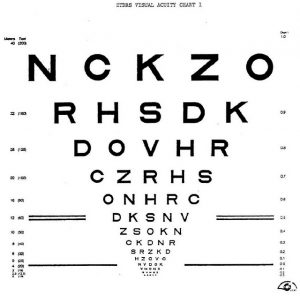
Eye chart image courtesy of Community Eye Health, CC https://flic.kr/p/cenNDu

The news photo of rugby league player Dylan Walker’s fractured eye socket made me feel anxious, like I get when I have an eye infection or it’s time for the annual glaucoma test. If I cover my left eye with my hand, I can navigate my way around the house, but that’s about it. No reading, watching TV or movies; definitely no writing, although I know vision-impaired people who have found ways around reading and writing.

What the auld aunties called a ‘gleyed ee’ or lazy eye was diagnosed in the late 1940s. I don’t remember wearing an eye patch when I was two, but I’ve seen the photos. It didn’t work. I say this only as an explanation if you passed me in the street and I did not say hello, it is possible you passed by on my right side.

Yes, so a serious injury to my left eye would probably see me lining up for the blind pension, although as I understand it, the aged pension replaces the (non-means tested) blind pension when the recipient reaches retirement age. An essay for another day, perhaps.

Last week the Australian Institute of Health and Welfare and Flinders University produced a report on eye injuries in Australia. The report shows 51,778 people were hospitalised due to eye injuries in the five-year period, 1 July 2010 to 30 June 2015. Two thirds of these were males. Falls (35%) and assaults (23%) were the most common causes of eye injuries. The most common type of eye injury was an open wound of the eyelid and periocular area (27%).

However, the report also showed that 86,602 people presented to an emergency department with an eye injury in the two-year period, 1 July 2013 to 30 June 2015. Only 1% of these cases (866) were admitted to hospital.

Sports-related eye injuries were seemingly uncommon by comparison, with just 3,291 males and 595 females reporting that the injury was sustained while participating in a sporting activity. However, information on what activity resulted in the injury was not reported for 69% of cases, so this is likely to be an under-estimation.

Of the known causes, more than one-third (37%) of males were participating in a form of football when they sustained an eye injury. Trail or general horseback riding (12%) was the most common sport-related activity resulting in eye injury reported by females. Over half (55%) of the sports-related cases resulted in an orbital bone fracture.

Such was the case during the Melbourne Storm-Manly rugby league game when a melee turned into a serious scrap between Manly’s Dylan Walker and the Storm’s Curtis Scott, with Scott throwing several punches, one of which broke Walker’s eye socket. Scott was sent off – red-carded as they say in soccer. Walker was given 10 minutes in the sin bin (for throwing a punch) and then had to be assessed for a head injury. Manly player Apisai Koroisau was also sent off for 10 minutes for running in and throwing a punch at Scott.

The National Rugby League (NRL) has been cracking down on such behaviour – Scott was the first person to be sent off for punching since 2015. All rugby league players know if they throw a punch they will at least be sent to the sin bin; angry flare-ups in recent years have tended to be of the push and shove variety.

But whether you follow rugby league or not, it was a bad look, for the sport and for all sports. Imagine the conversations over breakfast.

“Right, that’s it,” says Mum, whose son Billy (8) has been pestering her to play footie. “If you want to play sport you have two choices – soccer or table tennis. Those league blokes are thugs.”

Discussing the Manly/Storm fracas on the Sunday Footie Show, former Jillaroo Allana Ferguson commented: “If they did that in King’s Cross on Saturday at midnight and someone was injured they’d be off to jail.”

She makes a valid point.

A study last year by Dr Alan Pierce from La Trobe University found that repeated concussions in rugby league players have a long-term effect. He compared 25 former league players in their 50s with a control group of a similar age. The men carried out cognitive tests to measure memory and attention spans and dexterity tests to assess motor skills.

“What I’ve found is that the responses of retired rugby league players were significantly different to the healthy controls with no history of head injury,” Dr Pierce told the ABC.

The NRL took steps in 2015 to introduce mandatory head injury assessments (HIA), where players who have suffered a head knock have to leave the field for 15 minutes and be assessed by a doctor. If found to be concussed, they are not allowed to return to the field that match. An NRL injury surveillance report by Dr Donna O’Connor found that head injury assessments increased from 210 in 2015 to 276 in 2016, largely due to strengthened concussion guidelines. Sixty-six per cent of these cases were cleared to continue playing in 2016, compared to 54% in 2015.

If you have seen the excellent Will Smith movie Concussion (about brain injuries in American football), you may well ask why it took the NRL so long to act.

Cheek and eye socket fractures are common injuries in rugby league. They come about through (accidental) contact in tackles, as big bodies collide. Sometimes it happens through ‘friendly fire’ collisions with teammates.

Such was the case with Broncos forward Josh McGuire, whose injury in 2011 required surgery and he is now effectively blind in one eye.

Sports Medicine Australia says the incidence of sports-related eye injuries is low, but severity is usually quite high, as injuries to the eye can result in permanent eye damage and loss of eyesight.

“Research has shown that 30% of sports-related eye injuries in children have the potential for permanent loss of eyesight.

“A blow to the eye from sporting equipment, fingers or balls can lead to injuries ranging from lid haemorrhages or lacerations, corneal abrasions, retinal detachments and hyphaema (bleeding inside the eye) to permanent loss.”

Rugby league is rated a ‘moderate’ risk sport (in relation to sustaining eye injuries) compared to high-risk categories including baseball/softball, basketball, cricket and racquet sports. Any sport that involves small projectiles moving at speed is considered high-risk.

Our family GP once told me most serious eye injuries he had encountered were caused by squash balls and champagne corks.

If you lose an eye, the alternatives are an ocular prosthesis (a glass eye) or an eye patch, the latter having a bad press courtesy of movie bad guys. Think John Wayne’s bullying Rooster Cockburn in True Grit, Adolfo Celi’s menacing Emilio Largo in Thunderball, or John Goodman’s itinerant bible salesman Big Dan Teague (O Brother Where Art Thou).

If it came down to it, I’d opt for a good quality prosthesis, although the price (from $2,500), makes a $10 eye patch look like a bargain.

I’d make it a different colour just because I love that line in the Paul Kelly song about falling for a girl with different coloured eyes.

In the meantime, I will keep wearing Australian Standard safety glasses when I mow the lawns or use the brush cutter. You should too.


Falls a risk for over-65s

risk-falls-over-65s
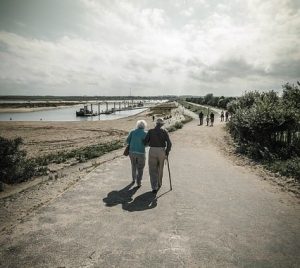
Elderly couple out for a stroll – falls and the over-65s photo courtesy pixabay.com

You may know this statistic about falls among older people, but it is shocking all the same to learn that 74% of people who were hospitalised after a fall had broken their hips. Head injuries were the next most serious (22%) with limb fractures further down the list.

About a third of all Australians in the 65+ age group will have a fall each year, but most are not serious. About 10% of people in this cohort who suffer a fall end up with a serious injury.

An Australian Institute of Health and Welfare (AIHW) reports states that about 100,000 people aged 65 and over were admitted to hospital after falls in 2012-2013. While that is a few years ago, the statistics are part of a 10-year study done at the time, so are representative. Discuss, as people say when posting something contentious on social media.

The falls could be as relatively minor as the tumble I took down our steep terraced acreage recently, which resulted only in bad language and a few minor scrapes. I few years ago I had a rather more serious fall – a broken rib and a bruised thigh – what rugby league commentators scoffingly dismiss as a ‘cork’. I was carrying two folding chairs in each hand while walking down the stairs. Did I mention it was raining and the soles of my shoes were wet? Duh!

Which brings me to She Who Is Ambidextrous (SWIA), who has taken the lead (2-1) in the Domestic Falls Stakes. Excuse me for making light of a poor but not overly serious situation.

SWIA had what’s known in the medical business as a FOOSH (Fall on Outstretched Hand). She sustained the injury as a result of tripping down some stone steps in the front garden.

As a young friend who rather more seriously injured his arm last year said when hearing this news, “At least it wasn’t a PAFO.”  (let me know if you can’t figure it out..)

Yes, it seems we are now in that age group who are more prone to falls, and, having fallen, are more likely to suffer an injury with a longer and sometimes problematic recovery time. Moreover, the fallout from falls can have psychological ramifications, making people less sure of themselves and reluctant to do ‘normal’ things which might result in falls.

It can happen to anyone, anytime.

The AIHW statistics quoted above include the telling observation that 72% of falls occur in the home or residential aged care facilities.

Stay on your feet – join an exercise class

Several Australian states have started a “Stay on Your Feet” campaign, which makes sense when you consider that in Queensland alone, falls cost the state more than $100 million a year.

Most people aged 60 and older are quite aware of the risk involved in taking a tumble and many attend exercise classes designed to shore up core strength and improve balance. So in many ways SWIA’s fall last week is a bit ironic as she is dutiful about attending exercise classes and daily doing what I never do (a morning stretch routine).

One of my regular readers says the thing he likes about the weekly read is that it so often addresses issues affecting ‘our’ age group (he means the over-60s).

So this is for you, mate. Core strength is the overall fitness and flexibility of the core muscles that help us keep our balance, sit down, stand up, lie down, kneel and squat. If your core strength is suspect (like me, down on one knee to get a dish out of the bottom cupboard), you will be found out using your hand/s for support.

Try these tests (and absolve me of all responsibility if you fall in a heap).

Sit on a hard-backed chair for 10 minutes. Now get up without using your arms for leverage. Do the same thing from a sofa, recliner or armchair.

As Billy Connolly says: “Ye know how auld you are by how long it takes to get out of a beanbag.”

The other trick is to stand on one leg for as long as you are able to hold the position, say 30 seconds (no hand support). Now try the other leg. Notice the difference?

The real test is how successful you are at putting on your underpants while standing.

Some people make provisions as they age by retrofitting their homes in some way, for example putting grab bars in the bathroom and toilet. Some even have ramps built to avoid going up and down steps or stairs. People aged 70 and over who live alone are often encouraged to wear a device which they can use to call for help.

Scientists in Australia, the US, UK and Europe are working to develop devices which can prevent falls by predicting the likelihood of a person having a fall. The University of Missouri is collating data from sensors built in to the walls of homes were aged pensioners live. The university’s researchers found that even small changes can predict if an elderly person is about to suffer a dangerous fall.

The risk quadruples if walking speed slows; for example when walking speed decreases by 5.1cm per second, the person has an 86% chance of toppling within three weeks, compared to just a 20% chance with no change. A drop in stride length of 7.6cm predicted a 51% chance of tripping within three weeks. Scientists elsewhere have developed wearable devices which can measure a person’s gait and ability to perform tasks like sitting down and standing up again. These can also reliably predict the likelihood of a pending fall. Scientists are finding these various devices helpful in predicting falls among people who have an illness which affects gait (Parkinson’s Disease, MS, joint pain (arthritis), spinal cord compression injuries and peripheral neuropathy, often associated with diabetes.

If all else fails, there are a range of alert buttons one can wear and press if in need of help. The help buttons trigger a monitoring station which will investigate and, if necessary, dispatch an ambulance.

The main risk of hurting yourself is if you are elderly and live alone, especially in a big, impersonal city. Chances are you could lie on the floor a long time before anyone discovered what had happened to you. I was reminded about this scenario when watching a new TV reality show, Ambulance, which is an inside look at London’s ambulance service. In the first episode, a man in his 90s has fallen to the floor and can’t get up. It’s been three hours and ambulances keep getting diverted to more urgent situations. To add to his woes, an ambulance is about to pull up at his front door when they get sent to help a woman who says she is having a miscarriage. Turns out to be a serial hoaxer

Good thing we live in a small community, where the first responders attending SWIA were prompt, thorough and cheerful. Medical staff at Maleny Soldiers Memorial Hospital were also very thorough, leaving nothing to chance.

Now you’ll have to excuse me, SWIA needs me to tie her shoelaces, take the lid off the pickle jar, and adjust the recliner… (and explain that the title of this article does not, of course, refer to said SWIA. Ed)

Today marks FOMM’s fourth anniversary. Congratulate me, make suggestions, or send gratuities!

Related reading, FOMM back pages